by James A. Bacon
Easter, the holiest day of the Christian calendar, marks the resurrection of Jesus Christ. The historic underpinnings of Christian doctrine have long fascinated me, and I have spent many years of amateur study of Jesus’ life and times in an effort to achieve a greater understanding of this seminal moment in human history.
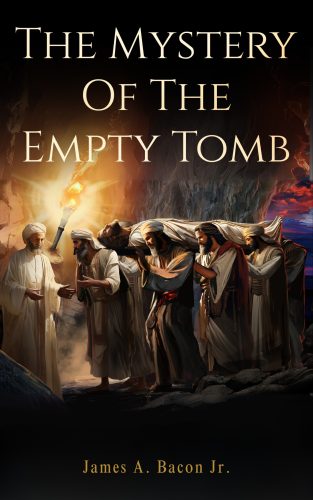
The result is my new novel, The Mystery of the Empty Tomb, which tells the story of Jesus’ entry into Jerusalem in the year 33 C.E. (Common Era), his arrest by the temple priests, his trial and crucifixion by Pontius Pilate, his burial, and the disappearance of his body from the tomb. The story is narrated by Nicolaus, a Greek by culture, native of Caesarea, and aide to Pilate. Grave robbery was endemic in the ancient world and the purloining of corpses was forbidden by imperial decree, so Roman authorities would have immediately assumed that the body had been stolen. The conceit of the novel is that Pilate puts Nicolaus in charge of identifying the culprits and tracking them down.
Nicolaus’ investigations take him from the palace of Herod the Great to the Temple of Jerusalem (the greatest of the ancient world), into the mansions of the high priests, through the streets and marketplaces of Jerusalem, and to the cities and villages of Galilee and Samaria. Through Nicolaus, the reader learns about the power struggle between Pilate and the priests, the rivalries between Sadducees and Pharisees (and among factions of Pharisees), the ethnic tensions between Jews, Greeks and Samaritans, and the revolutionary aspirations of the anti-Roman zealots. As Nicolaus probes deeper into the sects and doctrines of the Jews, he introduces readers to the mysteries of throne mysticism and arcane practices of sorcery.