• I See the Quid. Where’s the Quo?

    mcdonnells2by James A. Bacon

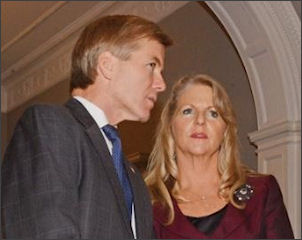
    The McDonnell GiftGate scandal has has the salubrious effect of inspiring legislators to tighten up state ethics laws. There is no way to know what the final outcome will be, but the legislative end product undoubtedly will create more transparency and accountability than existed before.

    There is, however, a potential downside to the indictment against former Governor Bob McDonnell and his wife Maureen. If federal prosecutors win convictions, one could argue, they will succeed in criminalizing routine political conduct. The new, loftier standards used to convict McDonnell will apply to his successors as well.

    The former governor and first lady argue that they provided no tangible benefit to former Star Scientific CEO Jonnie Williams Sr. in exchange for tens of thousands of dollars in personal gifts and loans.ย There is a big difference between (a) informal actions such as posing in photo-ops, hosting receptions in the governor’s mansion, or even setting up meetings with government officials and (b) formal actions that would affect legislation, regulations, enforcement of the law, appointments to boards and commissions or the dispensation of state funds. The McDonnells engaged in (a) but not (b). Even the prosecutors do not assert otherwise.

    The conduct of the McDonnells, maintain their defense attorneys, was “indistinguishable” from that of predecessors, including former Governor Tim Kaine, who received the use of a Caribbean vacation home, a gift valued at $18,000, from an investor whom he subsequently reappointed to the Virginia Commission on Higher Education Board Appointments.

    “Because these are practices that the commonwealth has affirmatively chosen to permit, there is no way that Governor McDonnell could have imagined that the federal government would suddenly declare his acceptance of lawful gifts to be a crime,” states the defense motion. “There is thus likewise no way that Governor McDonnell could have possessed the corrupt intent required to commit bribery.”

    Read the indictment. Prosecutors thoroughly document the gifts that Williams lavished upon the McDonnells and their children — shopping sprees, vacations, personal loans, golf outings and a wedding reception. They also present evidence that the McDonnells, Mrs. McDonnell in particular, solicited many of these favors. Such outrageous behavior affronts the sensibilities of Virginians, who rightly regard it as scandalous. But did it amount, in the words of the indictment, to “a scheme to use Robert McDonnell’s official position as the Governor of Virginia to enrich the defendants and their family members?” If so, what benefit did the McDonnells confer upon Williams in return?

    The governor set up meetings between Williams and state officials who might be in a position to help the Star Scientific executive gain state funding or buy his product, Anatabloc. The governor’s office even followed up to see if there was any interest in pursuing the matters discussed. There is no evidence, however, that McDonnell twisted anyone’s arm, much less that Star Scientific ever received anything of value. Indeed, in at least one email, Ms. McDonnell complained that state university officials would not return Williams’ phone calls. No special legislation. No special regulations. No relaxation of law enforcement. No permit approvals. No subsidies, tax breaks or grants.

    Maureen McDonnell did endorse the company and its products, lending whatever credibility she could offer as first lady of Virginia. The McDonnells lent the Governor’s Mansion for a Star Scientific reception. And the governor’s office did arrange for Star Scientific executives to get tickets to a state-organized confab of “health care leaders” where they could schmooze and pitch their product. That’s pretty weak tea.

    While Ms. McDonnell’s behavior was reprehensible — buying shares of Star Scientific stock while shilling for the company, then going to great lengths to avoid reporting the stock purchase in public disclosure documents — was it illegal? Maybe. I don’t know the law. I’m happy to let the judge decide.

    Of greater portent, were Governor McDonnell’s actions illegal?ย Is it truly unprecedented for governors to set up meetings between campaign contributors (and/or donors of personal gifts) and officials within their administrations? I find that hard to believe. Why else do people give large sums to political campaigns if not to gain access to the apparatus of government? Are we really prepared to criminalize such activity?

    If the prosecutors win their case against the McDonnells, the current raft of ethics laws under consideration by the General Assembly will fall short of the new standard. The real challenge will be to devise rules consistent with the new, elevated sense of propriety. And that, I predict, will far more easily said than done.

  • The McDonnells and Their Apologists

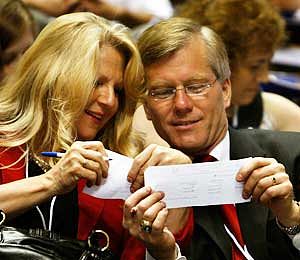
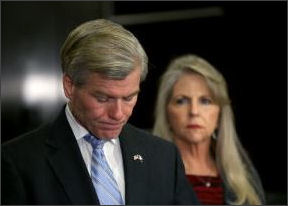
    maureen_and_bob(1)By Peter Galuszka

    It seems bizarre to balance news of the worst political corruption scandal in the stateโ€™s history and efforts by bloggers and commenters on Bacons Rebellion to dismiss it all as โ€œeveryone does it.โ€

    The apologia is getting a little too hot and heavy here. One famous blogger wanted to smack former governor Bob McDonnell on the backside of the head, implying they are closer than brothers and thatโ€™s all what he really needs as punishment for doing the bidding of his greedy wife.

    Whatโ€™s being lost here is that the indictment of the McDonnells is a huge turning point in Virginia political history. It means that the old noblesse oblige manners dating to when the state was ruled by a rich and exclusive cabal of white men has long since vanished along with the idea that the โ€œVirginia Wayโ€ means serious ethics rules are not necessary.

    Big news, this.ย  Itโ€™s not 1920 anymore and hasnโ€™t been for nearly a century. The Old Dominion has emerged into a completely new state where top politicians are born elsewhere (George Allen, Mark Warner, Tim Kaine, Terry McAuliffe and even Bob McDonnell).

    Rather than drawing from landed gentry the leadership comes from rich, self-made men, such as Warner who amassed $200 million or more in the cell phone and IT business or McAuliffe who built a fortune in various businesses. The other recruiting ground is service, including military, mayor, prosecutor or attorney general (Jim Gilmore, Kaine, McDonnell).

    In the latter track, it is harder to build a fortune. It is harder still when religious or social conservative views make one compelled to breed prodigiously. You end up with a lot of mouths to feed and college tuition to pay. Nowhere was this more evident that with the McDonnells and their five children. In the old days, Scott Junior would have been sent off to โ€œThe Universityโ€ or Washington & Lee while Sarah Jane went to Sweetbriar or somewhere thanks to old family money.

    A few more myths to demolish:

    • McDonnell will walk because thereโ€™s no โ€œquidโ€ to the โ€œquo.โ€ Admittedly, this is always a tough on in corruption cases. Even Blago from Illinois almost walked when there was indisputable evidence that he was selling Barack Obamaโ€™s seat. In West Virginia, they had Gov. Arch Moore accepting a half a million in cash in an envelope from a coal company wanting to avoid black lung fund payments. The donor was even wearing a wire and there was some question. But they both ended up in prison.
    • McDonnnell technically did not have to concretely โ€œdeliverโ€ anything for payoffs, just had to imply such. The indictments show a series of events. Maureen asks for favors (sometimes Bob does) and thereโ€™s some kind of event to promote Anatabloc, the product upon which Star Scientificโ€™s financial future depended. The Food and Drug Administration since has said Anatabloc is not tested or approved. Star had used medical outlets such as the RosKamp Institute and Johns Hopkins School of Medicine to imply they backed the product. Johns Hopkins pushed back. Jonnie Williams tried to get Virginia Commonwealth University and the University of Virginia to vet it by dropping the McDonnellsโ€™ name and pointing to events staged for him by the McDonnells. That could be quid pro quo enough.
    • Where there’s smoke, there’s fire. Federal prosecutors had to act because there was a clear and steady cycle of solicitations from the McDonnells, gifts and loans from Williams and then some activity on the First Couple’s part promoting Williams and his company. There were no isolated events.
    • The โ€œeverybody does itโ€ defense. This doesnโ€™t wash. First, it is true that one can drive a truck through Virginiaโ€™s ethics rules. No prosecutor could make a case on state law. But the indictments are federal charges. They include wire fraud. Federal law also covers gifts to public officials in exchange for something โ€“ perhaps political juice for medical research studies. It doesnโ€™t have to actually happen. Lastly, thereโ€™s the nettlesome problem that McDonnell might have falsified loan application documents to hide his relationship with Williams. โ€Intentโ€ is always tough legally, but when one gets into bank documents, itโ€™s a new ball of wax.
    • Why didn’t voters know that the McDonnells were in such dire financial straits when they were elected? Where was the media? These days most job applicants go through a credit check. The fact that the First Couple made bad financial decisions and couldn’t manage their credit should have raised bright red flags.
    • McDonnellโ€™s apologists โ€“ most of them conservatives โ€“ can be aggravating in other ways. They likewise claim to be wardens of public money, but Virginians such as you and I are going to be stuck with more than $780,000 in legal bills defending Maureen and Bob for the designer dresses, the Ferrari, the Rolex and so on. This is because firebrand Atty. Gen. Kenneth Cuccinelli was in a conflict of interest because he accepted Williams largesse, too. New Attorney General Mark Herring has put a stop to this nonsense. So where are the nearly broke McDonnells going to get their legal funding? There is a defense fund that was started last summer but it only has a measly $2,000 in it, showing that Virginians arenโ€™t exactly storming the Bastille over Maureenโ€™s need for Oscar de la Renta clothing.

    What this likely means is that the McDonnells, lacking resources for a lengthy court battle, will cop a plea and avoid lengthy jail terms. Point made: โ€œOrange is the New Black.โ€ And maybe the apologists will shut up long enough so we can get some needed ethics reform.


  • Educating Children, Cutting Spending

    scholarshipsThe Education Improvement Scholarship Tax Credit made it possible for 275 low-income students to receive private-school scholarships this year while saving the Commonwealth of Virginia almost $745,000. So concludes the Thomas Jefferson Institute for Public Policy in a new published policy brief.

    The 2013-2014 school year marks the first year that students received private-school scholarships under the tax credit. The provision provides a 65% state tax credit to donors contributing to eligible foundations awarding scholarships to low-income public school students. Foundations must use at least 90% of the contributions for actual scholarships, and the size of the scholarships is capped at the amount the state would have contributed to the student’s public school education in their school division of residence. Here are the numbers:

    Students awarded scholarships: 275
    Average size of scholarship: $2,456 per child
    Total scholarship dollars awarded: $675,000
    Amount donated: $751,000
    Cost of tax credit to the state: $488,000
    Educational savings to the state: $1,233,000
    Total savings to the state: $745,000

    A provision of the law requires donors to wait a year after making the donation to take the tax credit. Bills introduced to the General Assembly this year would allow donors to claim the credit the same year.

    — JAB


  • Bob McDonnell’s All-Too-Human Story

    mcdonnellsby James A. Bacon

    In reading highlights of the indictment against former Governor Bob McDonnell and his wife Maureen, I alternate between having sympathy for the governor and wanting to cuff him across the back of his head. How could he have gotten himself into such a situation?

    We knew from previous reports that the McDonnells were facing financial difficulties resulting from ill-advised investments during the mid-2000s real estate boom. Now we discover that the McDonnells had run up their credit card debt as well. To quote a Maureen McDonnell email noted in the Times-Dispatch:

    Bob is screaming about the thousands Iโ€™m charging up in credit card debt. We are broke, have an unconscionable amount in credit card debt already, and this Inaugural is killing us!!

    It seems that Ms. McDonnell was out of control. Despite having run up the family credit cards, she wanted more stuff… and she didn’t mind asking Star Scientific CEO Jonnie Williams Sr. to get it for her: a designer dress by Oscar de la Renta for the inauguration, dresses and accessories for her daughter’s wedding, her daughter’s wedding banquet, a Rolex watch for her husband, a vacation at Williams’ lake house.

    It does not appear that McDonnell initiated any of this but he did not have the cajones to put a stop to it. Indeed, he happily wore the $6,500 watch that Maureen gave him. Any normal husband in his financial straits would have asked, “Er, Maureen, that’s a lovely gift but… are you out of your cotton pickin’ mind? Where did you get the money to buy this?”

    You’d also think that, living on a governor’s salary of $175,000 a year — a $25,000-a-year pay raise over his attorney general salary — and enjoying rent-free residency in the Governor’s Mansion, the McDonnells could have gotten their finances in order. But curtailing her lifestyle spending apparently was not at the top of Ms. McDonnell’s agenda.

    Now there’s only one thing standing between the McDonnells and enduring disgrace: the hope that a judge and jury will buy McDonnell’s argument that he never promised any favors or attempted to influence anyone to provide state benefits to Williams. The indictment, he said in his public statement yesterday, “rests entirely on a misguided legal theory, and that is that facilitating an introduction for a meeting, appearing at a reception or expressing support for a Virginia business is a serious federal crime if it involved a political donor or someone who gave an official a gift.”

    I have sympathy for that argument.ย I still haven’t seen evidence that McDonnell provided substantive favors in return for the gifts and loans. But I have zero sympathy for the behavior that created the furor in the first place. There is no shame for a governor of humble financial means to live a humble life in the Governor’s Mansion. Harry Truman, how we miss ye.


  • A Sad Day for the Commonwealth

    mcdonnell-1By Peter Galuszka

    Itโ€™s a sad day for Virginia.

    Former Gov. Robert F. McDonnell and his wife have beenย charged by federal authorities with 14 felony counts, including wire fraud, conspiracy to commit wire fraud and obtaining property through their office in connection with their relationship with Jonnie R. Williams, former chief of Star Scientific.

    The indictments represent a new threshold for the Commonwealth, which prides itself on having corruption-free officials. For decades, the state has believed in โ€œthe Virginia Wayโ€ dating back to the days of gentlemanly cavaliers who always did the right thing.

    The fact that Gov. and Mrs. McDonnell played their wholesomeness card so often just makes the entire situation seem so tawdry. McDonnell once was considered possible presidential timber.

    A cursory read of the charges shows a politically ambitious family caught between presenting a salable image and their disastrous personal financial situation linked to some bad real estate investments before the 2008 financial crash.

    The indictments claim:

    • McDonnellโ€™s 2009 election staff approached Williams in March 2009 about using his private plane for campaign purposes. McDonnell told me personally at WRVA studios last summer that he had known Williams long before that. The indictment says that the two โ€œhad never met and they had no personal or professional relationship.โ€
    • In December 2009, governorโ€“elect McDonnell and his wife were at a Four Season Hotel in New York for a political meeting. Williams approached McDonnellโ€™s staff for a meeting and ended up buying Maureen McDonnell an Oscar de la Renta dress for the upcoming inauguration in Richmond. In an email, Mrs. McDonnell said she needed financial help with her clothing because, โ€œWe are broke, have an unconscionable amount in credit card debt already, and this Inaugural us killing us!!โ€
    • Not only did Mrs. McDonnell regularly solicit funds from Williams but so did the governor, as a string of emails shows.
    • The McDonnells allowed their images and their position to be used to help Williams and his struggling company with a dietary supplement named Anatabloc.
    • McDonnell directly spoke with Williams about the possibility of loaning him thousands of dollars to cover failing resort properties he had bought.
    • Williams sought and received help from the McDonnells in trying to get researchers at the University of Virginia and Virginia Commonwealth University to research the chemical element that is the key to Anatabloc. The McDonnells promoted the product at the Executive Mansion and Mrs. McDonnell flew in Williamsโ€™ private aircraft to Florida and Michigan to promote it.
    • The McDonnells repeatedly sold stock in Star Scientific, Williamsโ€™ company, before Dec. 31 deadlines so they could avoid reporting it on state reports.
    • McDonnell and his family used Williams to play at an exclusive golf course in Goochland County although Williams was not present. They also borrowed Williams lakefront house worth several million dollars. Williams sent an expensive foreign sports car for McDonnell’s use and Maureen sent Williams a photo of the governor driving it.
    • Williams bankrolled a McDonnell daughterโ€™s wedding luncheon as well as a trip for two children to a โ€œbacheloretteโ€ party in Savannah.

    If what the charge says is true, the McDonnells were living a double life to deceive voters. They projected a wholesome, God-fearing family while they were actually grabbing what they could to live the high life while trying to stay afloat in the secret financial morass they kept away from public eye.

    My takeaway? Enough Virginia mythology. It is time for a real State Ethics Commission.


  • The Start of De-Coochinization

    Mark-HerringBy Peter Galuszka

    Mark R. Herring, Virginiaโ€™s new attorney general, is working quickly to disassemble much of what his predecessor, Republican Ken Cuccinelli II, put in place.

    Herring (D)ย dismissed two law firms hired by Cuccinelli to represent the office for former Gov. Robert F. McDonnell and his staff in investigations connected to $165,000 in gifts and loans McDonnell accepted from a businessman.

    Cuccinelli had hired the firms, which have been paid $785,000 in public money, because he had a conflict of interest in representing McDonnell. Normally, the attorney general would defend the governorโ€™s office.

    Herring also seems to be shying away from aggressively defending laws relating to conservative issues such as laws related to abortion clinics, redistricting and gay marriage.

    Herring, who beat Republican Mark Obenshain in a squeaker of an election in November, has not said precisely that he would or would not defend such laws, but some Republicans are taking no chances. Del. C. Todd Gilbert (R-Shenandoah) has proposed a bill that would give legislators legal standing to represent the state if the attorney general declines.

    A Herring spokesperson told The Post that โ€œthe constitution of Virginia provides for a duly elected attorney general to do this very job.โ€ During the campaign, Herring said he is not sure he would defend the abortion clinic regulations against a court challenge.ย ย He has also declined to sayย whether he would defend the ban on gay marriage in Virginiaโ€™s constitution.

    Interesting how the shoe is on the other foot. When Cuccinelli was the stateโ€™s chief legal officer, he charged ahead with a politicized legal agenda that included cracking down on abortion clinics and harassing a former University of Virginia scientist who researched the relationship between human activity and climate change.

    Herringโ€™s firm approach is an interesting riff on how the style of Terry McAuliffe, the new Democratic governor, is emerging.

    At first, McAuliffe seemed to be pushing bipartisanship as a moderate, pro-business chief executive. Lately, heโ€™s become bolder about a liberal cause dear to his heart: expanding Medicaid coverage to the stateโ€™s poor.

    McAuliffe has already upstaged General Assembly Republicans on another issue โ€“ toughening Virginiaโ€™s lax ethics laws for state employees though an executive order.

    It will be fascinating to see how his and Herringโ€™s styles emerge.


  • Housing Supply, Demand and Affordability

    It could be worse -- you could live in Hong Kong.
    It could be worse — you could live in Hong Kong.

    by James A. Bacon

    The Hampton Roads and Richmond housing markets are “moderately unaffordable,” according to the 10th Annual Demographia International Housing Affordability Survey: 2014. While not exactly a kudo, that classification puts the two of Virginia’s three largest metros in the top one third of housing affordability for major markets (one million people and over) in the English-speaking world (the United States, United Kingdom, Canada, Australia, Ireland, New Zealand) as well as Japan, Singapore and Hong Kong.

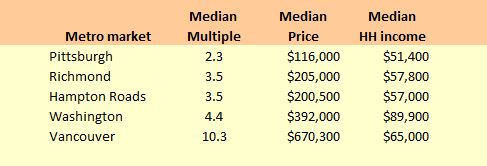
    Demographia classifies the Washington metro region as “seriously unaffordable” based on 2013 data, yet the capital region rates better than Denver, Portland, Boston, New York and San Francisco, not to mention such expensive outliers as London, Sydney and Hong Kong. (The study uses a multiple of 3.0 as the threshold of affordability — if median housing prices exceed median household incomes by more than three times, a region is deemed unaffordable.)

    The authors contend that housing affordability is largely a function of regions’ “urban containment policies,” or land use controls that restrict the supply of developable land on the grounds of livability, sustainability or smart growth.

    Housing affordability has deteriorated sharply in the past decade in Australia, Ireland, New Zealand, the United Kingdom and in some markets of Canada and the United States (evidenced by sharply higher Median Multiples). In every market where there has been a sustained and significant increase in the Median Multiple, more restrictive land use policies have been implemented.

    I have extracted Demographia’s data for Virginia’s three major metropolitan regions below and bracketed them with the most affordable and least affordable major markets in North America, Pittsburgh and Vancouver.

    affordability_ratios

    Demographia maintains that its methodology actually understates the differences in housing affordability. The average new house size in the United States, which tends to have more affordable housing markets) is significantly larger than in other countries: 250 square meters in the U.S. compared to less than 1oo square meters in Ireland, Singapore, the U.K. and Hong Kong. Not only is the median house size more affordable in terms of median income, it is bigger, which translates into a higher standard of living.

    Bacon’s bottom line:ย The Demographia study drives home a partial truth: Land use controls restrict the supply of developable land and, all other things being equal, a restricted supply of land drives up housing prices and diminishes the standard of living. I don’t see how any serious person can dispute this conclusion.

    However, all other things are never equal. The Demographia analysis is shorn of critical context.

    Transportation. It is highly deceptive to focus on the cost of housing without also considering the cost of transportation. It is axiomatic that the price of housing is largely influenced by its accessibility to jobs and amenities. Many Americans (and undoubtedly citizens of other countries) are willing to trade higher transportation costs and longer commutes for lower housing costs, and vice versa. Housing cannot be considered in isolation from transportation. If higher housing costs are offset by lower transportation costs made possible by restrictive land use policies, livability is not necessarily sacrificed.ย Therefore, the Demographia analysis is incomplete.ย 

    Infrastructure. The pattern and density of land use impacts the cost of utilities and public services, including water and sewer; fire, police and rescue; and school busing, just to name the most visible. In the United States, the cost per dwelling unit of providing these urban amenities rises when new development occurs in more scattered, low-density locations. Inefficient settlement patterns lead to higher costs — and higher taxes — than a municipality would incur otherwise. Demographia’s analysis does not consider these costs.

    Demand. The price of housing reflects the equilibrium between supply and demand. One reason that housing prices are so high in San Jose (Silicon Valley) and neighboring San Francisco is that there is so much wealth creation occurring there that far more people would like to live there than can afford to. San Francisco has added 1,500 housing units a year over the past two decades, according to Gabriel Metcalf, hardly a no-growth policy. The problem is that the slowly expanding housing stock could not keep up with demand. Contrast that to super-affordable cities like Pittsburgh and Detroit. The population of the Pittsburgh MSA is lower than it was in 1960. Need I even mention the situation in Detroit? Sad to say but many of Demographia’s most “affordable” cities have been economic laggards over several decades. That path to housing affordability is one that few others would want to emulate.

    That’s not to say that Demographia is wrong about the link between urban containment, housing affordability and standard of living. But the issues are far more complex than Demographia lets on. If study authors Wendell Cox and Hugh Pavletich want to persuade the unconverted, they need to up their game.


  • Massey Bill to Expedite Online Learning for Higher Ed

    Online learning at GMU.
    Online learning at GMU.

    Aย billย submitted by Del. James P. “Jimmie” Massey III, R-Henrico,ย would promote online education in Virginia by making it easier for the state’s higher ed institutions to enroll out-of-state students.

    Frank Muraca,ย executive editor of Fourth Estate, George Mason University’s student-run news publication, has the story here.

    Colleges and universities such as GMU are turning to distance education as a means to offer accessible, low-cost options to students who may not be able to commute to campus or commit to regularly scheduled classes. GMU Provost Peter Stearns wrote in March 2013 that Mason’s online programs would be “aimed strongly at out-of-state student audiences.”

    But there’s a problem, Muraca explains. Virginia institutions offering distance education to out-of-state students must obtain authorization from the states in which they reside, a costly and bureaucratic process. Theย State Authorization Reciprocity Agreement eliminates a lot of the hassle. States SARA’s website:

    [SARA] is an agreement among member states, districts and territories that establishes comparable national standards for interstate offering of postsecondary distance education courses and programs. It is intended to make it easier for students to take online courses offered by postsecondary institutions based in another state.

    Massie’s bill authorizes the State Council for Higher Education in Virginia (SCHEV) to join the agreement and approve of disapprove or participation by Virginia institutions.

    It’s good to see that GMU is experimenting aggressively with both online courses and hybrid online/classroom courses. Between 4,000 and 6,000 GU students are enrolled in at least one online course per semester. Online education is a key component of the university’s newly adopted strategic plan.

    It’s also encouraging to see that SCHEV is promoting SARA.ย Virginia public universities are not required to opt into the agreement, but as SCHEV communications director Kirsten Nelsen wrote in a press release, they would be advised to.ย โ€œTo ignore this opportunity risks falling behind other states as they join this cooperative effort. This will create a disadvantage for Virginiaโ€™s institutions and the students they serve.โ€


  • 40 Million Pounds of Toxics Released in Virginia Every Year

    toxic

    by James A. Bacon

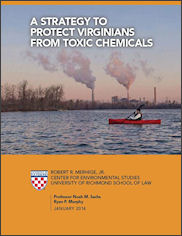
    Virginia industries in 2011 discharged 19.9 million pounds of toxic chemicals into the air, 16.7 million pounds into the water and 2.5 million pounds onto the land — and almost all of it was legal. So concludes a new report from the Robert R. Merhige Jr. Center for Environmental Studies at the University of Richmond School of Law, “A Strategy to Protect Virginians from Toxic Chemicals.

    Measured by the volume of toxic chemicals dumped into them, Virginia waterways are the second worst in the nation, says the report, written by professor Noah M. Sachs and third-year law student Ryan Murphy.ย The James River is the ninth worst waterway.ย The New River and Roanoke River are among the 20 worst waterways in the country. More than 277 different facilities in the state are legally permitted to discharge one or more toxic chemicals into the water.

    Write the authors:

    There are major gaps in the law, and Virginia lags behind other states in using state authority to address chemical risks. For example, Virginia lacks a comprehensive program to identify and clean up hundreds of contaminated sites in the Commonwealth that are not covered by the federal Superfund law. Moreover, current budgets for program and enforcement personnel are inadequate to enforce existing law, let alone the expanded protect program we recommend in this report. The toxics program at DEQ (Department of Environmental Quality) is understaffed, with about thirty full-time employees devoted to implementing and enforcing toxic chemical laws and regulations for the entire Commonwealth. In comparison, we have found that North Carolina, a state with a population slightly larger than Virginia’s has around one hundred full-time employees implementing and enforcing toxic chemical laws and regulations.

    “The central conclusion of this report is that the Commonwealth needs to use its own authority to fill gaps in federal law, step up enforcement, and protect Virginia’s citizens from toxic exposures.”ย The report calls for increased funding and personnel at DEQ, tougher penalties, stricter limits on toxic chemical releases and more focused attention on electric utilities and chemical manufacturers, among other measures.

    Bacon’s bottom line: The UR study draws attention to a critical issue that does not get enough attention in Virginia. Global Warming is the celebrated environmental cause du jour and, in my mind, attracts far more attention and resources than it deserves. We have many other environmental challenges in Virginia. Some, like the Chesapeake Bay, generate ample publicity but others, such as the presence of toxic chemicals in the environment, may not get enough. By focusing the spotlight on toxics, the report makes an important contribution to the public discourse.

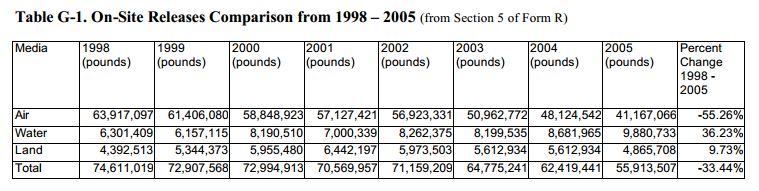
    That said, I don’t think Noah (who happens to be a personal friend) and Ryan close the case for the massive regulatory overhaul they call for. For example, here is a chart published in the Toxics Release Inventory (TRI), omitted from the report, that tells a somewhat different story:

    Source: Department of Environmental Quality. (Click for more legible image.)
    Source: Department of Environmental Quality. (Click for more legible image.)

    The existing regulatory regime cut the volume of toxic chemicals released into the air by more than half between 1998 and 2005. How much of that was due to DEQ action, federal regulatory initiatives or industry trends is not clear. But the trend line does not support the notion that massive regulatory intrusion is justified. Indeed, the electric power industry has shifted decisively to natural gas since 2005, which suggests that airborne toxics should decline even more dramatically in updated TRI reports.

    The report notes that Virginia ranks sixth worst in the nation for health impacts from PM2.5 emissions (fine sooty particles) from coal-fired power plants, based on modeling by Abt Associates — 657 premature deaths annually. The modeling attributes 94 deaths from PM2.5 emissions to Dominion’s Chesterfield Generating Station alone. In all likelihood, that modeling was based upon data that preceded the installation of new scrubbers at Chesterfield. Moreover, much of the impact from PM2.5 emissions comes from out-of-state coal plants, hence would not be affected by a ratcheting up of DEQ regulation of Virginia-based power plants.

    By contrast, the release of toxics into Virginia’s waterways increased by more than a third and on land by 10%. That suggests to me that water and ground pollution are far more likely than air pollution to be urgent problems that demand additional regulatory redress.

    Before drawing any definitive conclusions, however, I’d like to delve deeper into the numbers.ย “Toxic” chemicals vary widely in toxicity and health effects, and they vary widely in the rate at which they degrade into harmless compounds. Are Virginia industries spewing more longer-lasting, highly toxic chemicals like kepone and PCBs into the waterways? Or are they dumping chemicals with short half-lives that have only mild effects? If the answer is the former, we have a problem that must be addressed. But if it’s the latter, perhaps the problem is less urgent. The report does not endeavor to answer that question.

    Despite these reservations, I found the report illuminating. It is distressing to see that our rivers and streams are among the most toxic of any in the country.ย It is remarkable, if not outright scandalous, that Virginia has no plan for remediating contamination at non-Superfund sites and pursuing the parties responsible for the contamination. The recent chemical spill near Charleston, W. Va., provides vivid evidence that the threat posed by toxics is not merely theoretical. It is very real.


  • Will Self-Driving Cars Promote Smart Growth?

    SDCI always imagined that thinkers in the Smart Growth camp would be unnerved by the prospect of roads filled with self-driving cars (SDCs). If commuters could punch a destination into their mapping app, lean back, read email, surf the web or even doze off during the drive to work, SDCs could revive the long-distance commute and the perpetuation of scattered, low-density settlement patterns anathema to Smart Growthers. (See “A Roadmap for the Future of Self Driving Cars.“)

    But it turns out that some Smart Growthers and even transit advocates are looking at the emerging technology differently than I expected. In a Friday post to the Atlantic Cities blog, staff writer Emily Badger asks, “If autonomous cars can one day better perform the functions of transit, shouldn’t we let them?”

    Badger’s hope is that SDCs will reduce the number of vehicles clogging the road and hogging parking spaces:

    When cars can drive themselves, they can drive off when we’re done with them. They can pick up other people instead of sitting parked outside. We’ll request them on-demand. They’ll pull up out front, take us right where we want to go, then do the same thing for a hundred other passengers, a hundred times over. They’ll behave, in other words, like sophisticated ride-share services โ€“ or like personalized mass transit.

    SDCs won’t substitute for mass transit, she believes, but will complement it. The post is worth a read.

    — JAB


  • West Virginia’s Lessons on Fracking

    water in W.Va.ย By Peter Galuszka

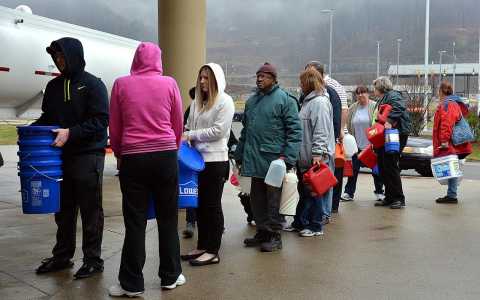
    Tap water is now drinkable for most of the 300,000 residents in the environs of ย Charleston, the capital of Virginiaโ€™s sister state to the west, but the mess has ample warnings for future problems notably fracking for natural gas.

    The national newspapers are filled with interesting pieces this morning about the problems of now-bankrupt Freedom Industries where 7,500 gallons of a chemical used to treat coal spilled 1.5 miles upstream from a municipal water system intake, making water unusable in Charleston and nine surrounding counties for about a week.

    The affected area would be about the size of Chesterfield or Henrico counties individually or more than the entire city of Richmond. Imagine the business losses from the inability to wash dishes in restaurants, wash cars, or even make toilet trips in state office buildings. Think of the unknown health impacts. ย Incredibly, thatโ€™s what happened in Charleston, the epicenter of the anti-regulation โ€œWar on Coalโ€ propagandists.

    The takeover warning for Virginia is that it could happen here and did back in the 1970s when Allied Chemical tried to sidestep pollution regulations by setting up a dummy company in a converted gas station in Hopewell to make the highly toxic pesticide chemical Kepone.

    One cause for future concern here, as well as in West Virginia, is what happens when hydraulic fracturing for natural gas comes. Fracking, which involves using high pressure water with special chemicals to help break up before-unreachable pockets of natural gas has really taken off in recent years.

    Combined with newer horizontal drilling methods, fracking has yielded a cornucopia of natural gas with a huge impact. It is utterly changing the dynamics of the U.S. energy picture and positioning the country to become an exporter of both gas and oil for the first time in decades.

    Fracked gas has its pluses. It emits half the carbon dioxide of coal and has nowhere near the death toll for employees. It doesnโ€™t destroy entire mountains. But it can increase the chances of fire, pipeline leaks, rail accidents and threaten water supplies depending on the types of chemicals used in the process.

    The West Virginia case provides chilling inadequacies with regulation. The tanks at Freedom Industries were inspected for air emissions but not for leaks, even though they were built in the 1940s and 1950s. Ownership wound around a polyglot of corporations.

    Within one week of the spill and facing hundreds of millions of dollars in lawsuits, Freedom promptly went bankrupt to protect itself against claims. That means that victims of the spill are doubly screwed. They have to eat the losses from the disaster and now they will find it much harder to get legal compensation.

    More chilling is the fact that West Virginiaโ€™s legislative and regulatory climate will make it harder to know whatโ€™s in gas fracking chemicals when companies move south from Pennsylvania to exploit Marcellus Formation shale that covers most of the state.

    The New York Times notes that in West Virginia, state regulators can issue regulations but they canโ€™t be enforced until the lobbyist-heavy legislature approves. A law last year would have required that companies disclose the types of chemicals they use for fracking but under pressure from oil equipment giant Halliburton, lawmakers decided to make them confidential.

    The same aura of confidentiality in favor of industry pervades Virginia which prides itself on being โ€œbusiness friendly. Much of what the State Corporation Commission does when it deals with firms or handles electricity rates is immune from the Freedom of Information Act. When former Gov. Robert F. McDonnell set up committees to study uranium mining and the nuclear industry in general, they were likewise immune from the FOIA. A lawyer working for former Attorney General Kenneth Cuccinelli was rebuked by a judge for advocating for energy companies in a lawsuit over natural gas rights.

    Fracking could come to Virginia although it isnโ€™t certain when or how much. The state already has more than 7,500 older gas wells near the Southwestern coal fields that do not use fracking.

    A sliver of frackable Marcellus formation skirts the West Virginia border west of ย Interstate 81 in mountainous regions unused to energy extraction. Rockingham County has already blocked a special land use permit sought by an energy firm. Washington area drinking water officials are seeking limits of fracking in the nearby George Washington National Forest at the headwaters of the Potomac River and other municipal water sources.

    Another possibility is the so-called Taylorsville Basin which runs from west of Annapolis to east of Fredericksburg and Richmond and Petersburg in areas better known for crab pots and pine forests. It isnโ€™t known how much gas is actually there, but a Dallas firm, Shore Exploration and Production Corp. is looking.

    I donโ€™t know offhand what rules Virginia actually has in place to reveal the chemicals companies use for fracking, but it is obviously something to watch. One example not to follow is that of the Mountain State.


  • Four Hard-Nosed Reasons to Invest in Bike Lanes

    bike_lanesAbout a year ago, I hosted a couple of brain-storming sessions to develop talking points for building a bicycle infrastructure in the Richmond region. The goal was to make a hard-nosed business case that investing in bikes would boost economic growth and bolster public health.ย (See “Making the Public Health Case for Bicycles” and “Bicycles and Economic Development.”)

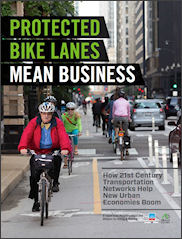
    If only my fellow brain stormers and I had had access to “Protected Bike Lanes Mean Business,” we could have made an even stronger case. Thisย report by PeopleForBikes and the Alliance for Biking and Walking touches on all the themes that we developed, and more. Broadly speaking, the authors see four ways by which bike lanes boost economic growth (and I quote verbatim here):

    Fueling redevelopment to boost real estate value. As city populations grow, motor vehicle congestion increases. New roads are rarely an option in mature cities. Protected bike lanes bring order and predictability to streets and provide transportation choices while helping to build neighborhoods where everyone enjoys spending time. By extending the geographic range of travel, bike lanes help neighborhoods redevelop without waiting years for new transit service to debut.

    Helping companies score talented workers. Savvy workers, especially Millennials and members of Generation X, increasingly prefer downtown jobs and nearby homes. Because protected bike lanes make biking more comfortable and popular, they help companies locate downtown without breaking the bank on auto parking space, and allow workers to reach their desk the way they increasingly prefer: under their own power.

    Making workers healthier and more productive. From DC to Chicago to Portland, the story is the same: people go out of their way to use protected bike lanes. By creating clear delineation between auto and bike traffic, protected bike lanes get more people in the saddle — burning calories, clearing minds, and strengthening hearts and lungs. As companies scramble to lower health care costs, employees who benefit from the gentle exercise of pedaling to work help boost overall hourly productivity and cut bills.

    Increasing retail visibility and sales volume. In growing urban communities, protected bike lane networks encourage more people to ride bikes for everyday trips. And when people use bikes for errands, they’re the idea kind of retail customers: regulars. They stop by often and spend as much or more per month as people who arrive in cars. Plus, ten customers who arrive by bike fit in the parking space of one customer who arrives by car.

    The only caveat that I would add is the same one I would add to investing in roads, highways and mass transit: All bike lane projects should be subjected to Return on Investment analysis and compete on an ROI basis with all other transportation modes.

    — JAB


  • McAuliffe Provides More Relief for Hampton Roads Tolls

    by James A. Bacon

    The Commonwealth Transportation Board voted Wednesday to make good on Governor Terry McAuliffe’s campaign promise to lower the tolls on two Elizabeth River tunnels. Tolls still will go up but less rapidly than provided for in the $2.1 billion public-private partnership agreement for the Downtown Tunnel/Midtown Tunnel project. Relief for the tolls, which will pay for upgrading tunnel links between Norfolk and Portsmouth, will cost the stateย $82.5 million over three years.

    The CTB approved using $57.2 million in unallocated transportation funds and $24.3 million in bond funds to pay for the toll relief.ย “This is a good first step,” said McAuliffe, who addressed the board shortly after the vote. “This buys us some time to do what we need to do.”

    Bacon’s bottom line. So much for the basic facts. Now for the analysis. Writes the Daily Press:ย “Both McAuliffe and Layne said they did not like the agreement the state had entered into with the Elizabeth River Crossings project.” But McAuliffe said the state was bound by a contract he described as a “bad deal.”

    The contract was indeed a “bad deal” insofar as it jacked up tolls — up to $1.84 one-way for automobiles during peak periods — before the tunnel and highway improvements were complete. Without relief, Hampton Roads citizens would be paying for a benefit they do not enjoy. McAuliffe is right to seek redress.

    But if Layne agrees that the agreement was deficient, why didn’t he say something when he served as a Hampton Roads representative to the board back when the CTB was voting to finalize the deal? I don’t recall him challenging the McDonnell administration during board meetings. Indeed, he was a steadfast champion of the project. Perhaps he had disagreements but expressed them in private channels of communication. If so, the question ย arises, what good is the Commonwealth Transportation Board? If it’s not a forum for hashing out transportation policy issues, what is it? Will the CTB serve the dictates of the McAuliffe administration as slavishly as it served those of the McDonnell administration?

    The only real value I see in the CTB is that it provides some transparency into transportation policy and decision making. We learn what big projects the current administration is pushing. We see presentations on issues that the Virginia Department of Transportation and the Department of Rail and Transit are wrestling with. But as a forum for actually debating issues, it’s useless.


  • Journalism’s Death Is Greatly Exaggerated

    rachel_maddowBy Peter Galuszka

    “Investigative reporting, R.I.P. In-depth reporting is dead. If not dead, itโ€™s comatose. Reeling from declining revenue and eroding profit margins, print media enterprises continue to lay off staff and shrink column inches.”

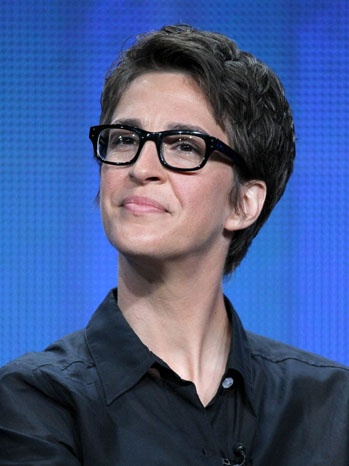
    Err, maybe not. James A. Bacon Jr., meet Rachel Maddow.

    The quote comes from advertised “sponsorships” in which an outside entity can help fund reporting and writing on this blog. It’s a morphed form of traditional journalism and there’s nothing wrong with it, provided the funding source is made clear.

    But what might be jumping the gun is the sweeping characterization that in-depth reporting is dead. That is precisely the point of Maddow’s monthly column in The Washington Post.

    She notes that it was local traffic reporters and others who broke the story about Chris Christie’s finagling with toll booths to punish a political opponent. She shows evidence of other aggressive reporting in Connecticut and in South Carolina, where an intrepid reporter got up early one morning, drive 200 miles to the Atlanta airport and caught then disappeared Gov. Mark Sanford disembarking from an overseas flight to see his Latin American mistress when he had claimed he was hiking the Appalachian Trail.

    Closer to home, it was the Post, which has seen more than 400 newsrooms layoffs over the past years, that broke GiftGate, the worst political scandal in Virginia in recent memory. The rest of the state press popped good stories, including the Richmond Times-Dispatch that has been somewhat reinvigorated despite nearly 10 years of corporate cheerleading and limp coverage under publisher Tom Silvestri. The departure of the disastrous former editor Glenn Proctor, Silvestri’s brainchild, helped a lot as did the sale of the paper by dysfunctional Media General to Warren Buffett.

    To be sure, there are sad departures. The Hook, a Charlottesville alternative, did a great job reporting the forced and temporary ouster of University of Virginia President Teresa Sullivan, but it has folded.

    Funding, indeed, remains a huge problem, even at Bacon’s Rebellion where we all write pretty much for free. One solution, Maddow notes, happened in a tiny Arkansas town that found it was located over a decaying ExxonMobil fuel pipeline. The community raised funds to help hire more reporters to break through the news.

    She suggests: “Whatever your partisan affiliation, or lack thereof, subscribe to your local paper today. It’s an act of civic virtue.”

    Hear! Hear!


  • Virginia’s Fiscal Condition: Average

    Source: Mercatus Center, George Mason University
    Source: Mercatus Center, George Mason University

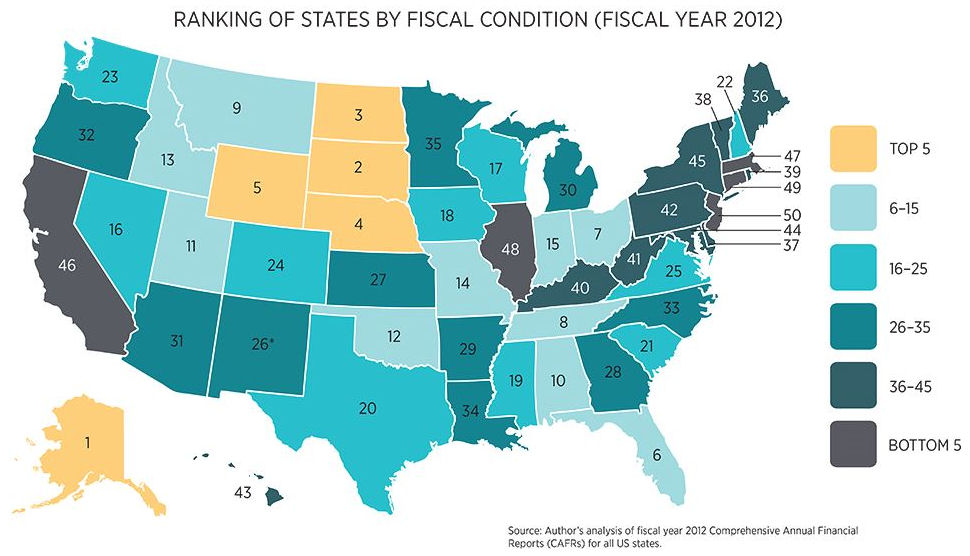
    Virginians persist in the belief that the commonwealth is an exceptionally well managed state with lower-than-average taxes, better-than-average services and rock-solid finances, as exemplified by its AAA bond rating. But there’s more to a state’s fiscal health than its ability to repay bonds. Sarah Arnett with the Mercatus Center rates the fiscal condition of the 50 states and finds Virginia right smack in the middle of the pack, in 25th place.

    The overall ranking is a composite of four specific indices based on 2012 Comprehensive Annual Financial Report data: cash solvency (states with ย more cash on hand score better), budget solvency (ratio of revenue to expenses), long-run solvency (the ability to meet long-term obligations such as pension benefits and infrastructure maintenance), and service-level solvency (reflecting the ability to provide citizens with an adequate level of services).

    Read the details in “State Fiscal Condition: Ranking the 50 States.”

    Update: Tim Wise provides more in-depth analysis of the numbers over on theย Growlsย blog.ย