Nine years ago Dan Larimer was broke, living with his parents, driving a 2001 Nissan Altima, and recovering from a messy divorce. Today Forbes magazine estimates his net worth at $600 million. The source of the 35-year-old Virginia Tech graduate’s fortune? Crypto-currency.
As the Roanoke Times‘ Jacob Dimmit tells the story, when Larimer was down and out, he managed to scrape up $20 to purchase 400 bitcoins. Today, those coins are worth about $4 million.
But a fortuitous purchase of bitcoin isn’t what made him one of Virginia’s wealthiest people. Fascinated by crypto-currencies, Larimer began creating his own. He launched his first crypto-currency, BitShares, in 2014. The value of all BitShares now exceeds $400 million. Then he launched Steemit, the first social network to operate on a blockchain. That currency now has a market cap of $600 million.
Now Larimer is working on his latest and greatest project, block.one, which he hopes will outdo bitcoin. Block.one’s coin, EOS, already ranks as the ninth largest cryptocurrency by market value, worth $4 billion. And he’s barely gotten started.
Block.one is headquartered in the Cayman Islands to avoid government taxes and oversight, but the engineering office is in Blacksburg. The company is self-funding, selling a digital token that operates similarly to bitcoin. The plan is to develop software and applications on top of the blockchain technology upon which bitcoin and other crypto-currencies are based.
As the Roanoke Times describes it: “Block.one will create software that it releases into the public for free. Developers will use those tools to create their own applications that run on their own blockchains, much like the way Bill Gates and Microsoft created the Windows operating system for all sorts of personal computers.” It’s not clear from the article how Block.one is supposed to make a profit, but, hey, there’s a lot I don’t get about the technology.
“Chronicling wealth is a big part of what we do,” Jeff Kauflin, co-author of the Forbes Richest People in Crypto-Currency list, told the Roanoke Times. “Crypto is a legitimate asset class now. There’s a lot of wealth that’s been created based on it, hundreds of billions. We at Forbes think it should be treated as a legitimate asset class.”
Clearly, Larimer is a genius. With the encouragement of his father, a defense contractor, he began writing software on a Macintosh II as a fifth-grader. When he exhausted all of the Advance Placement computer science classes during his junior year in high school, he just taught himself. When he started at Virginia Tech, he tested out of three semesters of coursework.
A turn towards libertarian thinking. In Blacksburg, Larimer got married, had children, and then got divorced. He and his ex crafted a deal under arbitration. The courts overturned parts of the deal, leaving him feel cheated. “That was my first experience with the government not respecting arbitration,” he said said. “I view violence as a shortcut to governance. So I made it my mission in life to find free market solutions to securing life, liberty, property and justice for all.”
Larimer said he believes cryptocurrencies, and the blockchain technology that power them, can provide fairer solutions to all sorts of societal woes. Currency is the beginning, but Larimer said the technology has the potential to reach much further.
No one company or government controls the software, so authority is decentralized. It’s based on computer algorithms, so the subjectivity is removed from the equation. A contract agreed to by two parties, whether it’s the transfer of a bitcoin or a separation agreement, is set in stone and cannot be relitigated.
“Right now in the current system, I have no way to know if that’s your car,” Larimer said. “I have to go ask the government. And if there’s a dispute between us, I have to go ask the government. The government will decide and they may or may not honor our contract.”
In the future, Larimer imagines, vehicle registrations will be stored in a blockchain, or a public ledger containing the information on every vehicle transaction to ever occur.
A block will be created when a vehicle rolls off the assembly line, then another when it’s sold at a dealership. When that owner decides to sell the car on Craigslist, they accept payment and in exchange add another block transferring ownership yet again.
If there’s an argument years later about who owns the vehicle, anyone can look back at the public ledger, called the blockchain, track the chain of blocks back to the manufacturer and determine the rightful owner.
This would be a vehicle registration system that would give unprecedented transparency, where deals could never be undone and the government would be completely uninvolved.
Bacon’s bottom line: We live in strange and unsettled times. I cannot begin to fathom how information-age alchemists can conjure up billions of dollars from the ether through the creation of crypto-currencies. Such digital prestidigitation seems to nullify all the axioms and maxims for slow-and-steady wealth accumulation that I grew up with. I can’t begin to imagine the creative destruction that crypto-currencies and blockchain will unleash, and I have no ability to augur who the winners and losers will be, much less how to preserve the modest wealth that I have accumulated. If you’re on the wealth-creating end, it must be an exhilarating time. If you’re on the sidelines, it’s most disconcerting.
I will say this: If crypto-currencies and blockchains are going to transform the world, I’d like to see one of the epicenters of change arising in Blacksburg. If Block.one turns out to be the next Microsoft, Apple, Google, or Amazon, I’m glad that Virginians will see some benefit from it.


 By Mark Greene
 This will be one of those blog posts where many readers will ignore the substance of my arguments and go straight for the jugular — Dominion Energy Virginia sponsors this blog, I’m a shill for Dominion, and, therefore, anything and everything I say can be discounted without further thought. If you’re one of those people, I know I won’t persuade you. But please, if you object to my conclusion, don’t settle for the cheap ad hominem shot. Explain to me why I’m wrong.
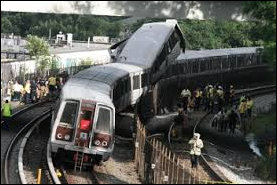 Uh, oh, the Metro funding deal isn’t sealed yet. The Washington, D.C., city council could be the spoiler. While Mayor Muriel E. Bowser has asked council to back a $178.5 million annual increase in funding for the commuter rail system to go along with $154 million from Virginia and $150 from Maryland, a council faction by Chairman Phil Mendelson is balking.

 The public relations battle over the Atlantic Coast Pipeline continues unabated even as managing partner Dominion Energy edges closer to beginning construction of the 600-mile project. The latest flap surfaced in the