

View more memes at The Bull Elephant
View more memes at The Bull Elephant
by Emilio Jaksetic
On November 13, 2025, Bacon’s Rebellion posted an article by The Jefferson Council entitled “Spanberger’s Political Amnesia.” That article criticized Governor-elect Abigail Spanberger’s letter to the University of Virginia’s (UVA) Board of Visitors (BOV) in which she asked the BOV to refrain from choosing a new President for UVA until she can appoint new members to the BOV. The Jefferson Council succinctly identified the political double standard displayed by Governor-elect Spanberger’s request by comparing it to the political hardball efforts of Virginia Democrats to make significant post-election decisions and appointments affecting UVA before then Governor-elect Youngkin could become Governor.
The Jefferson Council’s discussion of the political aspects of Governor-elect Spanberger’s letter is apt and noteworthy. However, it is important to also consider how her letter also raises serious rule-of-law issues. Why? Because although Governor-elect Spanberger’s letter may appear to be reasonable on the surface, it is problematic when viewed in the context of the Virginia Constitution and the Virginia Code. What follows are the reasons why I assert Governor-elect Spanberger’s letter poses a threat to the rule of law.
First, Governor-elect Spanberger’s electoral victory in November 2025 gives her the right to take the oath of office and become Governor at the end of Governor Youngkin’s term, but it does not give her any legal basis to exercise any authority that an incumbent Governor possesses. The authority and power of Virginia’s Governor rest with the incumbent Governor, not a Governor-elect. Governor Youngkin’s November 13, 2025, letter to Governor-elect Spanberger properly points that out. But beyond the traditional practices referred to by Governor Youngkin, there is an important rule-of-law aspect involved.
The idea that a Governor-elect is not yet the Governor is more than a mere truism. It reflects an important legal distinction.
(more…)

by James C. Sherlock
In the last episode of this series, the author wrote about what citizens should do to choose a nursing home. He made the case that a search should use Medicare Compare to make a list of facilities in the vicinity of your search area and then use the Staffing rating to whittle it down to facilities with at least a three-star staffing rating. In some regions of Virginia, that doesn’t leave very many options, but so be it. Do not seek admission to an understaffed facility.
The November 20, 2025, the latest Provider Information was released by CMS. The attached spreadsheet contains key elements of that data for every Medicare- or Medicaid-certified Virginia facility. The author recommends that regulators use this format. It is color-coded to permit assessment of the state’s portfolio of facilities in a few minutes.
Now, a dive into it.
by James C. Sherlock
The first thing to know when seeking a nursing home is that the Social Security Act spells out nursing home requirements relating to residents’ rights. See here subparagraph (c).
Once informed of the rights you or your loved one will have, Medicare Compare is by far the best source available to most Virginians when evaluating a nursing home before a necessary personal visit. But it is imperfect. The author will share with readers here his experiences on what information in Medicare Compare is useful and what is not.
Please open the Medicare Compare page for Parham Health Care and Rehabilitation Center in Richmond. We will walk through it.
In the next article, the author will report on important information for analysts that is not in Medicare Compare. But today we’ll work with information that CMS designs for everyone.
by James C. Sherlock
To facilitate public consideration, this is the first of several articles on bills pre-filed by Democrats for the 2026 General Assembly. This one presents pre-filed amendments to the Constitution of Virginia.
It will include the official summary of each and a link to the bill as filed. Some summaries are reasonably complete, some are not. So, if an issue is important to you, you are recommended to read the full bill.
I hope readers who comment will take a moment to consider the importance of thoughtful responses, approving or not, on this serious subject.
HJ1: Constitutional Amendment Fundamental Right to Reproductive Freedom.
Patroned by Delegate Charniele Herring, D-Alexandria, Constitutional amendment (second reference).
Provides that every individual has the fundamental right to reproductive freedom and that such right shall not be, directly or indirectly, denied, burdened, or infringed upon unless justified by a compelling state interest, as defined in the amendment, and achieved by the least restrictive means. The amendment specifies that, notwithstanding the other provisions of the amendment, the Commonwealth may regulate the provision of abortion care in the third trimester, provided that in no circumstance shall the Commonwealth prohibit an abortion
(more…)
by James C. Sherlock
It is important that Virginians understand early what the total control of the Virginia Government by Democrats will mean in legislation, whether they support the bills or not.
In pursuit of that effort, the author will post each of the General Assembly Democrats’ priority bills that are pre-filed. The format for each post will use the title of a bill as the title of the post. The text of each article will include the summary of that bill as filed. A link will be provided to the full text of the bill as filed.
This author will make no comments on the individual bills.
He will note here that campaign finance reform is the one issue that most matters to the integrity of the legislative process. But the General Assembly has proven in the past to be too corrupted by the current system to change it meaningfully.
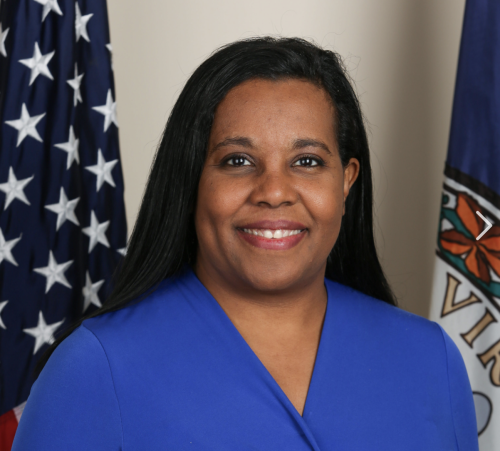
The photo at the open is of a former Democratic candidate who could not raise enough money the traditional way.
The corruption at the state level extends down to city and county officials who campaign for office under the same lack of constraints. The Virginia Beach City Council is, for example, owned and operated by commercial development interests that contribute the bulk of campaign donations from all sources. The result was seen in the scandalous story of the new Atlantic Park.
I expect that 98% of Virginians are unaware that we have no state law that limits campaign contributions. Thus, there is no public pressure to pass one.
The Miami Independent blog reports on the inquiries of a Virginia citizen affiliated with the Virginia Voter Roll Maintenance Movement into possible voting-registration irregularities in Arlington County. — JAB
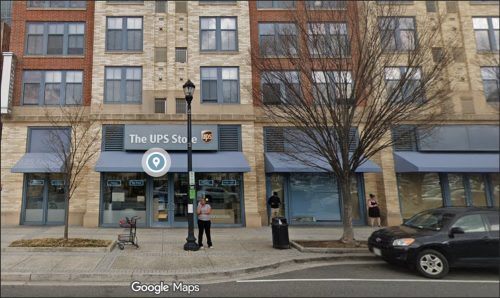
Voter Registration At UPS Store In Arlington, Virginia
by Eduardo Vidal
A Virginia resident reports that he has been stonewalled by Arlington County election officials after raising questions about dozens of voter registrations allegedly linked to a UPS Store address on 1405 South Fern Street.
The resident first contacted Arlington County General Registrar Gretchen Reinemeyer to flag what appeared to be potential irregularities with registrations listing 1405 South Fern Street, which is a UPS Store providing private mailboxes—not a residential building. Thus far, the resident says, the registrar’s response has been “woefully inadequate.” …
The poll pad listed multiple pages of voters registered at 1405 South Fern Street—one page with 39 active voters and another with 30. Some entries had unit numbers, others did not. One record listed no address at all. At least 12 names appeared more than once, suggesting possible duplicates or record-keeping errors. Unit designations varied from three digits to five, without a clear pattern.
Jim Bacon chats with Matt Thornhill, founder of Cozy Homes Community.
Millions of aging Americans have too much money to get government assistance but not enough to move to an upscale independent-living community. In any case, most would like to age in place in their own home. If Thornhill’s middle-market housing solution gets off the ground, it could revolutionize where and how older Americans live.
James Bacon: Hello, everyone! I’m Jim Bacon, and this is the Oinkonomics Podcast.
About 15 years ago, I worked for the Boomer Project, a research marketing firm that specialized in studying the baby boomer generation. A major preoccupation at that time was what happened at Woodstock, but what would happen when tens of millions of boomers got old and had trouble living on their own? Aside from the question of who was going to pay for their Social Security and Medicare, who is going to care for all those octogenarians and nonagenarians? What kind of quality of life would they enjoy as they became increasingly dependent upon caretakers?
Well, here I am, a boomer who reached senior citizen status several years ago. Once upon a time, anyone over 65 was considered old. But guess who’s older? My 96-year-old mother and 89-year-old mother-in-law. They require a lot of assistance. Elder care is not an abstract, sometime in the future concern like it seemed 15 years ago. My wife and I worry about our aging parents every day, and we spend a lot of time thinking about where the best place is for them to live.
That’s all prelude to me bumping into my old Boomer Project boss, Matt Thornhill, recently at a social event. Turns out, while I was scratching out a living as a journalist and blogger. Matt was converting the insights he’d gained from his market research into a real estate venture aimed mainly at aging boomers. Although, it probably won’t be too long before it appeals to Gen Xers, too. As founder and CEO of Cozy Home Community. Matt is developing a very specialized type of housing for communities of aging middle-income boomers.
Welcome to the Oinkonomics Podcast, Matt. Or should I just say, OK, Boomer!
Matt Thornhill: Hey, how you doing, Jim?
(more…)
by Andrew Rotherham
A lot of people are asking: What’s going to happen on education in Virginia? It’s a good question. And it matters beyond Virgina’s borders. The commonwealth took several big steps forward on schools over the past few years — some initiated by the legislature (science of reading and assessment reform), and some by Governor Glenn Youngkin (innovative public lab schools across the commonwealth, more ambitious standards, transparency, and a real accountability system).
Enter Abigail Spanberger. A moderate Democrat, perhaps more by temperament than politics. She worked for the CIA before winning one of Virginia’s vanishingly few swing districts to serve in Congress (she was my member of Congress for a time before retiring to run for governor).
She enters office with the wind at her back. Virginia’s countercyclical off-year election cycle, Trump’s abysmal numbers in the state, a non-Trump on the ballot electorate, and the government shutdown all handed Spanberger a legit landslide. Even seasoned observers and Democratic leaders were surprised by how well the party did — picking up 13 House seats and giving the incoming governor a commanding 64–36 majority. The state senate, not on the ballot, remains closely divided, though Democrats now hold a tiebreaker with the lieutenant governor’s seat.
There’s already early pushing and shoving — mostly about higher ed, UVA in particular. This 74 article by Kevin Mahnken is a good place to start on K–12, and Anne Hyslop’s just announced appointment as K–12 transition chair is a positive signal. Anne, a Bellwether alum, was one of the first to call out the problems with ESSA, has state experience, and helped design Virginia’s new accountability system. She discussed accountability and other issues recently on Bellwether’s LinkedIn Live along with Indiana’s Katie Jenner, state education leader Patricia Levesque, and longtime Senate aide David Cleary.)
(more…)
by Chap Petersen
It’s been a month since I’ve sent out a newsletter. Since that time, Virginia has seen a statewide election and the Federal shutdown has come and gone. And UVA is on the verge of going to the ACC championship in football.
Twenty-four years ago, when I entered the Assembly as an unlikely Democratic challenger, the Republicans controlled 66 seats in the House of Delegates, as well as the State Senate — and 8 of 11 Congressional seats.
Today, the state has completely flipped. The Democrats control all statewide offices, the State Senate and 66 seats in the House of Delegates. Notably, the Democrats control the state politically, because they control it economically (they have a monopoly on all high-wealth legislative districts).
One of the great ironies has been the Virginia Republicans who for years failed to support campaign finance reform legislation, even though they would have been the biggest beneficiaries. (Super-size donors in Virginia lean pretty far left).
(more…)By Steve Haner,

As a new Democratic Party trifecta looms in Virginia, a progressive policy group has floated a long list of old and new ways to soak Virginia’s upper income residents through taxes in order to fund additional state spending.
The Commonwealth Institute for Fiscal Analysis doesn’t use the word “spending,” of course, but speaks of “investments” in “quality public education, health care, affordable housing, access to food.”
According to the most recent report on state government spending trends, from the Joint Legislative Audit and Review Commission, the state’s payments to localities for school operations have grown 7% annually, about double the rate of inflation, and the cost of the Medicaid program has grown 12% annually, more than three times the rate of inflation. Those two by themselves have added $22 billion to the state budget in ten years.
But the appetite for more is on full display following the election. Later this week the money committees for both the House of Delegates and Senate will hold retreats away from the capital to hear likely warnings that the projected revenues are inadequate for a host of “unmet needs,” what a Republican Finance Committee chairman used to call “bills in the drawer.”
The Commonwealth Institute has the path to financial salvation:
by James C. Sherlock
On November 16, the author revised previous articles on the nursing homes in the Eastern, Central, and Southwest regions to provide better data and explain it better in a much-revised spreadsheet.
The format the author chose previously wasn’t getting the job done, so he changed it.
The new one should provide more clarity. The spreadsheet is designed to be self-explanatory. The sums and averages line at the bottom of each shows regional results.
Changes in the text were made only to reflect the updated spreadsheet.
And yes, on average, the Central Region has the worst nursing homes, driven by the outsized presence of the worst chains.
Articles on the Northern and Northwestern regions will quickly follow.
The year: 2075. The American colonies on the Moon are getting restless under Washington’s tyrannical rule….
This second edition of “Dust Mites” has a snazzy new cover, includes helpful lunar maps, and is 5,000 words tighter than the original. The sequel, “Trogs,” is scheduled for publication this summer.
Bacon’s Rebellion is Virginia’s leading politically non-aligned portal for news, opinions and analysis about state, regional and local public policy. Read more about us here.
Shake up the status quo! Your contributions will be used to pay for faster download speeds and grow readership. Make a one-time donation by credit card or contribute a small sum monthly.
Enter your email address to receive immediate notifications of new posts by email.
SUBSCRIBE
Protecting Thomas Jefferson’s Legacy at the University of Virginia

Shoot me an email and I’ll generate a new password for you.
