• Authority of Virginia Principals to Keep Schools Safe is Dangerously Undermined

    St. Anthony of Padua Catholic School, Baileyโ€™s Crossroads

    by James C. Sherlock

    At St. Anthony school when I was a student, Sister Mary Adria was the final decision authority. The only one, really.

    Sister Adria was the principal.

    There was no division staff, for the simple reason that there was no division. I guess parents could have appealed to the pastor, but we all knew Father McCarthy. In retrospect, good luck with that.

    That was a lot of responsibility for a young woman leading a school of 800 kids. Her staff was one secretary. Period. But Sr. Adria was extraordinary. Her decisions were, as far as anyone ever knew or could imagine, wise and fair. And final.

    Todayโ€™s world is certainly far more complex than in that 1950โ€™s Catholic elementary school.

    But it remains imperative that for daily operations the principal of any school have unchallenged authority and responsibility for that school and the education and safety of its students.

    And that the principal not hesitate to act.

    The principals of the two Loudoun high schools where girls were assaulted in 2021 either did not perceive that they had that authority, or were loath to exercise it because of the policies of and pressure from Loudoun County Public Schools (LCPS) School Board and division headquarters.

    That remains highly dangerous on its face. And not just in Loudoun County. (more…)


  • Reparations for the Violators

    by Dick Hall-Sizemore

    Governor Youngkin has proposed reparations for people who violated legal orders.

    Included in his budget proposal is a directive to reimburse all fines, fees, and interest imposed on individuals โ€œdue to violations of COVID-19 related practices, guidelines, rules or operating proceduresโ€ย  and to waive all such fines imposed. The budget language earmarks a million dollars from the general fund to reimburse any such fines and fees that were paid into the general fund and directs that any fines and fees paid into nongeneral fund accounts be reimbursed from those accounts. (See language beginning on line 51 of page 579 of the .pdf version of the budget bill.)

    I get it. Youngkin ran on a platform opposed to the COVID-19 restrictions imposed by Governor Northam, promising to remove them. In announcing his intention to propose reimbursement of any fines collected, he called them โ€œunjustโ€ and many in his base consider the COVID restrictions imposed by Northam unconstitutional.

    Nevertheless, the Virginia Supreme Court refused to block any of the restrictions contained in the Northam executive orders. Therefore, the restrictions and orders were legal. That makes the individuals and businesses involved lawbreakers and the fines and fees levied were their penalty.

    If we are going to get into the business of reparations for lawbreakers, why stop with COVID violators? In 2020, the General Assembly decriminalized possession of marijuana and made possession a civil offense, punishable by a fine of up to $25. The next year the legislature repealed altogether the prohibition on possession of marijuana. It follows that, if the legislature were to agree now with the governor that folks who violated legal restrictions that are no longer considered warranted should have their fines waived or reimbursed, folks who were convicted in the past of a law no longer considered warranted (possession of marijuana) should have their fines and court costs reimbursed or waived if still outstanding.


  • Workforce Development: Wrestling with the Alligator

    by James A. Bacon

    Governor Glenn Youngkin wants to consolidate the plethora of Virginia’s workforce development programs spread across 13 agencies and six secretariats, according toย Virginia Public Media.ย Not only do these programs consume $485 million in federal and state funding but there are a bewildering 1,500 of them.

    I find that number so astonishing as to be unbelievable. The Richmond Times-Dispatch counts programs over 12 state agencies. Whatever the actual number — and the inability to pin it down precisely is indicative of how dysfunctional the system is — workforce development in Virginia is highly fractured.

    The system is fragmented in part because many programs are funded as the result of state and federal legislation with narrow goals that target narrow groups or because they dole out funds to satisfy diverse geographic constituencies. Many programs run on autopilot. No one measures outcomes. No one measures effectiveness. No one re-evaluates them.

    Redrawing organization charts and appointing a new boss to oversee the bureaucratic labyrinth won’t accomplish much. But Youngkin has more in mind.

    โ€œA bloated, disparate construct that has workforce programs spread all over the place, and none of what you’re measured for effectiveness, is the antithesis to what I believe government should be doing,โ€ he said. โ€œWe can be efficient and we can be effective. I think it should run much more like a business, and that’s what we’re gonna go do.โ€ (more…)


  • Youngkin Delivers Early Christmas Gift

    by Barbara Hollingsworth

    (This column was first published by the Thomas Jefferson Institute for Public Policy.)

    Virginians received an early Christmas present this year. For four years, the Thomas Jefferson Institute for Public Policy has been strongly urging state officials in Virginia to lighten what has become a steadily increasing tax burden on residents and businesses in the commonwealth by enacting tax cuts and tax reform.

    On December 15, during his appearance before the joint Senate and House of Delegates Finance and Appropriations Committees, Governor Glenn Youngkin took bold steps to do just that. The governor announced his plan to โ€œaccelerateโ€ the state governmentโ€™s transformation based on what he said was โ€œdriving better outcomes for less money.โ€

    In his budget amendments to the 2022-2024 biennial state budget delivered to the General Assemblyโ€™s โ€œmoney committees,โ€ Youngkin proposed cutting taxes on Virginians by a billion dollars โ€“ in addition to the $4 billion tax relief bill he signed earlier this year.

    Youngkin told legislators that the state, which is running a large surplus, can afford the tax cuts despite his acknowledgement that a national recession is looming. โ€œOur carefully planned budget balances spending priorities and tax cuts, with roughly $1 billion โ€ฆ conditioned on meeting our 2023 revenue forecast,โ€ Youngkin told state lawmakers.

    The governor wants to โ€œfinish the job of doubling the standard deductionโ€ for state income tax filers, a long-time policy objective of the TJIPP. He also wants to reduce the individual income tax rate for the highest income bracket to 5.5% and eliminate state income taxes on military retirement pay. Youngkin said that these individual income tax reductions will save Virginians $700 million per year.

    Under the governorโ€™s plan, the corporate income tax rate for businesses would also be reduced from 6% to 5%, โ€œthe first step toward the ultimate goal of 4 percent at the end of our administration.โ€ For small businesses, Youngkin is proposing a 10% Qualified Business Income Deduction. These measures, if approved by the General Assembly, would total $450 million in business tax relief annually. (more…)


  • Richmond’s Next Chapter

    by Jon Baliles

    The Times-Dispatch Editorial Board printed a piece this week entitled โ€œThe cityโ€™s Lost Cause statues are all gone. So what now?โ€ While it recaps the events and protests of 2020 and the fact that all of the former Confederate statues have been removed, it offers a bit more foresight by looking at what will be required of our City and our leaders in the future.

    The piece points out that the removal of the A.P. Hill statue was characterized by Mayor Stoney as an opportunity to โ€œstart writing a new chapter for the cityโ€ and to make the accident-prone intersection more safe. โ€œThatโ€™s the blocking and tackling of running a government,โ€ Stoney said. The editorial, however, goes a little deeper than the Mayor:

    Charting a new chapter for Richmond, however, requires something more than โ€œblocking and tackling.โ€ In the summer of 2020, a broad coalition of Richmond citizens and public officials โ€” including Stoney โ€” embraced a newfound commitment to breaking down systemic racism and creating a more inclusive, equitable Richmond. In the winter of 2022, we still have little to show for it.

    It runs down the list of things that you constantly hear Stoney talking about but providing very little in the way of policy solutions that are implemented and working.

    City schools are struggling with a leadership crisis, a teacher shortage and a student population thatโ€™s been devastated by pandemic-induced learning challenges. The affordable housing crisis, especially for the poorest Richmonders, has only grown worse. Evictions and homelessness are spiking, with no comprehensive plan to address it. The Richmond Police Department is grappling with more than 150 officer vacancies as gun violence surges โ€” disproportionately impacting Black families, of course โ€” as it begins the search to replace yet another departed police chief.

    It talks about the housing crisis, and that apartments are going up with lightning speed in Manchester and Scottโ€™s Addition and (soon) in the Diamond District, while โ€œSouth Side and the East End are left to fend for themselves. Redevelopment of public housing complexes remain stuck at the starting gate. The new Richmond takes priority over the old.โ€ It does point out some of the positive news we have seen, like poverty dropping to 18% (lowest in two decades) and our โ€œurban coolโ€ is on the rebound as the pandemic years are more in the rearview mirror.

    But the thing that struck me the most about this piece is that it is really the first marker of issues that are and will be on the table and need to be addressed in 2024 when the City elects a new Mayor and City Council (in which, I will not be a participant). We have heard lots of talk and seen lots of tweets over the years from the Mayor and others about all they are doing for the City. But we can no longer afford trading real political solutions (including listening, compromise, and common ground) for self-promotion on social media just to rack up more clicks, likes and retweets and counting that as a measure of success.

    As Denzel Washington once said, โ€œJust because you are doing a lot more, doesnโ€™t mean you are getting a lot more done. Donโ€™t confuse movement with progress.โ€ (more…)


  • Another Takeaway from the Special Grand Jury Report in the Circuit Court of Loudoun County

    by Kathleen Smith

    Earlier this month, the special grand jury’s findings in the Circuit Court of Loudoun County were released to the public. The special grand jury had been impaneled by Commonwealth’s Attorney General Jason Miyares to investigate accusations regarding Loudoun County Public Schools (LCPS) and its handling of a student disciplinary case. After reading the report, it is clear there was a significant lack of leadership and communication at LCPS.

    According to its website, Loudoun County Public Schools employs nearly 13,000 people. That large number says a lot about the size of the communication problem evidenced in the report. In comparison, the Loudoun County Sheriffโ€™s Office is the largest sheriff’s office in Virginia and it employs about 800 people at six locations. The Loudoun County Social Services offices employ 2,227 people.

    With an organization the size of LCPS, there are going to be barriers to communication. Those barriers exist between every building, every floor, every office, and every department. That is normal. So, what does it take to make communication work within an organization of that size?

    Leadership matters. Bridging matters.

    Consider that 83,000 students benefit from the services of Loudoun County Public Schools. In addition, realize that many of these same 83,000 students (and their families) may also need social services, court services, and law enforcement services at any given point in time or on an ongoing basis throughout the school year. When that happens, there needs to be communication between LCPS officials and the other services involved.

    The report is very clear: that communication did not happen. (more…)


  • Why Arenโ€™t Children Learning in Petersburg Public Schools?

    by James C. Sherlock

    Why aren’t Black children, on average, learning in Virginia public schools?

    You have heard and perhaps internalized all of the excuses.

    Cue the historical/social/cultural/economic theories. They are all interesting. And exhaustively pursued.

    And irrelevant.

    Black children in many Virginia urban public schools are not being taught properly in environments conducive to learning. Black students in those schools depress the averages for Black students statewide.

    Money wonโ€™t fix that if it funds more of the same. No chance.

    There is a different way. (more…)


  • Baby, It’s Cold Outside

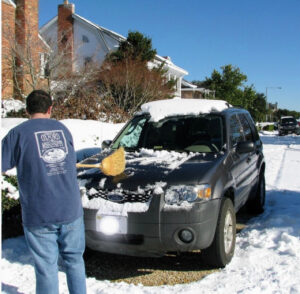
    Male Nojacketus sweeping the snow off a car in Virginia Beach. Circa 2016.

    by Kerry Dougherty

    On Sunday evening we headed over to the Sandler Center to see Ballet Virginiaโ€™s production of The Nutcracker. My granddaughter was in the corps of dancing Ginger Snaps.

    It was cold, for the Beach anyway. Temps were In the 30s.

    Please donโ€™t laugh, Northerners. Thatโ€™s frigid for these parts.

    I threw on my warmest coat, a wool scarf, knit hat and boots. The rest of my family was similarly attired.

    Then my son appeared. He was sporting a crisp sports shirt, khakis and loafers.

    And thatโ€™s it.

    โ€œGrab a jacket,โ€ I said, gesturing to the coat rack by the back door bursting with an assortment of cold weather gear.

    โ€œIโ€™m fine,โ€ he said, adding the obligatory, โ€œI went to school in Buffalo, remember?โ€

    That again. (more…)


  • Youngkin’s Budget Amendments: No Radical Changes

    by Dick Hall-Sizemore

    Budget is policy. The budget reflects the policy choices a government makes.

    Any Virginia governor, upon assuming office, inherits a biennial budget proposal developed by his predecessor. The new governor is limited significantly in the changes that he can affect in that budget in his first General Assembly session. If the new governor is of a different party than the preceding one, it is likely that he will be bringing in a new senior financial team, as well as a new policy staff and cabinet. Because it takes time for these new staff members to become acclimated, it is not unusual for the new governor (by now, not so new) to propose mostly marginal changes in the mid-biennial budget he presents to the General Assembly. It is in his second year in office that a Virginia governor gets to propose a biennial budget that is truly his and which will bear his policy imprint.

    Nevertheless, based on his campaign rhetoric and his promises after he assumed office, I expected Governor Youngkin to make substantial proposals โ€” cutting or eliminating some programs, along with some major initiatives. By and large, however, his budget proposals build upon what was already in place when he took office. The possible exceptions are one instance (behavioral health) in which he has chosen to put new emphasis on one aspect and another, resiliency and protecting the Chesapeake Bay, for which he has proposed a surprisingly large increase in funding. (more…)


  • Inmates Running the Asylum

    by James A. Bacon

    Inmates in the City of Richmond jail have cell phones, we are learning. They’re not supposed to, but they do. When a deputy attempted to confiscate one not long ago, he (or she) was surrounded by inmates with knives, according to WRIC. Deputies have been physically assaulted, too. Many fear for their safety, which is not surprising considering that the jail is severely short-staffed; 168 of 385 positions (44%) are vacant.

    We can surmise that morale isn’t the greatest when deputies are complaining to local media and Sheriff Antionette Irving has taken to giving the deputies polygraph tests. Irving says the jail administers the polygraphs because of “safety and security” considerations. She wants to know if โ€œthings are coming through the front door, the back door, or the mail.โ€ Whistle blowers say she’s running deputies through the polygraph to find out whom they’re talking to.

    Deputies are talking to Reva Trammel, among other people. The Richmond councilwomanย has taken her concerns to local media and has written a letter to Robert Mosier, Virginia secretary of Public Safety and Homeland Security. The letter cited three inmate deaths this year and “a growing number” of assaults on deputies. WRIC claims to have seen documents indicating that inmates have inflicted “several deputy injuries” in the last month.

    โ€œWeโ€™ve only had a few major assaults. We have had little incidents take place, but they havenโ€™t resulted in injury,โ€ Irving told the television station. โ€œWeโ€™re doing a good job collectively to keep all of us safe.โ€ (more…)


  • Bad Times at Richmond Jail

    by Jon Baliles

    If anyone knows what the hell is going on at the Richmond City Jail, please raise your hand. Stand up. Write it down. Grab the mic. Something. Anything.

    In a bizarre series of stories in recent days, people are dying, guards are getting beaten, and strange and awful things are happening at the City Jail. The slow drip of bad news has turned into a torrent of stories — none of them good. Sheriff Antionette Irving is invoking the opening of the Miranda warning on herself by not saying much of anything while charging the media absurd fees to get information about even basic records, whether they are subject to the Freedom Of Information Act (FOIA) or not.

    Luca Powell at the Richmond Times-Dispatch tried to get basic payroll records and was told the work to find that information would cost $1,385 by tasking four people to do the work at $98 per hour. (more…)


  • The Woke Attack Black George Mason Astrophysicist for Disrupting the Narrative

    James Webb, former Undersecretary of State and NASA Administrator. Courtesy NASA

    by James C. Sherlock

    In WokeWorld, research will result in fierce attacks if it does not align with the โ€œnarrative.”

    Even if that research is by George Mason professor and astrophysicist Dr.ย Hakeem Oluseyi, who is president of the National Society of Black Physicists.

    The New York Times, in an article by free speech and expression reporter Michael Powell, tells the story.

    Since 2015, there has been a legend accepted by many in the scientific community that James Webb, former NASA Administrator, was a homophobe. That story drove relentless and, happily, failed efforts to have the space telescope renamed.

    The efforts failed for the seemingly simple reason that the story is false.

    But the left wonโ€™t let it go.

    Dr. Oluseyi reported in 2021 that there was no evidence that Mr. Webb, a champion of civil rights who took on George Wallace while NASA chief, was guilty of the homophobe charge. In fact, his penetrating research showed that it was a case of mistaken identity.

    Dr. Oluseyi was instantly subjected to relentless, organized abuse that continues to this day.

    Mr. Powellโ€™s story explores both sides of the issue. He found that:

    this was not just a battle over history, but a battle reflecting modern times, which is to say it has been deeply contentious and personal, leading to angry accusations among warring scientists.

    Indeed.

    But science has nothing to do with it. (more…)


  • Tumblinโ€™ Dice

    by Jon Baliles

    The casino project proposal in Petersburg was unveiled this week and it is a big one. In poker terminology, it could be considered an โ€œall-inโ€ proposal. The ProgressIndex reports that The Cordish Companies propose a $1.4 billion “โ€˜city within a cityโ€™ of entertainment, retail, office and residential property. Its centerpiece would be Live! Casino & Hotel Virginia, a 670,000-square foot complex that would include more than 200 hotel rooms, an entertainment arena, and more than 2,000 slot machines and 60 gaming tables.โ€

    The proposal got the nod from Petersburg City Council this week as they formalized the partnership, but it still has to run the gauntlet at the General Assembly, and then a referendum of the voters in Petersburg. It also has to survive a chess-match of lobbying against Richmond as they try to get their casino off of life support and back to the ballot for the third time after it was rejected by voters in 2021, and then blocked by legislation in the state budget, and then withdrawn from consideration in 2022. Third time is the charm!

    The Petersburg project location at Wagner Road and Interstate 95 has a lot of room to grow and the proposal even has a few (but smaller) similarities to the Green City Project in Henrico, except with a casino instead of an arena as its focal point. It, like Green City, will be built in phases and have two hotels and a large retail and residential component.

    Cordish envisions building out the development in three phases, with the casino and hotel going up first. The second phase would be growing more retail businesses and possible entertainment amenities such as movie theaters around the casino and hotel. The third phase, according to Cordish, would be development of around 1,300 residential units and an eventual second hotel toward the back of the property. (more…)


  • Crossing the County Line

    by Joe Fitzgerald

    Theyโ€™re the exaggeratists. Maybe the Exaggerati. They take the smallest thing and blow it up to a crisis. Their eye is not on the sparrow, but on its feathers. And heaven help the sparrow whose feathers donโ€™t decently cover her.

    In the city this year the Exaggerati went door to door speaking of pornography in the school libraries. There was this one book, and itโ€™s off the shelves. They claimed parental rights were being abridged because of what pronouns kids wanted to use. Couple of dozen kids, maybe, out of 6,000.

    I worked hard for the School Board candidates who opposed the Exaggerati and beat them by 20 points. Partly because all politics is personal, and I care who my wife Deb serves with on School Board. And partly because I donโ€™t want to live in the kind of city the Exaggerati would give us, and I donโ€™t live in the city they imagine.

    Still, I could have made a strong argument for voting for the Exaggerati out of concern for the cityโ€™s future. Think about what may happen in Rockingham County next year. At least two long-serving pragmatic members are leaving the countyโ€™s School Board. Lowell and Dan share decades of experience on the board and theyโ€™ve kept non-school issues out of their service. But the Exaggerati already hold one seat and will try for more. If they land a majority on the board, the county schools will take a turn for the worse, and parents who arenโ€™t obsessed with wedge issues will have to look for somewhere to send their kids.

    The argument for voting for the Exaggerati this year would have been to guarantee the city schools would move backward at the same pace as the countyโ€™s might. A shared sense of educational disaster would give the countyโ€™s parents nowhere to go, and save our schools from an onslaught of new students. I mean, weโ€™re already building a new high school and will probably have to build a new elementary if the City Council approves the Bluestone Town Center next year. There must be limits to a cityโ€™s generosity.

    But thanks to the efforts of people like me and the EAK ticket, the city will still shine on the hill. So we should take advantage of the benefits of the countyโ€™s potential backward move.
    (more…)


  • Dominionโ€™s Wind Gamble Could Cost Customers

    by William O’Keefe

    A study by the Kleiman Center for Energy Policy at the University of Pennsylvania concluded that reaching long-term offshore wind power targets presents serious challenges with โ€œthe most pressing being the need to build out the electric grid to reliably and economically deliver vast quantities of offshore wind power.” And that also involves building adequate storage capacity.

    Although the SCC has approved Dominionโ€™s plan for building a smart grid, it remains to be seen if its implementation will match the rhetoric and the operational needs of the offshore wind farm. Dominion has balked at being held to meeting a performance standard, which is telling.

    An enhanced grid is essential because intermittent wind makes it necessary to compensate for periods of low or no wind while also matching demand and supply. Dominion is now in year three of its smart grid plan, so compatibility is based on analyses that are heavy on assumptions and light on empirical data.

    The challenge facing Dominion may be best summarized by the observation that thereโ€™s a disconnect between the need for a stable grid that supplies electricity on demand 24 hours every day and the asserted moral obligation that we use non-dispatchable, intermittent, and generally unreliable renewable power in spite of the fact that intermittency is presently the enemy of a stable electric grid. California, which is far ahead of Virginia in moving to renewable energy, recognizes this. The California Independent System Operator (CAISO) has said the โ€œbiggest challenge of managing a greener grid is maintaining a precise balance between supply and demand as the percentage of intermittent power from renewables increases.โ€ (more…)