
by James A. Bacon
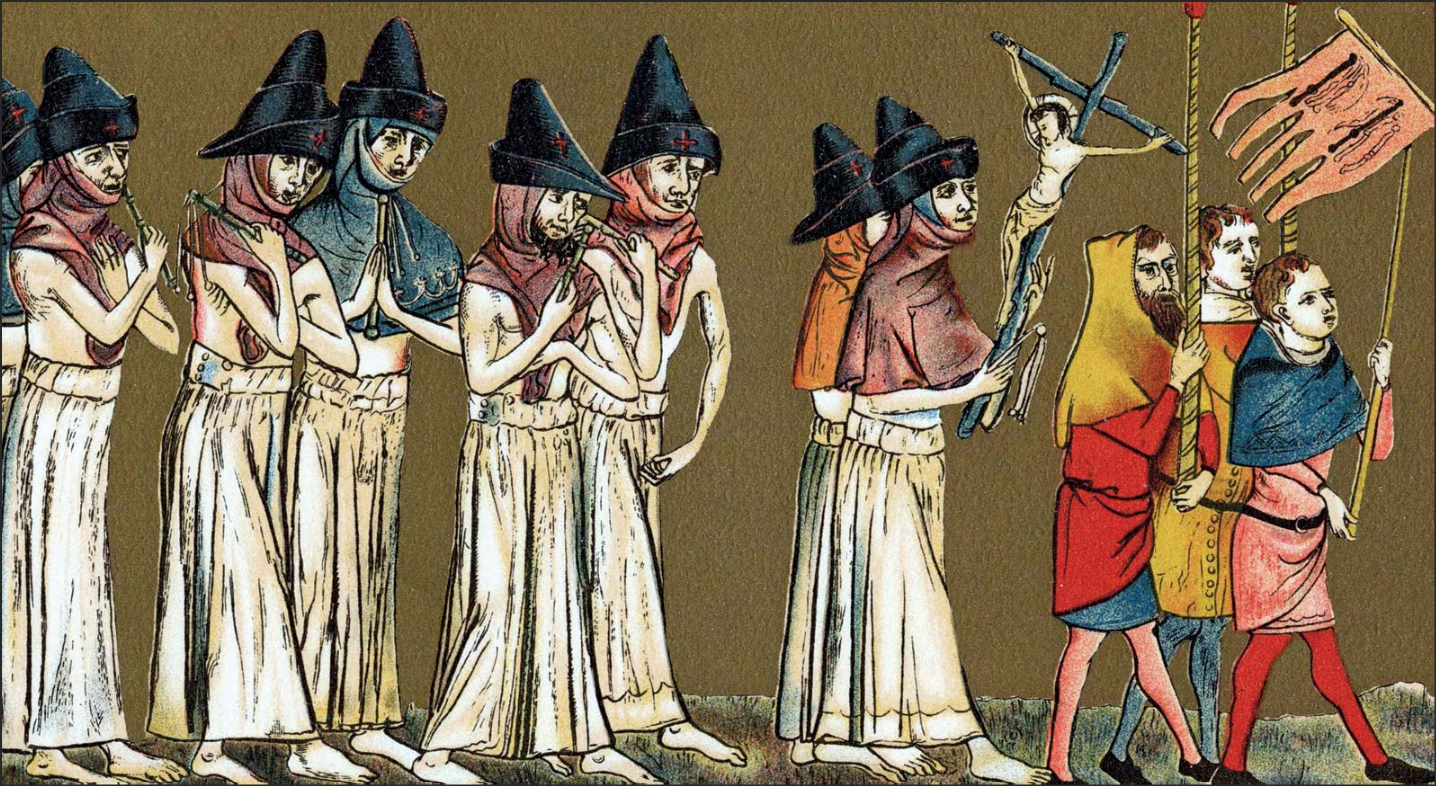
In the 14th century, a popular movement known to historians as “flagellants” spread across Europe. Followers practiced “mortification of the flesh” by publicly pummeling themselves with knotted whips. By practicing self-denial and imitating the scourging of Jesus, they hoped to hasten the second coming and end of times.
A similar movement has taken root in the United States today, although adherents don’t inflict physical pain upon themselves. Rather, they flagellate themselves with shame for their sins — or, actually, the sins of their ancestors, such as racism, misogyny, slavery, and the dispossession of native lands.
John McWhorter, the center-left African-American author of Woke Racism: How a New Religion Has Betrayed Black America, makes the case, as his book title suggests, that wokeism bears all the hallmarks of a religion. Wokeism comprises a closed system of unfalsifiable beliefs and exhibits no tolerance of dissent. Transgressors risk condemnation and ostracism. Practitioners engage in performative rituals such as public acts of contrition and apology.
As a living, breathing confirmation of McWhorter’s argument that wokeism is a religion, I present to readers a “Prayer for Truth, Reparation, and Healing” composed by the Truth and Reparations Task Force of the Episcopal Diocese of Virginia.
Intones the prayer:
Creator God,
We stand before you with humble hearts, acknowledging the wrongs inflicted and justified by the Episcopal Church in Virginia. We confess the sins of silence, white supremacy and complicity in systems that promoted chattel slavery and race-based oppression. We grieve the generational pain and suffering caused, the families torn apart, and the dreams dashed….
Forgive us, O Lord.
Open our eyes to the truth of our past, the seizure of indigenous lands, and the continued legacy of race-based slavery in the present…. Empower us to dismantle the structures of racism and oppression that still exist within our church and society.
…and so on in that vein, concluding with “Through Jesus Christ our Lord, Amen.”
This prayer was recited in a service at St. George’s Episcopal Church in Fredericksburg in a recent gathering of the diocese.
Perhaps it’s a stretch to call adherents of this doctrine flagellants. Pseudo-flagellants might be closer to the mark. It’s not clear from the tenor of the prayer that they are begging God forgiveness for their misdeeds. Rather, they are acknowledging the sins of the church and their white-supremacist predecessors. To be sure, the Anglican/Episcopal church was inextricably entwined with chattel slavery, Jim Crow-era segregation, and the expansion into Native American lands, and some acknowledgement of that reality is appropriate. But the invocation of contemporary “structures of racism and oppression” spreads the guilt so far and wide, in effect collectivizing it, that the prayer cannot possibly be interpreted as a personal confession along the lines of “forgive me, father, for I have sinned.”
It is instructive to contemplate the composition of the Truth and Reparations Task Force. The sixteen individuals appointed to the task force are said to comprise a “diverse” group. By diversity, the Episcopal Church means demographic diversity (as can be seen by the photos here). Intellectual diversity assuredly was not a criterion of admission.
It defies credulity to think that the African-American members of the task force reciting the prayer believe that they were personally complicit in the white-supremacist sins of Episcopal Church, and I question whether anyone else in the group thinks of himself or herself as blameworthy either.
What we see here, in my admittedly uncharitable assessment, is a group exercise in virtue signaling: we are not like those people who bequeathed us the beautiful churches where we worship, with their stained-glass windows, carved stone altars, and dark-wood pews. We are far better people than they were, and with this prayer, O Lord, we want to make sure you know it.
Among all Christian denominations, Episcopalians may well be the whitest, wealthiest and wokest (although it’s a tight contest with other mainline Protestant churches). Opinion surveys have shown that educated white professionals are the wokest demographic in the United States, surpassing even minorities in their belief that the country was born in racist, misogynist sin and has never recovered. Embracing the ideology of wokeness and partaking in its rituals conveys a sense of belonging and satisfying moral superiority.
The doctrine indisputably appeals to some congregants, but it offends those who embrace the old-fashioned Christian virtue of doing good works. Spiritual self-flagellation does nothing to feed the hungry, educate the poor, or mend broken lives. It inspires no hope. It confers no comfort. The doctrine, to borrow a phrase from Rob Henderson, author of Troubled: a Memoir of Foster Care, Family and Social Class, is a “luxury belief” — an idea held by privileged individuals that enhances their social status but has negative consequences for less privileged people.
The flagellants made their mark upon Medieval Europe for more than a century. I’m praying that the modern-day mortification of the spirit doesn’t last that long.



Leave a Reply
You must be logged in to post a comment.