
by James A. Bacon
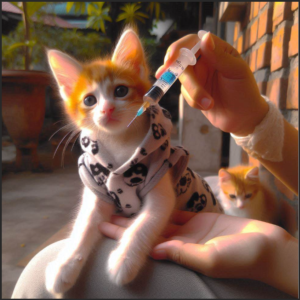
Hey, childless cat ladies, you might be giving your pets COVID!
OK, I’ll admit this story really doesn’t have anything to do with childless cat ladies. I’m shamelessly piggybacking on the J.D. Vance childless-cat-lady furor. I should be trying to panic all pet owners, not just childless cat ladies. You all might be giving your pets COVID!!
Actually, human-to-pet transfer of the virus has been documented already. Indeed, researchers have found that the virus has jumped to a few species of wild animals: white-tailed deer, feral mink and Eurasian river otters.
Here’s the real news hook: A Virginia Tech research team has discovered that the COVID-19 virus has leaped from humans to wild species — right here in Virginia!
A team of Virginia Tech researchers has reported its findings expanding the number of COVID-infected wild species in a Science magazine article, “Widespread exposure to SARS-CoV-2 in wildlife communities.” The list of COVID-carrying critters now includes deer mice, Virginia opossums, raccoons, groundhogs, Eastern cottontail rabbits, and Eastern red bats.
“The close match to variants circulating in humans at the time suggests at least seven recent human-to-animal transmission events,” says the study abstract. “Our data support that exposure to SARS-CoV-2 has been widespread in wildlife communities and suggests that areas with high human activity may serve as points of contact for cross-species transmission.”
It’s one thing to transmit COVID to the cat purring in your lap or the dog squeezing you to the edge of the mattress at night. It’s another thing to infect wild animals. How does that happen? As the authors observe, humans and wildlife rarely come into direct contact.
The study notes that areas with high human activity — urbanized areas, national parks — may serve as potential hotspots for cross-species transmission. Beyond that, not much is clear. “Determining how wildlife are being infected (pathways such as human refuse, wastewater, contact with infected pets, etc.) is a critical next step in disease control and management,” the study says.
The study presented no evidence that the COVID-19 virus is harmful to the wild animals, or that it poses any threat of re-transmission back to humans. However, there is reason to play close attention to the phenomenon of inter-species transmission: “As SARS-CoV-2 adapts to not only human hosts, but potentially a wide diversity of wildlife species, SARS-CoV-2 evolution may become more unpredictable.”
For the time being, it appears that the wild animals have far more reason to worry about being infected by COVID from humans than the reverse. And, yes, I’m looking at you, childless cat ladies!



Leave a Reply
You must be logged in to post a comment.