AP Flash: Sometimes the Weather is Hot!

Today’s Richmond Times-Dispatch contained one of the most ridiculous statements of the blatantly obvious ever distributed by the once-venerable Associated Press. The headline: “Poll: Extreme Heat Impacting Most Americans.” We needed a poll to learn that.
Except in the coolest of summers here in North America there are always days, or a stretch of days, when high temps and humidity force a change in behavior compared to nice days. Yet we get this as “news”:

The poll found that about 7 in 10 Americans have been personally affected by extremely hot weather or extreme heat waves over the past five years…That makes extreme heat a more common experience than other weather events or natural disasters like wildfires, major droughts and hurricanes, which up to one-third of U.S. adults said they’ve been personally affected by.

Wow. Hot summer days are more common than hurricanes. Science in action! Who knew? Then this:

A sizable share of Americans, around 4 in 10, report that extreme heat has had at least a minor impact on their sleep, pets or exercise routine.

Only seven in ten or four in ten? The only possible reason it wasn’t ten in ten in both paragraphs is the poll must have included Alaskans or people living up in the Rocky Mountains. Of course, many don’t have pets or never exercise. More than 60 years ago when I was a child living on an Air Force base in the high California desert, with no AC in our house or car, extreme heat dictated our summer daily schedules. Millions of Americans still live without air conditioning or cannot afford to run it. Nobody who works for AP, apparently.

Climate alarmists are either stupid or assume the vast majority of Americans are stupid. The same applies to too many of the climate “journalists” who enable them. The RTD’s near-daily effort to scare its readers into accepting the end-is-nigh nonsense was more engaging when it had its own dedicated climate propagandist on staff, but he moved on long ago.

— Steve Haner


ADVERTISEMENT

(comments below)


Comments


Comments

50 responses to “AP Flash: Sometimes the Weather is Hot!”

  1. LesGabriel Avatar
    LesGabriel

    RTD would be better off examining the purported solutions to their "climate change". Is the attempt to force an end to fossil fuels working? Is it sustainable? What are the costs in terms of dollars and lifestyle changes? Is the electric grid even capable of handling today's loads, let alone the increased loads being mandated for tomorrow? Who has the numbers, and why won't they share them? Or do we just trust the "experts"?

    1. Stephen Haner Avatar
      Stephen Haner

      Questions the MSM will never ask.

  2. Little noticed deeper in the data….Half of poll respondents were surprised with decreasing light EVERY SINGLE day

    1. Stephen Haner Avatar
      Stephen Haner

      Clearly CO2 causes that, too.

  3. Eric the half a troll Avatar
    Eric the half a troll

    Well one good thing about the extreme heat is it demonstrates how unreliable fossil fuel generation isโ€ฆ

    https://reneweconomy.com.au/batteries-step-in-as-coal-plant-trips-amid-heatwave-and-near-record-demand-in-texas/#google_vignette

    โ€œBatteries step in as coal plant trips amid heatwave and near record demand in Texasโ€

    1. Stephen Haner Avatar
      Stephen Haner

      The same coal plant might have fed the battery in the first place. Alot of the hottest record days for Texas still date to the summer before my birth. That's the point, hot days are normal.

    2. Nancy Naive Avatar
      Nancy Naive

      Manatee in the Elizabeth River, alligators in Back Bay. They need to read BR to know they shouldnโ€™t be there.

      Oh, and some three or four species of wood roaches.

    3. Stephen Haner Avatar
      Stephen Haner

      The same coal plant might have fed the battery in the first place. Alot of the hottest record days for Texas still date to the summer before my birth. That's the point, hot days are normal.

      1. Eric the half a troll Avatar
        Eric the half a troll

        It is Texas where renewables make up 31% of generation. You know what fed those batteriesโ€ฆ good old reliable renewablesโ€ฆ

    4. Randy Huffman Avatar
      Randy Huffman

      Coal plants provided reliable service in all kinds of weather for decades. From what I have read, reliability has declined a little, because the plants are getting aged and not being maintained at the high levels they used to be, due to planned closures. Think what happens to a car over a long period of time.

      Here is one article I found but have seen others similar in theme.

      https://www.utilitydive.com/news/coal-plant-forced-outages-rise-increasingly-unreliable-NERC/719488/

      You are going to see, more and more declines in solar, wind and batteries as they age too.

      1. Eric the half a troll Avatar
        Eric the half a troll

        Nuclear trip a week ago in Texas as well. Again batteries stepped in. And those were natural gas plants that failed in Texas and South Carolina the last couple years.

        The article I posted captured my point perfectly โ€ฆ

        โ€œThe debate around energy choices in Australia โ€“ and other countries โ€“ has been hijacked by ideologues who like to pretend that neither coal nor nuclear require little or no backup, because the technologies are โ€œbaseloadโ€, or โ€œalways on.โ€
        But this is nonsense. Coal and nuclear plants are subject to unexpected trips, and because of their size this can be the most challenging part of managing the grid for the operators, as AEMO has made clear. They are also well aware that the sun rises and falls, and that wind speeds change, but these are largely predictable.โ€

        1. Randy Huffman Avatar
          Randy Huffman

          Every source of electric generation is subject to โ€œtripsโ€, things happen, who suggests backup is not needed for peaks or outages?

          Backup can include batteries, fine, but will it be enough if the outage is days, or weeks? When I had solar put on my roof I asked about batteries for power outages, and they said sure, but they are very expensive if I wanted to power the whole house. The solar company recommended propane backup generator as much more cost effective, in the end I did nothing, but a utility canโ€™t do that. Do you think batteries alone are going to power tens of thousands of homes and businesses during a major long event? You need multiple options.

          I am an advocate of many different power generation sources. But to pretend coal, nuclear and gas are somehow overall unreliable is hogwash. Look at the many decades of service and success.

          1. LarrytheG Avatar
            LarrytheG

            The grid can also work like your house with solar, batteries, and backup generator.

            You use solar WHEN is IS available and when not use the backup sources – rather than the other way around, i.e. use the coal/gas for primary and solar for backup.

            Solar is the cheapest "fuel" , not always "available" so use it when you can to your benefit (like you are) and go to backup when it's not.

            Calling it "unreliable" because it's not always "available" is failing to understand it's value and usefulness for the grid – and such claims seem to come primarily from the right and climate skeptic types. The utilities know better and are installing it – like Texas.

      2. LarrytheG Avatar
        LarrytheG

        more solar, wind, and batteries can be easily and cheaply brought online though unlike coal, gas and nukes.

  4. https://uploads.disquscdn.com/images/a3d43069a6957f509b6802aac5526d82ca3c105de410be919d055d3feca2a068.jpg
    Frying an egg on the sidewalk — circa 1930s. (Photo credit: http://springfieldphotographs.com )

    Heat waves may be the worst since people have been systematically recording temperatures. Maybe. Of course, no one had thermometers back during the Medieval Climate Optimum or the Roman Climate Optimum, so we really don't know.

    1. Stephen Haner Avatar
      Stephen Haner

      No, Jim, what warming is going on is mainly due to nightly lows creeping up. As hot as it is now, it has been this hot from time to time as long as records exist.

      1. Nancy Naive Avatar
        Nancy Naive

        Yeah, but has nothing to do with carbon fuelsโ€ฆ the Sun is heating up.

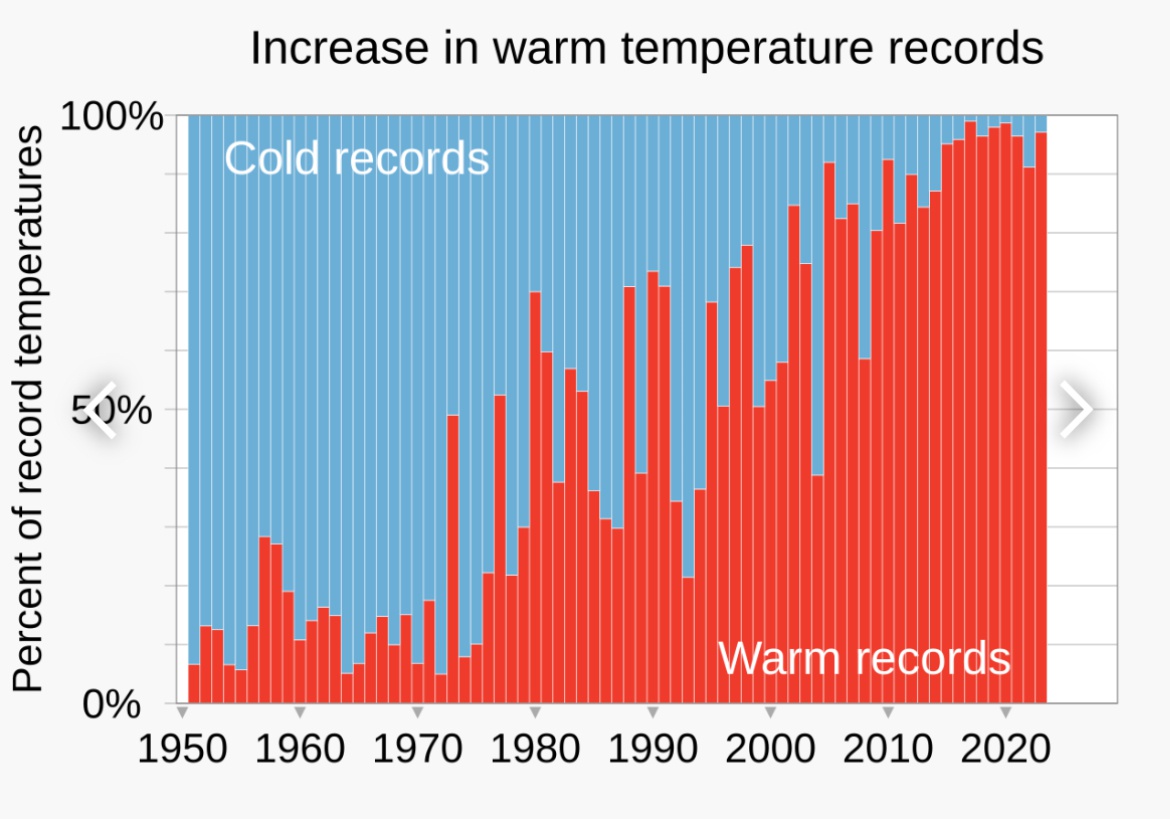
      2. Impressive chart. Look at all those record cold temperatures back in the 60s and 70s. What was going on then? Were those true record cold temperatures? Was it colder then than in the Little Ice Age?

        Sure, the temperature is warming today. But is the warming unprecedented? And how much is due to CO2 emissions and how much to natural variability? Temperature records going back to 1950 — or even 1900 — don't help us answer that question.

        It would be foolish to say that anthropogenic warming is NOT occurring. But it's equally foolish to say that it is driving ALL the climate change we see. A little humility would be in order. But humility is not a trait we find among the climate change alarmists. The science is settled, after all.

        1. Eric the half a troll Avatar
          Eric the half a troll

          โ€œBut humility is not a trait we find among the climate change alarmistsโ€

          It is also foolish to use pejoratives to discount the likelihood of very significant anthropogenic climate change based on absolutely nothing but speculation.

        2. It's not the heat it's the humility.

      3. Stephen Haner Avatar
        Stephen Haner

        Source? Doesn't it strike you as unlikely that the numbers would balance that neatly? But it looks ominous.

        1. Eric the half a troll Avatar
          Eric the half a troll

          Data is from NOAA:

          https://www.ncei.noaa.gov/access/monitoring/monthly-report/briefings

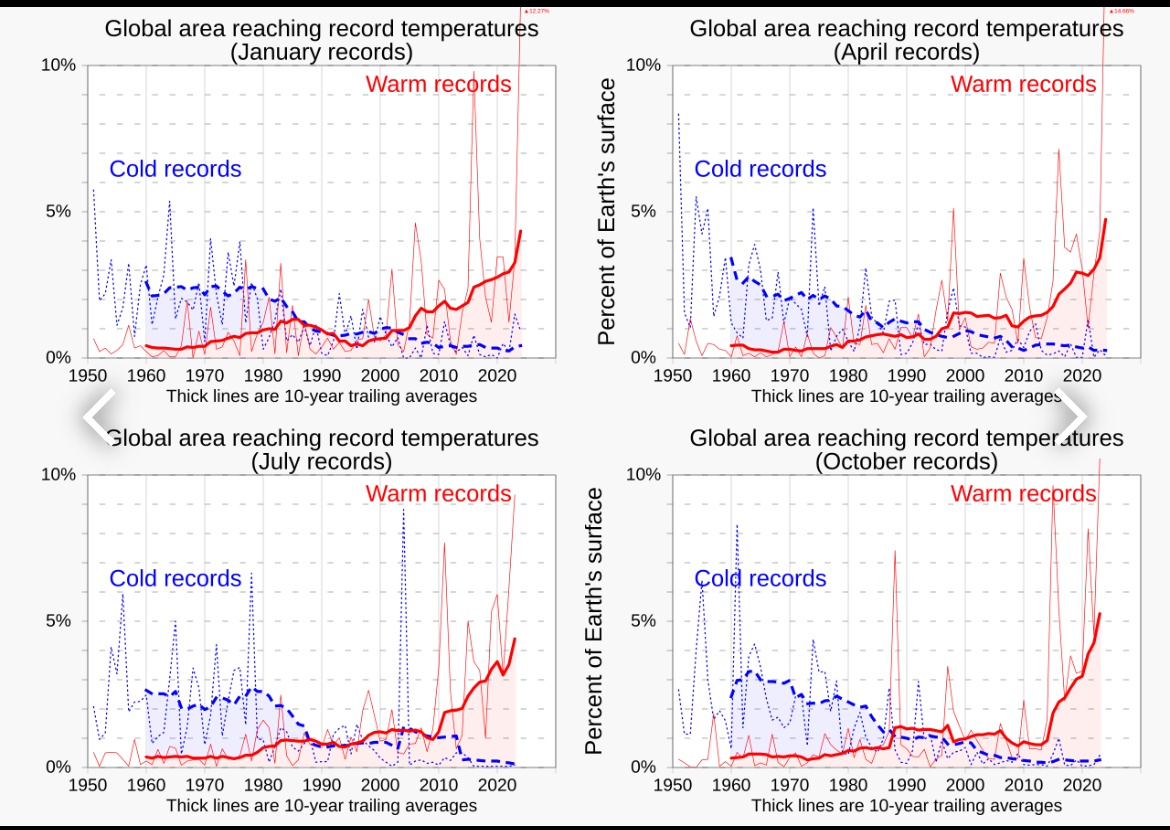
          Here is another depiction of global records at different times of the year. Seems to indicate pretty clearly that summers (and winters, springs, and falls) are indeed getting hotter. https://uploads.disquscdn.com/images/9554d4135ee501105e24d1012b7e51f4697e34d7917c765a626888c501077fbd.jpg

          1. Stephen Haner Avatar
            Stephen Haner

            End point bias. Ignores the well known heat waves of the 1930s dust bowl period. But I agree the data is clear that what is called "global warming" is really "overnight warming." Part of that is urban heat bias at the weather stations. I once asked a guy at U Alabama if the rise in CO2 concentrations would affect overnight temps more than daytime temps and he said no, that cannot be it. He thinks it is mainly urban development around the stations. You see less of the "overnight warming" effect at rural stations.

            Bottom line, Eric, is they really do not know. Theories are all they have because you cannot run experiments on the atmosphere.

          2. Stephen Haner Avatar
            Stephen Haner

            End point bias. Ignores the well known heat waves of the 1930s dust bowl period. But I agree the data is clear that what is called "global warming" is really "overnight warming." Part of that is urban heat bias at the weather stations. I once asked a guy at U Alabama if the rise in CO2 concentrations would affect overnight temps more than daytime temps and he said no, that cannot be it. He thinks it is mainly urban development around the stations. You see less of the "overnight warming" effect at rural stations.

            Bottom line, Eric, is they really do not know. Theories are all they have because you cannot run experiments on the atmosphere.

          3. Nancy Naive Avatar
            Nancy Naive

            I donโ€™t think you can get any more remote or removed from urban and human effects on instrumentation than melting polar caps anf high altitude glacial fields.

          4. Eric the half a troll Avatar
            Eric the half a troll

            Urban heat islands, eh? That is all it is? Gee, I wonder why those smart climate scientists never thought of thatโ€ฆ?!

            https://rhinohide.org/co2/publications/Hausfather/HausfatherMenne-UHI-2013.pdf

            Quick read, the UHI correction has been around and in use (as well as refined) since the 80s.

          5. Nancy Naive Avatar
            Nancy Naive

            I donโ€™t necessarily trust models either, but I do trust my instruments and other natural indicators of rising temperatures.

  5. Nelson Fegley Avatar
    Nelson Fegley

    If you look back 50 to 100,000 years you will find temperature variations far exceeding those reported with todays weather. With low populations of primitive people, the anthropological contributions to the temperature changes were negligible. And yet people had migrated out of Africa, and they devised ways to live with the high and low levels of temperature.

    With today's advanced knowledge of science and capabilities for dealing with adversity we can cope with climate changes at least as well as the folks did
    50 to 100.000 years ago. It will take some time to adapt, but with the slow rate of climate change we will have the time needed. All we need are the will and leadership to make the needed adaptations.

  6. Nelson Fegley Avatar
    Nelson Fegley

    If you look back 50 to 100,000 years you will find temperature variations far exceeding those reported with todays weather. With low populations of primitive people, the anthropological contributions to the temperature changes were negligible. And yet people had migrated out of Africa, and they devised ways to live with the high and low levels of temperature.

    With today's advanced knowledge of science and capabilities for dealing with adversity we can cope with climate changes at least as well as the folks did
    50 to 100.000 years ago. It will take some time to adapt, but with the slow rate of climate change we will have the time needed. All we need are the will and leadership to make the needed adaptations.

  7. Nelson Fegley Avatar
    Nelson Fegley

    If you look back 50 to 100,000 years you will find temperature variations far exceeding those reported with todays weather. With low populations of primitive , the anthropological contributions to the temperature changes were negligible. And yet people had migrated out of Africa, and they devised ways to live with the high and low levels of temperature.

    With today's advanced knowledge of science and capabilities for dealing with adversity we can cope with climate changes ar least as well as the folks did 50 to 100,000 years ago. It will take some time to adapt, but with the slow rate of climate change we will have the time needed. All we need are the will and leadership to make the needed adaptations.

  8. Stephen Haner Avatar
    Stephen Haner

    Even if there has been a slow warming, the AP story was useless. It didn't offer data, just "man on the street" opinions it seems hotter. The data is the prevalance of hot days hasn't changed. Sidewalks in Phoenix would burn you toes when concrete was first poured there a century ago. But the low information reader is fooled. Summer is hot.

    1. Stephen Haner Avatar
      Stephen Haner

      https://www.baconsrebellion.com/wp-content/uploads/2024/08/NOAA-Virginia-July-Maximum-2024.jpg

      A more useful chart that what the Half Troll proffered, this the latest from NOAA. VA max temps for July including the July just ended. More than 20 previous July's were hotter than the one just ended. AP will never report that….The trend remains about 1 degree C per century is slight warming.

  9. Thomas Dixon Avatar
    Thomas Dixon

    The sky is falling. Plug in your EV, wear your mask, and get your booster. The government wants you to be safe.

  10. how_it_works Avatar
    how_it_works

    Summers in Virginia have always been miserable for the 35 years I've been putting up with them.

    If it weren't for that Yankee from NY, Willis Carrier, nobody would move to Virginia.

  11. f/k/a_tmtfairfax Avatar
    f/k/a_tmtfairfax

    It has been a hot summer here in the Triangle, and I remember some hot stretches in McLean. But the writers at the RTD never heard my dad's stories of the Summer of 1936 in the Twin Cities. And, unlike many of them, this was true. People did sleep outdoors in their yards and some even in parks.

    https://www.mprnews.org/story/2016/07/06/heat-wave-1936

  12. Nancy Naive Avatar
    Nancy Naive

    Nah, no warmingโ€ฆ

    โ€œInvestigation launched after video appears to show alligator swimming in Lake Erieโ€

    1. A released pet alligator can survive for at least one summer in pretty much any body of water in the United States. It's that winter weather they have trouble with.

      I remember hearing periodic reports of alligator sightings in the Great Dismal Swamp as far back as when I was a kid. I never saw one myself, though.

      1. Nancy Naive Avatar
        Nancy Naive

        They have photos of some 5-footers in Back Bay. I stopped wading there 40 years ago after looking eye to eye with a 7-foot cottonmouth. An odd number considering heโ€™s not supposed to have any.

        1. LarrytheG Avatar
          LarrytheG

          what about the 7ft copperheads in the back yard?

          1. Nancy Naive Avatar
            Nancy Naive

            I ainโ€™t got those. Just some blue tail skinks and garters.

          2. LarrytheG Avatar
            LarrytheG

            we have black snakes that tend to keep the copperheads away and a ton of skinks and associated. And all hostas now eaten down to the nubs.

          3. Come one, man! The maximum length a copperhead grows to is a typically a little under 4 feet. The largest one ever recorded was 72 inches.

          4. LarrytheG Avatar
            LarrytheG

            I have to say, when I run into a large one, he’s BIG but I’m only gonna Estimate!

          5. Oh, yeah. They're all over 6 feet long when you're face to face with them…

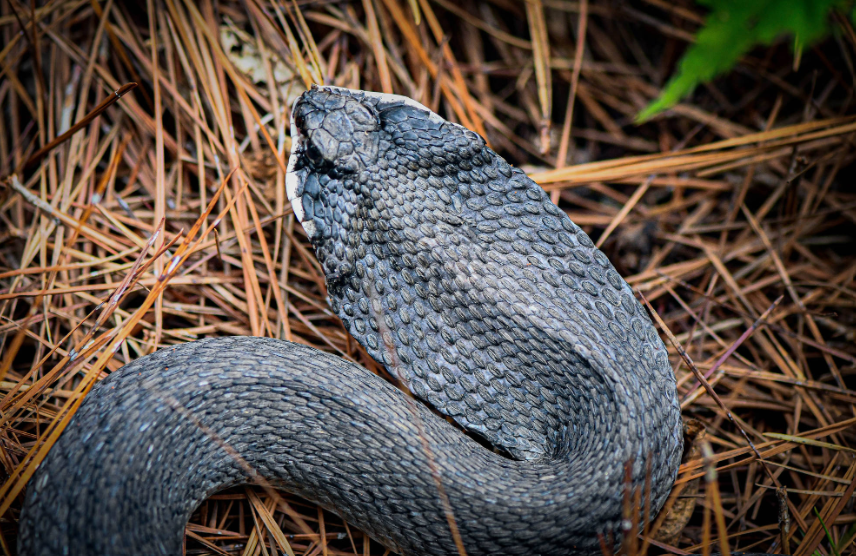
            My father has a simple method for identifying snakes. It is as follows: There are two kinds of snakes: cobras and rattlesnakes. If it has rattles its a rattlesnake. If it doesn't have rattles it's a cobra…

            And contact with both rattlesnakes and cobras is to be avoided.

            ๐Ÿ˜‰

  13. The poll found that about 7 in 10 Americans have been personally affected by extremely hot weather or extreme heat waves over the past five yearsโ€ฆ

    I've been personally affected by extremely hot weather or extreme heat waves over the past fifty-nine years. And so has anyone else who's lived in Virginia that long. I can't believe I used to work outside 12 hours a day in this stuff.

    One of the hottest summers (maybe the hottest) in Virginia Beach while I lived there was in the mid-1980s. '85, maybe? I cannot remember the exact year but I remember getting 2nd degree burns from a motorcycle seat (and yes, I should not have been riding in shorts – I was young, dumb, etc…). The bike was a Honda CX500 so it had to be somewhere between 1984 and 1986.

    1. Stephen Haner Avatar
      Stephen Haner

      Looking at the info another way, that only 4 in 10 Americans believe extreme heat has caused them a problem means six in ten are used to it, expect it, and take it in stride. Bad news for Eric, Nancy and the Sky is Falling Crowd.

Leave a Reply


ADVERTISEMENT