
By Steve Haner

Fifteen years ago I took my aging father on a sentimental journey to places in Southern California where we used to live, and just north of Edwards Air Force Base on the Mojave Desert we shared the highway for a time with an Old Dominion Freight Line 18-wheeler. The Richmond firm was showing its national reach.
California is showing some national reach now, as well, and is seeking to force that Virginia trucking company to buy EV trucks if it wants to keep working in the Golden State. It has adopted a new Advanced Clean Fleets regulation imposing zero-emission mandates on both long haul and short haul vehicles that enter the state. Given the importance of California’s industries, markets, and ports to the full U.S. economy, it is effectively a national mandate.
So argues Virginia Attorney General Jason Miyares, who joined in a joint letter with 23 other state AGs to the federal Environmental Protection Agency. California, the only state authorized to set its own air pollution standards, needs a direct waiver from EPA to impose regulations so divergent from federal rules, and the states are asking EPA to reject the request.
“California is playing games with America’s livelihood. This mandate doesn’t just affect California—it weaponizes the state’s massive ports to force the entire nation to bow to an extreme environmental agenda,” Miyares is quoted saying in a news release. “California’s so-called ‘in-state’ ban is nothing more than an export of California’s economic chaos, creating real harm across American industries and raising costs for families everywhere. The federal government should not preference California to the detriment of the other 49 states.”
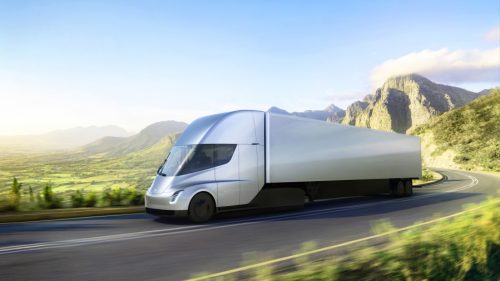
The letter raises several issues, but one of the most effective is a 1994 federal law that included provisions to create uniformity among the various states in how they regulated interstate trucking. The Federal Aviation Administration Authorization Act “broadly preempted state regulation of the trucking industry, ensuring that national and regional [motor] carriers attempting to conduct a standard way of doing business are protected from the sheer diversity of [State] regulatory schemes.”
Miyares’ most recent news release got little to no coverage in state media, but Virginia Mercury mentioned Miyares’ stance on this issue and several other pending anti-hydrocarbon fuel rules in a report back in May. The regulation started with a 2020 executive order from California Governor Gavin Newsom. It aligns with other Biden Administration steps at the federal level to limit or ban the use of hydrocarbon fuels, especially EPA’s proposed new rules for coal power plants. Miyares has also joined multistate actions against those.
The Mercury article, as it usually does, and as do most national media these days, included the standard “so what” paragraph with The Climate Creed of faith-based claims “…those pollutants from the transportation sector are the state and country’s largest source of greenhouse emissions that are warming the planet, leading to more frequent and severe flooding and fire events.” You don’t need evidence to persuade the inattentive, just repetition.
California also has rules seeking to push individuals to buy EV cars and small trucks, rules which the 2021 General Assembly did vote to apply to Virginia. Miyares issued an opinion earlier this year that Virginia is not legally bound to stick with California’s rules for passenger cars and light trucks because the regulation in force in 2021 has since been revised. The 2021 Virginia law made no provision for amended regs. But the truck rules do not dictate anything within Virginia, they merely force Virginia companies to comply if they wish to operate in California.
Bottom line, all these battles will be decided by the voters in November 2024 or 2025. A Kamala Harris administration is not going to undo anything done by the Joe Biden administration in Washington, or Newsom in California. And a year from now Virginia again votes on its governor and attorney general. Miyares, at least, is positioned to campaign with a record of looking out for consumers. A Governor Abigail Spanberger will also happily comply with green mandates from Washington or California.
The California truck rule, if allowed to stand, may initially be a huge boon to internal combustion trucks, as existing fleets can stick with the older technology up to 18 years or 800,000 miles on the vehicles. Buying a bunch of new trucks quickly might push off the deadline, but will be an expensive accommodation.
But the stated goal is all long haul trucks on California roads must be electric by the 2040s, and there is a 2035 deadline for short haul, or drayage vehicles. The drayage vehicles in normal practice wouldn’t cross state lines. Some truck manufacturers, such as Volvo, with a Virginia facility, are all-in on the EV future, but that economic bet is not universal.
The Brave New World of long haul battery trucks has raised quite a few concerns in the industry, as Fleet Owner magazine has reported.
In testimony to Congress, Andrew Boyle, the new chairman of American Trucking Associations, said converting the nation’s diesel trucks to electric “would require a $1 trillion investment, which ultimately would flow to consumers,” adding that due to less capacity, lower ranges, and high charging times to haul the same freight, the industry would need “far more trucks” that cost two to three times as much as a comparable diesel truck. He pleaded that “we can’t allow unrealistic timelines…and technically unachievable regulations to set trucking up for failure.”
Voters can now return their attention to the more important issues (apparently) of what Haitian refugees like to eat or whether counting machines can be trusted to actually count.
Leave a Reply
You must be logged in to post a comment.