
by Todd Truitt
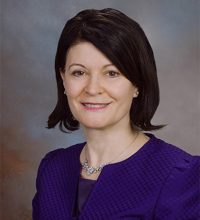
The Senate Public Education Subcommittee advanced a commonsense bill negotiated Thursday by Senator Barbara Favola, D-Arlington, and the Youngkin administration, providing for math Standards of Learning (SOL) exams in Spanish for beginning English Learners, as most states provide.
The bill addresses the alignment of Virginia’s new school ratings system with federal law, which includes the English, math and science SOLs scores of English Learners (EL) three semesters after arrival. Virginia previously used a de facto end run around this standard (as well as other more rigorous federal requirements), issuing school ratings under a separate state system that exempted ELs for 11 semesters.
Recently arrived ELs’ lack of English proficiency creates the potential for misidentification of schools needing support if proper accommodations are not used, which these Spanish math SOLs address.
Favola has taken a pragmatic approach to advancing her bill. Shortly after learning about the information below from Migration Policy Institute, she filed a budget amendment to fund such exams in Spanish for math and science for $300,000 per year.
The companion bill in the House sponsored by Delegates Laura Jane Cohen, D-Fairfax County, and Alfonso Lopez, D-Arlington, met some pushback because of its larger scope. It would require all SOLs to be provided in Spanish. Consequently, the House Education Committee moved the bill to Appropriations on a largely party line vote.
The next day, Favola filed an amended bill. At the Senate Subcommittee hearing, she testified that she had worked with Superintendent Lisa Coons on a compromise to limit the scope further to just math and permit such exams only for beginning English speakers.
Favola told me: “I truly believe this bill will save money for the state, localities and school districts. All of them need the ability to target their resources in a way that makes sense, which this bill better enables.”
Recently Arrived ELs Create Accountability Dilemma
As explained by the leading education civil rights group The Education Trust, accountability systems should show “which schools and districts are struggling to meet students’ needs and have student group disparities, and — most importantly — use this information to target additional resources and supports to address these needs.”
In a Board of Education meeting this past summer, Board member Amber Northern discussed the importance of accommodating recently arrived ELs to ensure schools are not being misidentified for support:
“An SOL test is assessing content knowledge. The issue with [ELs] is sometimes we don’t know whether we’re testing their ability of language acquisition on a state test or we’re assessing their content knowledge. That is why it’s so important to have the right modifications.”
(Note: Northern is also senior vice president for research at one of the top national education think tanks, Fordham Institute.)
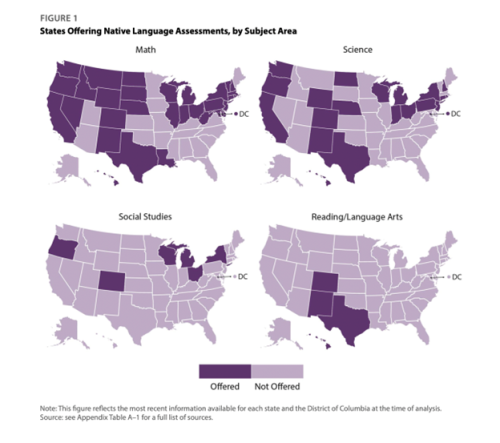
Existing research shows that one effective accommodation for ELs with low English proficiency is for the standardized test to be in a student’s native language. Considering the cost though, most states as of 2020 provided for such tests only in Spanish for math while around 20 states did so in Spanish for science.
Accountability System Will Result in Reallocation of Significant Resources
The governor’s budget proposed $50 million in additional funds for schools identified by the new accountability system as needing support. Favola has proposed an excellent budgetary amendment to increase it to $100 million, along with a bill attaching strings to such funds (e.g., requiring a School Improvement Plan that must include measurable goals over a 3-year period).
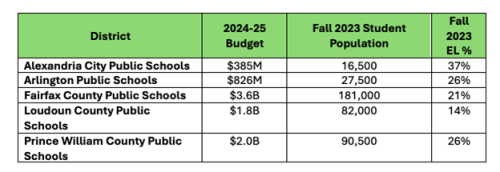
Moreover, school districts will be allocating resources based on information provided by the new system. The budgets of some of the large Northern Virginia school districts are as follows:
Educating ELs is also an issue elsewhere in the state. For instance, Harrisonburg City Public Schools (HCPS) has one of the highest percentages of ELs in the Commonwealth.
Virginia ELs’ most common native languages are Spanish (70%) and Arabic (5%).
States must educate ELs regardless of immigration status. The U.S. Supreme Court ruled in Plyer vs. Doe (1982) that public schools cannot deny a student a free public education because of their immigration status.
Bill Signifies Virginia Finally Aligning to Federal EL Standard
Virginia’s move to the federal EL inclusion standard and scrapping the separate state system has received the “strong endorsement” of major national EL civil rights groups, Migration Policy Institute and UnidosUS. This federal standard is strongly supported by numerous civil rights groups and both national teachers unions.
Northern Virginia school districts and people claiming to represent the interest of ELs have objected to Virginia’s move to the federal standard (including a Fairfax County School Board member almost in tears). In their defense, the Virginia press had not reported on the civil rights and federal legal background of the three-semester standard until the Richmond Times-Dispatch published my Letter to the Editor last week.
Two decades ago, Virginia also tried resisting the federal EL standard for its federal accountability system. Virginia applied for exemptions from the three-semester standard in 2005 and 2006, which the U.S. Department of Education denied.
In 2004, the Virginia House of Delegates passed a resolution asking to be exempted from No Child Left Behind (NCLB) and its federal accountability standards. U.S. Secretary of Education Rod Paige responded in a letter that Virginia did not have to comply as long as it turned down all federal education funds.
Former Delegate Kris Amundson (D-Fairfax County) had voted for the 2004 resolution in part because of this three-semester federal standard.
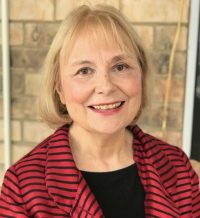
She told me then was a different era. Prior to her election to the House of Delegates in 1999, she had been a Fairfax County School Board member for almost a decade. She said the Northern Virginia school districts began receiving significant amounts of English Learners whose educational challenges they were not well experienced with.
After leaving the House of Delegates in 2009, Amundson would go on to lead the National Association of State Boards of Education, including during the negotiation of ESSA. Notably, ESSA added an optional alternative to the three-semester standard where states can choose to use academic Growth in the second year after arrival in place of Proficiency, but that method requires additional testing of ELs.
Amundson said her opinion has changed over the years and is now much closer to the ESSA federal standard:
“Today, I think 11 semesters [to exclude ELs] is unreasonable. Eleven semesters means an elementary school would never be held accountable for an EL who arrived in 1st grade during that child’s entire time there. Same with an EL who arrived in middle school, or in high school.”
Todd Truitt is a parent of two school-age children in Arlington County, Virginia. He is also the former Chair of the Math Advisory Committee for Arlington Public Schools and active in the Arlington Democrats. He is a business transactions attorney and a Certified Public Accountant.
Leave a Reply
You must be logged in to post a comment.