by Dick Hall-Sizemore
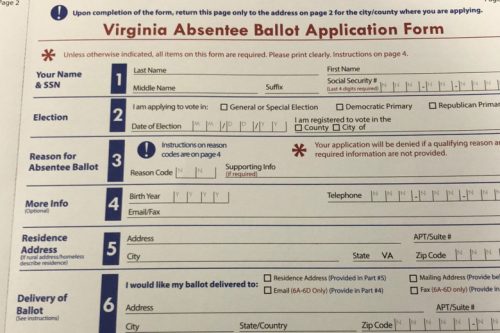
At the end of March, President Trump issued an executive order directing the Department of Homeland Security to compile a list of persons eligible to vote in a federal election in each state. The executive order also directed the United States Postal Service (USPS) to compile a list of eligible voters and prohibited it from transmitting a mail-in or absentee ballot completed by any person not on that list.
To implement the requirements of the Executive Order, USPS announced that it would compile a list of eligible voters from voter rolls submitted to it by states. In accordance with the provisions of the executive order, It then went on to say that it would not deliver absentee or mail-in ballots from voters that were not on those lists.
The order was immediately challenged in federal courts. The NAACP filed a challenge claiming that the Executive Order violated the provisions of an agreement regarding absentee ballots that the federal government and the NAACP entered into several years previously. The court agreed with the NAACP, thereby negating the Executive Order. However, an appeals court overturned the district court’s order, leaving the Executive Order in place.
On another front, California and the attorneys general from 22 other states filed suit in another federal court challenging the Executive Order on different grounds. Their suit claimed that the Executive Order was unconstitutional because it violated the separation of powers.
The court agreed with the states. Regarding the requirement that DHS compile a list of eligible voters, the court declared “the President lacks any authority to compile voter lists for each State.” As for the USPS announcement that it would not transmit absentee ballots from voters not on its list of “enrolled voters”, the court pointed out that “the Constitution reserves the power to determine voter eligibility to the States alone.” The court issued an injunction prohibiting the government from implementing the applicable provisions of the Executive Order. The federal government asked the court of appeals to stay the court’s order pending appeal, but its request was denied.