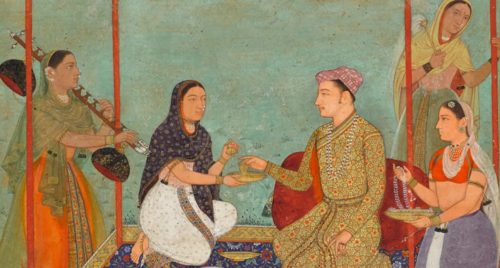
A double standard rankles in the Virginia Museum’s otherwise marvelous exhibit about the Mughal dynasty.
by James A. Bacon
The Virginia Museum of Fine Arts (VMFA) is displaying an extraordinary exhibition of 200 paintings, manuscripts, textiles, furniture, and works of artisanship from the Mughal dynasty, which ruled the northern Indian subcontinent from 1526 to 1857. It is an impressive collection, and it sheds light on a remarkable civilization of which most Americans know little to nothing.
The VMFA is gushing in its description of the artistic achievements of three of the most celebrated Mughal emperors: Akbar, Jahangir, and Shah Jahan.
From the tiniest jeweled objects to the monumental wonder of the Taj Mahal, this highly sophisticated and globally connected empire produced treasures of unparalleled splendor and magnificence.
The extraordinary creative output of the imperial ateliers conveyed the Mughals’ great wealth and power. In addition to glorifying the emperors, these diverse artistic productions also signaled worldliness. Descendants of a Central Asian prince, these cosmopolitan emperors presided over a multicultural court that fused Indian and Iranian cultures and regarded the empire’s array of languages and religions with great interest.
Splendor. Magnificence. Sophistication. Worldliness. Cosmopolitan. Diverse. Multicultural. These are the words the VMFA uses to describe the dynasty.
To anchor the Mughal timeline in a historical context with which most visitors are familiar, placards in the exhibit take note of events taking place in Europe and the Americas. Thus, we are informed that in 1607, the Virginia Company established Jamestown, and two years later an Englishman arrived in the court of Emperor Jangahir to negotiate an agreement for the East India Company.
I found the comparative information to be useful. But then there was this: In 1619, the placard states:
(more…)