
 by James A. Bacon
Of all the places in Virginia to favor “dockless micro-mobility devices” — e.g. scooters and bicycles — you’d expect Charlottesville to be at the top of the list. After all, the city is home to thousands of University of Virginia students who could benefit from the boost to mobility, and local government is sympathetic to any scheme that would reduce the number of cars on the streets. But the People’s Republic of Charlottesville, as peoples republics are inclined to do, may regulate these transportation alternatives out of existence.
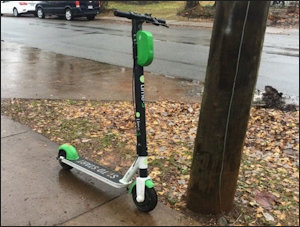
Lime, which has operated Internet and app-powered electric scooters in Charlottesville for a year, has declared its intention to pull out of the market — citing the cost of new regulations on e-scooters and e-bicycles, reports the Daily Progress.
“We love Charlottesville and we loved serving Charlottesville,” said Robert Gardner, of Lime. “It was working well for us, but the reason we’re leaving in 2020 is due to regulation changes.”
The root of the problem: City regs require Lime and competitors to put 50 e-bikes in the field for every 100 scooters. To exceed the 100-scooter cap, Lime had to add another 50 e-bikes. Here’s the problem: It is not cost-effective to operate bicycles, which are frequent targets of vandalism and require significant maintenance. Said Gardner: “People can remove and take the bicycle seat, wheels and other parts and it really isn’t cost effective to have them in the fleet.”
City spokesperson Brian Wheeler said the city is pushing the bike requirement because the University of Virginia is ending its UBike rental program in May. “One of the goals is to ensure that there are still bikes available for rental.”
UBike rentals are ending? Now that’s a really interesting story. Conduct a search on Google or the University of Virginia website, and you’ll find many glowing articles about the glorious launch and phenomenal acceptance of the UBike program but not one mention of the program’s demise. One is left to speculate why the University is scrapping it. One logical surmise among many possible explanations is that UBike suffers the same problem as Lime — vandalism, parts theft, and excessive wear and tear.
That wouldn’t speak well of the current generation of students at a university whose honor code once upon a time expelled students for theft, but that archaic relic of the pre-post-modernist rejection of oppressive bourgeois values may be all but irrelevant these days. (The Honor Code, I fear, may be dying a death by a thousand cuts. See this story for example. But I digress.) If enough people imbued with a post-modernist outlook accept the proposition that “property is theft,” then perhaps the bicycle rental business is forever doomed in Charlottesville.
Another regulatory issue is geo-fencing — the use of technology to limit speeds, restrict access to certain areas such as the Downtown Mall and UVa, and require riders to park scooters in specified places. Lime officials, reports the Daily Progress, reported a loss of ridership in areas with restrictions.
“While Lime absolutely is happy to work with our partners in government to geofence areas when there is a legitimate concern about our product, often times we find that there are alternative solutions, like signage for instance, can work as good or better than the “tech” option,” Gardner said.
Another scooter company, Bird, pulled out of the area in June. But VeoRide entered the market in November with 150 scooters and 50 bicycles. Perhaps VeoRide can make a go of it even though Bird, Lime and UBike could not. Perhaps there is a market for a single player in Charlottesville, where, between November 2018 to October 2019, 30,000 users made more than 200,000 trips. Even assuming VeoRide can make it, in all likelihood, a single vendor will leave the market under-served.


Leave a Reply
You must be logged in to post a comment.