
by Donald Smith
The Capitol Square Preservation Council, which has the mission to review any major changes to the monuments in Capitol Square. Although it still exists, it has been defunded and no longer operates. These are my prepared remarks for the presentation I would gladly offer to the council, should it convene again, to consider the fate of Confederate monuments in the square.
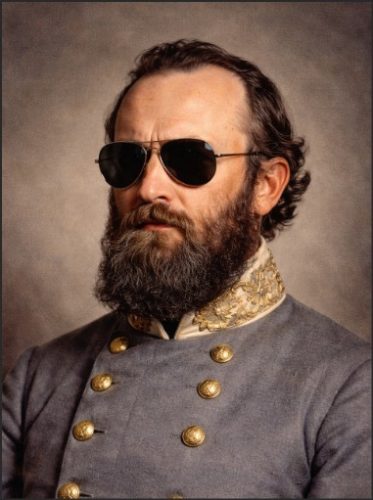
If the people and government of the Commonwealth cannot bring themselves to honor the legacy of Thomas “Stonewall” Jackson, they will look silly, shallow, emotionally and culturally brittle, and incapable of dealing with complex matters. His statue should remain in Capitol Square.
My name is Donald Smith, and I am a proud Son of Virginia. My mother was born in a cabin—I am not kidding, an actual cabin—outside of Lexington. That cabin was built by my great-grandfather, Givens Kirkpatrick. He, along with his father and all of his brothers, fought under the Confederate flag. Their legacy, and the legacies of hundreds of thousands of past Virginians, are tied in with the legacy of Stonewall Jackson, the quirky but brilliant general who not only led them, but was one of them.
Thomas J., “Stonewall” Jackson, was unique in many ways.
He came from a disadvantaged background. He lost his parents in childhood and was raised by an indifferent uncle. He was dirt-poor. He represents the vast majority of Virginians in the 1800s, who had to struggle to make ends meet. He was not a “First Family of Virginia” Cavalier.
He was a self-made man. Jackson ranked at the very bottom of his class when he entered West Point. He was one of the worst-performing students in his plebe class. Yet, through sheer will and incredibly hard work, he graduated near the top of his class, especially in mathematics. While teaching at VMI, he invested wisely and made himself relatively prosperous. He did not inherit huge plantations or sums of wealth.
His battlefield exploits were extraordinary. Stonewall Jackson was, and still is, one of America’s most accomplished and famous battlefield generals. This is from Rebel Yell, a biography of Jackson by S.C. Gwynne. Gwynne was a bureau chief and senior editor for Time magazine, and a Pulitzer Prize finalist:
In April 1862 Jackson was merely another Confederate general fighting for what seemed to be an increasingly desperate cause. By June he had engineered perhaps the greatest military campaign in American history and was one of the most famous men in the Western world. Jackson’s strategic innovations shattered the conventional wisdom of how war was waged: he was so far ahead of his time that his techniques would be studied generations in the future.
During World War II, George Patton told Eisenhower that he wanted to be Ike’s Stonewall Jackson. Marine hero Chesty Puller carried a biography of Stonewall with him. Garnet Wolsey, who commanded the British Army in the late 19th century, interviewed Jackson in 1862, and later wrote this about him: ”With such a leader men would go anywhere, and face any amount of difficulties; and for myself, I believe that, inspired by the presence of such a man, I should be perfectly insensible to fatigue, and reckon upon success as a moral certainty.” The great American novelist Ernest Hemingway turned Jackson’s last words into the title for one of his books: Across The River and Into The Trees.
His support for African-Americans, given the times he lived in, was extraordinary.Jackson founded, funded and operated a Sunday School for slaves, at a time when it was illegal to help slaves learn to read and write in Virginia, and when many whites remembered the deadly Nat Turner raid in the 1830s. Prominent Lexington citizens threatened Jackson with legal action if he kept the school open—and Jackson refused! He risked losing his job and being ostracized from Lexington society. He put himself and his family at personal, financial, and professional risk for African-Americans.
Jackson’s Civil War service was, first and foremost, for Virginia.Initially, Jackson opposed secession. But he was loyal to his state—Virginia was, in his mind and heart, his country. Virginia called him into service, and he went, like tens of thousands of other Virginians. He did his duty, as did they.
Thomas J. “Stonewall” Jackson’s accomplishments, as a soldier and citizen, were extraordinary.
I want to thank the Capitol Square Preservation Council for the invaluable duty it performs. Time and time again, passions and anger sweep through human society. We need bulwarks against those sweeps of rage and intolerance. Fences that protect what is important, and contain recklessness.
The people of Virginia, in a show of wisdom, rationality, and common sense, created your council, by codifying it in the Virginia Code. Because of you, the monuments on Capitol Square are protected against partisanship and vindictiveness. Because of you, no monument on the grounds of the Commonwealth’s capitol will easily fall because a few powerful zealots in the General Assembly want them to fall. To the contrary, because of you, those zealots will have to make their case in a public forum. Make a case that convinces you, representatives of important state institutions, that their reasoning is sound and their actions reflect the public will.
You may have been defunded. But you still exist. And, the simple fact that you exist should cause bullies and partisans to pause. To think twice. To consider how their actions will be perceived by others. You are protection against opportunists who might want to take advantage of the trust We The People have placed in government, and take actions that don’t reflect what We The People really want.
Study after study shows that a majority of Americans understand the importance of preserving key symbols of our past. Stonewall Jackson was an imperfect, flawed man. As are we all. If we cannot bring ourselves to honor him, with all his extraordinary accomplishments, in public, then we should expect that people around the world will think less of us.
Thank you for your time. And, again, thank you for the important mission you perform.
Donald Smith is a graduate of the University of Virginia. Raised in Chesterfield County, his mother was born in a log cabin outside of Lexington, which her grandfather built after the Civil War. The cabin, now restored, is still occupied by family members.
Leave a Reply
You must be logged in to post a comment.