
by Dick Hall-Sizemore
The U.S. Supreme Court, in its eagerness to enhance the power of the presidency, has potentially created a real mess over the question of birthright citizenship.
Instead of ruling on the constitutionality of the President’s Executive Order ending birthright citizenship, the Court limited its ruling to the issuance of nationwide injunctions by district courts. The Court ruled that district court judges do not have the authority to issue injunctions affecting persons or entities that were not a party to the case before them. The Court granted the President’s request to stay the nationwide injunctions issued by the district courts, but “only to the extent that the injunctions are broader than necessary to provide complete relief to each plaintiff with standing to sue.”
The injunctions in two instances were issued in cases brought by state Attorneys General, suing the federal government over the implementation of the Executive Order. They were granted standing to sue, the district courts issued nationwide stays, and the relevant appeals courts upheld them. Because the Supreme Court order allowed a district court to issue a stay applicable to the plaintiffs in these cases, i.e. the states, the stay will still be effective in those states.
Maryland was one of the states involved in those suits in which a stay was ordered. So was North Carolina. Virginia was not.
The result will be that, after 30 days from now, when the Supreme Court takes effect, a child born to undocumented parents in Maryland or North Carolina, where the executive order has been stayed, will be a U.S. citizen, whereas a child born to undocumented parents in Virginia will not be a citizen. This flies in the face of the idea of “equal justice for all.” Any pregnant undocumented immigrant living in Virginia more than 30 days from now should make arrangements to travel to Maryland or North Carolina to have her baby.
Beyond the unequal treatment based on where a person lives, the Court decision will create significant administrative burdens and confusion at the state and national levels. Will hospitals have to determine the citizenship status of every pregnant woman who comes in to give birth? What about births that take place outside a hospital? How will states issue birth certificates for those babies? Will Virginia have to modify its birth certificate form to indicate the citizenship status of the baby? I am sure there are similar questions applicable at the federal level.
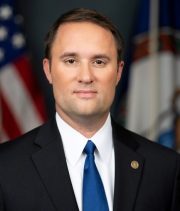
Where is our Attorney General? His official website says that one of his duties is to defend the constitutional rights of Virginians. The 14th Amendment to the United States confers citizenship on any person born in the United States, with narrow exceptions. This was affirmed by the Supreme Court in 1898. Furthermore, he points out that, “As the son of a Cuban immigrant, I understand that the American Miracle is alive and well and will work tirelessly to preserve it for the next generation.” I guess not all sons (or daughters) of immigrants are born equal in his eyes.
CORRECTION: The original version of this article stated that the Executive Order applies to all non-citizens, even those here legally, such as green card holders. This is incorrect. It applies only to children whose (1) mothers are in the United States illegally and whose fathers are either not American citizens or legal permanent resident or (2) whose mothers are legal, but temporary residents and whose fathers are not citizens or legal permanent residents. It is not clear whether it applies to undocumented mothers who have been allowed by the courts to stay in the United States while awaiting a court decision on their asylum petition. The order is not applicable to mothers who are legal permanent residents, i.e. green card holders.
I regret and apologize for my error.
Leave a Reply
You must be logged in to post a comment.