
Virginia’s Heroin Epidemic
Share this article
ADVERTISEMENT
(comments below)
Comments
Comments
6 responses to “Virginia’s Heroin Epidemic”
-
“These all sound worthwhile, although it strikes me that they only scratch the surface of the problem.”
Boy, is that ever true. I suspect the real problems lie far deeper below the surface. And that they include the breakdown of many former pillars of our society. Such as functional families, schools, and traditional value systems that, despite many, many short comings and injustices, by and large did a far better job of holding our society together and functioning top to bottom.
So now the negative fallout of these pervasive breakdowns now infect our society from top to bottom.
-
Reed, I agree that there may be a social-breakdown component to the heroin epidemic, which should not be ignored. Arguably, strong families are better equipped to resist the heroin scourge.
What worries me, though, is that the prevalence of prescription opioid drugs has created a pathway to heroin addiction that didn’t exist a decade or two ago. Chris Christie made quite an impression a month or so ago when he described how one of his close friends, a successful professional with a strong family, got addicted to prescription painkillers, his life spiraled out of control, and he committed suicide. The takeaway is that heroin addiction afflicts Americans of all walks of life.
-
Yes, Jim –
I agree with you on the likely “over prescription of opioid drugs’ today, and also with CrazyJD follow – on comments.
I have some personal experience here, knowing how easy it is to rely too much for too long on such drugs for pain after a catastrophic accident, and/or for long lasting chronic pain as a result of that accident or arising independent of it.
There also appears to be some perverse incentives, however well intended, that encourages physicians to prescribe such drugs so as to keep patients on regular visits, particularly in the mental health field.
These problems of course have been around a long time. There was a morphine epidemic during and after WWII as a result of the over prescription of that drug for pain during combat and/or after it.
For example, many a Marine or sailor went into Naval Medical after the war with chronic pain only to emerge from the hospital an opioid addict.
But why now the increasingly prevalence of this drugs as additions, and how to fix it? That is a thorny and difficult question. Very dangerous if some distant bureaucrat or regulation starts taking pain medication away from people in pain. That can go down hill very quick. So there can be great abuse at both ends of the problem.
-
-
-
Well said, Reed, though I can tell you from my experience with clients that some of their occupations can lead to addiction. One client was a tree trimmer, who often endure injuries that cause great pain. They start with Alleve, that doesn’t work, they move on to oxy, then when that doesn’t work they move to heroin, which does work. They get picked up for possession, spend a few months in jail, go through withdrawl (heroin is not yet available in the regional jails), get out, take a hit at the dosage they were used to using, and die of overdose tout de suite.
If you want to observe how heroin gets into Virginia, just watch the tree trimming trucks, which often carry it inside the blades of the giant limb chippers they carry behind the truck. The stuff comes down Rt 29 from Baltimore through Virginia’s tree trimming capital, Culpeper.
-
………. “…addicted to prescription painkillers”
.
” The takeaway is that heroin addiction afflicts Americans of all walks of life.”how are the two connected?
how about this:
” CDC: Prescription Drugs Kill More Than Illegal Drugs;”
finally – why this:
” Prosecute drug dealers more aggressively.”
when we’ve been doing this for quite some time and the prisons are full of them?
my view is that if we really want to deal with the problem – we have to face the truth – we have to WANT to face the truth and stop conjuring up false narratives …
finally – why are the jails full of what kind of drug offender – and not the other?
-
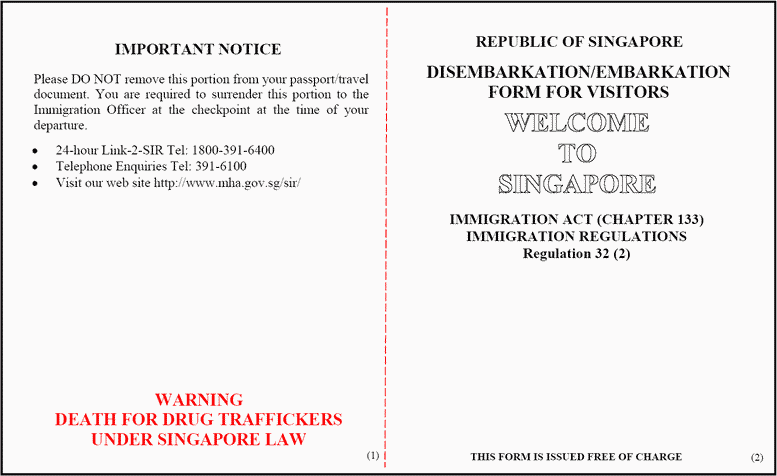
Every time I go to Singapore I see this on the embarkation card I sign.
https://upload.wikimedia.org/wikipedia/commons/d/db/SingaporeEmbarkationCard.png
The Singaporeans are quite serious with regard to executing drug dealers. They do so routinely and they don’t care if the dealer / smuggler is a foreign national (as a few Australians learned to their chagrin).
The United States has a drug related death rate of 6.96 per 100,000 (third highest in the world), Singapore has a drug related death rate of 0.18 per 100,000 (one of the lowest in the world).
While I don’t condone the death penalty for any reason I have to admit that Singapore’s approach works and ours does not.
Indonesia also executes drug dealers and has a drug related death rate of 0.02 per 100,000. In early hours of April 29th, 2015 Indonesia executed eight convicted drug traffickers. Seven of the eight were foreigners: two Australians, a Brazilian and four Nigerians.
Interestingly, the Netherlands – long know for drug tolerance – has a death rate of 0.63 per 100,000 (quite low among developed countries).
We seem to be “stuck in the middle” with neither the Indonesian resolve nor the Dutch enlightenment.
As always, our federal government’s “war on drugs” (like the war on poverty, war on Vietnam, etc) has been a spectacular failure.


Leave a Reply
You must be logged in to post a comment.