
by Dick Hall-Sizemore
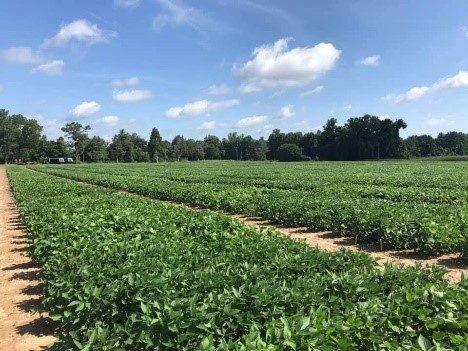
The 2025-2026 soybean harvest and market began in September with Virginia soybean farmers having lost their biggest customer as a result of Trump’s tariff policies.
In 2023 (the latest year for which figures are available), soybeans were Virginia’s top agricultural export at over $1.4 billion. Exports to China accounted for $784 million (56 percent) of that total. In retaliation for the high tariffs imposed by the Trump administration this year, China imposed a 20 percent tariff on American soybeans. That tariff, in combination with existing taxes and duties, pushed the overall rate on U.S. soybeans to 34 percent. As a result, U.S. soybean exports to China have been zero since May. As a Purdue University Center for Commercial Agriculture report recently noted, “The U.S. soybean harvest began in September without any orders from the world’s largest buyer: China.”
Currently, Virginia soybean farmers, who increased the acreage devoted to soybeans from 500,000 acres in 2023 to 600,000 acres this year, face an unenviable situation—rising costs and decreased demand for their product. As Virginia Business explains, “Coming into this year, many farmers were just hoping to break even because crop prices were weak while costs had increased. But Trump’s tariffs, which helped make their crops uncompetitive around the world, drove prices down further, and tariffs on steel and fertilizer sent farming costs up even more.” The Federal government estimates that soybean farmers will lose $100 an acre this year. With 600,000 acres in cultivation, that could translate into a total loss of $60 million for Viriginia soybean farmers this year.
Although Secretary of Agriculture Brooke Rollins has been a cheerleader for the administration’s tariff policy, the Trump administration recognized early in the process that farmers would be especially affected by tariffs and she pledged assistance. After all, the same situation had occurred in Trump’s first administration when $23 billion was distributed to farmers to compensate them for losses caused by tariffs then.
Recently, the administration has openly acknowledged the problem. Kevin Hassett, a top White House economic adviser, said, “Right now, the silos are full, and there are soybeans sitting on the ground with tarps over them. That’s unacceptable to the president.”
The administration is floating providing $10 billion to soybean farmers to compensate them for their losses, but no legislative package has been presented. In the meantime, the Wall Street Journal reports that Trump has directed the Dept. of Agriculture to distribute to farmers $3 billion from a fund that was used to bail out farmers in Trump’s first administration. Despite the government shutdown when government offices are supposed to be closed and federal workers on furlough, Trump has ordered that Farm Service Agency offices resume their core operations, which would enable farmers to get access to those funds.
The subsidies would certainly help this year. However, there are long-term concerns. China has not been content to just forego its need for soybeans. It has turned to alternative sources, primarily Brazil. From January to August of this year, Brazil exported a record 2.5 billion bushels of soybeans to China. Seeing an opportunity following Trump’s first trade war with China and a surge in its soybean exports to China, Brazil increased its production from 4.5 billion bushels in the 2017/2018 crop season to 6.3 billion bushels in the 2024/2025 season. During the seven years preceding the first trade war (2011-2017), U.S. exports to China averaged 60 percent of total U.S. soybean exports. In the seven years following the trade war (2018-2024), that average share dropped to 47 percent. During the same period, the average annual share of Brazil’s soybean crop going to China increased.
China is taking significant steps to secure future orders for Brazilian soybeans. As reported by the Washington Post, “Chinese state-owned companies have taken stakes in major Brazilian ports.” Also, “COFCO, China’s largest agricultural importer, has the exclusive rights to run a major new terminal” at one of the ports.
These actions will likely make it much harder for Virginia soybean farmers to re-establish the ties and relationships they had with their former Chinese soybean customers whenever China and the U.S. reach agreement on trading terms.
In contrast with the soybean farmers, cattle ranchers are having a banner year. Several years of severe droughts, coupled with the economic uncertainties of COVID, resulted in many cattle ranchers selling their herds. Others chose not to increase their herds. For those that did not sell out and were able to hang on, beef prices are at record levels. It is a matter of simple economics: the supply has decreased and the demand has remained. As the Wall Street Journal summarizes the situation, “Business hasn’t been this good for cattle ranchers for decades, maybe ever. Herds are thin and beef demand is strong, helping send prices for everything from ground beef to steaks to record levels.”
Virginia cattlemen are enjoying the good news for the cattle industry. As one Virginia rancher said to an interviewer, “If you’re in the cattle/calf business and you’re not being profitable, you probably need to look at a different industry to be involved in. But we went through a lot of hard years where we don’t make money.”
These higher prices ranchers are getting for their cattle translates into higher prices for consumers. According to the Wall Street Journal, retail prices for ground beef were 13 percent higher in August than in the same month last year.
Higher prices for consumers in the grocery store pose a problem for a president who promised voters that he would lower their grocery bills. To the consternation of the beef industry, Trump told reporters a few days ago, “We would buy some beef from Argentina. If we do that, that would bring our beef prices down.” Agriculture Secretary Rollins confirmed that Trump “is in discussions with Argentina” and that we should hear “in a day or two” about what that exactly looks like.”
Angered over the prospect of the country importing Argentine beef in order to bring beef prices down, ranchers can join the soybean farmers in denouncing the Trump administration’s Argentine policies. The farmers are upset about the administration pledging $20 billion to prop up Argentina’s economy just as that country suspended its export tax and China purchased a large order of Argentine soybeans.
Leave a Reply
You must be logged in to post a comment.