
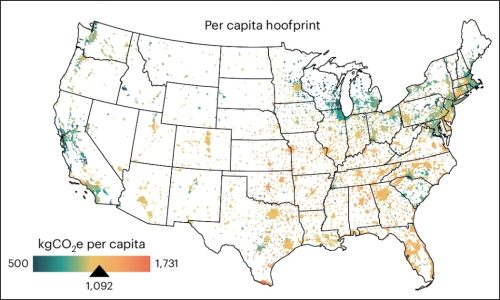
Hey, ecowarriors, Nature Magazine has introduced the concept of the “carbon hoofprint,” which measures the carbon impact of meat across the U.S. The bottom line (according to ineluctable logic of the study) is that to save the planet, we need to eat less beef and eat more BACON!
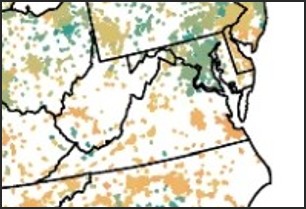
To spare readers from the necessity of squinting, I have expanded the portion of the map displaying the hoofprints of Virginia and surrounding locales.
The carbon intensity of a city, it seems, is driven largely by the proportions of beef, poultry and pork consumed. But supply chains and the geography of “meatsheds” play a role. What’s important to know is that beef is the most carbon intensive of the meats and (based on an unscientific eyeballing of the maps below) pork is slightly more benign than chicken. Kudos to the Washington Metro. Richmond, Hampton Roads and pretty much everyone else: bad, bad, bad!
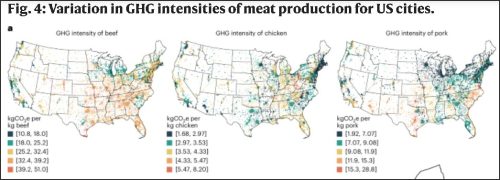
The lesson is clear: Anyone wanting to save the planet from the impending warming catastrophe needs to convert their meat consumption from burgers to bacon.
Warning (from me, not the study): Sadly, even bacon contributes to global warming. Therefore, it must be considered a “bridge” food until society can transition completely to a diet of low carbon-intensity grasshoppers and worms.
According to the Microsoft AI summary:
The carbon intensity of insect production for food purposes is significantly lower compared to traditional livestock farming. Insects produce greenhouse gas emissions that are 10-100 times less than those produced by beef production. This makes insect protein a viable and sustainable food source option, contributing to a more sustainable food industry and reducing the environmental impact of food production.
I hear that grasshopper meal tastes pretty good with a shot of vinegar.
— JAB
Leave a Reply
You must be logged in to post a comment.