
by Jeff Bayard
Most Americans have never read the First Amendment religious liberty protections that apply to them — especially here in Virginia. They know the amendment exists. They just don’t know what it says. And even fewer know that Virginia adds a second layer of protection on top of it.
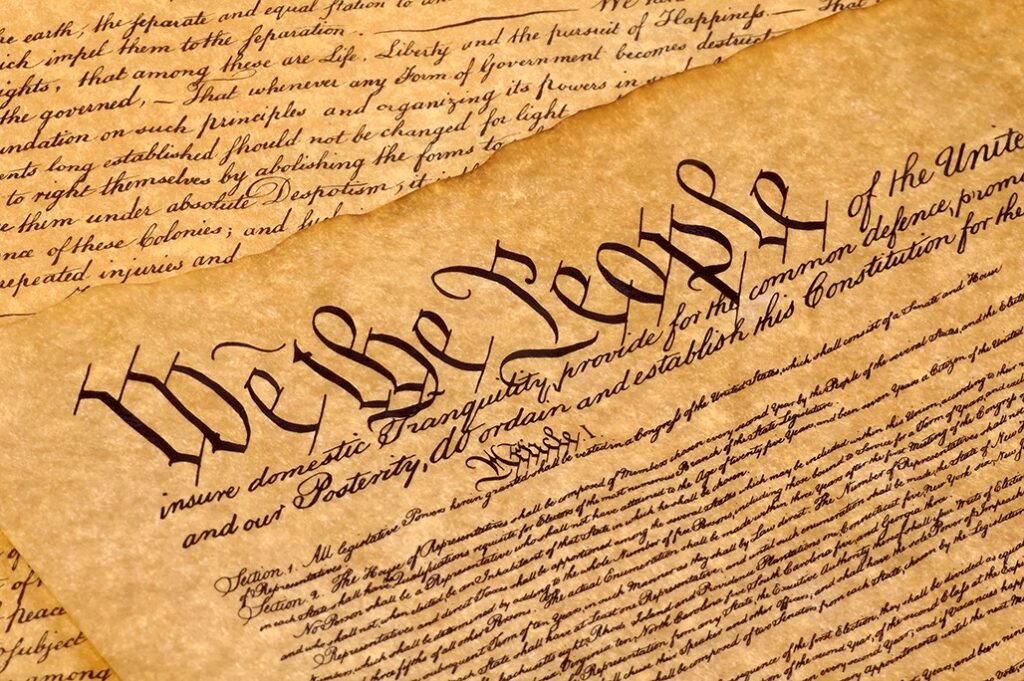
Here is the federal text:
“Congress shall make no law respecting an establishment of religion, or prohibiting the free exercise thereof…”
— U.S. Constitution, First Amendment
Now read what Virginia wrote — in 1776, before the federal Bill of Rights even existed:
“That religion or the duty which we owe to our Creator, and the manner of discharging it, can be directed only by reason and conviction, not by force or violence; and, therefore, all men are equally entitled to the free exercise of religion, according to the dictates of conscience…”
— Virginia Constitution, Article I, Section 16
Notice the difference. The federal amendment restrains government: Congress shall not. Virginia’s constitution gives you an affirmative right: all men are equally entitled. You don’t just have the right to believe privately. You have the right to live your faith — in your home, your business, your counseling office, your daily life.
That is double-layered protection. It was meant to be ironclad.
What the founders actually meant
The Founders called religious liberty the “first freedom.” Not because it appears first in the amendment. Because they understood it as the foundation everything else rests on.
James Madison drafted the First Amendment. He wrote that conscience is “the most sacred of all property” — connecting religious conviction not just to private belief but to its public profession and practice. George Mason wrote Virginia’s Declaration of Rights. He understood that a government powerful enough to control how citizens worship has no real limits at all.
The Free Exercise Clause was never meant to protect only Sunday mornings inside a church building. It was meant to protect the physician who won’t perform an abortion. The counselor who believes change is possible. The web designer who won’t create content that violates her convictions. The business owner who serves everyone — but cannot participate in every ceremony.
The right is not the freedom to believe. It is the freedom to live what you believe.
That is not a fringe interpretation. That is what the text says. That is what the Founders meant.
What is happening in Virginia right now
Consider Peter Vlaming. He was a high school teacher in West Point, Virginia. He was fired for refusing to use male pronouns for a biologically female student. His reason was religious. He did not attack anyone. He did not refuse to teach. He simply could not speak words that violated his conscience. The school board fired him anyway. It took the Supreme Court of Virginia to reinstate his free-exercise and free-speech claims.
He believed. He exercised that belief. He lost his job.
Virginia law goes further. § 54.1-2409.5 of the Code of Virginia bans licensed counselors from offering any practice that seeks to change a minor’s sexual orientation or gender identity. That means a Christian counselor who believes change is possible cannot act on that belief with a client under 18. If he does, it is classified as unprofessional conduct. He can lose his license.
This is not a neutral law. It targets a specific viewpoint — a biblical one.
Virginia businesses face similar pressure under the Virginia Human Rights Act. A business owner who declines to create content that violates her conscience can face legal consequences. The state has begun to compel speech. What your work expresses is no longer fully yours.
Dear Christian, this is happening in your state. Right now.
You’ve seen what’s happening. The deep dive shows exactly why it’s unconstitutional — full case citations, statutory language, the Vlaming ruling, and a steel-man of the opposing argument.
Why this should alarm you
When government controls what a counselor may say in a private session, “free exercise” has become “free belief.” You may think what you want. But you cannot live it out professionally.
When a teacher loses his job for refusing to speak words that violate his convictions, the state has crossed a line. The First Amendment does not protect only private belief. It protects expression and action rooted in belief.
This is no longer theoretical. This is what is happening in Virginia right now.
The Supreme Court has weighed in — repeatedly. Three landmark cases directly address what Virginia is doing. We unpack all three in the full analysis: Employment Division v. Smith, Fulton v. City of Philadelphia, and 303 Creative v. Elenis. The picture they paint is not good for what Virginia is doing.
The stakes for November
Virginia voters face real choices in November. The officials who write these laws, enforce these regulations, and appoint these licensing board members answer to you. Religious liberty does not defend itself. It requires citizens who understand what it is, why it matters, and what it costs to lose it.
The Founders gave us two layers of protection for a reason. They knew government’s appetite for control does not stop on its own. Both layers are under pressure today.
You were given this right. Not by government — by your Creator. Government did not grant it. Government cannot legitimately take it away.
Jeff Bayard is content manager and composer at the Virginia Christian Alliance. This article has been republished with permission of The Virginia Christian Alliance.
Leave a Reply
You must be logged in to post a comment.