
By Steve Haner

I don’t often dispute with my former colleague Dwayne Yancey, now running Cardinal News, but his short-sighted and one-sided column this morning on the changing tax environment for solar panel manufacturers demands an answer.
Yes, certain solar-specific tax expense subsidies are set to expire in the House-passed version of the new federal tax rewrite. Yes, the solar industry has its hair on fire and is blasting out warnings of economic collapse, including at a legislative energy meeting last week. Yancey follows the playbook page by page in his argument.
As is often the case, what really matters is what was left out, either not mentioned at all or left to a side comment. The pending tax package – and it will change and may even fail – includes a host of provisions intended to boost manufacturing of all kinds, none of them denied to the firms who make solar components.
The solar industry is whining, amplified by Yancey, because it is losing special privileges applied only to that industry, that energy production method. They don’t want a level playing field, they want an edge. They cannot compete without the tax breaks given to the industry and then really boosted by additional tax favors granted to their customers, also set to expire.
Yancey mentions none of the tax proposals that will benefit all manufacturing, highlighted for example by this from the Tax Foundation. Will all of these be in the final bill? Maybe not. Do they reduce revenue? Probably, but these are the kinds of things that economists do see as stimulating investment and potentially creating jobs and revenue long term. They include:
- Permanent deductions for domestic research and development spending.
- Permanent 100% bonus depreciation.
- Permanent 100% first year expensing for qualifying structures.
- Increasing the Section 179 expensing cap from $1 million to $2.5 million.
- Increasing the Section 199 qualified business deduction from 20 to 23%.
That is not the whole list. Some work for big companies, some for smaller businesses not organized as C corporations, but none are denied to companies making or installing solar energy. Some already existed in some form and the solar companies were tapping them along with the special treatment they got from solar-specific provisions. Again, it is the level playing field they are crying about.
Now to the 800-pound gorilla omission on Yancey’s part – tariffs. Special treatment for the domestic solar industry on tariffs not only continues under President Donald Trump, but he is pounding the competitors of the American manufacturers. A federal trade arbiter just green-lighted crushing tariffs up to 3,500% on foreign competitors. How is that missing from Yancey’s discussion? Should that also not boost the domestic producers?
Even the general tariffs now hitting China should benefit the American producers. In fairness, builders here may also contend with Trump’s new tariffs on steel and aluminum which could raise their costs. Overall, however, no industry is getting better “protection” under tariffs than the solar manufacturers. Is this an endorsement of Trump’s approach? Hardly, I have many issues with it, but it is the business environment at this current moment.
As I noted yesterday in passing along the PJM energy warnings and the response from Democrats, their go-to response is to claim solar will pick up the slack. A legislator reached out to me by phone and was continuing to talk about ways to increase solar installations in Virginia. An earlier Yancey column on an interview with Abigail Spanberger, the Democrat candidate for governor, also focused mainly on solar and how the state can promote it.
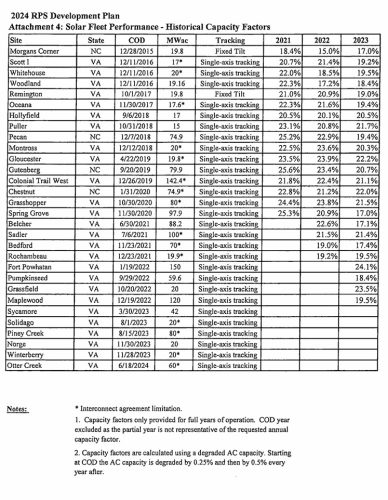
They are delusional. Solar has a huge problem, beautifully illustrated by looking outside today and seeing the latest sunless day in a long string of them. It was also beautifully illustrated by the table reproduced below, which I wish every Virginian could see. More often than not, more than three hours out of four, it doesn’t work at all.
Tell me again why we should give such an unreliable source of energy so many “tax expenditure” subsidies? Can we rely on it to run our economy? No. Of course not.
Leave a Reply
You must be logged in to post a comment.