
By Steve Haner
Virginia’s first (and so far, only) installation of onshore utility-scale wind turbines is in its early construction phase, with opponents hoping the Botetourt County project will draw the attention and opposition of the new Trump Administration. They are also complaining to regulators about soil running off the job site and fouling a nearby trout stream.
Apex Clean Energy’s proposed Rocky Forge Wind languished for years without a buyer for its energy output, but a power purchase agreement with Google finally brought it to life. The county approved construction in January.
Google is also planning a data center elsewhere in the county, just north of Roanoke, but the power from Rocky Forge won’t feed that directly. The wind energy when produced will become another asset in the PJM Interconnection energy marketplace. The financial details are not public, but presumably Google will share in any energy revenue, tax credits and the very marketable renewable energy certificates.
If the project is completed and connected to PJM next year as the developer intends, it will meet the amended deadline for tax credit eligibility created by the new federal omnibus tax legislation. The 13 planned turbines, each 655 feet tall, will produce about 75 megawatts of electricity when operating at peak efficiency. When there is no wind, there will be no power.
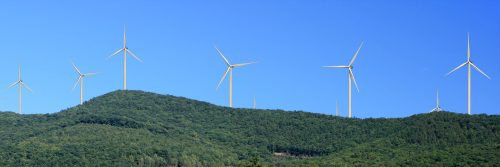
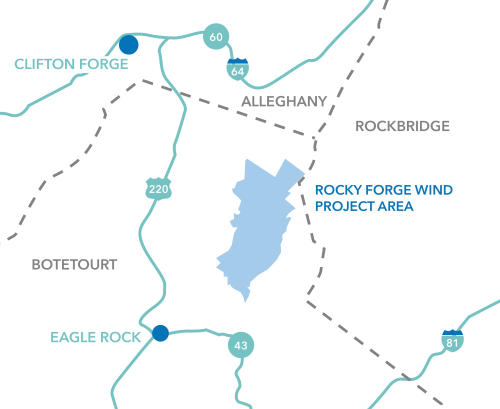
The location of the turbines along a timbered ridgeline on private property is far from populated areas and even the major roads in the area, Interstate 81 to the east and U.S. 220 to the west. But the land does have neighbors who will see the towers, and a spirited opposition group has been dogging the application for years. Their concerns and tactics mirror those applied to the embattled Mountain Valley Pipeline, but usually with less media attention and certainly with none of the cheerleading from environmental groups.
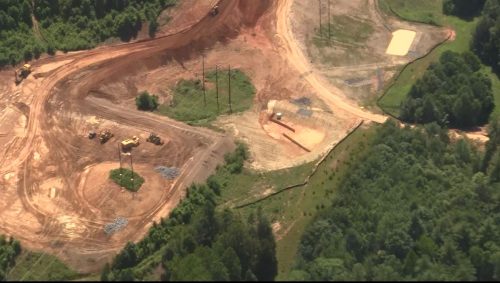
Erosion and sediment control issues were commonly raised against the natural gas pipeline, often imposing delays and incurring fines, but ultimately overcome and the project is operational. The opposition group Virginians for Responsible Energy is hoping for a stop-work order from the county or from the Virginia Department of Environmental Quality because of the erosion.
Opponent Eric Claunch of Eagle Rock wrote in the Fincastle Herald last week of two major episodes of silt reaching and muddying Mill Creek, a class IV trout stream (meaning it supports a wild trout population.) He also raised the complaints in a public comment period before the Botetourt Board of Supervisors in May.
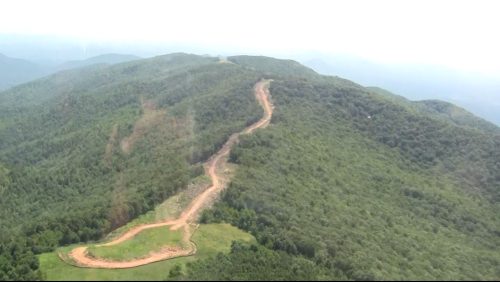
At this point, the contractor is focused on building or improving the roads that will be needed to carry the huge turbine components up to the 13 turbine sites and related facilities. Claunch hitched a ride in a small plane and has provided aerial photos that show the road work and site preparations.
Claunch concluded his Fincastle Herald letter with:
Adding irony to environmental insult, during the past very hot days—when electricity is needed most for cooling—there has been negligible wind, continuing to demonstrate what VRE has told county officials over many years and was ignored: the Rocky Forge Wind project is neither viable nor beneficial, and is a testament to how this green energy dream destroys rather than saves the environment.
But the project was never about energy production. If it were a viable and cost-effective source of energy, a real utility would have snapped up the power purchase agreement years ago. Onshore wind simply hasn’t taken off in Virginia, in part because of expected public opposition to the sight of turbines dotting mountaintops.
Claunch added in an email to Bacon’s Rebellion, “VRE’s intent is to delay the project long enough for the Trump administration’s Treasury Secretary to decree that “beginning construction” means something much more restrictive than what Botetourt County did.” Many of the detailed rules to implement the One Big Beautiful Bill’s energy provisions are still to be published.
The hostility of the Trump Administration to wind energy does extend to projects onshore, not just those proposed for the ocean. Extra scrutiny has been ordered across the board. But this project is on private land, a very different situation than the ocean wind projects which are in federal waters and thus need federal leases along with permits from a host of federal agencies.
Rocky Forge’s major vulnerability to federal policy will probably be qualifying for the tax credits, and opponents will continue to look for an opening there. They are also complaining that the Federal Aviation Administration’s review was inadequate and failed to account for all military training routes through that rural region. The highest turbine will be built at an elevation of 3,264 feet, meaning the tip will reach 3,919 feet above sea level.
It is unclear if there was any connection between the county’s approval of the turbine construction plan and the Google announcement of a new data center there. Neither will be major employers compared to other businesses with similar levels of capital investment, but between them Google will become a major county taxpayer. That may be the steepest hill the opponents need to climb.
Leave a Reply
You must be logged in to post a comment.