-
Northrop Grumman: Myths About Privatization
If you live in Virginia and need to get a driver’s license or ID card at one of the state’s 74 Department of Motor Vehicles offices today, you are out of luck. Still due a tax refund? Wait a little longer. The Department of Taxation’s computers don’t work. Worried about pollution? Chill out until the Department of Environmental Quality can get its systems up and running.What happened? Northrop Grumman has struck again. The firm won a $2.3 billion contract — the largest state pact ever — in 2005 to provide the state with communications and computer services. Another state agency, the Virginia Information Technologies Agency (VITA), is supposed to help Northrop Grumman run the system.The tale once again shows just how privatization can get really fouled up and how its benefits can by mythical. Exhibit A is, of course, Northrop Grumman, the huge defense corporation that Virginia officials persuaded to bring its headquarters here this year with a goodie basket worth millions in tax breaks and incentives.The state IT system has been a mess. It has had regular outages, forcing a game of musical chairs at VITA top management. The latest mishap occurred Aug. 25 when a couple of small circuit boards fried. Affected were 26 state agencies. All but six were up and running this morning.There’s plenty of blame to spread around. Former governor Mark Warner, a Democrat who now represents the state as a senator, was so enamored with the then-fashionable privatization concept back in 2005 that he entered into this outsourcing deal. At the time, state computing was a mishmash of incompatible systems.Republican Gov. Robert F. McDonnell inherited the mess, plus about $75,000 in campaign contributions from Northrop Grumman. During the campaign, he made some noises about the issue but piped down. Why? Virginia was in the running to snag Northrop Grumman’s Los Angeles headquarters. It competed against Maryland and the District and won the relocation derby by offering up more than $13 million in state incentives and breaks, plus a like amount from Fairfax County.Now we’re stuck with Northrop Grumman. Once again, Virginia’s naive leaders skipped down the yellow brick road of privatization. They support limited government because old Thomas Jefferson did. They are still in love with the era of Margaret Thatcher and Ronald Reagan, who wanted to get government off our backs — through privatization, of course.Then-Gov. George Allen pushed the concept further in the 1990s, with the state’s law to sidestep transportation finance shortfalls by farming out state highway responsibilities to private infrastructure firms. Warner, a businessman who made his millions selling cellphone bandwidth, marched in tune.And that is why you can’t get a driver’s license in Virginia today or tomorrow or maybe not until Friday.Peter Galuszka
-
At the Request of AZA
AZA contacted EMR and said that the second half of his comment on the 25,000 jobs lost post by Jim Bacon has been deleted three times since 8:00 this AM. (The time stamp on the Blog is off by an hour.)
EMR saw the third attempt to post when it was up at about noon. It is gone again. AZA asked that EMR read over his comment and if it made sense, to post it as an original post since Jim had asked a question raised by the first part when the second part was removed.
EMR is pleased that former students can understand what EMR has been saying and often get ahead of him. AZAโs comment seems like a fair statement and may temper Jimโs tone at the Whoop Ass session later today.
Here is AZAโs revised complete post that was originally forced to be divided in two because of length and the second half deleted on three occasions:
……………
Mr. Bacon asked:
โAZA, If it makes economic sense for there medical facilities to be based on the scale of the territory served โ Neighborhood, Villages, Communities, Regions, etc. — then you have to explain why that distribution does not exist today.โ
We would refer those who do not yet understand this issue to Professor Risseโs treatise The Shape of the Future (SotF). In Volume I he demonstrates that the organic framework does exist but that human economic, social and physical activities are not yet distributed based on organic reality for reasons that he spells out in the book.
Some Agency malfunctions result in bad regulations as you suggest. No sane person would disagree.
However, as eggs, hamburger and salad greens that are intended for humans consumption; as deep well drilling to tap the last of the stored natural capital; and as the demise of Maytag โ to say noting of the collapse of the housing finance structure โ demonstrate, it is Enterprise malfunction and rigged markets that are at the roots of many of societies worst dysfunctions.
As Katrina demonstrates often major disasters are a combination of malfunctioning Agency, Enterprise and Institutional activities in a context of human ignorance parading as โculture,โ โfreedom,โ โpatriotismโ or gods will.
โThe idea of making different types of medical services available at different geographic levels is an elegant one.โ
Yes, and it is also a condition precedent for efficiency and effectiveness in the delivery of all the services upon which humans depend for health, safety and welfare.
โBut economies of scale will continually change with new technology and new delivery models.โ
The illusion that churn, flux and โinnovationโ will continue or accelerate is just that an optimistic illusion, a Myth. Natural systems do not work that way. They ebb and flow. Humans are running out of resources (including natural capital) to fund the luxury of continual change and โinnovation.โ Professor Risse addressed this 10 years ago in the โPast Shockโ section in Vol II of SotF.
(End of Part 1)
The next really big innovation in medicine will be delivering a doctor to the bedside by wire. Not the doctors image or the patients image but the doctor himself. Do not hold your breath for this innovation to occur.
Even today the vast majority of the medical โsolutionsโ are available to only a very few at the very top of Ziggurat. It these procedures and interventions were subsidized so all citizens could benefit, the medical costs alone would bankrupt society long before Boomergeddon.
This reality is a key problem with Enterprise provision of medical services. It is EXACTLY like the drivers of the Affordable and Accessible Housing Crisis about which Professor Risse pontificates. Trickle Down does NOT work for any except those at the very top of the Ziggurat.
Trickle Down drives the Wealth Gap.
โWho decides what is appropriate at which level on an ongoing basis? Whom do you trust to do that, if not the marketplace?โ
The only answer we have ever heard that COULD actually work and preserve Democracy and market economies is โenlightened Citizens.โ
It is not regulations (Agencies), not markets (Enterprises) and not faith or Myths (Institutions) that alone can achieve what Prof. Risse calls a sustainable trajectory for civilization.
Citizens are the voters, the owners and the members of Agencies, Enterprises and Institutions.
Citizens and their Households are also the sole members of the New Fourth Estate.
As Professor Risse demonstrates in THE ESTATES MATRIX that it takes all FOUR legs of the MATRIX to manage a modern technologically based society.
As demonstrated by eggs, hamburger, etc. noted above โmarketsโ can only be a rational distributor of the resources necessary to support health safety and welfare of society IF citizens are well informed and all Four Estates work in harmony.
Enterprise controlled markets will always work to optimize short term profits not the happiness, safety or long term sustainability of citizens, Households or civilization.
The only possible โsolutionโ is for citizens to understand the need for and them support implementation of :
Fundamental Transformation of governance structure (Agency Transformation โ including rational regulation with controls, programs, policies and education exercised at the level of impact.)
Fundamental Transformation of economic structure (Enterprise Transformation โ a market economy is essential but they must be enlightened markets and Enterprise scale is as important as Agency scale.)
Fundamental Transformation of human settlement pattern (This is essential so that citizens and their Households and their Organizations (Agencies, Enterprises, and Institutions) โ can manage society.)
In this context blaming the current president for killing 25,000 jobs as Mr. Baconโs earlier post does is not just wrong, it feeds the Anger of Ignorance.
Larry Gโs cautionary note about the Google searches is ABSOLUTELY RIGHT. That is why tossing rocks at empty pigeon holes (or tossing cans of Glen Beck Red Meat Whoop Ass) is akin to yelling FIRE in a crowded theater.
That is also why civilization as we know it may be doomed.
Pandering governance practitioners, including those selling โtraditional valuesโ as well as Enterprises (including MainStream Media) and Institutions (especially the political Clans) have been lying to citizens to stoke Mass OverConsumption.
For their part, citizens are not taking responsibility for the collective impact of their actions.
The longer the meaningless rock tossing goes on, the less chance of citizens making better choices at Google and everywhere else.
AZA
-
The “Cooch” Gets His Ass Whupped
Jim Bacon, our favorite bloviator, seems to be a little too enamored with Kenneth Cuccinelli, our hard-charging attorney general who battles his highly-politicized court fights and opinions.As the Grand Baconator Deluxe writes:“It will be take-no-prisoners time in Northern Virginia this Tuesday evening at the Virginia Conservative PAC fundraiser. Ken Cuccinelli will be the headline speaker. I don’t know what the Attorney General plans to talk about, but I suspect the words “kicking butt” and “taking names” will apply.”Well, Jimbo, Ole Cooch just got his ass whupped in Charlottesville.Today, Albemarle County Judge Paul M. Peatross Jr. threw out that five civil investigative demands issued by Cuccinelli against the University of Virginia in his probe of possible fraud by global warming specialty Michael Mann.Peatross ruled that the attorney general had not shown that the CIDs were relevant and had not sufficiently “stated the nature of the conduct” that is allegedly fraudulent.Mann, who left U.Va., 2005 and now teaches at Penn State University, believes that human activity has contributed to global warming. Cuccinelli, a staunch conservative who doubts global warming, believes that Mann fudged research while at U.Va. He is demanding data and emails from 40 scientists around the world.The case has gained international attention and outcries from such groups as the American Association of University Professors and the Union of Concerned Scientists which says that at least one of Cuccinelli’s CIDs seeks information that has nothing to do with Mann.The Charlottesville judge also ruled that Cuccinelli has the power to issue CIDs against the university and could come back with revised ones.Since taking office in January, Cuccinelli has issued a series of controversial opinions and filed politically-tainted lawsuits. He has said that gays have no right to protection at public universities, that the Environmental Protection Agency cannot regulate carbon dioxide, and that Christmas decorations can be erected on public property if equal space is given to other religions. On Aug. 2, a federal judge in Richmond allowed his lawsuit against a new federal health care plan to proceed.Does that make it 1-1? What’s the expense to taxpayers for all this nonsense? Groveton? Any ideas?Peter Galuszka
-
AN ENLIGHTENING CONFRONTATION WITH REALITY
Readers of Baconโs Rebellion will recall the name Richard Thornton. A few years ago, Richard provided eye opening insights into the nefarious activities of Pre-Revolutionary governors of the Virginia Colony. Back in the days of the First Bacon’s Rebellion.
Richard is a National Examiner in architecture and design. He often focuses on the historic roots of North American settlement patterns. He has been asked to do a series on the reasons behind the impact that Katrina had on New Orleans.
His series can be found at
http://www.examiner.com/architecture-and-design-in-national/richard-thornton
If you thought you knew about New Orleans, you may be surprised to find out what you did not know. He is up to the fourth installment and has not gotten to the War of 1812.
Sure a lot better than tossing rocks at empty pigeon holes.
EMR
-
A Massive Confrontation with Reality
It will be take-no-prisoners time in Northern Virginia this Tuesday evening at the Virginia Conservative PAC fundraiser. Ken Cuccinelli will be the headline speaker. I don’t know what the Attorney General plans to talk about, but I suspect the words “kicking butt” and “taking names” will apply.Yours truly will provide the warm-up act. I will explain how, unless we can bludgeon the electorate into a major attitude adjustment, the U.S. is heading for a major confrontation with reality — Boomergeddon — within the next 15 to 20 years.
For details about the event, to be held at the Waterford in Springfield, click here.
-
Obamacare: 25,000 Lost Jobs and Counting
Bacon’s latest column in the Washington Times:
An Associated Press story sparked a small furor recently when it reported that the Obama administration’s ban on deep-water drilling would cost an estimated 23,000 jobs. With unemployment stuck near 10 percent, consternation over the avoidable job destruction was understandable.
But that’s hardly the only example of how Mr. Obama’s policies are devastating the economy. A little-noticed provision of the Affordable Care Act will wipe out an estimated 25,000 jobs that physician-owned hospitals were expecting to create within the next year or so. To keep the big hospitals on the sidelines of the health care debate, the authors of Obamacare cut a deal that effectively blocks physicians from building or expanding their own specialty hospitals – spiking 39 projects that were on the drawing board before the law was enacted.
The job-killing provisions of Obamacare are particularly ironic given that physician-owned facilities tend to be economically efficient and deliver superior medical outcomes. Stated goals of Obamacare are to tame in-hospital infections, reduce medical complications and cut readmission rates – metrics in which many physician-owned hospitals excel. But health care “reform” hamstrings the tightly focused physician-owned surgery centers while protecting generalist community hospitals with more political clout.
The larger hospitals have long nursed a grudge against the nation’s 265 doctor-owned hospitals. Accusing physicians of “skimming the cream” of the most profitable patients and referring patients to their own facilities, a supposed conflict of interest, the big-hospital lobby has pushed for years to restrict the ability of doctor-owned hospitals to compete. The restrictive proposals made little progress during the George W. Bush years, but tumultuous debate over health care reform put them back into play.
Obamacare architect Sen. Max Baucus, Montana Democrat, proposed to pay for Obamacare’s massive expansion of entitlements in part by imposing a 20 percent cut in Medicare fees for hospital services over the decade. Understandably, the American Hospital Association and the Federation of American Hospitals protested the arbitrary nature of the cost savings. So, the Baucus caucus threw the big hospitals a bone – the crackdown on physician-owned hospitals – in exchange for putting a muzzle on their opposition. Neutralizing the hospital lobby was crucial for the law’s passage. Read more.
Bacon’s Rebellion angle: Fortunately for Virginia, none of the canceled physician-owned hospital projects are located here in the Old Dominion. That’s because there are so very few POHs here. Why is that? Because Virginia has the Certificate of Public Need (COPN) process by which the general hospitals can block the creation and/or expansion of POHs.
Virginia hospitals justify the anti-competitive COPN on the grounds that physician-owned hospitals “skim the cream,” mostly treating patients with better-paying private insurance and forcing general hospitals to treat money-losing Medicaid patients and those with no insurance at all.
That argument bears revisiting. The Physician Hospitals of America contend that POHs have comparable Medicare/Medicaid patient mixes to many general hospitals and that they do provide some uncompensated care as well. Obama’s insurance reforms should bring about a large reduction in uncompensated care. If the uninsured population drops by 2/3 or so, as is predicted, the number of patients without any means to pay for their medical care is greatly diminished. In that case, general hospitals need no special protections from competing doctors’ hospitals.
It will be interesting to see if Gov. Bob McDonnell’s health care council takes up this issue — or just buries it.
-
A Review of “Boomergeddon”
“Boomergeddon” is a useful, breezy primer on the problems confronting the U.S. as its Baby Boomer population ages and face what the author believes to be a rising firestorm of government debt and entitlement programs that the nation can no longer afford.The author, Jim Bacon, is a journalist with a libertarian point of view who has little use for government, swears by balanced budgets and has a bit of a Calvinist streak regarding personal responsibility. His book seems not at all intended to be the final verdict on the enormously negative scenarios that Bacon sees, but rather as an introduction to some difficult issues that people born right after World War II through the early 1960s will likely face as they become elderly.In this role, the book is a benefit. Bacon is an excellent writer and breezes through coming demographic shifts and complex economic problems such as an overload of sovereign debt, an unworkable managed care health system, far too much government spending, and so on. In this sense, Bacon is performing a real service for the student of introductory current events since he lays out a number of issues in an easy-to-comprehend manner.The book falls short for the same reasons. It appears to be hastily written with an eye to looming November elections (Republicans have suddenly discovered deficit spending after eight years of George W. Bush). Rather than going out and interviewing real people, Bacon instead relies too much on cut and paste articles mostly from conservative or libertarian outfits such as the Cato Institute.More sophisticated readers will find some of his points obvious. It should come as no surprise that many people in the Washington area voted for Obama which is a pattern similar to other large, diverse metropolitan areas. It’s not exactly news that the District of Columbia area is chock-a-block with lobbyists. The average newspaper reader is well aware that subprime spending and overuse of credit cards contributed to the worst financial crisis since the Great Depression. In this, he underplays the role of huge and lightly-regulated financial service companies in pushing credit instruments on a reluctant public .Bacon gives interesting background on managed care, but this may be his weakest chapter. He’s absolutely right in noting that our current system has no price transparency — an important point to a free market advocate like Bacon. And, he pushes quality control as Obama’s solutions do, but he makes a big mistake by believing that medical outcomes of human beings are really widgets or jet engines that can be measured by such in-vogue quality management trends as Six Sigma used in the manufacturing sector. It might have helped if Bacon had spent a week or even a day in a hospital to see how things really work. Very few people can afford medical concierge services that he sees as a promising free market trend.And, while noting that Obamacare is designed to give millions of mostly poor and uninsured Americans access to health insurance, he somehow acts as if lower income people don’t deserve health care. This same strain of class elitism is evident in his discussion of credit cards when he makes such statements as “Master Cards for the masses.” Credit card use expanded beyond the wealthy for other reasons than that the great unwashed wanted to live like kings. Financial institutions have forced people to drop cash or checks because they are more expensive to process.A few other points. Bacon hop-scotches the world looking at rising troubles points, sort of like the “Sit Rep” section that Soldier of Fortune magazine used to publish. Some of this is interesting, but it is doubtful how useful it is to his “Boomergeddon” point. The squabbles. for instance, of tiny Nagorno-Karabakh are of minor relevance to the foreign policy of the U.S. and the Boomers it serves, although Armenians and Azeris might be interested.The core of the book are the near doomsday scenarios that Bacon presents. He envisions 13 (curious number) steps on the road to Boomergeddon. These start in 2011 with slower than expected growth, continued government spending, a currency crisis in 2017, a recession the following year, a credit downgrade in 2022, failed bond auctions in 2027 and then, (ka-boom), Boomergeddon.Very few professional economists I know are able to predict what’s happening two quarters from now, let alone in 2020. Bacon is a journalist, not a trained economist. Curiously for someone so anti-government, he may be paying too much attention to what governments do. Indeed, large, state-less private corporations have been on the scene for at least two decades How they and their financiers rock and roll with the times will likely have much more of an impact. Governments will likely have much less of a say on economics two decades from now than they do today.Still, Bacon has done an admirable job of putting together some very big thoughts for the average reader. If his intention is to spark debates, he’s done us all a good service.Peter Galuszka(submitted to Amazon.com)
-
ADVICE FOR THE DONKEY CLAN AND FOR BEN’S FED
On 25 August the WaPo head line read: โAs midterms loom, Democrats (the Donkey Clan) work to shore up faltering recovery.โ
By โrecoveryโ it is assumed that the headline writer was suggesting that the Donkey Clan is hoping that โsomethingโ will get โthe economyโ back to Business-As-Usual in time to make citizens feel good by 2 November.
Forget that, in will never happen. Jobless stagnation is the very best one can hope in the immediate future. In spite of Richard Floridaโs optimistic story title noted below, Fundamental Transformation takes time.
On 26 August the WaPo headline read: โFed policy foggy as the economic picture cloudsโ
It would be nice if the Fed raised the interest rates. Low interest rates help some big financial Enterprises at the top of the Ziggurat but punishes those who saved over the past two decades.
But in the larger context:
How about a Fed policy and Donkey Clan platform planks based on HONESTY and on REALITY?
Jim Bacon sees Boomergeddon looming in the distance. There is a problem much closer at hand.
Car SALEs and home SALESs have pulled the economy out of the last seven recessions.
Not this time. Too many Wrong Size Houses in the Wrong Locations (which, by definition, are accessible by Autonomobiles) are the ROOT cause of The Great Recession AND the economic hurt that will follow, what ever it is called.
It is NOT just risky home loans to poor credit risks…
It is NOT just wild gambling on futures and derivatives driven by the unfounded assumption that house values will always go up…
It is NOT just that home owners used the speculative value as debit card to fund private debt…
It is NOT just that Agencies have increased public debt and tossed good money after bad to prop up shaky loans on dwellings in dysfunctional locations…
It is NOT just that Agencies, Enterprises and Institutions acted as if home ownership was an unquestioned good thing…
It is NOT just that those Wrong Size Houses in the Wrong Locations are only accessible by Autonomobile…
It is NOT just that Autonomobiles that most citizens can afford require cheap materials and cheap energy to build and run best on gasoline…
It is All those things and many more.
But mainly it is continuing economic policy that depends on unsustainable patterns of consumer consumption โ Mass OverConsumption.
And it is about the location and pattern of human activities at, above and below the surface of the planet.
As noted in The Shape of the Future, LOCATION matters and national, state and municipal policy, programs, regulations and education programs have been guided by the Geographically Illiterate for 65 years.
It is time to pay the piper.
Sales of exiting homes are at a 15 year low. Sales of new houses are at a 40 year low.
CNN says: โSay goodbye to the McMansion.โ That SHOULD surprise no one since Chris Nelson projected in 2006 that if the then current trends continued there would be 22-million Wrong Size Houses in the Wrong Locations by 2030. It is the demographics stupid (and the location and the economy.)
The housing news is BAD for home owners and land owners. However, declining house prices is NOT a bad thing in the long run. It will make shelter โaffordableโ and that is GOOD but Only if the homes are ALSO ACCESSIBLE. See SYNERGYโs work over the past 15 years on the Affordable and Accessible Housing Crisis.
Home ownership itself is not ALWAYS a good thing for reasons Richard Florida spells out in The Great Reset. There is a short version of Floridaโs perspective in โThe Roadmap to a High-Speed Recoveryโ in the 12 Aug 10 The New Republic.
According to some like James Altucher home ownership is BAD thing. His 19 Aug 10 column in DailyFinance lists seven reasons. Many will not agree but Altucher provides food for thought. It is very clear home ownership is NOT for everyone.
But the BIG economic issue going forward is not just housing and Autonomobiles โ it is human settlement patterns and what has been driving dysfunctional shelter locations. The question is:
IN THE NEW REALITY, WHAT WILL HAPPEN TO PROPERTY VALUES?
Well, it depends on LOCATION. Home values and property values have changed trajectory more significantly in the last three years than at any time since data has been available. In general, the farther from the Centroid of New Urban Region Cores and the farther from the Zentra of all Urban agglomerations, the more house values and property values have fallen and will fall. The reasons and research on this topic follow, but to put the issue in historical perspective:For over 100 years Countryside land values have been irrationally inflated by speculation about the amount of land that can be sustainably and productively devoted to Urban land uses. As larger and larger percentages of the population shifted to Urban sources for their livelihood the unfounded assumption was that more and more land would be needed for Urban activities. See Chapter 1 Box 2 of The Shape of the Future for the reasons why between 1800 and 2000 the population increased by 50 times but the amount of land needed for daily human activity as a percentage of the total area of the US DECEASED by a factor of 10.
Much of the unfounded speculative increase in โvalueโ was based on the assumption that any land one could access with an Autonomobile would be a potential location of Urban land uses. The speculation accelerated in the 1920s when there was extensive growth in Autonomobile ownership. The speculation exploded in 1956 with the funding of the Interstate and Defense Highway System. See โInterstate Crimeโ Column # 50 28 Feb 2005 accessible from the RESOURCE page at www.emrisse.com
Now there is a new resource that allows anyone to check out location of places citizens can live if they want to lower transportation costs and have a smaller (and cheaper) carbon footprint http://abogo.cnt.org
But wait, these are the SAME places Florida says the Creative Class WANTS to live. AND, it turns out it is the ONLY place those at the bottom of the Ziggurat can afford to live.
Put another way, it is the ONLY place that society can afford to support Urban citizens no matter where they are in the economic Ziggurat.
At SYNERGY we have been harping for over 25 years on the need to use Vacant and Underutilized land inside The Clear Edge and we have the position papers to prove it, so does Jim Bacon. Just so no one forgets, Mr. Bacon and EMR have also said โ and continue to say: So long as they pay their fair share of location-variable costs citizens should be able to live where ever they want. A main driver of settlement pattern dysfunction are the hidden and neglected subsidies and externalities.
In addition, municipal regulations and many other forces have prevented the rational evolution of human settlement patterns. The what, how, why and WHERE is spelled out in The Shape of the Future. The misguided regulations and other forces have raised the cost of the built environment โ shelter, employment, services and infrastructure โ to the determent of citizens at all scales. In Clusters, Neighborhoods, Villages, Communities, SubRegions and Regions citizens are not well served by the existing land use CoMixture, the lack of diversity and unsustainability.
The simplistic โAbogoโ tool linked above is still in Beta form but working out the bugs will just make it stronger.
What it shows is: If you are in a Household that derives its primary support from Urban
activities:Live and work INSIDE The Clear Edge.
In fact the closer to the Centroid, the better. That is true for all scales of Urban places from the Cores of New Urban Regions to the Zentra of small Urban agglomerations in the Countryside that are the components of Balanced But Disaggregated Communities.
Housing and other components of the built environment to necessary to support Resilient, Sustainable Regions will continue to be sound investments. In fact inside R=5 the residential values dipped and rebounded over the past three years. โRegionalโ averages mask what has happened in the past three years in the higher radius bands. When the value of Urban โimprovementsโ goes down, the hot air will leave the speculative Countryside bubble that has been expanding for over 100 years.
This will help those who want to acquire land for contemporary farming close to the market but it will wipe out property tax as THE source of income for municipal jurisdictions. That is not a bad thing in the long term since revenue to support Agencies at all scales of governance should come from user fees and from taxes on consumption, not taxes on property. That is another story for another time.
SYNERGY has recently applied Regional Metrics and newly available data to document the current trajectory of house values. โCurrentโ means through yesterday. The results are just what you would expect after reading Bill Lucyโs new book Foreclosing the Dream or any of the material produced to date by PROPERTY DYNAMICS, a program of 1000 Friends of Virginiaโs Future.
Suffice it to say, that the invisible hand is FAR ahead of the current crop of Agency โplannersโ (including those at the FED) and the political spinners in both dominant Clans. Strangely enough, the current market trajectory is NOT ahead of the best Regional thinking in the period 1960 to 1973. Inexplicably, the OPEC Oil Embargo resulted in the leadership of Agencies, Enterprises and Institutions to shift human settlement patterns in EXACTLY the wrong direction. You guessed it, that is yet another story for another time.
SYNERGY is working on a list of strategies that Community and SubRegional Agencies, Enterprises and Institutions can implement to achieve a sustainable trajectory for themselves and their constituents (the voters), owners (including stockholders) and members. There is a lot that โspecialโ places like Greater Warrenton-Fauquier can do but time is running out and it will soon be too late to change existing policy, regulations, programs, projects and education.
Now for that Donkey Clan and Benโs Fed advice:
Stop pretending something โ ANYTHING โ will bring back the good old days.
Humans have burned through millions of years of stored natural capital, not just petroleum but concentrated minerals, marine resources, top soil, fossil water, a protective atmosphere.
There must be a shift from Mass OverConsumption to REAL conservatism โ aka, conservation.
The focus must be on rational conservation objectives such as energy conservation, land conservation, air and water conservation, agricultural land conservation, species diversity and not exacerbating climate change.
The Wealth Gap must be closed. Does anyone need to be reminded that the major component of the wealth of the vast majority fo citizens WAS the โequityโ in their home? Larry G’s comment on Jim Bacon’s post is right on by the way.
The idea that making the rich richer will result in more trickle-down is DEAD. Things have been getting worse and worse for the majority for nearly four decades. It is time be honest.
There are strategies to address systemic problems which the majority to can come to embrace in intelligently presented: stop mineral dissipation, stop top soil loss, stop ground water depletion, recycle, reuse and share. Live on energy income, not on capital.
The party is over. Citizens deserve an opportunity to succeed, not a free ride and entertainment while they wait for the gravy train. There are adults in the US that will appreciate honesty.
If the Donkey Clan abandons those at the bottom of the Ziggurat they will not just run the federal, state and municipal agencies into bankruptcy, they will lose their base.
Elephant Clan has abandoned those in the middle of the Ziggurat. It is now faced with the defection by the Anger of Ignorance crowd.
By continuing Business-As-Usual, the Donkey Clan will lose the bottom of the Ziggurat to populist demagogues as has happened in Latin America and there will be no one in either Clan for those in the middle to support. A five Clan future?
The Donkey Clan must lay out the course toward a sustainable trajectory and be honest, be real. Or become a minor fifth Clan.
There are less than 10 weeks to sell a new message. Some Clanspersons may lose the next election but the whole Clan will lose its soul AND its constituency on the current path.
The times ahead will be difficult but there will be some entertainment too:
Let us see how fast the โproperty rightsโ advocates who own speculatively inflated land stop complaining about how โgovernmentโ is preventing them from โdoing what they want with their propertyโ and start whining for โgovernmentโ to provide price supports for their speculative interests in land?
The Consumptionists have had the bull horn for 30 years. It is time for a new and sweeter tune from more refined instruments.
EMR
-
The Whiplash Shift in Investor Sentiment
Wow, the negative shift in investor sentiment has come faster and harder than I ever imagined. When I started writing “Boomergeddon” about a year ago, the U.S. economy was growing briskly and the stock market was rising. I certainly wasn’t alone as a pessimist, but I didn’t have much company. Indeed, I sometimes wondered if I was testing peoples’ credulity by suggesting that the U.S. might default on its debt within 15 to 20 years. Now I’m getting trampled by the stampede for the exits. Fear of inflation has turned into fear of deflation. Hopes for a strong recovery have morphed into worry about a double-dip recession. Sentiment gets worse by the day. Now there’s this: Gluskin Sheff economist David Rosenberg says the U.S. economy has entered a 1930s-style depression. Reports CNBC:
The 1929-33 recession saw six quarterly bounces in GDP with an average gain of 8 percent, sending the stock market to a 50 percent rally in early 1930 as investors thought the worst had passed.
“False premise,” Rosenberg said. “And guess what? We may well be reliving history here. If you’re keeping score, we have recorded four quarterly advances in real GDP, and the average is only 3%.”
According to CNBC, major analysts from Goldman Sachs, JPMorgan and others have slashed 2010 GDP projections to the 1.5- to 2-percent range. Meanwhile, Morgan Stanley now says that global investors face defaults on government bonds, given the burden of aging populations and difficulty of generating more tax revenues. Reports Bloomberg:
โGovernments will impose a loss on some of their stakeholders,โ Arnaud Mares, an executive director at Morgan Stanley in London, wrote in a research report today. โThe question is not whether they will renege on their promises, but rather upon which of their promises they will renege, and what form this default will take.โ The sovereign-debt crisis is global โand it is not over.” …
โOutright sovereign default in large advanced economies remains an extremely unlikely outcome, in our view,โ the report said. โBut current yields and break-even inflation rates provide very little protection against the credible threat of financial oppression in any form it might take.โ …
โThe conflict that opposes bondholders to other government stakeholders is more intense than ever, and their interests are no longer sufficiently well-aligned with those of influential political constituencies,โ such as elderly voters and their claims on pensions and health insurance, Mares wrote.
The sentiment is getting so negative, I’m tempted to become a contrarian. Sure, fellas, the situation is bad, but it isn’t that bad. We’ve still got 15 years before Uncle Sam goes broke. Give it a rest, already! (Original post on the Boomergeddon blog.)
In all seriousness, Virginians need to pay heed. Time is running out to get our fiscal house in order and wean ourselves from the federal teat. The job of governance will not get any easier in the years ahead. It will only get harder.
-
The “Cooch’s” Curious Circle
Want to see how Virginia’s hard right conservatives operate? Follow the circle.Del. Robert G. Marshall, a Prince William County Republican and a staunch social conservative, sets his social media a Twitter and before you know it, he has asked his dogmatic kinsman, Atty. Gen. Kenneth Cuccinelli, for a legal opinion on an issue that could come off a check-the-box list from Liberty or Regent University.Arizona’s racist anti-illegal immigration law gets slammed by a federal judge. Marshall tweets “the Cooch” who comes out with an opinion that in the Old Dominion, law enforcement can stop and question anybody they think might be undocumented. No matter that being undocumented is not a criminal violation of federal law which has jurisdiction here. It is a civil matter.Finally want to stick it to Roe V. Wade? Marshall asks the “Cooch” for a legal opinion on whether outpatient abortion clinics should have the same standards as full-service hospitals that handle just about everything from the common cold to coronary bypasses. If fully implemented, Cuccinelli’s ruling could shut down 17 out of 21 abortion clinics. He’s been trying to do that for all those years he was a legislator.Want to clear the state for Nativity scenes at fire stations even though it is still August? That’s foremost on Marshall’s mind so he asks the “Cooch” who says that Christmas displays are just fine on public property as long as other faiths have access, too.Reactions are mixed. The ACLU advises all to ignore Cuccinelli’s immigrant opinion but they are OK with the Christmas thing.One wonders, what is next? Mandatory church services on Sundays?Peter Galuszka
-
Boomergeddon Update
In case you are one of those who pre-ordered a copy of Boomergeddon, here’s a status update. A small volume of books was delivered to Amazon.com late last week but they were insufficient to cover the number of preorders, so in the blink of an eye, the book status went from “preorder” to “out of stock.” As a consequence, many people are still waiting for their copy.
We have made another shipment of books to Amazon.com, but the number ordered by the computer is ludicrously small, so it still may be “out of stock” when the books arrive in Amazon.com’s warehouse and are distributed to buyers. Just be patient. This trial by ordeal is common to unknown authors and small publishers. You will get your book.
To keep you amused, I link to a brief profile that Rick Sincere wrote about Boomergeddon and yours truly in the Charlottesville Libertarian Examiner. (Note to self: Make sure you comb your hair before a journalist snaps your photo. Otherwise, your wife may not allow you out in public ever again.)
And here’s a link to an interview by Scott Lee on the Freedom & Prosperity Radio Network. (Note to self: Learn to banish the word “uh” from your radio-interview vocabulary.)
And, of course, there is always the Boomergeddon blog, where I post more regularly than I do on Bacon’s Rebellion. Since setting up the blog on Boomergeddon.us, I managed to purchase the .com domain from a cyber squatter. So, we are officially Boomergeddon.com now!
-
Museum Donors of the World Unite!
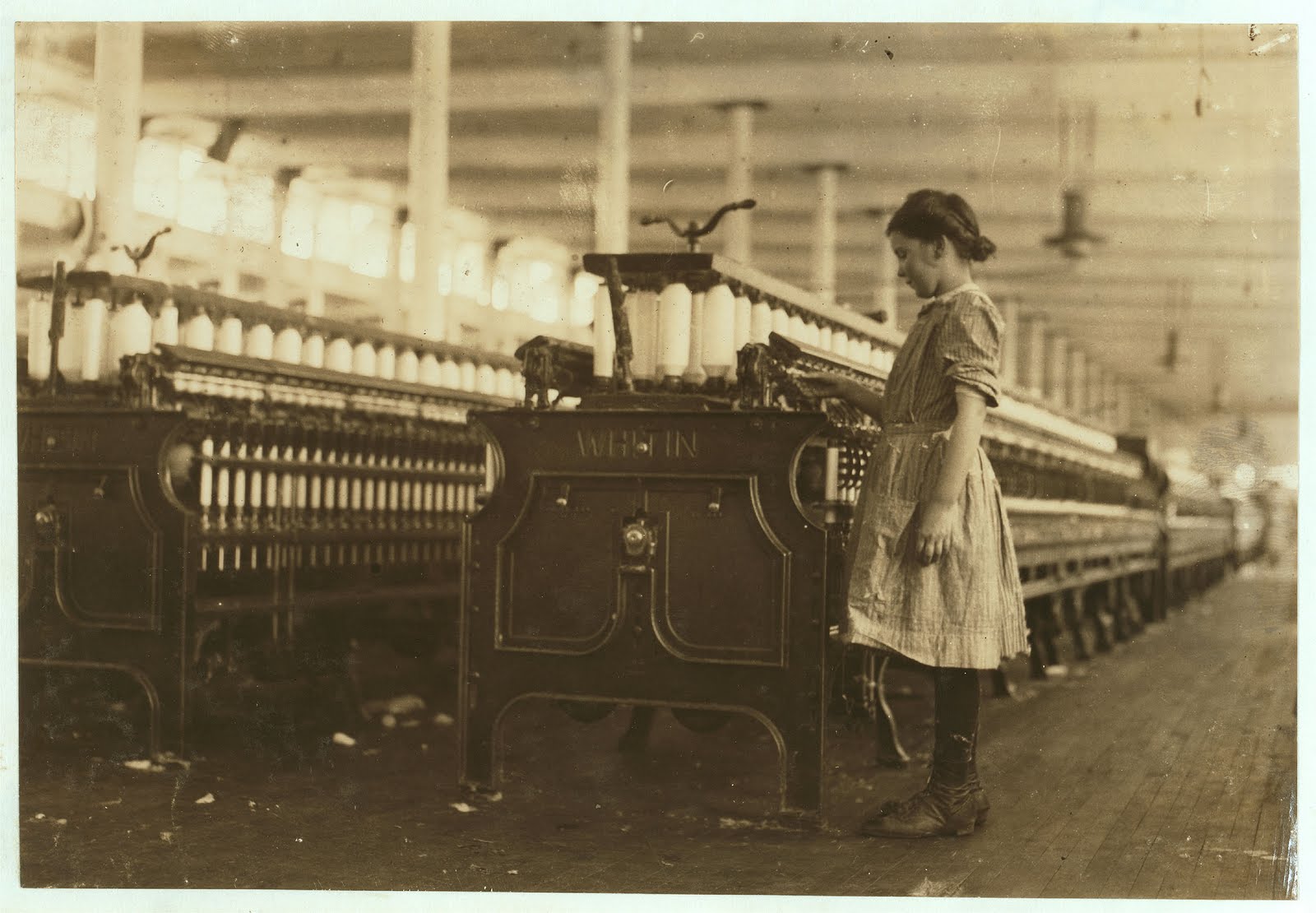
“Virginia Workers Have Benefited from Organized Labor,” proclaims the headline of a press release promoting a new exhibit at the Virginia Historical Society. The press release continues:โFor most people, unless they have someone in their family who has been a union member or has been very involved with union work, they have no idea how organized labor has shaped their working world today,โ said William Rasmussen, lead curator at the Virginia Historical Society. โThis exhibition will show visitors, especially young visitors, that there hasnโt always been a 40-hour work week, minimum wage, health benefits, and required lunch breaks. Thousands of Virginia workersโwhite, black, male, female, young, oldโhave sacrificed and suffered to give us the adequate, healthy, and safe working environment that most of us presently enjoy.โ
I wonder if the exhibit will explore the role of the labor movement in cementing white working- class privilege of the expense of African-American workers. I’m guessing not.
I wonder if the exhibit will explore the relationship between rising wages/improving workplace conditions and rising labor productivity made possible through the investment of capital, entrepreneurial innovation and the free-market competition for workers. I’m guessing not.
I wonder if the exhibit will explain why the marketplace demand for organized labor in Virginia today is virtually nil, surviving for the most part in large industrial corporations with national ?
I hope to be proven wrong, thus pleasantly surprised, but judging by the press release, I’m surmising that the exhibit will push a traditional liberal narrative. An interesting point for some dogged investigator to pursue: Has the Virginia Historical Society become another cultural institution taken over by liberals and funded through the donations of an oblivious public? Has the Virginia Historical Society swung from one extreme to another, from romanticizing a flawed past to propagating an equally lopsided progressive narrative?
Just asking.
(Photo credit: Virginia Historical Society.)
-
Bill Bolling’s Funny Pages
Sunday mornings bring my usual routine — wading through three newspapers. Despite the wholesale move to digital, there’s something about flipping through all that newsprint that seems satisfying, but this shows my age.When I come to the Richmond Times-Dispatch, I reach for the “Commentary” section rather than the comics if I want amusement. Publisher Thomas A. “TAS” Silvestri has some impenetrable tome on what it means to be a “leader” or propaganda for the Greater Richmond Chamber of Commerce of which, in a curious conflict of interest for a newspaperman, he is chairman. Or there is apple-checked Bob Rayner writing that despite his Harvard education, Barack Obama doesn’t understand market economics. Rayner, I assume, does. Or Robin Behers, a former Navy petty officer, who, in what had to be an exclusive global scoop, once wrote flatly that Russia has sold nuclear weapons to terrorists.The biggest hoot this Sunday was the lead piece penned by Lt. Gov. Bill Bolling, the Republican whom the TD editorial board is setting up to succeed Bob McDonnell.Bolling writes that Congress must keep the tax cuts granted by George W. Bush. Bolling, true to the GOP, claims that these are not just perks for the rich, even though they are. They are needed to help stimulate the economy and why should (rich) families be penalized? Odd that New York Times columnist and Nobel Prize-winning economist Paul Krugman writes today that by keeping the cuts, Congress would be giving a check worth $3 million to the tiny upper strata of people who are already wealthy.But what really made Bolling a better read than “Doonesbury” or “The Wizard of Id,” was this statement:“In my role as Virginia’s chief jobs creation officer, I have met with more CEOs than anyone in Virginia government over the past seven months. These CEOs know what it takes to create jobs and get our economy moving again. If there is one thing they all agree on, it is the need to reduce taxes to encourage spending and investment.”Wow. That’s a mouthful. It is also highly amusing since some of the same CEOs are responsible for the very economic mess we are trying to get out of. In my past life, I spent years at BusinessWeek, was a contributing editor at Chief Executive magazine, former Washington Editor for Directorship magazine and still write occasionally for Corporate Board Member. I also blogged for about a year on corporate governance and financial services for CBS Interactive’s bnet.com.I don’t mean to bore with my resume but my point is that I have interviewed dozens of CEOs over the years, including such luminaries as the heads of Procter & Gamble and TRW. There are some truly good ones out there, but there are also many bad apples. I do not hold them in awe.Consider that:- The CEOs of Bear Stearns, Wachovia, Merrill Lynch, AIG. LandAmerica Financial Group, Lehman Brothers, Fannie Mae, Freddie Mac and Bank of America let their greed get the better of them and got all involved in subprime lending or extremely risky but profitable financial derivatives based on subprime lending such as Credit Default Swaps that stuck us in the Great Recession in the first place.
- Greater Richmond took a huge beating because of the inept CEOs and other top managers at Circuit City, costing the area thousands of jobs.
- CEOs at General Motors and Daimler-Chrysler botched making cars and planning for new models so badly that both needed huge federal bailouts.
- CEOs at BP helped give us the worst oil spill in U.S. history this spring.
I have more on my list, but I think I’ll give the leader a break.
Hot flash for Bill Bolling. CEOs ALWAYS want lower taxes. It ain’t news. You might want to concentrate on why financial services firms are not lending to small businesses which create two thirds of all jobs in Virginia and elsewhere. Or why credit card companies use any ruse they can to bilk customers so they can’t spend more on goods and boost production.But what does it matter. He’ll probably be the next governor anyway.Peter Galuszka
-
McDonnell’s Idea of Health Care Reform

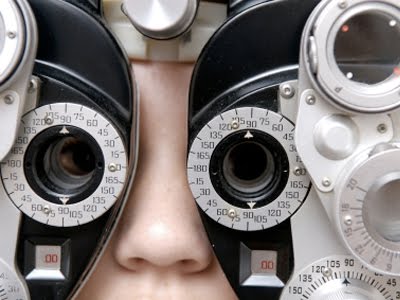
With all the hub-bub about “Obamacare” and the new-found love of Republicans for balanced budgets after eight years of George W. Bush blow-outs, one wonders what Gov. Robert F. McDonnell is doing.When it comes to health care, the Republican governor seems to have a deaf ear on medical care for the poor.Consider that McDonnell is getting a big time rep as being a budget balancer by supposedly turning a deficit of $1.8 billion into a surplus of more than $400 million. Of he did so through some accounting tricks that would have gotten the CEO of a private firm in trouble, such as delaying scheduled payments on state employee pensions.McDonnell also has achieved his supposed budget goals on the eyes of the poor. He cut $764,000 from Medicaid funds intended to help the needy get routine eye exams from optometrists. That has the Virginia Optometric Association up in arms since their doctors handle about 70 percent of all eye exams in the state.The message seems to be that if you are poor, then you can just as well go blind. The state won’t help you.But then, McDonnell doesn’t seem to cotton much to the needy. Take a look at the composition of his “Virginia Health Reform Initiative Advisory Council” which is supposed to help him deal with such features of Obamacare as setting up exchanges to help people meet their requirement to buy health insurance and also get unspent stimulus money available to help make medical records electronic.McDonnell has appointed 24 people to the council. They include Managed Care executives,lawyers, physicians, a business school official, politicians, and, strangely, the COO of a pest control firm.Noticeably absent from his council are people representing the poor, the elderly, labor unions or others who may not be in the business elite in crowd.Of course, John A. Luke, chairman and CEO of MeadWestvaco, its headquarters newly relocated to Richmond, is on the council. But the paper and packaging firm has a dotty relationship with labor unions and one wonders how much Luke will recommend short-changing workers when it comes to health care. One must consider the bottom line.The upshot is that McDonnell sees health reform as what is healthy and good for Managed Care. Actual patients can go wanting, especially if they are poor or elderly.Peter Galuszka
-
What are Trani and Casteen Really Doing On Corporate Boards?
In Virginia, as in most states, being the head of a large public university is a prestigious job. Along with it come lots of perks, such as being appointed to various education and public service committees and also, in some cases, to lucrative seats on corporate boards.Therein lies the problem.Two former heads of two major universities — the University of Virginia and Virginia Commonwealth University — have been or are on the boards of some publicly-held firms that have had some very serious problems. These call into question why the academics are involved, what their roles on the boards really are or have been, whether being on the boards hurts their school’s reputation and whether they even have the time for it.One is John Casteen III, who has just left the presidency of the University of Virginia. He had been a director of Wachovia for years, before the North Carolina bank racked up losses of $23.88 billion in 2008 and was forced into a shotgun merger with Wells Fargo National Bank using taxpayer bailout money.After its tough and controversial takeover by First Union, Wachovia stumbled because it got involved in subprime mortgages, notably by buying GoldenWest, a subprime mortgage lender. Casteen, who did not respond to questions, was on the board during that takeover and throughout all of the drama when the financial crisis hit in late 2007, spelling doom for Wachovia.Today, Casteen is a defendant in a massive lawsuit brought on by pension fund managers from California and Louisiana among other places, who say they were cheated by Wachovia and saw their investment crash and burn.If that weren’t enough, Wachovia has settled with the federal government by paying fines of $160 million for its involvement in laundering drug money through Mexican currency exchange houses.Both events happened while Casteen was on the board. In 2007, Casteen had total compensation of $243,500 from his service on Wachovia’s board and stock ownership.Eugene P. Trani left the presidency of Virginia Commonwealth University in 2009 after improving the school’s standing and expanding its presence in downtown Richmond. But Trani was also a director of LandAmerica Financial Group, a Richmond-area title insurer that went belly-up in 2008, taking with it millions in investors’ money.One wonders what Trani was doing in those final days of LandAmerica Financial Group in late 2008 when bankruptcy loomed.Today, Trani is on the board of Richmond-based Universal Corporation, a global tobacco marketer. Universal’s subsidiaries have just agreed to pay $8.98 million in a tobacco bribery scandal that stretches from Brazil to Thailand to Africa. The firm has issued a public apology. Trani received total compensation for his board service of $159.032.Once again, what was Trani doing on the board?He is on the board’s audit and pension investment committees? Did he know about the bribery problems? Did he do anything to correct the matters? He did not respond to requests for comment.And speaking of tobacco, Casteen has just been appointed to the board of Altria, which owns cigarette giant Philip Mrris USA. His pay wasn’t available, but groups such as Campaign for Tobacco-Free Kids say that high profile people such as university presidents should avoid being used to improve the image of tobacco firms.Being Virginia, the state may be too conservative to have the student protests of the type in Ohio that led to E. Gordon Gee, president of The Ohio State University, being scolded off the board of Richmond-based Massey Energy, a coal firm with a bad safety and environmental record.Two other heads of schools are not on corporate boards. One is Ed Ayres, president of the private University of Richmond and the other is Michael Rao, who succeeded Trani at VCU.In Virginia, the ruling elite, and that includes the Richmond Times-Dispatch, never asks any tough questions about academics and corporate boards. They adopt the stance of many corporations that I have dealt with — you have no right to ask, we defend our board at all costs and directors should be considered gods walking the earth.Maybe. A spokesman for the National Association of Corporate Directors says that academics can offer valuable and unique perspectives to corporations. But the dangers of academics serving on corporate boards remain.Peter Galuszka