• Foreclosure Fiascos

    A common refrain on this blog that gains more currency as frustration with the anemic economic recovery grows is that regulation of business is somehow to blame.

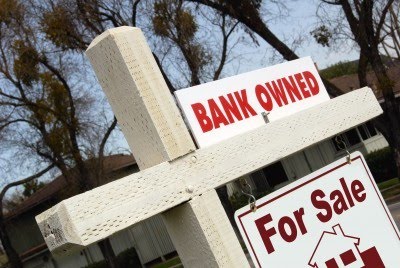
    That might suit the right-wingers but it is a fallacy. And just as the big financial institutions were allowed to run amok by federal and state regulators during the go-go mortgage years, a brand new financial problem has arisen: phony foreclosures.

    As banks loaned mortgage money like crazy during the last decade, they quickly securitized those loans, meaning they packaged them into parts and sold them off to new owners. Traditionally, if you buy a house, there is a deed of sale and trust or whatever in your local courthouse that states who holds the loan, for how much, and so on. If the house is sold or foreclosed upon, this tried and true system keeps track of ownership and the loaned money.

    Well, not no more it don’t. Federal regulators and Congress are finding that many banks, especially the big mortgage enchilada, Bank of America, apparently sold off mortgages without bothering to take the time to record the sales properly.

    They often used ill-trained and sometimes semi-literate robo-signers who would sign hundreds of foreclosure papers every day without even examining them.

    So, you have banks foreclosing on the homes of people even though they don’t own the loan.

    This is insane. But it has happened on such a large scale that it might dip us into another financial crisis.

    The reason for this is simple: greed. Banks could give a damn about people or propriety. They made big bucks granting questionable loans. And they made even more bucks securitizing loans and selling them off without messing with the paperwork.

    And where were the regulators? Who knows? Probably the same place when banks were greatly leveraging their lending to equity ratios and making loans to people without incomes.

    But if you pay attention to the Republicans and some of the people who write for this blog, it’s not the banks’ fault, it’s the fault of “regulation” that is hampering our “free market” system.

    Guess what? How can there be a “free market” when someone is seizing your property and selling it off because you haven’t paid a loan that really is no longer due to that person or bank? What’s to keep some free market maven, such as Jim Bacon or Groveton, from showing up at my front door and ordering me out so they can resell my house?

    I don’t owe Jim Bacon or Groveton any money.

    Peter Galuszka


  • Google Blows Away McDonnell’s Plans

    The timing couldn’t be more revealing.

    Just as Gov. Robert F. McDonnell, pushing his goal of making Virginia “the Energy Capital of the East Coast,” was set to open a hydrocarbon-heavy lineup at a two-day energy conference in Richmond, Google struck.

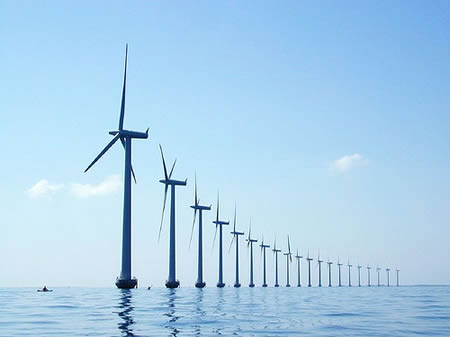
    The Internet giant and Good Energies, a New York investment firm, announced a $5 billion project to build an underwater transmission backbone for a farm of wind turbines up to 20 miles off the East Coast from Virginia to New Jersey. The project would take a decade to complete and eventually generate up to 6,000 megawatts of electricity, or about as much as four large nuclear power stations. Analysts say Google needs great gobs of energy for its operations, which include a large server farm in Northern Virginia.

    The news came just as McDonnell was to open the energy conference. He envisions wind and solar among his preferred mix, but his plan is heavily dependent on hydrocarbons such as coal and petroleum as well as nuclear.

    Virginia has reserves of high-quality coal in its southwestern mountains, but the seams have been increasingly mined out, and large-scale production likely would involve mountaintop removal, a highly controversial practice that involves lopping off huge swaths of earth.

    McDonnell has also pushed offshore oil drilling, but his plans hit a snag in April when BP’s Deepwater Horizon rig exploded in the Gulf of Mexico, resulting in the largest environmental disaster in the nation’s history.

    Undaunted, McDonnell is still pushing offshore drilling, and tonight’s keynote dinner speaker will be Texas oilman T. Boone Pickens, who likes what McDonnell is trying to do. But the Virginia Sierra Club trashed McDonnell’s plans, saying they rely too much on oil and coal, and pay only lip service to renewable energy sources like wind and that the states wastes too much energy as it is.

    Therein lies the rub. Google, which will fund the huge offshore wind project, is a 21st century company. T. Boone Pickens seems an icon from another era, and so does McDonnell as a result of all this. A more modern governor might have had the Google announcement taking place at his conference. Instead, attendees will get the usual Texas oilmen.

    To be sure, there may be some problems with a wind project of the size envisioned. The area is a busy fishing ground, and tall windmills might interfere with that. It is also a major maneuver area for the Air Force and Navy, which opposed McDonnell’s offshore oil plans because they could interfere with military exercises.

    But at the end of the day, one simple fact keeps coming up: No one knows for sure if there are big oil deposits off the Virginia coast. There may be natural gas. But there’s no doubt how much wind is out there.

    Peter Galuszka

  • “Well Within Reach”

    The Miller Center of Public Affairs at the University of Virginia has issued an important new report on transportation, “Well Within Reach: Americaโ€™s New Transportation Agenda.” The report is the brainchild of former Gov. Gerald Baliles, the last governor of Virgina to think seriously about transportation.

    I haven’t had time to read it closely enough yet to provide any thoughtful comments, but a quick glance suggests that the report does incorporate some new thinking, as evidenced from this quote in the executive summary: “Funding for the Highway System was intended to come from drivers, but the current fuel tax no longer creates a direct link between charges and use. We must return to a ‘pay as you go’ system.”

    Emphasis on “user pays” — good.

    Ignoring the relationship between transportation and land use — bad.

  • Krugman Unhinged

    Paul Krugman advanced the argument in a recent NYTimes column — I kid you not — that there has not been a big expansion of government spending under the Obama administration. America needs more spending and bigger deficits in order to gin up some real stimulus!

    I know, I know, Krugman is an easy target โ€” like shooting fish in a barrel. But he won a Nobel Prize, forcrissake, and heโ€™s a columnist in the New York Times, a newspaper that some people take seriously. Whatโ€™s more, heโ€™s so insufferably smug and contemptuous, he needs to be knocked down a peg or two. So, I do my best in the video above.

    (Show mercy on me for the technical quality of the video. YouTube and video-making is a brand-new thing for me. But go ahead and thrash away at the facts and logic expressed therein.)


  • Cuccinelli: The Scary Winner at the Tea Party


    One fact coming out of the Tea Party convention hasn’t really come out on these blog postings, but it is probably the most important one: Kenneth Cuccinelli is the big beneficiary.

    Any political ambitions that the highly ambitious attorney general might have had got a huge boost when the Cooch got a standing ovation at the Greater Richmond Convention Center. Everywhere, along with “Guns Save Lives” paste-on paper slogans, there were Cuccinelli stick-ons. Cars in the parking lot across the street were slathered in pro-Cooch propaganda.
    It may not be so hard to understand why the Tea Partiers like him. Fairly affluent with incomes of from $50,000 to $100,000, white, and middle aged the Tea Partiers project the resentment of outsiders not unlike the 1960s’ “Silent Majority” angry with civil rights, the sex revolution and underclass “welfare” that Richard M. Nixon so skillfully tapped.

    Cooch is perfect for them. He’s a loose cannon, bows to no larger power and is unabashedly hard right whether he’s taking on imagined fraud in global warming research, peddling questionable legal opinions on police power on stopping suspected immigrants or making certain that gays and lesbians have no legal right to protection against discrimination on public college campuses.

    Given the groundswell of support for him by the masses at the convention center, it is clear where they are really coming from. Fellow bloggers may try to paint the event as a truly diverse, sincere and sympathetic gathering (one blogger even said he has decided to “endorse” the movement and is now a “patriot” as if we couldn’t wait for his decision). But the fact is that what you are really seeing is a big move to the far right among the conservative movement.

    This is what is frightening. More traditional Republicans such as George Allen, Bob McDonnell and Bill Bolling all hustled to get a place at the Tea Party table. House Minority Whip Eric Cantor wisely didn’t show up. Say what you want about these politicians, but they aren’t imbued with a kind of self-righteous fanaticism. With the exception of Cantor, they seem willing to compromise and at least consider, to varying degrees, the views of others.
    Not so the Cooch. He sees himself as stubbornly correct in his convictions. When an Albemarle County judge kissed off his “civil investigative demands” against the University of Virginia and a former professor who is an expert on global warming, Cuccinelli charged back with a scaled down attack. This one involves a state global warming research grant whose state funding totaled less than the $350,000 or so that U.Va.’s alumni and other community members have coughed up to fight off Cuccinelli’s first attacks.
    Its this kind of single mindedness that would make Cuccinelli downright dangerous if he were to attain higher office such as governor or in Congress. There would be no room to consider the views others. Whatever the “Cooch” thinks is morally correct. It is a quality of certainty that could date back to the Jesuits which ran a private high school in Washington that Cuccinelli attended. I attended another such high school in the D.C. area and I while I have great respect for the Society of Jesus, I can sniff out a certain strain of righteousness that should give one pause.
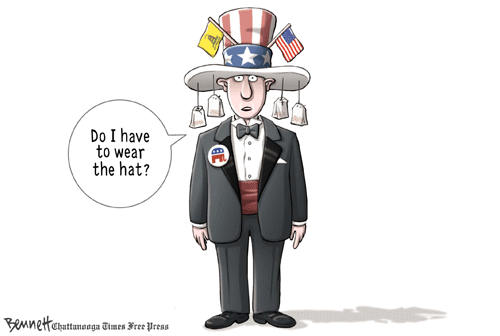
    The Tea Partiers running around with their funny tri-cornered hats, anti-Obama stickers, and 9 mm. automatic pistols in slick Velcro holsters may not realize what they are getting into by giving Cuccinelli a jet-assisted political boost. Lots of politicians have cleverly exploited the politics of resentment even though it didn’t seem to me that the Tea Partiers were particularly down and out. Well-fed and well-dressed, they seemed just as interested in taking the U.S. back five or six decades to some wonderful and imaginary White Toast era than in affecting decent change.
    The most important single political statement they came was backing some kind of constitutional amendment letting states shun federal laws they don’t like. It is the same logic used by the Southern racists to shun integration back in the 1950s and 1960s. Imagine if we had someone in office as self-assured and single-minded as Cuccinelli to oversee such as states’ rights campaign.
    If that were to happen, the Tea Partiers would see violations of civil rights beyond their wildest dreams.
    Peter Galuszka

  • In the Company of the Virginia Tea Party

    At different points in its brief history, the Tea Party movement has been variously portrayed by the ruling class and its compliant tools in the mainstream media as (a) an astroturf rent-a-mob orchestrated by conservative special interest groups, (b) an ignorant rabble of rustics, cranks, gun lovers, spittoon users and Deliverance Creatures, (c) a racist reaction to the election of a black president, and, more recently, when a New York Times poll found Tea Partiers to be better educated and to have higher incomes than the general population, as (d) to quote Washington Post columnist E.J. Dionne, Jr., “the populism of the privileged.”

    Apologists for the status quo will never understand the movement because they cannot bring themselves to acknowledge the simple and obvious truth: that the Tea Party is a middle-class movement protesting its pillaging at the hands of politicians, lobbyists, fixers, pleaders and feeders at the trough of the federal government. But the paid prevaricators of the dominant media do understand that the Tea Party represents an existential threat to their power and privileges, thus they seek to de-legitimize it by any means.

    Until this past weekend, I have observed the Tea Party from afar, largely sympathetic to it but, fed consistently negative images by a mainstream media that highlighted the most extreme statements and actions of a few, I was unwilling to publicly align myself with the movement. However, having had the opportunity to attend the Virginia Tea Party Patriots Convention in Richmond on Friday and Saturday, chat with dozens of attendees and soak up many of the speeches and presentations, I have no reservation whatsoever now to declare myself a Tea Party patriot.

    Who are the Tea Partiers? I would love to take the mailing addresses of the 2,400-or-so attendees of the convention and conduct a geodemographic segmentation analysis, as my friend (and geodemographic segmentation analyst) Steve Toler suggested. Until such a thing is possible, I will have to rely upon my own anecdotal impressions.

    Ethnically speaking, it is safe to say that the Tea Party is overwhelmingly white. Critics of the movement have pointed to that simple fact, along with its hostility to America’s first black president, as proof that the Tea Party is in some sense “racist.” Such is the intellectual bankruptcy of the critics. (I would argue that the critics’ profound ignorance is a good thing, for as long as they persist in totally misunderstanding the movement, the more impotent they will be in opposing it.)

    The organizers of the Tea Party made every effort to be inclusive. At least two of the keynote speakers were African-Americans (and there may have been more — I did not have a chance to see everything), who delivered crowd-pleasing speeches in the great tradition of African-American church oratory. The Bishop E.W. Jackson, who leads a large congregation in Chesapeake, generated some of the strongest applause of the convention and practically had the predominantly white audience calling out, “A-men,” from the seats. (View the clip above.)

    There was a smattering of African-Americans — I would guess several dozen — among the attendees. Given the widespread media smear of the movement as one step removed from the Ku Klux Klan, I consider that a remarkable accomplishment. Hopefully, black attendees will report back to their friends and family members that it is safe to attend Tea Party rallies, ensuring greater African-American participation in the future. Indeed, I think this is likely. I chatted with one black minister from the Richmond area who came to check out the proceedings. Like many African-Americans, he felt thoroughly alienated by the Republican Party, but he was deeply disappointed by President Obama and the Democrats as well. He wondered if the non-partisan Tea Party might prove to be a viable political alternative. There is a strong (though not dominant) social conservative element to the Tea Party movement that members of African-American churches may feel very at home with.

    I also feel safe in saying that the Tea Partiers are overwhelmingly middle class. I have interacted with a broad cross-section of Richmond’s business and political elites over the years, and I saw very few familiar faces at the convention. The interests of politics and business are so tightly conjoined, even in a state capital like Richmond, that the better-off folks, even the political conservatives, prefer to work the system from the inside. The Tea Partiers consist of people who have no stake in the status quo. To the contrary, they feel over-taxed, over-regulated, hectored by those who seem themselves as their betters, and fear runaway deficits and the black hole of a national debt that threatens to swallow the country whole.

    The Tea Party is a big tent. Members include both God-fearing social conservatives and atheist followers of Ayn Rand. Some support free trade; others are protectionist. Some support a strong military and assertive foreign policy; others are isolationists and abhor foreign wars. What unifies the audience is a reverence for the Constitution; a desire for smaller, less intrusive government; a faith in free markets; an unabashed love of the country; and a distrust of the elites of both political parties who have warped the founding Constitution, expanded the power of central government, usurped free markets and threaten in their overweening greed to bankrupt the country.

    I did encounter a few conspiratorially minded people who see sinister and secretive forces at work. A handful of others had highly idiocyncratic views. Such is to be expected of any collection of 2,400 people. But the outliers do not define the movement. The vast majority of people I met are reasonably well informed; some are very well informed. Many are new to politics, frightened by the direction they see the country heading, but they are eagerly seeking more knowledge. They don’t always see the world as I do. (I doubt many would share my views regarding the critical importance of human settlement patterns.) But I do feel comfortable in their company.


  • Catching Up With The Parade


    The Tea Party extravaganza now going on at downtown Richmond’s tax-payer built convention center. I went yesterday and was very impressed.

    The confab seemed to have everything. There were Patrick Henry Re-enactors ringing their Liberty Bells. Slogan-covered gun nuts toting .45 cal. ACPs in holsters. Opponents of eminent domain. Bumper stickers toting Sarah Palin and the Confederate Flag. Our very own Jim Bacon munched a barbecue sandwich as he had some success hawking “Boomergeddon” books from a table in the main hallway.

    Imagine my pride when I woke up this morning and found that the Richmond Times-Dispatch had spent part of its lead editorial castigating something I wrote in The Washington Post and on this blog. I cited a commentary by Style Weekly Arts Editor Don Harrison, a colleague of mine, who had the temerity to note that the event is being held in buildings built at extraordinary taxpayer expense. Here’s what the TD wrote:

    “The Tea Party’s back in town, and a few commentators have suggested there’s something hugely hypocritical about the fact that they’re meeting in the Richmond convention center. The convention center, you see, was built with tax money and — as one wiseacre put it — the Tea Party movement ‘is vigorously anti-tax and anti-government.” So there!
    This is almost painfully stupid. The Tea Partiers support limited government — not anarchy. As one analyst noted recently, enactment of their proposals would dial back federal spending from about 24 percent of GDP to about 18 percent.”

    Well, this wiseacre couldn’t be happier. I haven’t talked with Don yet today, but I am sure that wiseacre is happy, too. The words “vigorously anti-tax and anti-government” are mine. The original article was Don’s. Another blogger, Norm Leahy, a principled conservative who not only talks the talk but walks the walk, picked up as well on Don’s original piece.
    Imagine my pride at being singled out by a newspaper that for decades has had one of the most retrograde editorial pages in the U.S. that tried, however eloquently, to support such racist and hateful movements as Massive Resistance in the 1950s. The TD is still apologizing for that one.

    The problem is that the TD represents the entrenched interests of Richmond’s economic elite and little more. This cabal likes to dub itself “leaders’ and has promoted using other people’s money to develop the Broad Street corridor. The convention center was built with a special tax levied on hotel operators. Center Stage, replacing the Carpenter Center, was another tax payer blow out and however welcome it may be, it tends to present entertainment more attune to the richer whites living in the burbs and people actually living in the city.

    The idea, you see, is to get them back downtown even though the living settlement pattern and highway development plans of the very same elite some years back pushed those folks out of the city and to the burbs. They spent tax money for Interstate 95 through historically African-American Jackson Ward, which in its day grew organically and without public financial help to become one of the premiere jazz spots on the East Coast. Chopped up by bulldozers, Jackson Ward died. The elite also spent tax money or floated bonds for other superhighways to get white folks out of town such as the Powhite Parkway and Route 288 connecting a white suburban area of Brandermill with a white suburban area of Short Pump.

    As in many newspapers, the TD’s Chinese Walls originally intended to maintain some level of integrity are quickly dissolving away. The newspaper’s publisher is chairman of the Greater Richmond Chamber of Commerce. Rather than encourage true investigative reporting, he is the point man for the local business elite’s marketing “vision” of what the city is and should be whether it is or not.

    Congressman Eric Cantor is much loved by the TD. His wife serves on the board of Media General, which owns the newspaper. The TD has probably never printed a negative word about Cantor who is part of the club.

    The TD editorial page, however, is not as foul as it was during the days of rug-biter Ross MacKenzie. Sometimes it is reasonable, even if it wanders off into effete stories about how Chablis goes well with oysters or how breathtakingly lovely services can be at the Episcopal Church. Even their choice of the word “wiseacre” shows how out of touch they are. My father, who died at 88 in 2004, didn’t use that description for me because it seemed of an earlier generation. He used other ones.

    The problem for the TD with the Tea Party is that it is part of the Republican establishment that, truth be known, is utterly terrified of such movement. To their credit, the Tea Partiers blame George W. Bush for a bit of the budget deficit. Fair-haired boy-wonder Cantor voted lockstep with whatever Bush wanted and they know that, too.

    The TD and the Republican Establishment are control freaks. They want to be kingmakers and, while playing the role of high-minded Southern gentility, want to select the goals for us lower class and dumber folk. They can’t do that with the Tea Party, as nutty as some of its elements can be.

    So, t
    he TD, just like Gov. Bob McDonnell and Lt. Gov Bill Bolling, are running to catch up with and lead a parade that started long ago. McDonnell and Bolling got cheers when they held a panel discussion on streamlining government. But I didn’t hear anything meaty other than a truly scary idea of an amendment that lets states discard federal laws don’t like.

    Imagine if this awful concept had been around in the 1950s. We’d still have segregation. Massive Resistance would still be the law of the Commonwealth. We’d be stuck otherwise 60 years ago while the world has moved away. Virginia would be like a left-behind South Africa.

    Anyway, TD editors, I bow to your small compliment and hope my future work pleases you.

    Peter Galuszka


  • The ANTIPARTISAN VOTERS GUIDE — YEAR ONE

    With Federal mid-term elections less than a month away and important contests facing voters in many states, it is time for The ANTIPARTISAN VOTERS GUIDE โ€“ YEAR ONE.

    After analyzing parameters, principles and strategies, The ANTIPARTISAN VOTERS GUIDE for the inaugural year of the AntiPartisan campaign can be reduced to four simple rules:

    1. If the incumbent is a Donkey Clan member, vote for the Elephant Clan candidate UNLESS there is a creditable non-aligned candidate* who can win.

    2. If the incumbent is an Elephant Clan member, vote for the Donkey Clan candidate UNLESS there is a creditable non-aligned candidate* who can win.

    3. If the office in question is โ€˜open,โ€™ vote for the Donkey Clan member, UNLESS there is a creditable non-aligned candidate* who can win.

    4. In the rare instance where there are two creditable non-aligned candidates* who can win and one is a lawyer, vote for the other one.

    *โ€˜Non-aligned candidatesโ€™ include those who have formally and irrevocably renounced partisan Clan affiliation.

    A BRIEF EXPOSITION OF THE FOUR RULES:

    On the first two rules:

    Most voters would feel better about themselves if they voted for someone they believed REALLY wanted to make the world a better place for someone besides the candidate and his / her Clan. However, it is not prudent to waste your vote on someone who has no chance of winning UNLESS the candidate is an avowed AntiPartisan candidate that supports Fundamental Transformations. In this case, every vote will count, even if the candidate does not win.

    On the third rule:

    Voting for the Donkey Clan candidate in open contests will avoid gridlock that would result from a Donkey Clan administration and Elephant Clan legislature especially at the Federal level. Civilization does not have two years to waste on more gridlock.

    Do not worry that one Clan would control both administration and legislature. The goal is Transformation, not gridlock. Voting out ALL the Clan-aligned incumbents will send a clear enough message that Business-As-Usual is not an acceptable strategy.

    On the fourth rule:

    Shakespeare stated the overarching principle well. However, it must be broadened to reflect 21st century reality: Society must evolve to rely the actions of citizens, not the actions of agents. In the coming year citizens must have representatives who understand the need for solutions that meet the needs of the vast majority, not representatives who are trained in the art of advocacy for causes that are, by definition, wrong half of the time. (It goes without saying that in enlightened interest of the vast majority INCLUDES respecting the legitimate interests of ALL minorities.)

    THE TOP PRIORITY

    The top priority for Fundamental Transformation of governance structure is NOT to end wars, balance budgets, eliminate trade deficits, create jobs, support renewable energy, reverse environmental degradation, address climate change, fix social security, provide adequate health care, solve the Mobility and Access Crisis, solve the Affordable and Accessible Housing Crisis, solve the Helter Skelter Crisis or even cure Mass OverConsumption.

    The TOP priority of Fundamental Transformation of governance structure is to set in motion an evolution of governance so that there is match between the structure of Agencies (governance) and the economic, social and physical reality in 2010.

    Matching governance structure with reality requires that Agencies exist for each of the organic components of human settlement from the Cluster to the Community, from the SubRegion to the MegaRegion and from the continent to the planet. That will allow for the evolution of THE functional governance imperatives:

    The level of control and responsibility must be at the level of impact.

    When there are multiple levels of impact there must be shared responsibility.

    The closer an Agency is to the subject of Agency action, the better. The closer the citizens who elect the Agency are to the subject of Agency action, the better.

    It is also imperative that:

    The โ€˜biggestโ€™ Agency does NOT control just because it has a larger jurisdiction or is โ€˜higherโ€™ in the overall governance structure.

    To repeat, the level of control and responsibility must be at the level of impact.

    These new imperatives for the allocation of governance responsibility are no more radical than:

    โ— โ€œThe king does not have the ONLY sayโ€ was in 1215,
    โ— โ€œThere are THREE Estatesโ€ was in 1302,
    โ— โ€œThe Crown cannot UNILATERALLY declare a tax on teaโ€ was in 1773, or
    โ— โ€œOf the people, by the people and for the peopleโ€™ was in 1776

    It will take some getting used to, but new scales of governance Agencies and new relationships between governance Agencies are essential for civilization to achieve a sustainable trajectory.

    The problem is not BIG government. The problem is BAD governance structure.

    Once there is a rational set of Agencies and a rational distribution of governance responsibilities, THEN it will be possible to end the wars, balance budgets, eliminate trade deficits, create jobs, support renewable energy, reverse environmental degradation, address climate change, fix social security, provide adequate health care and solve the Mobility and Access Crisis, the Affordable and Accessible Housing Crisis or the Helter Skelter Crisis.

    Citizens will come to understand that Mass OverConsumption is unsustainable and that the Wealth Gap must be closed. All citizens must have the opportunity to prosper based on effort and ability, not on happenstance and inheritance.

    In the new context, Agencies can work with the other three Estates โ€“ Enterprises, Institutions and Citizens / Households โ€“ to insure that ALL Citizens have the opportunity to be happy and safe AND evolve a sustainable trajectory for civilization.

    A sustainable trajectory for civilization will require:

    โ— A Global Balance of consumption with resource regeneration

    โ— Optimizing MegaRegional, New Urban Regional and SubRegional Resilience

    โ— Achieving relative Balance at the Community, Village and Neighborhood scales.

    With respect to โ€˜sustainabilityโ€™ See Chapter 23 of The Shape of the Future.

    EVOLVING AWAY FORM A TWO CLAN POLITICAL SYSTEM

    The two currently dominate political Clans have perfected the art of achieving a of 50.5 percent โ€˜majority.โ€™ This state of affairs does not meet the needs of ANY cohort of citizens or their Organizations โ€“ even the leaders of the Clan that won the last election.

    The โ€˜two partyโ€™ system may have made sense when the vast majority of the humans in the US were:

    โ— Illiterate
    โ— Had no right or opportunity to participate in the political process
    โ— Made a living as subsistence farmers, indentured servants or slaves
    โ— Participated in Regional agrarian societies with a mercantile / colonial supply chains
    โ— Were unconstrained by natural resources (aka, Natural Capital) because resources were effectively โ€˜infiniteโ€™ in relationship to the population and per capita consumption of the US
    โ— It took a week for information to get from northern Massachusetts to southern Georgia.

    The two Clan system allowed for a articulation of โ€˜clear-enoughโ€™ alternatives that guided part-time governance practitioners who met and acted in isolation from the majority of the citizens they represented. In an agrarian society, governance practitioners acted on a narrow spectrum of issues that reflected the far more simple economic, social and physical context of that society.

    In 2010 the VAST MAJOR
    ITY of the humans in the US are:

    โ— Illiterate โ€“ a growing number have advanced educations
    โ— Citizens have the right, duty and opportunity to participate in the governance process
    โ— Securing their livelihood within a complex, Global Urban society with Global competition and a Global supply chain
    โ— Constrained by per capita consumption because humans have reached and / or exceed Peak Resources
    โ— Information transfer is instantaneous

    Compounding these profound differences, there are a bewildering array of new factors to consider at every level of economic, social and physical activity in the Global, Urban society.

    In addition, there are generations worth of Myths and misconceptions about what constitutes the best interest of citizens, Households and their Organizations.

    Finally, in an Urban society there are more community (small โ€˜cโ€™) responsibilities and fewer personal rights, the exercise of which turn out to be in the best interest of the citizens, their Households and their Organizations.

    Wishing for โ€˜the good old days when things were simpleโ€™ is as intelligent as wishing to be 16 years old again. It is time to move beyond the two Clan political system.

    EVOLVING A GOVERNANCE STRUCTURE TO MATCH THE ECONOMIC, SOCIAL AND PHYSICAL COMPLEXITY OF CONTEMPORARY HUMAN EXISTENCE.

    The current โ€˜three levelโ€™ governance structure of the US (Federal / State / Municipal) reflects the reality of 1784 when Thomas Jefferson outlined the parameters that became the Northwest Ordinance adopted by the Continental Congress. Since that time citizens of the US have experienced a profound transformation.

    The transition from an Agrarian society in 1784 โ€“ and in 1800 โ€“ to and Urban society in 2010 has been documented by Peter Drucker (The Age of Discontinuity) and others as the most dramatic transformation in the 220,000 (+/-) year existence of Homo sapiens. See resources cited End Note Seven of the Prologue to The Shape of the Future.

    The 210 year transformation in the US can be summarized as follows:

    1800: The Countryside (including extensive โ€˜wildernessโ€™ beyond a โ€˜frontierโ€™) supported 95 percent of the population. This cohort was engaged in the production of food and fiber โ€“ many were subsistence farmers, indentured servants, slaves and hunter /gathers AND,

    In 1800 a few scattered, compact Urbansides supported 5 percent of the population. This cohort relied primarily on Urban activities for their livelihood.

    2010: There are now 70 large, complex Urbansides (the Cores of the largest 70 New Urban Regions) where 85 percent of the population of the US live and work. (Fifty-six of the New Urban Regions are agglomerated in 11 MegaRegions) AND,

    In 2010 the Countryside (with no โ€˜frontierโ€™ and no true โ€˜wildernessโ€™) supports 15 percent of the population. Most of the Countryside population resides in smaller-scale Urban agglomerations WITHIN the Countryside or in Urban Households scattered across the Countryside. Less than 5 percent of the US population is directly involved in the production of food, fiber and other NonUrban activities. There are no slaves, no indentured servants, almost no substance farmers and even fewer hunter /gathers.

    The primary activity of humans in the US can be summarized as follows:

    In 1800 โ€“ NonUrban 95, Urban 5.

    In 2010 โ€“ Urban 95, NonUrban 5.

    A vast array of hunter gather societies supported the evolution of Homo sapiens for about 207,000 (+/-) years. The transformation from these hunter gather societies to a wide variety of agrarian societies โ€“ supported by a tiny, but growing, minority of citizens who lived in ever more complex Urban enclaves โ€“ evolved over the next 12,800 (+/-) years.

    The massive and rapid transformation from multiple agrarian societies with compact Urban enclaves (cities, villages and hamlets) to a complex, interdependent, Global, Urban society was accomplished in less than 200 years. This transformation was unprecedented and the impact is still largely misunderstood.

    Based on unsupported, self-serving Myths, โ€˜leadersโ€™ now expect citizens to get along with the same three-level governance structure in 2010 that existed in 1800.

    How is that working for citizens? Not well.

    The Industrial Revolution has Urbanized human society as documented in Chapters 1 and 2 of The Shape of the Future. The Industrial Revolution did not exert full impact on the settlement pattern or economic and social structure of the US until after the Civil War ended in 1865. After a post Civil War industrialization boom and The Long Depression (1873 to 1896), the economic, social and physical fabric of the US was transformed by an Urban revolution of unprecedented scale.

    To understand the roots and dynamics of the Urban Revolution from 1800 to 2010 in addition to The Shape of the Future and TRILO-G see, at a minimum: Guns, Germs, and Steel (Jared Diamond) The City in History (Lewis Mumford), Crabgrass Frontier (Kenneth Jackson) and (The Great Reset) Richard Florida. Also see over 100 resources cited in PART I of The Shape of the Future.

    Fundamental transformation in society must be reflected in Fundamental Transformation in governance structure. As Thomas Jefferson noted:

    โ€œI am not an advocate of frequent changes in laws and constitutions but laws and institutions must go hand in hand with the process of the human mind. As that becomes more developed, more enlightened, as new discoveries are made, new truths discovered and manners and opinions change … institutions must advance also to keep pace with the times.โ€

    (Thomas Jefferson to Samuel Kercheval, 1816. ME 15:40)

    Can anyone in good faith suggest that far more changes have already occurred than Jefferson believed were required to necessitate fundamental changes?

    It comes down to a matter of survival. In a โ€˜flatโ€™ world with:

    โ— wide-spread literacy,

    โ— Instant communications / information dissemination, and

    โ— Wide distribution of weapons of mass destruction / massive stockpiles of weapons of conventional destruction / ubiquitous access to weapons of inter-personal destruction:

    There is no alternative but to make Fundamental Transformations of governance structure. These transformations can facilitate evolution of Fundamental Transformation of humans settlement patterns and of economic systems. These Transformations are imperative if citizens are to achieve a sustainable trajectory for their civilization.

    To advocate โ€œOriginalismโ€ with respect to governance structure is to condemn citizens to conflict and Collapse. One starts with the Wealth Gap and moves quickly to terrorism. See Aftershock by Robert Reich.

    WHAT ABOUT TERM LIMITS AS A ‘SOLUTION’?

    Term limits within the existing structure are nothing more than an excuse to postpone Fundamental Transformations of the governance structure. It is the STRUCTURE that is the problem. It does not matter WHO is in office.

    Within a transformed governance structure, term limits would be a natural attribute of the system. That is not because term limits remove dead wood but because they encourage office holders to change venues, change perspectives and change Estates.

    In addition, term limits would provide an incentive for those with good ideas and initiative to move up โ€“ from Community manager to Regional cabinet member to MegaRegional legislator to Continental chief executive.

    Remember the four rules and see you at the poles.

    EMR


  • It’s Tea Time in Richmond

    Virginia’s Tea Party movement has grown with a vengeance to become what some observers say is the best organized such movement in the country.
    Its success, and strident resentment of current politics, will be in evidence Friday and Saturday when the movement convenes at Richmond’s Convention Center for a big conference.
    Drawing on anti-Obama sentiment, concern about deficit spending and frustration with the anemic economic recovery, the movement in Virginia has grown to about 30 informal chapters and 8,000 participants. “We’re incredibly successful,” Jamie Radtke, a tax consultant and stay-at-home mom who heads the Richmond Tea Party and the umbrella Federation of Virginia Tea Parties, told me.
    These are heady times for Radtke, whose story is told on the front page of the Wall Street Journal on Oct. 6. The Virginia Tea Party types have played a big role in turning around sentiment in the Old Dominion, which voted for Barack Obama in 2008.
    Radtke and her confederates insist that they are not particularly anti-Obama and that they are equally critical of George W. Bush’s bank bailout, House Minority Whip and Henrico Congressman Eric Cantor’s spending, and Republican members of the Virginia General Assembly who Radtke says have doubled the state’s budget.
    But as well-organized as the Virginia movement seems to be, there are still loose ends. To be sure, there’s a racial element, since the parties sprang up after Obama, the first African American president, took office. Tea Party organizers in Virginia go to great lengths to show that they are diversity-conscious and often draw attention to members who are black.
    Another problem stretches farther down the ranks. I attended a tea party meeting at a middle school in New Kent County last week. The participants were drawn from a piney woods area of about 13,000, mostly white people, many of whom are retired, about 35 miles east of Richmond.
    About 150 attending saw a slide show with the usual patriotic themes that got tougher with each click. Bush’s $700 billion Troubled Asset Relief Program, used to bail out such giant financial entities as AIG, was billed as a “liberal” program and tied to Obama. The speaker was a minister and retired Harvard Law grad who along with an assistant were the only African Americans in the room.
    And when the Tea Parties converge in downtown Richmond, they will be living large thanks to the largess of taxpayers. Although the movement is vigorously anti-tax and anti-government, the convention center where their event will be held was built with $170 million raised through a tax increase on regional hotels, according to one astute local observer. A hotel across the street where many will stay was built with $44.8 million in historic site tax credits. A new performing arts center built nearby to revitalize the downtown area’s forlorn Broad Street was built with $61.3 million in taxpayer money.
    These contradictions don’t seem to bother the exuberant Tea Partiers. After all, they have the state’s Republicans, including Cantor and Gov. Robert F. McDonnell and Lt. Gov. Bill Bolling, dancing to their tune. According to the Journal, the movement helped push right-wing Attorney General Kenneth Cuccinelli to sue to block Obamacare’s requirement that U.S. citizens buy health insurance. And they are well organized.
    Peter Galuszka
    (first posted on The Washington Post.com and published in the newspaper’s Oct. 7 op-ed page.

  • The Real Races to Watch

    This November there will be another federal election. As always in a mid-term election all of the House of Representatives and one-third of the Senate will be up for grabs. This election is a bit more exciting than usual due to the prospect of significant gains by the Republicans at the expense of the Democrats.

    Big whoop.
    In my opinion, the real action may be at the state level. Unlike Virginia, most states hold elections on the same even-numbered years as the federal election cycle. Which means that many statehouses are in contention this November. A recent Rasmussen poll predicts that the final governor count will be GOP – 28, Dems – 15 with 7 “too close to call”. You can see more details here.
    Who cares and so what? The number “33” has a certain mystical meaning. For starters, it is emblazoned on each and every bottle of Rolling Rock beer. Perhaps more importantly, from a political perspective, it represents 2/3 of the 50 states. Article V of the US Constitution defines the two ways that the constitution can be amended. The first approach involves the Congress proposing amendments which are then ratified (or not) by the states. The second approach allows the states to demand that Congress call a constitutional convention. Both approaches require a 3/4 vote by the states to ratify the amendment(s).
    The Republicans are within earshot of 33.
    Governors are not state legislatures and it’s unlikely that the Republicans will win enough of the “too close to call” elections to get 33+ governorships. However, I sense a trend among Republicans at the state level. Fed up with the federal government and convinced that special interests have a death lock on Capitol Hill, more and more Republican state legislators are talking about the 10th Amendment. Are we getting to a point where Republicans control enough state houses to start threatening the federal politicians with a demand for a constitutional convention? Bet on it. As the Bush meltdown becomes the Obama long recession, the flames of resentment against the federal government grow among the voters – especially the Republican voters. And nothing warms the cockles of Republican hearts like a promise to “do something” about “Washington”. What could be a better way of “doing something” than forcing a constitutional convention on the federal establishment – whether they like it or not?
    How long will it take for some Republican to start talking about a constitutional convention mandated by the state legislatures? I’d guess Nov. 3.
    Will it happen? Will there really be a state mandated convention? Will the US Constitution be rewritten? Of course not. Remember, we’re talking about politicians here … not real people. However, the talk will happen and sometimes talk is enough to make a slight difference. Perhaps the federal “ruling class” will back down a bit when faced by even the threat of a non-violent rebellion by the states. Then again, perhaps pigs will sprout wings and start mating with sparrows.

  • DRIVEN APART — FINALLY

    For the last three decades Billions of dollars have been spent on traffic congestion โ€œsolutions.โ€ These โ€˜solutionsโ€™ are based on conventional wisdom and validated by the annual Texas A&M / Texas Transportation Instituteโ€™s (TTI) annual Urban Mobility Report (UMR.)

    Every year for three decades Urban traffic congestion has grown worse and settlement patterns have become more dysfunctional โ€“ not just from a traffic congestion perspective but from a broad range of economic, social and physical parameters.

    In April of 2003 SYNERGY published a PowerPoint โ€œThe Physics of Gridlockโ€ which demonstrates why the basic perspectives upon which UMR is based generate more and more congestion and perpetuate the Mobility and Access Crisis. An updated version is available on The Shape of the Future, 4th Printing CD.

    On 20 September 2004 SYNERGY published Column 39 โ€œSpinning Data, Spinning Wheelsโ€ that catalogued problems with UMR. This column is available on the RESOURCE page at www.emrisse.com

    Every column, report and post by SYNERGY that has addressed the Mobility and Access Crisis since 2004 has quoted these two sources.

    And every year more Billions are plowed into infrastructure designed to overcome congestion but in fact making it worse โ€“ as documented by UMR.

    NOW, finally, someone has put together enough money (from the Rockefeller Foundation) and enough talent (from CEOs for Cities โ€“ aka Enterprise Chief Executive Officers for Urban Regions) to expose UMR for what it is.

    DRIVEN APART: How Sprawl (aka, dysfunctional human settlement patterns) is Lengthening Our Commutes and Why Misleading Mobility Measures are Making Things Worse.โ€ http://www.ceosforcities.org/work/driven-apart

    DRIVEN APART does not directly address the issues raised by SYNERGY, it attacks the core congestion index โ€“ the Travel Time Index. However, anyone who has understood anything SYNERGY has published since 1988 will understand the mutually supportive relationship between the problems with TTIโ€™s TTI (sic) and the SYNERGY perspective.

    How big is the change documented by DRIVEN APART?

    Among the largest 51 New Urban Regions in the US the change is dramatic.

    The Core of the Richmond New Urban Region goes from 44th worst congested due to settlement pattern dysfunction to number FOUR.

    The Core of the National Capital SubRegion goes from 2nd worst in the US to 14th worst. The Cores of Chicago, New York and San Francisco New Urban Regions all improve dramatically. Even Houston goes from 4th worst to 12th worst.

    These are not โ€˜goodโ€™ scores. Everyone agrees there is a Mobility and Access Crisis.

    The key reality is that what has been done to solve the problem in fact makes it worse. The reasons are very clear if one understand human settlement pattern dynamics.

    The exec summary is 24 pages but is only a 4 page read โ€“ a lot of big print and repeats.

    Read it and weep.

    Post Script: Several readers requested that the irrelevant comments by โ€˜hydraโ€™ be deleted.

    Later they changed their minds and requested that this note be added at the end of the post:

    โ€œPlease read the comment on this topic by โ€˜Concerned Readers.โ€™โ€

    Since the Litmus Test criteria for removing irrelevant comments are not yet finalized, this seemed like a good comprise.

    EMR

    EMR


  • He’s BAAAAACK!


    Just when Thomas Jefferson’s University thought it could get a respite from a spate of bad news, the Cooch comes back.

    Yes, irrepressible Atty. Gen. Kenneth Cuccinelli is back with a new civil investigative demand for emails and other materials of former University of Virginia professor Michael Mann, an expert on global warming.
    The Cooch has his legs kicked out from under him in August when five of his CIDs were tossed out by an Albemarle County judge who couldn’t figure out why Cuccinelli was bothering to probe research into global warming, but did leave the door open for a new CID.
    Cuccinelli complied with a new version that probes one research contract involving only state money. He made his play Oct. 4, in good time for the November midterm elections where Republicans are pushing the idea that goofy and dishonest profs ginned up the global warming hoax (one guesses they missed the pictures of melting glaciers).
    U.Va. shelled out $352,874.76 from alumni and other donors to shield itself from Cooch’s fishing trip. One wonders how much more they will have to pay.
    Doesn’t matter to the Cooch. He’s on a media roll. And to the hard right wing, he looks a lot more together than fellow Republican Gov. Bob McDonnell who wonders if he has enough votes to make privatizing ABC stores worth taking to the General Assembly or a special session. Imagine if all that work comes to naught.
    Charging ahead also positions Cuccinelli to take on Lt. Gov. Bill Bolling when McDonnell’s term ends in 2013.
    But you have to wonder about the Republicans. Cooch doesn’t care how much he spends to skewer a professor who left the state five years ago when that professor runs afoul of Cuccinelli’s scientific theories. One thought the GOP would be more cost conscious.
    As for McDonnell, he’s come up with a plan that benefits big box stores who thirst for liquor sales while little guys will suffer. He’ll come up $47 million a year short of what state ABC stores now do annually. And he’s messed around with a bunch of new taxes or charges masquerading as taxes to get privatizing ABC less anemic than it otherwise wouldbe. ONe thought Republicans were against new taxes.
    Whatever. The Gong Show continues in Richmond.
    Peter Galuszka
    .

  • Big Business’s Pile of Cash Keeps Growing


    Taking advantage of current regulatory “uncertainty” and ultra-low interest rates, large U.S. corporations have amassed a pile of cash worth about $1.6 trillion or about 6 percent of their total assets.

    Yet small businesses and individuals have a difficult time tapping into the low rates because banks refuse to lend them money.
    This conundrum is the opposite what the Fed had in mind as it has kept rates near zero for the past two years. Doing so was supposed to encourage lending and economic activity which would spur more jobs. But the opposite is happening — the ultra low rates actually are serving as a brake on jobs-creation and keeping the recovery anemic.
    To be sure, some of the bloggers on Bacon’s Rebellion, would have you believe (and I mention no names), that this spate of cash hording is simply because U.S. business is fearful of new regulations put forward by President Barack Obama and the Democratic-controlled Congress.
    Culprits include Dodd-Frank which finally regulates financial services and ObamaCare which promises medical insurance coverage for all citizens and bans such atrocious practices by the managed care industry of denying people coverage because of what the insurers define as “pre-existing” conditions such as high blood pressure. Of course, the vast majority of regs for ObamaCre haven’t even been written yet, but that doesn’t stop the fear-mongers.
    It could be that the reason big companies are grabbing cash could be as simple as one word — greed. From their perspective, it is better for the corporation to grab all the cash it can at rates that may not be around again for years. The intent might be to borrow to invest in capital equipment and research & development, but why bother? If anyone squawks, raise the specter of “regulatory uncertainty.” Enjoy the good money run as long as you can! Get the U.S. Chamber of Commerce, Fox News and the Wall Street Journal to do your blocking!
    Back two years ago, I was helping out as a financial services blogger for bnet.com. That was during the worst of the financial crisis and I was up every morning at 5 a.m. surfing the Web for clues. As more banks, especially those who bet on subprime plays, panicked, credit everywhere froze up. The Treasury Department under Henry (Bazooka in his pocket) Paulson desperately tried to shore up balance sheets and confidence so that money could get moving again. The Fed under Ben Bernanke kept rates low, low, low to encourage liquidity, lending and stave off disaster.
    Ironically, disaster appears to have been kept at bay. But big firms have gamed the system and horde cash. Little guys (small business makes up most jobs in the U.S.) can’t get credit two years later.
    And the some of the bloggers on Bacon’s Rebellion whine about the “uncertainty” of Obama regulation. Someone is laughing all the way to the bank here and they ain’t in Richmond’s West End.
    Peter Galuszka

  • SIGNS OF THE TIMES: WEEKEND READING

    Notes for a rainy Monday:

    In Saturdayโ€™s WaPo the Real Estate section was 6 pages long. The story that occupied most of the first page? โ€œGetting home on two wheels,โ€ a feature on the importance of bicycles in marketing residential real estate in the Core of the fourth largest, and one of the most prosperous, New Urban Regions in North America.

    On Friday, Steven Pearlstein looked at the prospects for โ€˜commercialโ€™ side of real estate in โ€œโ€˜Wait and prayโ€™ wonโ€™t work for commercial real estate.โ€

    Fundamental Transformation of human settlement pattern anyone?

    In WaPo‘s Sunday Business section the big story was about infrastructure. โ€œMaterials are cheap. Labor is plentiful. Itโ€™s the perfect time to invest in INFRASTRUCTURE.โ€ The settlement patterns is dysfunctional. Before ANY resources are spent on ANY infrastructure it must be redesigned to support sustainable settlement patterns. Understanding the need for Fundamental Transformation of human settlement patterns is the first step.

    In Sundayโ€™s Metro section: โ€œVa. Faces complex redistricting? Fundamental Transformation of governance structure anyone?

    Where is AntiPartisanism in the debate? How about redistricting that starts with a blank slate and Alpha Community centered districts? Why is no one pointing out that the current administrations government efficiency effort is less than rearranging the deck chairs?

    In Sunday’s Business section Michelle Singletary provides a sound bite from Robert Reichโ€™s new book After Shock. Fundamental Transformation of the economic system?

    Cutting spending AND raising taxes is not even a start because it does not address the Core problems of the Wealth Gap, Peak Resources and citizen obliviousness โ€“ The Anger of Ignorance.

    Does anyone else see the irony of the โ€˜Tโ€™ โ€˜Eโ€™ โ€˜Aโ€™ in Tea Party standing for โ€˜taxed enough alreadyโ€™ when Agencies, Enterprises, Institutions and Citizens / Households are ALL paying far less than the commutative costs of their actions?

    EMR


  • Munis: The Next Systemic Financial Crisis

    In recent history, the United States has survived at least three major financial debacles: the Savings & Loan crisis around 1990, the bursting of Internet bubble around 2000, the collapse of the real estate bubble that began in 2007. Whatโ€™s next? When I was writing โ€œBoomergeddonโ€ earlier this year, I expected the next traumatic financial event to be the default by the United States and other sovereign nations on their debt. But I didnโ€™t see the U.S. hitting the skids until the mid-2020s.

    Meredith Whitney, the superstar financial analyst who first warned how the real estate crash would create a disaster for U.S. banks, now warns of a looming sovereign debt crisis โ€” but the sovereigns she refers to are not Greece, Ireland or Portugal. They are California, New Jersey, Illinois and Ohio.

    In a new 600-page report (which I am trying to lay hands on), she argues that the next systemic risk in U.S. finance is state and municipal government. In an interview with CNBC, she said she sees scary parallels between the fiscal condition of states/municipalities and the banks, including widespread off balance-sheet borrowing and a lack of transparency. Indeed, no one โ€” including the bond-rating geniuses at Moodyโ€™s, Standard Poorโ€™s and Fitch, I might add โ€” had compiled all the information she believes is necessary to truly understand the risk. So, she set the staff of her boutique firm onto the job. โ€œThe Tragedy of the Commonsโ€ is the result.

    Fortune magazine has the best coverage of the report. Whitney rates the condition of the nationโ€™s largest 15 states (as measured by GDP) on four criteria: their economy, fiscal health, housing and taxes. Only two states โ€” Texas and Virginia โ€” get positive ratings. The states with the worst ratings are, in order of awfulness:

    California
    New Jersey, Illinois, Ohio (tie)
    Michigan
    Georgia
    New York
    Florida

    The middling states are Washington, North Carolina, Pennsylvania, Maryland and Massachusetts.

    There is a giant gap between the statesโ€™ spending and tax revenues, which she estimates at $192 billion, or 27% of their budgets, for fiscal 2010. That pressure will continue building, especially upon municipalities that rely upon property tax revenues, as real estate market continue to implode. Whitney expects the states to look after their own finances first, leaving many cities to fend for themselves. Accordingly, she expects municipalities could start defaulting on bonds in large numbers.

    The worst-off jurisdictions are states and municipalities where housing prices grew the fastest, tax revenues and spending soared, and local governments borrowed heavily to finance the growth. The collapse of housing prices and property tax revenues leaves them the most exposed.

    The Obama stimulus package gave states a reprieve in fiscal 2010 by making up roughly one-third of their budget shortfall. On CNBC, Whitney speculated that there will be intense political pressure in Congress for another bail-out, but that would simply transfer liabilities to the federal government, which has its own balance sheet issues, and create even more moral hazard.

    The Old Dominion may be better off than most other big states, but that is no reason for Virginians to rest on our laurels. No one to my knowledge (other than Whitney, perhaps) has recently calculated how much debt Virginiaโ€™s cities, counties and independent authorities collectively have accumulated. And no one has carefully examined the consequences of still-falling real estate prices on the ability of Virginia municipalities to carry that debt. We may be OK. But, then, we might not be. It should be a top priority of Gov. Bob McDonnellโ€™s commission on government reform and restructuring to find out