• Introducing… The Wonk Salon

    My Boomergeddon project is winding down, so it’s on to the next one. This time, I’m entering the no-spin zone…. I’m not peddling my own opinions and nostrums, I’m peddling those of the brightest minds in the public policy arena: think tank scholars. I strip out all the op-eds and blog posts and digest the best — the backgrounders and research reports.

    The Wonk Salon

    If you track public policy issues, you can find an abundance of high-quality research and scholarship on the Web. Trouble is, the good stuff gets lost in the blizzard of op-ed punditry and blogorrhea. To stay current you have only two practical choices: Bookmark the websites of dozens of think tanks and scholarly organizationsโ€ฆ or visit the Wonk Salon.

    We monitor the world of wonkcraft so you donโ€™t have to.

    (See the list of organizations we follow.)

    The Wonk Salon also provides a decorous forum where policy junkies can discuss the merits of serious scholarship. Few think tanks enable comments on their studies and reports. We do. We also police the comments, deleting profanity, vulgarity, off-topic posts and personal attacks. At the Wonk Salon, we debate ideas โ€” not personalities.

    Come check it out!


  • New Views on the Civil War

    The 150th anniversary of the Civil War is approaching and it shows just how much things have changed and, in many ways, how they remain the same.

    Virginia was the epicenter of so much of the grief the war caused plus the triumph of African-American slaves who, in a new historical interpretation of the war, bravely faced death from Southerners for pushing for freedom but also somehow forced their emancipation on a reluctant North.

    What’s important to note is that many of the political and constitutional issues that the war brought forward are still being battled over today, namely the 14 Amendment which gave African-American slaves citizenship if they were born on U.S. Today, some conservatives want to repeal the 14th Amendment because they see it being used by mostly Hispanic illegal immigrants who cook up a legal stew on citizenship if they have babies in the U.S.

    I had the pleasure of putting these questions to Ed Ayers, the preident of the University of Richmond who is a well-regarded historian and scholar on the Civil War and Amerian history. His interview with me has run in two publications, Diverse Issues in Higher Education and in Richmond’s Style Weekly.

    Meeting with me in his study last December, Ayers gave me an hour’s worth of commentary that I found remarkable for its precision and breadth. His key point is that unlike earlier rembrances where Blacks didn’t get to play much of a role, the Sesquicentennial will celebrate Emanicaption as much as the war itself. He blieves that Blacks cleverly forced their emancipation on the North, which he says later celebrated themselves as great human rights heroes.

    He has a point. When the Centennial opened in 1961, I was a boy of about eight living in the D.C. area. The war to me meant lots of cool and gory trading cards showing Confederate and Yankee troops getting blown in half by cannon fire. Indeed, much of the celebration dealt with the usual White Southerner stuff about tactical manuevers by genius Southern generals and the romantic sacrifice for a lost Southern cause. This view was reinforced later in my life when I lived in North Carolina and in Virginia.

    As Ayers pointed out, this manufactured view changed since it hit at a key moment in the Civil Rights movement with Selma, and the March on Washington, the dead college boys in Mississippi, and later race riots in Northern and MidWestern cities. Virginia started the Centennial with Massive Resistance to integration and by the time it ended in 1965, it was still a felony for a White and Black person to marry.

    Here are a few highlights from Dr. Ayer’s interview:

    Regarding the a controversy in Virginia about textbooks erroenously saying that 200,000 Blacks fought for the South.

    “This has been a major point that those who would like to resist this revolution in understanding: If black men had fought for the Confederacy, then the war could not have been about slavery. Itโ€™s the reason people want to show that. But in fact we know that 200,000 black men fought for the Union. While there may have been some who picked up a gun in defense of the Confederacy or alongside their owner, thereโ€™s been nothing like this.
    “Why the North fought against slavery was because black people forced it to be a war against slavery. They started flooding to these Union camps. They started demanding to be an ally in their own freedom. And itโ€™s that northern men started running in shortages for enlistments. So the North needed black men to fight. The number of black troops who fought is larger than all the troops that fought at Gettysburg. This is a significant number of people who were fighting.
    You also see that you didnโ€™t have to be a black soldier to damage the Confederacy and thereby help the Union. Everywhere they could, women escaped to the Union from slavery as fast as they could. When their men were gone, many just refused to work. Without force, they said, now our time is our own. Weโ€™ll feed our children. Weโ€™ll take care of ourselves. Weโ€™ll get a crop in the ground.”

    You have people fighting Hispanic immigration and as part of that they want to repeal the 14th Amendment. You have the anti-immigration laws in Arizona and Prince William Count. Whatโ€™s the context here?

    “It shows that issues touched by the Civil War havenโ€™t left us. That’s why itโ€™s important to understand where the 14th amendment came form in the first place. Every time we think this story is behind us, we find that it is not. Slavery is the great sin of this countryโ€™s history, followed by nearly 100 years of segregation. We canโ€™t think we can just put it behind us. The Civil War is woven into all the hard questions about American society. It involves the powers of the state versus the federal government just this week about health care. There are two things here. One strand is how federalism works. The other is about the place of race and injustice in our society. These two things are always weaving together. The sesquicentennial gives us a way to see that this is all part of the same story.”

    Richmond may be a city of monuments to Confederate generals. But if you go to other Southern cities such as Charleston, S.C, you see them marketing the “Confederacy” to tourists with the flags and uniforms. You donโ€™t see that here. Somehow itโ€™s OK there but not here. Why?

    “Richmond was the capital of the Confederacy. Weโ€™ve had one struggle after the other about this and itโ€™s not productive. Youโ€™ve had the struggle over the floodwall; the Lincoln statue. One of the best days I have had in Richmond was at the unveiling of the Civil Rights Memorial at the capitol. African-Americans in Farmville began a moral revolution in this country.

    “Richmond had half the battles of the Civil War taking place 30 miles from here. Charleston had one day in the Civil War when it fires on Fort Sumter. Richmond, on the other hand, was the center of suffering for so long.”

    For the complete interview, read Style.

    Peter Galuszka


  • Mapping Virginia’s Human Settlement Patterns

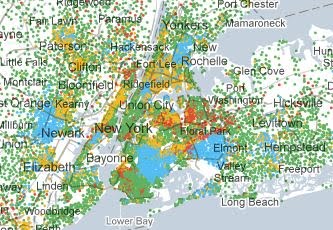
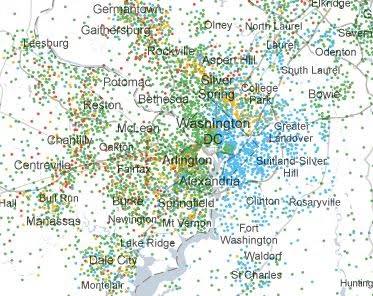
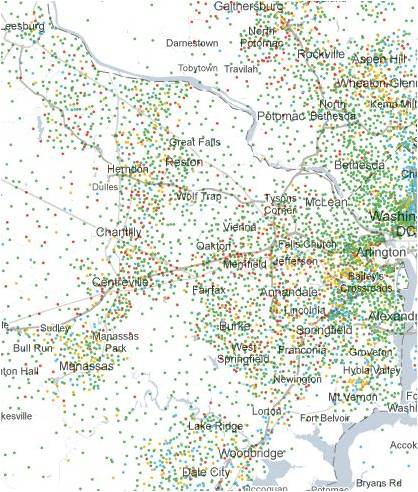
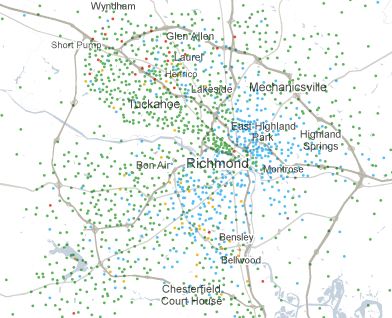
    The New York Times has published an awesome tool for visualizing human settlement patterns. I could play with it all day long! The tool, “Mapping America: Every City, Every Block,” breaks down the nation into Census tracts and displays the population with a dot for every 1,000 people in the map scale seen to the left. (As a cool aside, the dots are color coded by race, making it possible to get a sense of how segregated or integrated different communities are.)

    Thus, we can see that the New York metropolitan area — the NY Times’ home turf — is one of the mostly densely settled, if not the most densely settled, places in the country.

    We can also see that the Washington metro- politan area, by national standards, is densely populated in the urban core but that the human settlement patterns outside the core are highly scattered, both on the Virginia side of the Potomac as well as the Maryland side. This vivid, high-altitude view (which is the same scale, by the way, as the New York map above) depicts what people imprecisely refer to as “suburban sprawl,” or what EMR and I refer to as scattered, disconnected, low-density human settlement patterns.

    Now, let’s zoom in for a closer look at the Virginia side of the Washington metro area. Here we can see the truth in EMR’s oft-stated dictum that if all of Northern Virginia were settled as compactly as Arlington and Alexandria — hardly examples of dystopic density — the entire population could fit into an area the size of Fairfax County. If the region’s population were that compact, imagine the possibilites for creating the same kind of alternative transportation systems — both bus and heavy rail — that allows Arlington to boast of the highest rate of mass transit ridership in the country outside of New York! (At this scale, one dot equals 500 people.)

    Finally, let’s take a look at RoVa (the Rest of Virginia), in particular my home town of Richmond, which I love dearly in nearly every way but its extraordinarily inefficient human settlement patterns — a flaw that ultimately may prove to be its economic undoing. Here you can clearly see two small patches of moderate density development (in the Fan, the blue patch, meaning mostly white people live there, and in Church Hill, the green patch, meaning mostly African-Americans live there). You can see low-moderate density in western Henrico County (the upper left-hand quadrant), while the rest is extraordinarily low-density development. Richmonders periodically fantasize about supporting light rail transit but, as the maps shows, the scattered, low-density distribution of the population makes the idea a cruel delusion.

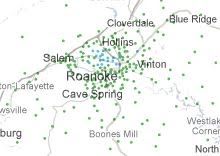
    Hampton Roads is no more densely settled than the Richmond area, if you care to check the map. Smaller cities like Roanoke, Lynchburg and Charlottesville are even lower density. Just imagine how expensive it is to provide infrastructure and municipal services to a such a scattered, low-density population. Yes, there are costs associated with providing services to people in an extremely dense environment, too. I’m not suggesting that Virginia should let its urban cores evolve into mini-Manhattans. But I am suggesting that the sweet spot for providing infrastructure is a density comparable to that in Arlington and Alexandria.

  • INFRASTRUCTURE PART TWO POINT ONE

    OH BOY!

    Mr. Bacon came forward with his 10 percent concern about the SYNERGY take on INFRASTRUCTURE and it is a WINNER!!

    EMR agrees with almost 100 percent of Baconโ€™s 10 percent reservation.

    What is even better, his โ€˜reservationโ€™ is a big fat pitch right over the heart of the plate.

    More on that in a moment, but first:

    WHAT MR. BACON SAID:

    โ€œOK, I’m back for a second try… As usual, I agree with 90% of what EMR says here. There *is* a housing and affordability crisis, there *is* a mobility and access crisis, dysfunctional human settlement patterns *are* at the root of both, and the key to reforming human settlement patterns *is* (a) governance reform, (b) devising rules by which people pay the location-variable costs of where they live, work and play, and (c) (my emphasis) dismantling the zoning/regulatory policies virtually mandate the scattered, disconnected, low-density pattern of land use that plague us today.

    โ€œAlso, let me say that I enjoyed EMR’s perspective on the tradeoffs between affordability, fuel mileage and safety in autonomobiles — a fresh analysis I had not seen anywhere before.

    โ€œThat said, it is inevitable in a conversation to focus on areas of disagreement. While I agree with EMR that the economics of building a transportation system around autonomobiles has reached a dead end, I can’t say I’m enthralled with the alternatives.

    [Mr. Bacon said: I CAN’T SAY I’M ENTHRALLED WITH THE ALTERNATIVES!!

    BACON IS RIGHT…

    IF HE MEANS THE ALTERNATIVES MOST OTHERS HAVE PUT ON THE TABLE.

    But so far in these three perspectives on infrastructure, EMR has only talked about WHAT DOES NOT WORK and why citizens and their Agencies, Enterprises and Institutions must understand what makes Urban settlements functional BEFORE they build INFRA to support their STRUCTURE.]

    โ€œYes, redesigning the urban space can make it possible for people to take more trips on foot and by bicycle (or, who knows, by Segway). That we should do. But let’s be realistic, bicycles will never be more than a niche mode of transportation, and walking is useful only for very short trips.

    [The future of AFFORDABLE Mobility and Access requires that the vast majority of Urban trips be VERY SHORT TRIPS. In the most functional Urban places, they already are — that is what makes them great places to live, work and seek Services.]

    โ€œMy reservation about buses, light rail, heavy rail and high-speed intercity rail is that they all require massive subsidies.โ€

    [Because of the current station area settlement patterns as demonstrated in the case of Tysons Corner. The Silver Line could pay for itself IF it was not a give away to adjacent land speculators. Right TMT?]

    โ€œ Creating more functional land use patterns undoubtedly would improve the dismal economics of buses and perhaps light rail, but there is no getting around the fact that the up-front capital costs of heavy rail are extremely high, that projects routinely experience massive cost overruns, and they will continue needing operating subsidies on an ongoing basis. Do we really want a transportation system with those characteristics as we hurtle towards Boomergeddon?

    โ€œSay what you will about roads and highways, it is possible to make them pay their own way through user fees (gas taxes, mileage taxes, tolls, whatever) in a way that is not possible with mass transit.โ€

    [When roadways do pay their full cost, then roadways and the private vehicles to use them will be more expensive than most Households will be able to pay.]

    โ€œ Here in Virginia, Gov. McDonnell has veered away from the user-pays principle, trying to pay for road improvements by means of anything but user fees. But conceptually, switching to a user fee basis of paying for roads/highways is easy, even if the political will is lacking. The end result may be that roads will cost more than people would like, or roads will be more congested than they want, or more people will be driven to buses, vans, carpools, but the basic principle of people paying their location-variable costs would be maintained.

    โ€œBy contrast, there is no way to get people to pay the location-variable costs of using heavy rail. The best you can hope for in places like Tysons Corner is to reduce the subsidies by introducing more functional human settlement patterns. (There may be niche cases where rail can be made profitable, but I doubt we can build an entire transportation system around them.)

    [The Hong Kong heavy rail shared vehicle system is a money making proposition โ€“ at least it was when the Brits walked away, not telling what it is with Chinese accounting โ€“ but that does not solve the problem for most large Urban agglomerations.]

    โ€œBottom line: I say we have to reform human settlement patterns, make people pay their location-variable costs, and then let the market decide. I am a transportation mode agnostic. I don’t see how subsidizing heavy rail is any more virtuous than subsidizing roads and highways. If I’m wrong about the economics of heavy rail, if someone can figure out how to make heavy rail pay (without offloading all the risk to the taxpayer), then I’m all for it. If I’m right, then I guess we’re stuck with cars and shared-vehicle systems (buses, vans, carpools) that can run on road/highway infrastructure as our alternatives.โ€

    [As one can see there are some small quibbles but EMR is 99 percent on board. One other quibble below.]

    BACON IS 99 PERCENT RIGHT ABOUT HIS 10 PERCENT RESERVATION

    To be specific Bacon says โ€œbuses, light rail, heavy rail and high-speed intercity railโ€ are NOT THE ANSWER.

    That does not mean that Large, Private Vehicles and roadways ARE the answer, only that there must be an alternative. A fair allocation of costs is a place to start as Bacon suggest, BUT…

    The fact that there must be an alternative is EXACTLY what EMR demonstrates in WHAT COMES AFTER THE CAR (Forthcoming,)

    The topic could be left there but will take it a step further:

    The REASON that โ€œbuses, light rail, heavy rail and high-speed intercity railโ€ are NOT THE ANSWER is that each example of each mode has a native sweet spot on The Cost of Services Curve for STATION AREA land use patterns and densities.

    The proof of this settlement pattern axiom can be found in moderate scale Urban agglomerations such as Goteborg, Sweden and Freiburg, Germany where light rail matches the settlement pattern for most of the Urban fabric. Goteborg is the best example because the Urban agglomeration has grown up around a light rail armature.

    However, No large Urban agglomeration is uniform and so one size cannot fit all. And, none of the candidates that Bacon lists achieve optimum Mobility and Access at rational cost for the variety of settlement patterns at the Cluster, Neighborhood, Village and Community scales that are economically viable AND ecologically sustainable where the vast majority of Urban citizens can be happy and safe.

    The Large Urban agglomeration with the best Mobility and Access FOR THE LARGEST PERCENTAGE OF THE POPULATION, especially those who cannot afford a LARGE, PRIVATE VEHICLE (Stockholm, London, Paris, Toronto, Vancouver, Berlin, Wien, and others) employ a variety of different shared vehicle systems. But none achieve optimum Mobility and Access at rational cost for the full spectrum of settlement pattern alternatives that are economically viable AND ecologically sustainable where the vast majority of Urban citizens can be happy and safe.

    ONE OTHER QUIBBLE.

    Jim too often jumps to the conclusion that something that will cost a lot for Agencies to provide (aka, massive subsidies) is bad per se.

    Not so.

    Urban civilization is VERY expensive. Humans have been living on natural capital โ€“ not
    just stored cheap energy but that is the big one.

    If humans are to continue to enjoy civilization as it has evoked to date EVERYONE WILL HAVE TO PAY MUCH MORE:

    HOUSEHOLDS,

    AGENCIES,

    ENTERPRISES,

    INSTITUTIONS.

    That does not take away form the fact that WHAT FOLLOWS THE AUTONOMOBILE will need to be flexible. The good thing is that on a seat-mile basis it will be far, far cheaper โ€“ but not free and not even cheap.

    More in WHAT COMES AFTER THE CAR.

    EMR


  • INFRASTRUCTURE MANIA PART TWO

    So far the comments following INFRASTRUCTURE MEDIA raise few serious questions. EMR addressed one and will try to get to a second one but there is one inquiry that deserves special attention. It is buried so deep in musings, cuteness, irrelevant reminiscences, misconceptions, Idea Spam and Intentional Information Sabotage that few may have gotten to it so it will be addressed here.

    Burying relevant observations and questions is yet another demonstration why THE LITMUS TEST is critical.

    The fact that there are few thoughtful comments is evidence that ALMOST NO ONE is willing to seriously consider looking into the ABYSS that is life in the Post Autonomobile Age โ€“ especially in the US.

    Richard Florida โ€“ and many others โ€“ contend that the Autonomobile Age is almost over. An ever growing number have been predicting this since 1925 but the evidence is now overwhelming that dominance of the Large, Private Vehicle is in decline โ€“ except in the imagination of those who are promoting INFRASTRUCTURE MANIA.

    Yes, humans will use vehicles and yes, some vehicles will be operated exclusively by their owners but no amount of subsidy can sustain for much longer a condition where Large, Private Vehicles are the dominant mode by which Urban humans achieve Mobility and Access. It is a matter of physics as well as economics.

    THE QUESTION IS:

    At 11:28 PM on the day before Groundhogโ€™s Day Jim Bacon asked:

    โ€œEd, I’m curious about this statement:

    “At the present time half of the working adults in the US cannot afford to buy and maintain a Large, Private Vehicle that is fuel efficient AND safe to drive on the Interstate Highway System.”

    โ€œI’m wondering what you base that upon. If you said that half the working adults cannot afford a โ€œnewโ€ large, private vehicle, then I would find that plausible. But the average age of the auto fleet is close to 10 years now. There are a lot of depreciated, inexpensive second-hand cars on the market.

    โ€œAdmittedly, the older the car, the more expensive the maintenance. That’s probably a bigger cost than gasoline.

    โ€œStill, I’m wondering what you base the statement on.โ€

    EMR is glad Mr. Bacon raised this question!

    SOME BACKGROUND

    The statement quoted above is from the current draft of WHAT FOLLOWS THE AUTONOMOBILE (Forthcoming).

    Most know that with respect to the Affordable and Accessible Housing Crisis, the fact that X percent of the Y cohort cannot afford the median priced house is an eye catcher. But is there a similar hook for the Mobility and Access Crisis?

    To find shelter when there is no Affordable Housing close to Jobs / Services / Recreation / Amenity, citizens have been forced to seek Housing in locations that are Accessible only with Large, Private Vehicles.

    This has made the Mobility and Access Crisis worse and worse each year as TTI documents in its annual Urban Mobility Study.

    Some understand that even within the settlement patterns that are designed to optimize use of Large, Private Vehicles these vehicles have NEVER been able to provide Mobility and Access to over half the individuals in the resident population. The majority of the population is too young, too old or too unfirm to drive and park Large, Private Vehicles.

    Even in Planned New Communities with:

    โ— Densities as low as 10 persons per acre at the Alpha Community scale,

    โ— Abundant sidewalks, bike paths,

    โ— Many Clusters and Neighborhoods with higher density, some with mixed uses, and

    โ— A concerted effort to provide non-Large, Private Vehicle Mobility and Access,

    The percentage of citizens that could use Large, Private Vehicles by themselves has almost never been over 50 percent. This is because these places tend to attract larger families and do not provide the amenities sought by the Households without children.

    It is clear to a growing number โ€“ those who bother to consider the facts โ€“ that even with free fuel and Gee Whiz technology Large, Private Vehicles cannot provide Mobility and Access for the majority of citizens in large Urban agglomerations. The reasons are spelled out in THE PROBLEM WITH CARS.

    There is NOT ONE large Urban agglomeration on the planet that does not have one or more shared vehicle systems. The Urban areas with:

    โ— The highest value per square foot of built space,

    โ— The highest value per square foot of land area, and

    โ— The most voluntary visitors (aka, tourists)

    Are almost always served by shared vehicle systems.

    The days of Dallas, Houston, Denver and Salt Lake thumbing their noses at shared vehicle systems is history.

    Pedestrian and bike trips are the fastest growing mode of travel in almost every large Urban agglomeration except in China. That will change now that there are new taxes on private cars in recognition of the fact that shared-vehicles and pedestrian / bike movement is necessary to support large Urban agglomeration. The vast Chinese investment in High Speed Rail is a drop in the bucket compared to the cost of an attempt โ€“ which would eventually fail โ€“ to provide the Mobility and Access to which Chinese citizens aspire via Large (or small), Private Vehicles.

    AND AFTER THE CAR?

    To move past THE PROBLEM and consider what comes AFTER the car, a new perspective was needed. That โ€˜hookโ€™ caught the attention of Jim Bacon.

    The statement:

    “At the present time half of the working adults in the US cannot afford to buy and maintain a Large, Private Vehicle that is fuel efficient AND safe to drive on the Interstate Highway System.”

    is crafted to make clear that:

    โ— Even โ€œworking adultsโ€ โ€“ and not just welfare slackers, meandering teens and old folks โ€“ are in need of alternatives to Large, Private Vehicles. (Including the able-bodied but unemployed would increase the percentage but detract from the focus.)

    โ— Buy AND maintain in SAFE condition are important parameters because when a vehicle is over 3 or 4 years old (out of the dealerโ€™s โ€˜free serviceโ€™ sales incentive) the cost of maintenance increases dramatically and the more Gee Whiz technology, the higher the cost to keep the vehicle up to spec and thus โ€˜safeโ€™ and fuel efficient.

    โ— Fuel efficiency is critical because of the rising cost of energy. Fuel efficiency and maintenance go hand in hand.

    โ— The test of โ€œSafety on the Interstate Systemโ€ is the key.

    Old and poorly maintained cars are not safe to drive at high speed, especially on โ€˜mixed-trafficโ€™ expressways with sleep deprived over-the-road-drivers pushing long haul rigs with multiple safety violations much less other unsafe drivers in unsafe cars.

    Drop the Interstate speed limit to 50 mph and those who could afford a โ€˜safeโ€™ car would increase by at least 10 percent. Pandering politicians keep raising the speed limit to the determent of fuel efficiency AND safety.

    If there was a rational criteria of visibility FROM a vehicle, the number of cars that are deemed โ€˜safeโ€™ to drive on the Interstate system would go down by about the same amount as decreasing the speed limit would raise the qualifying vehicles.

    There have been aerodynamic cars since the mid 20s but only when fuel efficiency became a concern did wind drag become a major design consideration. The design to increase efficiency has drastically reduced visibility from the car.

    As EMR pointed out to Larry Gross:

    The strategy of autonomobile makers has been:

    โ— Deliver as little real change as possible each year,

    โ— Induce purchase of new vehicles as often as possible,

    โ— Make the vehicles as expensive as possible so that the profit per unit is as high as possible.

    All these
    factors increase the percentage who cannot afford a safe, fuel efficient vehicle.

    IS THE 50 PERCENT NUMBER PRECISE?

    With so many variables it is hard to say but using the criteria for โ€˜affordabilityโ€™ for location efficient mortgages and other parameters the number โ€˜half the working adultsโ€ is probably โ€˜conservative.โ€™ EMR is ALWAYS conservative.

    If drive-til-you-qualify is thought of as the way that Affordable and Accessible Housing is provided for those at the bottom of the food chain, then long distances on the Interstate system โ€“ or similar limited access roadways โ€“ will be required.

    Actually, very long distance commuting has been on the decline for 30 years according to Census Data. But that is not the issue. Being forced to own a Large, Private Vehicle to travel 3, 5 or 10 miles contributes to the cumulative problem of space to drive and park and the disaggregation of Urban fabric.

    If one has to own a jalopy to drive 15 miles a day to work, the settlement patterns makes these citizens a slave to both economic and spacial parameters.

    More in WHAT COMES AFTER THE AUTONOMOBILE.

    Oh yes, it looks like the pandering politicians of the Commonwealth will join hands to approve the $4 Billion Beg, Barrow and Steal Anti Mobility and Access Boondoggle.

    Even if it cannot be stopped now, it will die soon due to its short-sighted design.

    At least one can say โ€œWHAT DID I TELL YOU!!โ€

    AARRRGH SQUARED!!

    EMR


  • INFRASTRUCTURE MANIA

    !! AARRRGH !!

    Oh, the frustration!

    As Peter Galuszka has noted, EMR has not posted much at BRB of late.

    This is NOT just due to travel, holidays, snow or even the process of aging.

    At SYNERGY there are a number of new projects and Perspectives well on the way to publication BUT

    The PLAN was to get out the next version of CITIZEN MEDIA that includes THE LITMUS TEST before other items were published.

    Many of those who have worked on THE LITMUS TEST (TLT) believe TLT is an important step toward protecting intellectual inquiry from Idea Spam โ€“ as distinguished from Personal Relationship Spam and Enterprise Spam which are two more widely recognized forms of electronic communication pollution.

    TLT is intended to provide a firewall to protect citizens not just from Idea Spam but from Intentional Information Sabotage.

    Alas, progress on the CITIZEN MEDIA redraft is slow; TOO SLOW when there is an immediate threat that can undermine peace, security, economic prosperity, social stability and environmental sustainability in the Commonwealth and across the US.

    That danger is INFRASTRUCTURE MANIA. Agencies are about to waste $ Trillions on infrastructure.

    Both the Elephant Clan and the Donkey Clan are posed to dump outrageous sums on outrageously wasteful infrastructure in the name of โ€˜jobs,โ€™ โ€˜recoveryโ€™ and โ€˜economic growthโ€™

    The Presidentโ€™s State of the Union speech contains non-specific language proposing nation-wide โ€˜action.โ€™

    In the Commonwealth, The Clown Show is about endorse pandering politicians scheme to dump $4 Billion onto a road builders, equipment suppliers and land speculators wish list.

    Mr. Bacon has focused on the debt that will flow from this activity. This IS a major concern, BUT…

    Debt and lining political contributors pockets is just the tip of the iceberg.

    STRAWS IN THE WIND

    Earlier this week when Neal Pierce (Washington Writers Group) published โ€œNew Infrastructure Strategy: Yes, Build โ€“ BUTโ€ EMR hoped that he could just cite Pierce toss out an attaboy and keep working on CITIZEN MEDIA. http://citiwire.net/post/2496

    No such luck. Nealโ€™s โ€˜butsโ€™ are valid BUT pale compared to the real reasons to be concerned about wasting Trillions of dollars on โ€˜infrastructure.โ€™

    INFRASTRUCTURE TO SUPPORT WHAT?

    As explored at more length below in the section on GREEN INFRASTRUCTURE, infrastructure is NOT a free standing thing. What is called โ€œinfrastructureโ€ is ONLY REALLY INFRASTRUCTURE if supports a needed and functional STRUCTURE โ€“ in this case, the built environment to support human civilization (aka, functional human settlement patterns).

    Otherwise it is just a waste of time and money.

    As spelled out in THE PROBLEM WITH CARS โ€“ PART THREE of TRILO-G the Autonomobile is a primary cause of dysfunctional human settlement patterns. Why build more of what made Urban settlement patterns dysfunctional?

    WHAT COMES AFTER THE AUTONOMOBILE? (Forthcoming) is a follow up to THE PROBLEM WITH CARS which articulates the physical and economic reasons why Large, Private vehicles cannot provide Mobility and Access to Urban citizens.

    One of the key reasons is that:

    At the present time half of the working adults in the US cannot afford to buy and maintain a Large, Private Vehicle that is fuel efficient AND safe to drive on the Interstate Highway System.

    In the context of:

    โ— The rising cost of energy and Peak Petroleum, and

    โ— The demonstrated inability of Agencies to build and maintain infrastructure required to operate Large, Private Vehicles;

    There obviously must be a successor to the Autonomobile if Urban citizens are to have Access and Mobility.

    These facts also mean that Agencies must solve the Affordable and Accessible Housing Crisis if there is to be a solution to the Mobility and Access Crisis.

    Both are solved ONLY if there are functional, Balanced and sustainable human settlements.

    Building more of the infrastructure that caused settlement pattern dysfunction will not just create more debt, it will make EVENTUALLY solving the Affordable and Accessible Housing Crisis and the Mobility and Access Crisis much more expensive, and perhaps impossible.

    THE ROADWAY CHOIR

    How does one know that Billions at the Regional scale and Trillions at the nation-state scale need to be thrown at โ€˜the infrastructure problem?โ€™

    The Roadway Choir has been singing that song for decades.

    The annual reaffirmation of faith in the Access and Mobility Myth from the Texas Transportation Institute (TTI) arrive on 20 January. TTIโ€™s Urban Mobility Report STILL has the same tragic flaws that were pointed out in Column # 39 (of 131) โ€œSpinning Data, Spinning Wheelsโ€ back on 20 September 2004.

    It also continues to be used to justify spending money to solve the WRONG problem as pointed out in โ€œDriven Apartโ€ See DRIVEN APART, FINALLY at BRB 6 October 2010.

    (By the way, the comments following this post document need for THE LITMUS TEST as noted by CRS at the end of the comments.)

    In a ONE PAGE follow-up to Driven Apart, Julia NAILS the problems with the TTI report. Note the reference to โ€œland use patterns.โ€ Read it and weep.

    http://www.ceosforcities.org/news/entry/2958/2010-umr-remains-a-flawed-and-misleading-guide-to-urban-transportation

    The Transportation Research (sic) Board (TRB) annual meeting was just held in the Federal District. The TRB meeting is the annual pilgrimage of The Roadway Choir to the Mecca of transportation funding and dysfunction. Ken Orski reports The Roadway Choir is STILL in full throat with the same old songs. (EMRs favorite is โ€œGive Us More Money to Spend on the Roadway to Gridlock,โ€ a true classic!)

    (Observer has suggests that if VDOT spent as much on SLUG LINES each month as they did on hotel bills and entertainment at TRB, they would reduce congestion twice as much โ€“ by any useful measure โ€“ as the $4 Billion serving of asphalt pork. Yes there are some Shared Vehicle System spices but the real money is in Autonomobile pork. See http://www.slug-lines.com/

    THE ENVIROS

    Those who claim to be the Anti-Roadway Choir are not helping much.

    In the context of the $4 Billion pork package a leader of the environment / smarter growth crowd is quoted as saying:

    โ€œOur nation is broke โ€“ we cannot afford to try to build our way out of congestionโ€

    That statement sends the WRONG message. There are many who still believe with enough tax cuts for the rich and reductions in NPR spending, โ€˜our nationโ€™ will be rich…

    To paraphrase Will Owen: โ€œNo matter how much money is thrown at the problem, there are almost NO infrastructure solutions to the Mobility and Access Crisis.โ€ See Chapters 13,14 and 25 of THE SHAPE OF THE FUTURE, THE PROBLEM WITH CARS โ€“ PART THREE of TRILO-G and WHAT FOLLOWS THE AUTONOMOBILE (Forthcoming).

    Saying โ€˜the nation is brokeโ€™ (which Bacon and others say is yet some ways off) is continuing the practice by what is now called โ€œThe Environmental NGOs and their Enterprise Partnersโ€ to reach for the LOW HANGING RHETORICAL FRUIT.

    The message must be FUNDAMENTAL TRANSFORMATION!

    Ya HEAR?

    CONVENTIONAL OBLIVIOUSNESS

    Then there are well-meaning but poorly informed who clap for The Roadway Choir.

    Two comments on BRB will illustrate this problem.

    In the comments following โ€œThe Vice Tightens,โ€ 14 January:

    At 9:01 AM on 15 Jan 11:

    โ€œJim, you and EMR have some very interesting long term ideas about transportation and land use. However, your ideas will take a long
    time to organize, enact, plan and implement. And those are just the pre-requisite steps before the ideas start to have an impact. In the meantime?โ€

    These ideas are NOT โ€œlong term.โ€ As noted REPEATEDLY the biggest change will be inside the heads of those who believe Business-As-Usual is an intelligent or sustainable strategy.

    And at 9:11 AM on 15 Jan 11:

    โ€œAs an aside, here are the transportation projects which could be funded by the additional debt.โ€

    Citing a VDOT laundry list is just clapping for The Roadway Choir.

    ON HIGH SPEED RAIL

    One of the things current administration has gotten right about infrastructure is to appoint Ray LaHood as Secretary of US DOT. For a very good summary of the perspective of Joe Boardman AmTrakโ€™s President.

    http://www.masstransitmag.com/print/Mass-Transit/Backbone-of-an-Industry/1$13234

    Boardman does a fine job of putting rial and High Speed Rail (HSR) in context of US infrastructure needs. One problem he doe not focus on the key to HSR success โ€“ the pattern and density of land use within half a mile of the HSR platforms, including across the platform transfers to other Shared Vehicle Systems. (Full disclosure: Although EMR does not think he has ever met Boardman, because of where he has worked before AmTrak, there are probably at least a dozen shared acquaintances.)

    In the same issue of Mass Transit Magazine there is a great (greatly misleading) story about how to end oil dependence. T. Boone Pickens says โ€œHydrofrac the whole countryโ€ and it will result in a 100 year supply of fuel for Large, Private Vehicles.โ€ And after 100 years, hydrofraced water tables (Thank you MGM) and investment in a whole new energy infrastructure with MORE DYSFUNCTIONAL Urban settlement patterns ?

    Well, Collapse.

    http://www.masstransitmag.com/print/Mass-Transit/Ending-Our-Oil-Dependence/1$13235

    In a 4 Dec 10 post on his Boomergeddon Blog, Jim Bacon jumped on โ€œthe railroad to nowhereโ€ band wagon.

    http://boomergeddon.us/wordpress/2010/12/04/the-rail-line-to-nowhere/#comments

    Not wanting to let this pass, EMR posted the following comment which sums up his view on HSR:

    Before Jim races on to whack another mole…

    First:

    It is counterproductive to talk about the usefulness of ANY infrastructure investment unless it is in the context of the settlement pattern that this infrastructure is intended to support.

    Second:

    With respect to High Speed Rail (HSR) the settlement pattern of concern is that within half a mile of the station platforms (including across-the-platform transfers to other modes) the line between stations should take the most reasonable, least costly, lowest environmental impact route.

    Third:

    Any discussion of HSR must be considered in the context of whether the US policy is to evolve a functional and sustainable settlement pattern and a surface transport system to support this settlement pattern or if the nation-state policy / goal will continue to follow an unsustainable trajectory that involves subsidizing dysfunctional systems that rely on Large, Private Vehicles and Aircraft on routes of under 1000 miles.

    Fourth:

    One must understand the geographical context of any discussion.

    California has two MegaRegions about 500 miles apart โ€“ that is the sweet spot for HSR.

    Topography, physics and economics dictate that there are two ways to get from the Cores of one MegaRegion to the Cores of the other.

    One route is up the Pacific Ocean side of the Coast Range which has lots of places where one would NOT want to run a REAL HSR for many economic, social and physical reasons.

    The other route is via the Central Valley which has a lot of space and not much else. There are very similar, low intensity areas along the HSR between Paris and the South of France and along the major HSR lines in Spain e.g Madrid to Barcelona.

    If there is to be HSR between the two MegaRegions it needs to be up the Central Valley. The choice of starting a segment is due more to what is โ€˜shovel readyโ€™ than where the trip demand is or will be.

    Fifth:

    Ken Orski (quoted in the original post) and those he spends his time with were and are scared witless that HSR will syphon off money from their beloved roadway pork barrels.

    And So:

    HSR anywhere or a California HSR may or may not be a prudent use of federal stimulus dollars.

    But it is not a โ€œbridge to nowhere.โ€

    This is pure whack a mole aka, tossing rocks at empty pigeon holes.

    EMR

    Jim responded the that he agreed on the substance. So EMR jumped on his Citizen Media soap box.

    Jim:

    As usual we agree on the substance.

    But it is the substance that needs to be the focus of discussion.

    Whack-A-Mole and Tossing Rocks only builds the wall between substance / fact / science and fosters The Anger of Ignorance.

    AntiPartisanship is the right path but citizens of the US are still over fat and over satisfied by years of Mass OverConsumption and they are not yet ready to stop the Whack-A-Mole and Tossing Rocks At Empty Pigeon Holes (TRAEPH โ€“ someone could do something with those letters… perhaps TRAP?)

    By the time they are ready will there be any resources left to build on? Will the genetic proclivities that got humans to this point prevent them from reaching a sustainable trajectory?

    EMR sees no answer beyond the scale of the Alpha Community (ALPHA VIL 21 and THE CURRENT TRAJECTORY) but sustainability STRARTS at the New Urban Region scale and for those in MegaRegions, perhaps is not possible at smaller scales.

    Keep up the good work, abandon the Whacker and the Rocks.

    EMR

    GREEN INFRASTRUCTURE

    While on the topic of โ€˜infrastructure,โ€™ GREEN Infrastructure has a nice sound but, as SYNERGY has noted in the past, green infrastructure is not an end-all and be-all.

    The โ€œinauguralโ€ National Green Infrastructure Conference 2011 sponsored by The Conservation Fund will be held in 23 to 25 February in Shepherdstown, West Virginia. (Those environmental NGOโ€™s and their Enterprise Partners again?) If you read the hype (conference โ€œagendaโ€), one would think green infrastructure IS a end-all and be-all.

    Creating functional and sustainable green infrastructure is a fine idea. In fact it is a vital goal on the path to a sustainable trajectory for human civilization as it has evolved to itโ€™s status in January 2011.

    Viable green infrastructure is supported by almost everyone except those who see functional settlement patterns as a conspiracy to rob citizens of their personal right to live off of subsidies that support spacial dysfunction โ€“ specifically the โ€œAgenda 21″ crowd.

    Green infrastructure โ€“ by whatever name โ€“ is necessary to support humans and the environment upon which humans depend for air, water, food and shelter. However, before green infrastructure is anointed as the end-all and be-all driver of land use decisions, let us be clear:

    Green infrastructure is not alone. There is ALSO a need for black infrastructure (sidewalks, paths, streets, roadways, rails, bridges and tunnels), blue infrastructure (water supply and precipitation management), gray infrastructure (waste water, solid waste and air pollutant management), red infrastructure (energy generation, transmission and distribution), purple infrastructure (cultural, historical, psychological, aesthetic and amenity) and invisible infrastructure (the electromagnetic spectrum).

    All are critical to support modern Urban humans and to protect the natural system upon which all life depends. Given the current role of Homo sapiens on the planet, black, blue, gray, red, purple, green
    and invisible infrastructures must be designed to support FUNCTIONAL human settlement patterns.

    Currently settlement patterns are DYSFUNCTIONAL from economic, social and physical perspectives. Freezing in place major components of green infrastructure in that context is counterproductive, if not suicidal.

    That is the case because there is already far more land devoted to Urban land uses than can be efficiently used in the foreseeable future.

    Those scattered Urban uses of land cannot be supported by any infrastructure โ€“ black, blue, gray, red, purple, green or invisible. The only cohort that focusing on one infrastructure component at a time โ€“ and without regard to the structure to be served โ€“ benefits are those who hold land speculatively in the hopes of future demand for MORE scattered Urban land uses.

    Before deciding what and where green infrastructure should go, consideration must be given to functional settlement patterns for 95 percent of the population who can efficiently occupy for their daily activities ONLY about 5 percent of the land area of the lower 48 in the US. That leaves 95 percent of the land area for green, blue and purple activities.

    Intelligent design of functional human settlement patterns rarely conflicts with functional green, blue or purple infrastructure. However, green infrastructure in the wrong place can render human settlement patterns dysfunctional. See USE AND MANAGEMENT OF LAND โ€“ PART FOUR of TRILO-G.

    INVISIBLE INFRASTRUCTURE

    It is foolhardy to design ANY infrastructure in a vacuum just as it is foolhardy to over design black infrastructure to serve Autonomobiles.

    As those who understand the Access and Mobility Myth know, it is not possible for citizens in Regional agglomerations to live where they want, work where they want, seek services where they want and then have Agencies, Enterprises or Institutions design black infrastructure to get them where they want to go when the want to go there and arrive in a timely manner.

    It is becoming clear that the same is true for the invisible infrastructure. See the front page story of the 30 Nov WaPo Health and Science section which asks:

    โ€œAre we headed for a smartphone meltdown? As demand for the data-hungry [actually band-width hungry] devices skyrockets, mobile networks risk collapse : Cellphone traffic needs wider road.โ€

    This story is written from the perspective of the telecoms who what more bandwidth for their most lucrative services. The story sounds like it could have been penned by Autonomobile advocates โ€“ The Roadway Choir. It is just not possible for โ€œeveryoneโ€ to have band width hungry devices that work at the same time especially with millions of pages of โ€œcontent farmsโ€ being planted every day.

    Ironically, on the front page of the A section of the very same edition of WaPo is answer:

    โ€œWith faster cellphones come souped-up bills: New cellphone options, in a language foreign to many.โ€

    Invisible infrastructure charge should reflect actual use and then scarce resources will be fairly allocated. It is called โ€œthe market.โ€ (Yes, there must be a decision arrived at by democratic processes for what โ€˜everyoneโ€™ should have access to and then beyond that, the more you use, the more you pay. E.g. everyone gets PDFs to support useful activity free, everyone pays for the download of movies and entertainment and the bigger the download, the more one pays.)

    THE REAL MARKET SOLUTION

    So, infrastructure boils down to this:

    โ— First, functional and sustainable human settlement patterns

    โ— Second, fair allocation of location variable costs.

    Pandering politicians have taken up the chant of The Anger of Ignorance Crowd:

    โ€œNo gas taxโ€ by which they mean โ€œno CAR tax.โ€ What they really mean is โ€œincrease the subsidy for use of my Large, Private Vehicle.โ€

    After all cars and Wrong Size Houses in the Wrong locations have led us out of the last seven recessions. And, while shelter values continue on a downward trajectory โ€“ especially outside Radius = 20 Miles in the Virginia portion of the National Capital SubRegion โ€“ CARS ARE COMING BACK.

    Ford recorded record profits in the last quarter of 2010. Anyone who owns a business knows why. Business owners have been dunned with notices / ads about that huge tax break for โ€œlight trucksโ€ used in their business โ€“ write off the full value in one year. If you have cash flow and an old pickup / van / SUV or one without a DuraMax engine, an Allison Transmission and dual wheels the end of 2010 was the time to buy.

    GM sales are up too โ€“ in China. But watch out, China now realizes the stupidity of trying to meet citizen needs for Access and Mobility with Private Vehicles so they are now taxing SMALL cars. They do not want to clog the roads for the Communist Party leaders and the โ€˜entrepreneursโ€™ who drive Large, Private Vehicles.

    Consumers are not stupid. Unsafe Nanos are sitting on sales lots in India. Recall from above, even in the US:

    At the present time half of the working adults in the US cannot afford to buy and maintain a Large, Private Vehicle that is fuel efficient AND safe to drive on the Interstate Highway System.

    If you think the Autonomobile industry understands the shape of the future, check out the headliners at the Washington D.C. Autoshow. And be ready for WHAT FOLLOWS THE AUTONOMOBILE (Forthcoming.)

    All this renewed AUTO MANIA and INFRASTRUCTURE MANIA will come to a crashing conclusion unless citizens start to pay the full cost of their current civilization. That means there is a need for โ€˜some tax.โ€™ Do not rely on Public Private Partnerships tolls to generate cash for infrastructure UNTIL there agreement of the settlement pattern that needs to be provided with Mobility and Access. THEN it will be clear that there is NO low-hanging plum projects upon which to slap tolls.

    THE ROAD AHEAD

    The Mobility and Access Crisis will not be solved without Fundamental Transformation of the human settlement pattern โ€“ and that includes black, blue, gray, purple, green and invisible infrastructure to support functional and sustainable human Regions and Communities, AND.

    Neither the Mobility and Access Crisis nor the Affordable and Accessible Housing Crisis can be solved โ€“ nor will health care, education, public safety and national security stop being bottomless pits โ€“ until there is Fundamental Transformation of governance structure, AND.

    Mass OverConsumption and the exhaustion of finite resources will not stop โ€“ a sustainable trajectory for human civilization will not be achieved โ€“ without a change in the economic system, AND

    None of these Fundamental Transformations can be achieved without CITIZEN MEDIA.

    In this context, recall THE BOTTOM LINE from Chapter One of the most recent version of CITIZEN MEDIA. (In light of the events in Tunisia, Egypt, Jordan, Lebanon, Yemen note especially the roll of global, instantaneous communications.)

    Citizens cannot make well informed decisions on their own best interest on ANY topic until they have a reliable source of reliable information.

    That is true for Fundamental Transformation of human settlement patters,

    That is true for Fundamental Transformation of governance structure (the topic Observer was addressing)

    That is true for Fundamental Transformation of the economic system.

    Without a reliable source of sound information democracy and market economies are not possible. This reality must be seen in the global context:

    On a small planet with Global economic, social and physical interconnections, GROSS INEQUITY at the Community-, SubRegional-, Regional-, MegaRegional- and continental-scales OR between ethnic and religious groups
    is NOT sustainable.

    All citizens must have the opportunity to prosper based on effort, ability and acceptance of responsibility for their actions โ€“ individual and collective. Success cannot be based on gambling, happenstance and inheritance or on inequitable distribution of resources and opportunity at ANY scale.

    Avoiding Collapse of civilization as-it-has-evolved and the survival for Homo sapiens comes down to understanding that:

    In a โ€˜flatโ€™ world with:

    โ— wide-spread literacy,

    โ— Global, instant communications / information dissemination, and

    โ— Wide distribution of weapons of mass destruction / massive stockpiles of weapons of conventional destruction / ubiquitous access to weapons of inter-personal destruction:

    There is no alternative but to make Fundamental Transformations of governance structure. The conflict started in Tunisia and now spreading to Egypt, Jordan, Lebanon, Yemen and beyond makes this crystal clear. These conflicts are based on economic dysfunction in societies with literacy, and instantaneous global communications.

    Transformations in governance structure can facilitate evolution of Fundamental Transformation of humans settlement patterns, governance structures and of economic systems. These three Transformations are imperative if citizens are to achieve a sustainable trajectory for their civilization.

    The question remains:

    Will the genetic proclivities toward competition, acquisition, consumption and xenophobia that got Homo sapiens to this point in their evolution prevent the emergence of an Urban society with a sustainable trajectory?

    Will human beliefs and superstitions that have become hardwired into society thwart evolution of a sustainable advanced-technology based civilization, or perhaps a stable New Bronze Age or will they result in the end of human society as has evolved over the past 13,000 years?

    Will those at the top of the economic food chain realize they must close the Wealth Gap to survive?

    The answers will depend on whether citizens can evolve Citizen Media to provide the information they need to make intelligent decisions in the voting booth and in the marketplace.

    AARRRGH!

    Ok, now back to CITIZEN MEDIA

    EMR


  • Big Questions for Mr. “Aw Shucks”

    It’s no surprise that George Allen wants his Senate seat back. The question for him is whether he understands how much the political landscape has changed in Virginia since his disastrous reelection run in 2006.

    Republican insiders say that Allen is a much-chastened, humbler politician — a far cry from the smug, cowboy-boot-wearing hombre whose “macaca” insult aimed at a man of Indian descent torpedoed his 2006 campaign.

    What we’re now getting is a remade Allen who claims to be an “outsider” in Washington politics who decries the free-spending ways of Congress during most of the last decade. Problem is, he was right there from 2001 to 2006 cheerleading George W. Bush through his budget-busting tax cuts for the well-to-do, minimizing banking rules that helped spur the financial meltdown, and voting for wars in Iraq and Afghanistan that still haven’t been paid for.

    Allen has already been targeted for his “Mr. Washington Insider” role by such upstarts in the Virginia Republican Party as Jamie Radtke, who briefly worked for Allen and then became a highly-successful leader of the Virginia Tea Party movement. To blunt Allen, all she really has to do is ask him to please explain his voting record while in the Senate.

    Allen may also be banking on the “aw-shucks” Southern manner and family legacy (his father was a Washington Redskins coach) that went down well when he was Virginia’s governor from 1994 to 1998. He comes on like a happy, oversize puppy. But his run against Jim Webb in 2006, however, revealed that he really spent his childhood in Southern California and provoked some prickliness on his part at the revelation of Jewish roots on his mother’s side, as if that matters in today’s Virginia.

    Another problem for Allen is that he’s plunging into some different and hard times. Virginia was on a roll when he was governor. Back in the 1990s, Northern Virginia was becoming a high-technology magnet for Internet firms such as America Online and for a raft of telecommunications firms banking on fiber optics. The good times made it easy for him to pursue his agenda of cutting welfare for the poor and parole.

    When he was senator, he watched the state snarf up billions in post 9/11 defense dollars, especially in Northern Virginia and Hampton Roads. Easy money linked to lax federal regulation spurred construction of overpriced and oversized homes in outer suburbs such as Loudoun and Prince William counties.

    One couldn’t ask for a more different environment these days. The defense milk cow is about to be slaughtered. Housing starts remain anemic. Jobs can’t be found. Deficits have soared.

    And what Allen has been doing while out of office can’t be called truly great preparation for a new run for the Senate. As folks like Radtke were busy in the field building grass-roots Tea Parties, Allen was working in a sinecure-type job as a highly paid energy lobbyist.

    Peter Galuszka

  • Uh, oh: Virginia Falling in Technology Index

    First Virginia fell to second place in the Forbes “Best States for Business” ranking. I was so depressed that I couldn’t blog about it. Now, we’ve fallen from 6th to 8th place in the Milken Institute’s 2010 State Technology and Science Index. I guess I can’t ignore our declining status any longer.

    Here is the Virginia summary:

    Virginia remained in the top 10, but fell from sixth to eighth. Virginia registered its best performances in technology concentration and dynamism (fourth), and technology and science workforce (sixth). Much of this strength stems from the Eastern Virginia suburbs of Washington, D.C., which have benefitted from their proximity to the federal government, a cluster of data-processing firms, and defense and aerospace contractors. Virginiaโ€™s overall slippage was attributable partly to a decline in human capital investment from eighth in the 2008 index to 15th this year. Virginiaโ€™s indigenous innovation ecosystem that spawns new firms is less extensive than those of Massachusetts and California. But Governor Bob McDonnell has signed bills in support of his โ€œjobs and opportunity agendaโ€ that attempt to address this gap. The legislation will exempt capital gains taxes on investments in start-up tech or biotech firms.

    You can find the detailed numbers for the Old Dominion here.


  • Managed Care Bucks Line Cantor’s Pocket

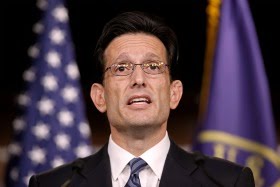
    Now that Prince Eric has been elevated to his new position of House Majority Leader, Cantor’s made good on his pledge to lead a repeal vote against Obamacare in the House, now controlled by Republicans.

    So, it should come as no tremendous surprise that Cantor is being especially well-funded by the managed care industry, which doesn’t want its sweet deal of dominating entire states, cherry-picking healthy policy applicants from the in-need by denying scores of millions coverage for “pre-existing conditions” and not having to bother with the poor who can’t pay for regular insurance but don’t qualify for Medicaid.

    According to today’s Washington Post, major health care firms and their employees gave $2 million in the past two years to the election campaigns of Cantor and the new Republican Speaker of the House John A. Boehner.

    The Post says that Cantor received at least $5.6 million from corporate donors, including $2.4 million from firms and employees in the fionance, insurance and real estate industries. Some of Cantor’s biggest Virginia donors are the big Richmond lobbying firm of McGuire Woods and Dominion followed by Altria and others.

    The money puts Cantor well above his House colleagues in terms of business money received. Midterm elections in 2010 showed a big increase in corporate finding.

    Little wonder that “Young Gun” Cantor continues to do the bidding of big business, such as trying to shoot down regulations and taxes on corporations. Of course, Cantor at times does reverse on himself. I interviewed him in 2009 and he told me that “we’ve got to get the federal government out of the capital markets.” When I reminded Cantor that he voted for George W. Bush’s TARP bank bailout he was silent for about 20 seconds.

    The Main Street types in Virginia’s GOP love Cantor. Their “Pravda”, the Richmond Times-Dispatch regularly features Cantor in a positive light on its front page. Occasionally their “Politifacts” fact checker raps his knuckles for being a little too slick with facts, but it’s quite a cushy deal for the hometown boy from Henrico County and his wife who’s on the board of Media General, owner of the Richmond paper (no matter how many times the TD editors claim t’ain’t so).

    One wonders if Prince Eric is still selling “Coffee with Cantor” morning meetings at the Capitol Hill Starbucks for a couple grand or so a latte.

    If you want to see big bucks from big business at work, look no further.

    Peter Galuszka

  • Want to Cut Costs? Start by Slashing Subsidies for Sorry-Ass College Students

    Not only is the cost of a college education may be escalating without let-up, it’s pretty clear that students are not getting any more for their money. A new book, co-written by University of Virginia sociology professor Josipa Roksa, paints an alarming picture of what’s going on in higher education today.

    In research for the book, “Academically Adrift: Limited Learning on College Campuses,” Roksa and New York University sociologist Richard Arun tracked more than 2,000 students between fall 2005 and spring 2009 at 24 different colleges and universities. The colleges ranged from highly selective to less selective. Sums up a McClatchy newspaper acccount:

    Forty-five percent of students made no significant improvement in their critical thinking, reasoning or writing skills during the first two years of college, according to the study. After four years, 36 percent showed no significant gains in these so-called “higher order” thinking skills.

    Combining the hours spent studying and in class, students devoted less than a fifth of their time each week to academic pursuits. By contrast, students spent 51 percent of their time โ€” or 85 hours a week โ€” socializing or in extracurricular activities.

    This is a scandal of massive proportions. American universities beg non-stop for mo’ money — money from the taxpayers, money from alumni, money from students and their parents. As documented on this blog, their costs have gone through the roof — much of it for bloated administrative costs. While the higher ed lobby depicts itself on the side of the angels, it is totally unaccountable. Not only that, but it is failing in its core mission — educating students.

    Given the deplorable state of affairs documented in “Academically Adrift,” parent shelling out hard-earned money for tuition is a fool not to ask the tough questions. Are their children actually getting an education, or are parents blowing $80,000 to $200,000 for their hedonist offspring to party for four (or five) years?

    Taxpayers should demand answers as well. How many kids are graduating on time? If subsidized tuitions are justified on the basis of social benefits — we all benefit when the general education level rises — we need to ask, how much are students really benefiting? Is it possible that the gains to society stem mainly from educating the two-thirds of the students who work hard and manage to learn something? Could we be wasting our money on the other third?

    With our budgetary backs to the wall, we especially need to ask the tough questions here in Virginia. Yesterday, Gov. Bob McDonnell rolled out the “Preparing for the Top Jobs of the 21st Century” higher education initiative. The plan is to spend millions of dollars, in the governor’s words, “[to] enable our institutions to meet the goal of issuing an additional 100,000 degrees over the next 15 years, making Virginia one of the most highly educated states in the nation.”

    One hundred thousand more degrees? That’s nearly 7,000 extra degrees a year.

    Before I launch into McDonnell’s logic, let me say in his defense that the initiative does contain a number of measures to ensure that state universities deliver their educational services more efficiently, including “the use of greater technology, year round facilities usage and innovative and economical degree paths.” It’s not a total give-away. But we ought to be pushing state colleges to continually improve their productivity in any case. Relentless efforts to drive down costs should be a given, not used to help sell more spending.

    What I question is the assumption that we need to add another 100,000 degrees over the next 15 years. Where did that number come from? Did the higher ed lobby cook it up? On the assumption that the vast majority of students who could benefit from higher ed are getting a college degree anyway, what will these additional 100,000 students gain from the college experience? I’m willing to concede that Virginia institutions deliver more bang for the buck than most other universities, but that’s not enough for me. Why should Virginia taxpayers be subsidizing students who skip half their classes and get drunk five nights a week at the frat house? We don’t have unlimited dollars to spend on kids whose most vivid memories of college are getting wasted and puking on the floor. We need to bring costs under control. And demanding more from the student population — study or leave — sounds like a good place to start!

    Before the General Assembly passes this bill, legislators should invite Ms. Roksa to testify about what she found. I would be surprised if she draws the same public policy conclusions that I do, but even so, I think lawmakers would get an earful.


  • The Vice Tightens

    I hope someone in the McDonnell administration reads the Wall Street Journal. I’m getting queasier and queasier about the idea of Virginia taking on more debt. I reproduce this blog post from the Boomergeddon blog.

    Financial markets have tightened their grip on sovereign debt โ€” especially U.S. municipal debt โ€” in the past two months. The yield on 30-year, AAA-rated general obligation bonds has soared from about 3.75% to 5.0% since late 2010 โ€” the highest interest rates since the darkest days of the Global Financial Crisis.

    The squeeze has been caused largely by the anticipated expiration of some $109 billion worth of letters of credit and similar guarantees that municipalities used as short-term financing to get them through the depths of the financial crisis. โ€œMunicipalities may be hard-pressed to come up with this money or refinance this debt,โ€ the Wall Street Journal quoted Eric Friedland, a municipal analyst at Fitch Ratings, as saying.

    Bond analysts say that the crunch could lead to some municipalities defaulting on their debt, with spillover effects to banks that backed the bonds with letters of credit. โ€œThis is one area of risk the market hasnโ€™t focused on,โ€ said Frederick Cannon, a banking analyst at Keefe, Bruyette & Woods.

    The Journal highlighted a bond auction that proved disappointing to the New Jersey Economic Development Authority. The government agency fought to refinance a short-term, variable interest loan but had to reduce its planned $1.8 billion offering to $1.1 billion because investors were demanding higher rates. In another sign that investors are shying away from the municipal market, mutual fund giant Vanguard dropped plans to roll out three new municipal bond funds, citing market turmoil.

    As investors take a closer look at state/local finances, the more disconcerted they get. Iโ€™ve prominently highlighted Meredith Whitneyโ€™s analysis in this blog (see โ€œThe Next Big Meltdown: Failed Statesโ€œ), in which she predicted a wave of municipal bankruptcies.

    Now, it appears, New Jerseyโ€™s unfunded pension liabilities are coming under closer scrutiny. Officially, the stateโ€™s pension liabilities amount to $54 billion, writes James Freeman in an op-ed into todayโ€™s Journal. But the state optimistically assumes an 8.5% return annual return on investment. Independent estimates suggest the shortfall could be as high as $175 billion โ€” and that doesnโ€™t include liabilities for retiree health benefits, which could total another $67 billion. If investors start turning over the rocks of Illinois and California obligations, who knows what kind of bugs will come crawling out? Both states have been relying upon accounting gimmicks for so long, there could be all manner of unpleasant surprises.

    If yields on AAA-rated debt have climbed to 5.0%, states with lousy credit ratings will find the cost of capital to be even more expensive. And itโ€™s the states with poor credit ratings that tend to be the most dependent upon the long-term debt to begin with. Fortunately, states are restricted in their ability to fund ongoing operations through debt, so the higher interest rates will not punish state or municipal governments as much as they would hammer federal finances.

    But the market is speaking, and investors clearly donโ€™t like what they see. If enough municipal bankruptcies occur, negative sentiment could easily spread to to government obligations of all kind, including federal Treasury securities. Then the state/local problem becomes a federal problem.

    With its AAA credit rating, Virginia has less to lose from higher interest rates on munis than other states. But Gov. McDonnell’s plan to borrow another $3 billion for transportation funding would push the state to the outer bounds of prudence. And all for what? We haven’t even seen a list of the transportation projects yet! In all probability, the money would go to projects approved by the Commonwealth Transportation Board, reflecting the priorities of the 2000s decade. But things are very different now, as I’ll explain in a future post about the prospects for continued oil price hikes. We need a new set of priorities. Let’s not invest $3 billion in projects of dubious value.


  • Will the Real Bob McDonnell Please Stand Up?

    As the Virginia General Assembly opens, Gov. Robert F. McDonnell is once again fiddling with any number of things.

    These include yet another proposal to privatize ABC stores, a new budget based on a phony surplus and an ambitious plan to borrow heavily to build roads despite his posturing as a fiscal conservative.

    It’s a strange brew of initiatives, considering how he’s also pushing, with key Republican legislators, a so-called “Smaller Budget, Stronger Economy” strategy that bashes unions (as if they were responsible for the recent recession) and supposedly would create jobs.

    Where to start?

    McDonnell’s latest twist on his plan to sell off state-owned ABC stores would borrow ideas from other states, such as Ohio, that have privately-run retail stores but keep liquor wholesaling in the hands of the state. McDonnell spent $76,900 for the consulting firm PFM Group to come up with this new strategy after previous ones failed, notably since ABC stores would have generated $47 million a year less than they do now.

    McDonnell claims that this latest plan would generate $200 million to $400 million for transportation. But it faces intense Democratic opposition, and one wonders why McDonnell didn’t try this latest wrinkle — keeping control of liquor wholesaling — first. One also wonders why he keeps after a scheme that would be marginally beneficial at best when there are far bigger problems out there.

    Among those bigger problems is his budget, which he claims shows a $403 million budget surplus. Among pet projects are road building and more spending on other transportation, education and jobs creation.

    But does he really have the money? He got his surplus by withholding payments to the state’s retirement system. That’s not really budget cutting, and the state is going to have to make those payments sooner or later.

    McDonnell did achieve some cuts that supposedly contributed to the surplus by axing state payments for K-12 education and Medicaid — in other words — doing so on the backs of children and the poor. And as for boosting higher education, he’s proposing to cut 6 percent from the budget for the State Council of Higher Education for Virginia (SCHEV), which says it will fight McDonnell’s plan.

    Lastly, McDonnell plans to borrow $3 billion over the next three years to fund transportation projects. I, for one, support such investments, believing they pay the state back over time in better economic growth. This ambitious plan, however, flies directly in the face of McDonnell’s political philosophy as a so-called fiscal conservative who is loath to spend.

    And there are some other very simple ways to boost transportation funding. The obvious is raising the gasoline tax, since Virginia charges among the lowest tax rates in the country. Another idea floated by the Old Dominion Highway Contractors Association is to charge a “pump toll,” which would be a $1 tax every time someone fills up with gas. The money would go back to the localities and regions where it was generated and comes with the political advantage of seeming more like a “toll” than a “tax,” which conservatives tend to go for.

    As McDonnell enters his second year in office, one can’t shake the sense that he’s making things up as he goes along. He didn’t think through his original ABC plans and didn’t even bother consulting with lobbyists, which may seem to be a strange complaint but not when you consider how things really work in politics.

    It appears to me he’ll do whatever he needs to get things like a mention in Time magazine that’s he’s a new-style GOP governor who can produce a budget surplus in awful financial times. But he did so through smoke and mirrors and now is proposing to spend money he really doesn’t have.

    Lastly, he wants a big borrowing campaign for transportation. Fine with me, but it does make him seem like the very politicians he campaigned against.

    Will the real Bob McDonnell please stand up?

    Peter Galuszka

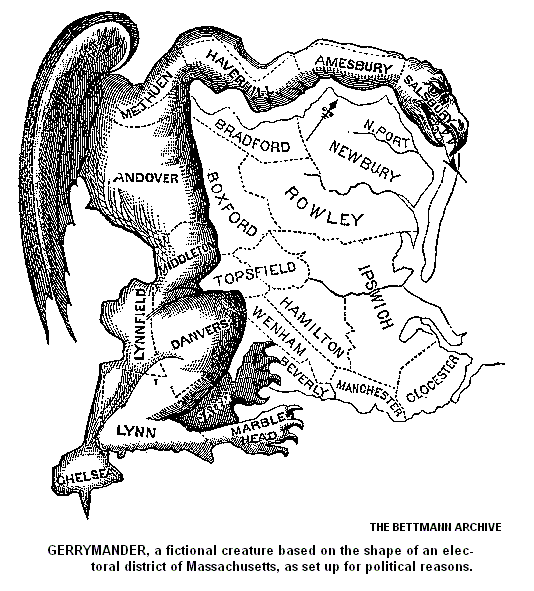
  • Will Virginia Slay the Gerrymander?

    Gov. Bob McDonnell has just issued Executive Order #31 creating the Independent Bipartisan Advisory Commission on Redistricting. The commission is tasked with ensuring bipartisan citizen involvement in the redistricting process for General Assembly and congressional seats. Stated the governor:

    As Virginia redraws its legislative districts later this year, the process should take place in a manner that is fair and open. Legislative districts should be drawn in a way that reflects commonsense geographic boundaries and communities of interests as required by law. This Bipartisan Redistricting Commission will contribute to public involvement, openness, and fairness in the redistricting process.

    The commission will consists of 11 members, with an equal number of Republicans and Democrats plus Chairman Bob Holsworth, founder of the non-partisan website Virginiatomorrow.com. It will submit a redistricting plan to the General Assembly for approval.

    Kudos to McDonnell for eschewing the prospect of short-term political gain in favor of creating districts around natural communities of interest. Assuming the commission’s proposals are adopted, bipartisan redistricting could lead to fewer safe seats, fewer elections being decided in primaries, fewer ideologues and more competitive races all around. In theory, bipartisan redistrict could result in a reduction in polarized politics.

    As virtuous as bipartisan redistricting reform is, it is only the first baby step in the road to governance reform. The next step will be to reorganize the powers of state and local governments in recognition of the reality that the metropolitan region (what EMR calls the New Urban Region) is the fundamental economic unit of the 21st century. The municipalities around which Virginia organizes the delivery of government services are an artifact of the agrarian era, they are a barrier to the efficient delivery of government services, and they contribute to the perpetuation of dysfunctional human settlement patterns.

    If Gov. McDonnell really wants to leave his mark on the Old Dominion, he needs to initiate a process for restructuring governance in the commonwealth of Virginia.

  • Glock 19s for Everybody?

    Here’s a less-than-pleasant quiz.

    What type of weapon did mass killer Seung-Choi use to slay 32 people at Virginia Tech in 2007? What type of weapon did Jared Loughner use to kill a federal judge, a 9-year-old girl, four others and to wound 14 more people, including U.S. Rep Gabrielle Giffords, in Tuscon on Saturday?

    The answer? A Glock 19.

    Glock, of course, is the Austrian arms company that mass produces semi-automatic pistols for police and military services worldwide. The 9 mm. pistol was seen as a much-needed replacement for the old-fashioned six-bullet revolver that had been standard fare for cops. When they confronted criminals using Kalashnikovs, Uzis or MAC-10s with big magazines handling dozens of rounds, they need to up-gun.

    And that is the problem. The usual Glock has a 15-round magazine. Loughner, according to media reports, used a 30 round magazine designed to spew out a maximum amount of bullets in a minimum of time. He had at least two of these 30-round magazines and a couple of 15-round back-ups when he went to Giffords political event.

    When Cho went on his Tech rampage, he used exactly the same type of Glock with multiple magazines in addition to a Walther P22 handgun. He was able to buy the weapons easily even though a number of Tech professors and other personnel were intensely worried about his sanity and the possibility that he might hurt himself and others.

    Congress considered banning the Glocks some years back from public consumption but backed down under pressure from the National Rifle Association and other right wing groups.

    Yet the time has come once again to consider keeping these weapons out of public hands. I’d like to challenge the many conservatives who read this blog to give me a reason why automatic assault rifles or machine guns should be freely available. They are needed by police and military to kill an enemy. They have no purpose for hunting (I have been a hunter but I used a single-shot, bolt-action.22 cal. rifle). And, when it comes to personal defense, why does one need a weapon that can spit out from 500 to 700 rounds a minute?

    Ditto Glocks. If you are being threatened, do you need a 30-round clip? Do you need to fire 91 bullets as police claim Loughner did?

    I remember commenting on the need for better gun control at the time of the VT killings. I was told to “shut up” by a former blogger, a retired and highly-conservative retired Army colonel. Other attempts to pose the need for controls likewise have been shouted down by right-wingers
    thumping the Second Amendment.

    Unfortunately, the conservative culture is filled with the imagery and pageantry of weapons. Sarah Palin brags of her prowess in slaying Alaska’s wild animals and says we need to “reload” when it comes to politics.

    When I attended the Virginia Tea Party convention in Richmond this October, there were plenty of gun nuts strutting about openly holstering Glocks or .45 cal., 1911-style ACP pistols. I remember getting into a discussion with one fanatic wearing a “Guns Save Lives” sticker. He told me that the good old .45 has more stopping power than a 9 mm. Hard right media gurus such has Bill O’Reilly regularly talk about shooting down their opponents and beheading Washington Post reporters. I blog on the Post and I wonder if I am included.

    Even more moderate conservatives, like Jim Bacon, buy in to the gun culture indirectly. After attending the Tea Party extravaganza, Bacon praised it to high heaven, apparently ignoring the gun culture it generated.

    It’s time to stop ignoring the gun culture. How many more Techs or Tuscons are we going to need before we wake up?

    Peter Galuszka

  • Politics and the Chesapeake Bay – Part 1(a)

    Overview: I have decided to add an unplanned segment to the Politics and the Chesapeake Bay series. I felt there were sufficient questions following the first article in the series (Pt 1) to warrant an intermediary article to answer those questions. The two big areas of interest involved the uniqueness of the Chesapeake Bay (especially as an estuary) and the forces continuing to change the bay (especially rising sea levels).

    What is an estuary? It is a partly enclosed body of water with one or more rivers or streams flowing into it. Some definitions add a requirement for brackish water. The bottom line is that there is no completely accepted definition of an estuary. However, like pornography, you know it when you see it. The Chesapeake Bay is unquestionably an estuary. So are both the San Francisco Bay and the St Lawrence River. Other bodies of water, like the Gulf of Mexico, might meet the technical definition of an estuary but wouldn’t qualify in my book.

    Is the Chesapeake Bay unique? In many ways, yes. The Chesapeake Bay is not the largest estuary in the world. That distinction belongs to the Rio de la Plata located between Argentina and Uruguay. However, the Chesapeake is the largest estuary in the United States and is generally considered the third largest estuary in the world. Yet even these “facts” can be disputed. By surface area, the largest estuary is Rio de la Plata. By length it is the St Lawrence River. By miles of shoreline it is the Chesapeake Bay. By any measure, the Chesapeake joins a very few other aquatic marvels (such as Florida’s Everglades) as one of America’s most important natural wonders.

    The Changing Chesapeake. Anybody who boats on the middle section of the Chesapeake Bay knows Sharp’s Island Lighthouse (pictured in this post). The lighthouse sits at the intersection of the Choptank River and the main bay. It is instantly recognizable by its 20 degree tilt (caused by ice floes during particularly cold winters). The current Sharp’s Island Lighthouse was not the first. The first lighthouse was built in 1837 on top of a 900 acre island which was home to a thriving agricultural community. Named Sharp’s Island after the Quaker physician who once owned it, the island was a beautiful place in the mid 1800s. So beautiful that a wealthy Baltimore shoe manufacturer built a resort hotel on the island. There was only one problem – the island was rapidly sinking into the Chesapeake Bay. The isle (which measured 900 acres in the 17th century) was down to 94 acres by 1900. The island is under 9 to 12 feet of water today.

    The rising tide. The water level in the Chesapeake Bay’ along with the rest of the Mid-Atlantic coast’ is rising at twice the rate of sea levels worldwide. This amounts to 1.3 feet per century at the mouth and 1.0 foot per century in mid-bay. That’s a lot of extra water but far from enough to put a hotel that was dry in 1900 under ten feet of water today. The Chesapeake Bay has been identified as one of four anomalous areas along the U.S. East Coast that appear tectonically active. There is a down-warping of the Earth’s crust called the Salisbury embayment. This embayment could certainly be the root cause of the mini-Atlantis known as Sharp’s Island. However, the entire US Mid-Atlantic coast is experiencing sea level increases well beyond global averages. And the Salisbury embayment cannot be blamed for all of that!