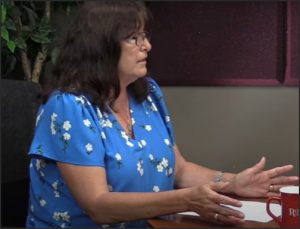
The number of Virginia preschoolers with disabilities has increased 24% of the past two years. The response of the Virginia Board of Education? Hire more special education teachers!
Voting 7 to 0, the Board directed the Virginia Department of Education (VDOE) to remove the requirement for special-ed teachers to do graduate-level coursework as a means of boosting the supply by at least 70 positions, reports The Virginia Mercury.
I suppose the action makes sense… if there is a genuine need for more special-ed teachers. But let’s think this through.
A 24% increase in the number of preschoolers with disabilities in just two years?
Many years ago, when I worked at The Washington Post, I overheard one of our national reporters griping on a Friday afternoon.
I wasn’t eavesdropping. You could hear him across the canyon of a newsroom.
“No one in the effing federal government answers their phones on Friday,” he shouted, slamming down his phone and adding a few more descriptive expletives about the goldbricking official he was trying to reach.
(Note to those under 40, picture this: There was a time when office workers were tethered to actual telephones with spiral cords. These communication contrivances rested on desks and were equipped with heavy receivers that made a most satisfying noise when smashed back into their cradles in anger.)
Some time after that outburst, probably at the end of a slow-news week, a group of us simultaneously tried to reach several dozen government officials at 3 p.m. on a Friday afternoon for a quick metro story. We wanted to see who was working. Besides us.
If memory serves, the answer was no one. I can’t find a copy of the feature story. We thought it was highly amusing. It’s doubtful the federal workers on the receiving end felt the same way. Continue reading.
The Guardian, a UK-based tabloid with a U.S. edition, wrote a thunderous exposé about UnitedHealth. The title: Revealed: UnitedHealth secretly paid nursing homes to reduce hospital transfers.
First paragraph:
UnitedHealth Group, the nation’s largest healthcare conglomerate, has secretly paid nursing homes thousands in bonuses to help slash hospital transfers for ailing residents – part of a series of cost-cutting tactics that has saved the company millions, but at times risked residents’ health, a Guardian investigation has found.
The details of United Health’s alleged activities were well reported and gut wrenching. UNH stock, already weak, cratered.
But the story entirely missed the larger context.
Readers of that article, and perhaps its author, are left ignorant of the fact that Medicare and Medicaid do the same thing — pay for lower re-hospitalizations — for the same reason that UnitedHealth does. Money.
Hospital readmissions among the Medicare population are common, costly, and often preventable. The Medicare Payment Advisory Commission (MedPAC) and a study by Jencks et al. estimated that 17-20 percent of Medicare beneficiaries discharged from the hospital were readmitted within 30 days. Among these hospital readmissions, MedPAC has estimated that 76 percent were considered potentially avoidable and associated with $12 billion in Medicare expenditures.
Medicare and Medicaid offer bonuses and levy financial penalties on hospitals and nursing homes for their performances in that measure and several others.
Medicare, Medicaid and UnitedHealth all claim to be motivated to improve patient care. OK. Maybe.
I received my Ph.D. and J.D. from the University of Virginia. I loved my time at UVA but I’m concerned the university has become an institution of indoctrination rather than education.
On April 29, UVA’s Board of Visitors resolved to strengthen efforts to ensure that the university is an inclusive and welcoming community where everyone can freely express their ideas. In March the board had pledged to dismantle UVA’s diversity, equity and inclusion apparatus.
History matters at Thomas Jefferson’s university, and UVA’s recent history is disturbing: In 2020 UVA’s board endorsed radical DEI goals articulated by UVA’s Racial Equity Task Force. Among the goals were “doubling the number of underrepresented faculty at UVA by 2030,” “developing a plan and a time horizon for having a student population that better reflects the racial and socioeconomic demographics of the commonwealth of Virginia and, as much as feasible, of the nation,” “encouraging related organizations to develop a scholarship program for the descendants of enslaved laborers who worked to build and maintain the university,” and “developing a series of educational programs around racial equity and anti-racism, including leadership development programs focused on equity, including racial equity.”
Want to know more about the latest Medicaid budget controversy? You’ll learn more sitting in your back yard and listening to the crickets.
Image credit: Bing Image Creator
by James A. Bacon
Today we read in the Virginia Mercury the alarming headline that Governor Glenn Youngkin and other Republican governors have signed a letter supporting a congressional budget bill “that would cut billions from Medicaid.”
After providing some background about the overall budget bill and the politics swirling around it, the article goes on to highlight Democratic Party talking points about Medicaid. It quotes U.S. Rep. Jennifer McClellan, D-Richmond, warning that taking people off Medicaid will push them into emergency rooms, shifting costs to others. The article also quotes Democratic gubernatorial hopeful Abigail Spanberger as asserting that thousands of Virginians “will lose their healthcare because of this bill.”
Ironically, the letter Youngkin signed doesn’t even mention Medicaid. The thrust of the letter is to support the inanely named One Big Beautiful Bill, which will “save taxpayers $1.6 trillion over the next ten years.”
But saving Medicaid is the Democrats’ messaging strategy, so that’s what the Mercury goes with. The Republican-backed budget, reports the news outlet, would cut Medicaid by $625 billion over the next ten years. By contrast, Democrats want to protect the poor.
How do citizens sift through the conflicting claims? There is so much we need to know.
Early in his career, Martin would walk out onto the stage and say, “It’s great to be here.”
Then he’d move a few feet away and say, “It’s great to be here, too.”
He would keep shifting about, as the laughter grew, finally saying, “And, wow, it’s really great to be here.”
This was meant to be funny and it was, very.
At the risk of sounding narrow-minded, however, the same approach to political office-holding is less amusing. Hop-scotch through elective office enough and you abuse the trust you’ve been given by the electorate.
Once upon a time – not very long ago – Aaron Rouse won an at-large seat on Virginia Beach City Council and said, in effect, “It’s great to be here.” That was 2019 and Rouse had been elected to represent nearly half a million residents in Virginia’s largest city.
Soon after, he wanted to be mayor, but then withdrew. “As a global pandemic put almost everything in our lives to a complete halt,” Rouse said, “it’s not the time for me to ask for your support and vote.”
Was being mayor of Virginia Beach really Rouse’s object of desire? It hardly seems so. In 2022, Republican state Sen. Jan Kiggins won Virginia’s 2nd District Congressional seat and Rouse immediately found a new love, announcing his bid to replace her in a special election.
Rural Virginia localities enjoy a historic opportunity to augment declining tax bases by courting solar farms and data centers. Remarkably, some local leaders regard the opportunity as a threat. They have convinced themselves that the critical infrastructure for the AI age threatens their rural quality of life.
I can understand peoples’ reservations about massive solar farms that can alter the landscape and potentially cause serious runoff, even though those concerns can be mitigated. But I am downright baffled by the resistance to data centers, which have a tiny geographic footprint and a minimum impact on farms, woodlands, and scenic vistas.
Thinking that perhaps I have been missing something, I read with interest an interview of Warren County Supervisor Cheryl Cullers. According to The Royal Examiner, she proclaims “heck no” to data centers, and “yes” to Smart Growth and tourism. “I have no intentions of voting for a data center, and I have not heard anybody else say they were either,” she told interviewer Mike McCool.
I still don’t get it.
Cullers, a nurse by profession, comes across as a nice, public-spirited lady who hasn’t thought things all the way through. She describes data centers as a “distraction” from more pressing community issues… as if building the tax base to pay for things like, oh, schools, law enforcement, social services, public works, and the like, weren’t a pressing issue.
Dems think they have a winning issue in decrying layoffs of federal workers. Don’t count on it.
by James A. Bacon
Governor Glenn Youngkin is looking like a pretty darn good steward of the public fisc these days. Bucking a slowdown in the national economy, Virginia’s General Fund revenues increased 8.8% in April, tracking $220 ahead of the state’s official forecast. Instead of spending the money, the Governor is adding the surplus to reserves set aside to weather cutbacks to the federal spending that sustains much of the commonwealth’s economy.
Predictably, Democrats are in a snit. They want to spend more money to address an inexhaustible well of “unmet needs” and also to tar Youngkin by association with President Trump’s moves to slash the size of the federal workforce. Youngkin has refused to distance himself from DOGE initiatives.
“I think what bothers me the most is, he isn’t stating what all of us know to be true,” Del. Joshua Cole, D-Fredericksburg, told NOTUS. “He knows what is going to happen down in Washington is having impacts already.”
Likewise, Democratic candidates for statewide office have adopted the strategy of running against President Trump. “There’s no one I trust more to stand up to Trump and Musk than you, Jay,” says former Governor Ralph Northam to Jay Jones, candidate for Attorney General, in Jones’ latest ad.
We’ll see how that plays out. If I were a Republican candidate, I would double down in defense of Youngkin’s fiscal policies and in support of restructuring unsustainable federal deficit spending, even if it means short-term pain for Virginians. Moody’s, the bond rating firm, has joined S&P and Fitch in downgrading U.S. federal debt — once seen as the world’s safest — from AAA to AA1. It is far better for Virginia to emancipate itself from federal spending now than wait until the inevitable reckoning forced by merciless bond vigilantes.
Virginia has had many good governors, both Republican and Democrat. Couldn’t you convince one of them to campaign with you? Terry McAuliffe, for instance. He’s funny, engaging and has boundless energy. Doug Wilder is one of the best retail politicians in the country, an elder Virginia statesman and an iconic figure.
Both are charismatic. But Northam?
The Times-Dispatch reports that the Jones campaign is launching a “six figure ad buy” featuring the former governor.
Need I remind you of those blackface photos of Ralph? (Or was he the person in the Klan costume? I was never quite sure.)
This man demonstrated poor judgment over and over. Continue reading.
We need more money. Leaders of the mendicant Washington Metro system met last week to discuss how to keep alive the regional rail and bus system. Abandoning the pipe dream of adding more money-losing routes to the money-losing system, the emerging consensus is to make the existing system more efficient. “Automation is how we get world-class transit,” said Nick Donohue, a former Virginia deputy secretary of transportation who held run the discussion. Such thinking is a step forward conceptually. Just one problem: Automation would cost $5.6 billion, with half coming in theory from federal grants and the rest funded by local jurisdictions over 15 to 20 years, according to the Washington Post. Good luck with that. Especially when the president of the Amalgamated Transit Union called the plan “dangerous, expensive and reckless.”
We don’t want your stinkin’ money. According to Inside Climate News, grassroots opposition to tax-generating data centers has blocked $900 million in projects in Virginia and delayed another $46 billion. Yes, billion with a b. The newsletter notes that data-center foes have teamed up with other conservation groups called the Virginia Data Center Reform Coalition. Data-center facilities themselves are innocuous. The problem is that they consume massive amounts of electricity, which will requiring upgrades to generating capacity and the electric grid, which in turn will mean higher electric bills for everyone (not to mention more transmission-line upgrades that everyone in their path hates). Virginia is already home to 13% of the world’s data-center capacity, and continued expansion of the industry represents a once-in-a-generation economic development opportunity. But geographically, the tax-revenue and employment benefits of data centers are highly concentrated, while the cost of electricity upgrades are dispersed. Until the unequal distribution of costs and benefits can be worked out, expect opposition to grow.
Speaking of things that will never happen… Winsome Earle-Sears, the Republican candidate for governor, opined in a commencement address at the Fishburne Military School that she wants to give Virginia parents as many educational options for their children as possible. That includes more charter schools (of which Virginia has only seven), more virtual schools, and more home schools. “Parents should be able to make the decision,” she said. “They know their children. The American dream is about options.” I agree 100 percent. Unfortunately, Democratic legislators and the educational lobby don’t. They are committed to maintaining public schools’ near-monopoly with all the opportunity they create for political patronage, social engineering and student indoctrination. In a February press release, Democratic candidate Abigail Spanberger called for more funding, more staff, and higher teacher pay — rewarding a key Democratic Party constituency while doing nothing to address collapsing standards and low expectations. It’s fine for Earle-Sears to advocate alternatives to failed schools, but public schools still educate roughly 90% of Virginia students. She needs to push harder on what Dems are doing wrong and what she would do differently.
I spent this weekend in Charlottesville celebrating the graduation of my daughter Mary Walton. Very proud of her.
In the colonial era, the town of Charlottesville and surrounding Albemarle County was the western frontier of Virginia. Beyond it lay the Blue Ridge mountains, the Shenandoah Valley and the fierce Shawnee Indians.
In 1777, in the midst of War with the British King, the Virginia legislature raised an army under George Rogers Clark, a militia captain and noted frontiersman. The mission was simple: protect the American settlers in far western Virginia (modern-day Kentucky) from the pillaging Shawnee, acting at the behest of the British general Henry Hamilton, who was called “the Hair-buyer” due to the sums he paid for American scalps, including women and children.
The ensuing campaign was one of the most impactful in American history. Clark’s small army tramped through the wilderness of western Virginia, then floated up the Ohio River till they reached the Wabash River in the winter of 1778. Deep in enemy country, holding their rifles above the freezing water to keep the powder dry, Clark’s men waded up the river. Reaching Hamilton’s fort at Vincennes, they attacked without warning, driving off the British and capturing the fort. Soon they controlled the entire Northwest Territory, beyond the Ohio River.
Ever since he resigned in 2020 as superintendent of the Virginia Military Institute under pressure from then-Governor Ralph Northam, J.H. Binford Peay III has refrained from commenting on the furors raging at the military institute. Even as his 17-year legacy was being trashed and VMI was depicted as a racist, sexist institution, he held his tongue.
J.H. Binford Peay III
But the 85-year-old veteran of the Vietnam War and Desert Storm felt moved to speak up when the reputation of his former chief of staff — a current VMI board member — was under attack.
The Institute remains embroiled in political conflict in the wake of the board declined to renew the contract for Peay’s successor, Cedric T. Wins, an African-American alumnus with a distinguished military career. Legacy media has implied without evidence that Wins’ race was a factor in the decision, although Wins’ implementation of Diversity, Equity & Inclusion policies at VMI undoubtedly was.
E. Sean Lanier, a former board member, sparked the latest controversy by issuing a letter criticizing the board on a variety of grounds, including its vetting and appointment processes for three current board members. He specifically noted that board member Jamie Inman had been “removed from his role as Chief of Staff at VMI under the prior administration for insubordination involving the delivery of sensitive materials to then-BoV President Bill Boland ’73.”
Peay issued this statement regarding Inman: “Jamie Inman was never removed from his role as Chief of Staff under my administration. Col (Ret.) Inman served me and VMI for over a decade, and his performance was superlative. This is just another case of disinformation.”
Readers will recall that back in 2017 the Trump administration enacted the Tax Cuts and Jobs Act (TCJA) which fundamentally changed U.S. tax policy. The maximum allowable SALT (state and local tax) deduction was lopped off at $10,000, forcing many taxpayers to stop itemizing deductions.
Offsetting the SALT deduction cap, the TCJA allowed a larger Standard Deduction. Overall TCJA reduced federal income taxes for most Americans.
Locally however, both Virginia and Maryland — I believe uniquely among all states — used the TCJA as an excuse to increase state income taxes. This was accomplished passively by no longer allowing residents to deduct their federal itemized deductions from income calculated for state taxes.
Enter President Trump’s proposed new Big Beautiful tax bill. Among other things, the bill reportedly considers allowing the SALT deduction to increase up to $30,000 or possibly even more. Presumably, this means that more Virginia residents will be able to take itemized deductions yet again.
The year: 2075. The American colonies on the Moon are getting restless under Washington’s tyrannical rule….
This second edition of “Dust Mites” has a snazzy new cover, includes helpful lunar maps, and is 5,000 words tighter than the original. The sequel, “Trogs,” is scheduled for publication this summer.
Advertisement
Advertisement
Advertisement
Advertisement
About
Bacon’s Rebellion is Virginia’s leading politically non-aligned portal for news, opinions and analysis about state, regional and local public policy. Read more about us here.
Fund the Rebellion
Shake up the status quo! Your contributions will be used to pay for faster download speeds and grow readership. Make a one-time donation by credit card or contribute a small sum monthly.
Can’t wait until tomorrow
For your Bacon’s Rebellion fix?
Enter your email address to receive immediate notifications of new posts by email.
SUBSCRIBE
Search Bacon’s Rebellion
Categories
Archives
The Jefferson Council
Protecting Thomas Jefferson’s Legacy at the University of Virginia
Forgot Your Password?
Shoot me an email and I’ll generate a new password for you.