
by James A. Bacon
Rural Virginia localities enjoy a historic opportunity to augment declining tax bases by courting solar farms and data centers. Remarkably, some local leaders regard the opportunity as a threat. They have convinced themselves that the critical infrastructure for the AI age threatens their rural quality of life.
I can understand peoples’ reservations about massive solar farms that can alter the landscape and potentially cause serious runoff, even though those concerns can be mitigated. But I am downright baffled by the resistance to data centers, which have a tiny geographic footprint and a minimum impact on farms, woodlands, and scenic vistas.
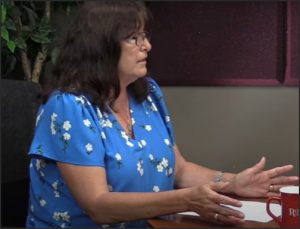
Thinking that perhaps I have been missing something, I read with interest an interview of Warren County Supervisor Cheryl Cullers. According to The Royal Examiner, she proclaims “heck no” to data centers, and “yes” to Smart Growth and tourism. “I have no intentions of voting for a data center, and I have not heard anybody else say they were either,” she told interviewer Mike McCool.
I still don’t get it.
Cullers, a nurse by profession, comes across as a nice, public-spirited lady who hasn’t thought things all the way through. She describes data centers as a “distraction” from more pressing community issues… as if building the tax base to pay for things like, oh, schools, law enforcement, social services, public works, and the like, weren’t a pressing issue.
Back in 2022, she explained, she made an effort to find out more about data centers. First, she visited Prince William County, the No. 2 Virginia location for server farms after Loudoun County. She could barely find the facilities, she said, for they were so well closed in with trees. “You couldn’t see the building.”
Then she visited Loudoun. “Oh, my word, that was an eye-opening experience,” she said. “It was block after block of these huge cement buildings… this huge electric area that looked like it would take up the middle portion of Front Royal. And I thought this is ridiculous.”
The logic here is mystifying. Cullers conjures images of huge cement blocks plopped down in the center of Warren County’s main town. But that’s nonsense. Warren County has two industrial parks, which is where data centers belong. And if Cullers doesn’t like the Loudoun model, Warren County is free to adopt the Prince William model of hiding data centers behind trees.
According to the Royal Examiner, Cullers also raised concerns about noise, water consumption, and electrical load. Noise issues can be dealt with by segregating the data centers from other land uses. Water consumption is a legitimate issue. A large, 100-MW data center can require as much as 1.1 million gallons per day of water, which would increase Front Royal’s daily consumption by roughly half. But the obstacle is surmountable. Negotiations for permitting such a facility could ensure that developers would reimburse the town for the cost of a major upgrade to its water system. Electric load is also a legitimate issue, which I’ll get to in a moment.
But first let’s explore Cullers’ vision for economic development. She advocates environmentally safe businesses, local job creation, and expanded tourism. Warren County, she said, is not taking advantage of “our natural resources and the tourism aspect of things.” The county has unique assets like the Shenandoah River, the Skyline Drive, and the Shenandoah River State Park. Neighboring Page County, she said, is “knocking it out of the ballpark with tourism.”
Pardon my skepticism. Mountain tourism can generate modest economic activity from hiking, camping, river rafting and the like. Warren County might even have a slim competitive advantage over other Appalachian counties due to its proximity to metropolitan Washington. But it ain’t Disney World. It ain’t even Kings Dominion. There’s only so much tax revenue that can be extracted from taxes on campgrounds and the sale of granola bars.
Moreover, Warren County’s assets are hardly unique. The mountainous Appalachian region spans 423 counties in 13 states, all of which are peddling the same product. There’s a lot of bucolic scenery in this country. It’s hard to stand out.
Why can’t Warren County walk and chew gum at the same time — develop its tourism economy and host data centers? Here’s an idea: Take tax revenues generated by data centers to pay for the amenities — hiking trails, biking trails, boat ramps, safety & emergency services, what have you — that make the great outdoors accessible to tourists.
The most intractable issue is the impact on the electric grid. Data centers are electricity hogs and if Virginia builds enough of them, Dominion and other electric utilities will have to make multibillion-dollar investments in added generating capacity and upgrades to the transmission system. Someone has to pay for that, and it’s entirely legitimate to ask data-center developers to absorb the marginal additional cost.
The General Assembly doesn’t seem anywhere near close to resolving how to deal with the prickly issue of who pays. The recent session saw many bills passed, and many vetoed. There is no consensus on how to move forward. But that’s not the concern that Cullers expressed in the interview. She appears to reject data centers out of hand rather than want to engage in the hard work of negotiating solutions that work for everyone.
To be fair, resolving incredibly complex tradeoffs is above the pay grade of a county supervisor. Still, it takes political will for the power brokers in Richmond to hammer out a compromise, and that political is lacking if the folks back home aren’t demanding it.
Leave a Reply
You must be logged in to post a comment.