• PJM to Analyze Long-Term Grid Resilience

    PJM Interconnection, operator of the regional transmission grid of which Virginia is a part, says the electric grid handled the 12-day bout of extreme cold weather in January with plenty of margin to spare. But given the evolving energy mix in the multi-state region serving 65 million Americans — more gas, wind and solar, less coal and nuclear — PJM has embarked upon an analysis to assess future fuel security.

    “The PJM grid remains reliable even with the resource retirements analyzed to date and investment in new, increasingly more efficient gas-powered generation sources,” said the grid operator in a press release yesterday. “While the grid also remains fuel secure given these changes, the potential for continued evolution of the fuel mix underscores concerns … about the need to examine the long-term resilience of the grid.”

    PJM’s initiative follows findings by the National Energy Technology Laboratory (NETL) last month that a surge in coal-generated electricity helped the Mid-Atlantic and Northeastern regions get through the Bomb Cyclone deep freeze, while nuclear, gas, wind and solar output remained largely static. NTEL argued that gas-fired electricity output was somewhat constrained by pipeline capacity and the necessity of competing with natural gas as a home heating fuel. PJM responded that demand for gas pushed up the price to the point where coal became cost competitive to burn, but there never was a shortage of gas.

    That’s this year. What about the future as the energy mix continues to evolve? Virginia appears poised to participate in the Regional Greenhouse Gas Initiative (RGGI), a cap-and-trade market designed to ratchet down utility carbon emissions by 30% over 10 years. For participating states, that will require the phasing out of power plants reliant upon the most carbon-intensive energy sources, coal and oil. Furthermore, increasing production of wind and solar power continue to undermine the economics of nuclear power. Here in Virginia, environmental and left-wing activist groups have signaled their opposition to re-licensing the Surry and North Anna nuclear plants over the next decade or two. Bottom line: the long-range energy mix could be far more dependent upon gas and renewables than it is today.

    PJM places a premium on fuel diversity as a way to mitigate risk. “No generation resource is free from risks that can negatively impact the electric power sector,” states a 2017 report, “PJM‘s Evolving Resource Mix and System Reliability.” “These risks are global and can affect any geography or political construction.”

    However, in an analysis of a wide variety of power-source portfolios with different mixes of coal, nuclear, gas, wind, solar and “other,” the study found that “natural gas and, to a lesser degree, coal” contributed more to system flexibility and reliability than the competing power sources. The study drew no conclusions regarding an ideal power-generating portfolio. In other reports, PJM has said that the existing transmission system can accommodate up to 30% contribution from wind and solar.

    PJM’s new analysis will involve three phases:

    • Identify system vulnerabilities and determine attributes such as dual-fuelย capability that can ensure that peak demands can be met during extreme scenarios.
    • Model those vulnerabilities as constraints in PJMโ€™s wholesale market for guaranteed capacity.
    • Work with federal agencies to ensure thatย PJM is meeting security needs for military installations.

    Stated the press release: “The intent of the vulnerability assessment is to stress-test the system under various fuel supply disruption scenarios to better understand potential future reliability concerns.”

    (Hat tip: Allen Barringer)


  • A Shocking Case of Lawful Behavior

    by Stephen D. Haner

    Sometimes the problem is fake news and sometimes the problem is non-news, and in a shocking non-news story it was revealed that (gasp) politicians are raising money. Just as they have for every year I can remember, General Assembly incumbents are filling mail and email inboxes with invitations to their usual spring and summer lobbyist shake-down events.

    But you have to understand, these are Senate Republicans doing this, the very same Republicans who have not acted yet on a delayed state budget! They are now in a special session. Acting in total and clear compliance with state law, and conducting themselves in complete conformity with previous patterns of behaviorโ€ฆ..wait, why is this news? Are not Democrats also holding fundraising events? Actually they are, while the story was light on those details.

    Perhaps you think it okay for members of the House of Delegates โ€“ in both parties — to hold their standard spring events. Do you think they have done their duty by passing out another version of their budget, so they get no special scrutiny as they dun the lobbying corps and the various corporate donors? They also are in special session, if that is what offends.

    Granted, very few Senate Democrats are as aggressively raising funds. They have always been less aggressive about raising funds. It is one reason they are, in case you missed it, not in the majority.

    I am not going to defend the Senate GOP delay on starting the second budget conference. But the issues that caused the hang up are legitimate and sadly we are all getting used to this unfortunate game of budget chicken. It may lead to laws that prevent fundraising during special sessions as well as regular sessions, but those prohibitions are mainly for show. If money can affect their decisions in January, it works just as well in June.


  • Time to Reform Practice of Cash Bonds

    Earlier this month Richmond Commonwealth’s Attorney Michael Herring announced that his office would no longer recommend requiring cash bond for people charged with crimes. Instead, prosecutors would recommend defendants either be held in jail or be given their freedom until the trial. Too many people are unable to raise cash for the bond, and Herring is concerned that the practice needlessly stuffs the city jail with poor defendants who may be innocent and pose no threat to the community.
    Herring is not a social justice warrior. He’s a prosecutor who takes seriously his obligation to put bad guys in jail. But he’s also sensitive to the effect that the criminal justice system has on poor African-Americans. Holding someone in gaol until his (or her, but mostly his) trial interrupts his employment, disrupts his ability to meet his financial obligations, and deprives him of his freedom. The practice also imposes a burden on taxpayers to house, feed, and guard people who have yet to be convicted of a crime.

    If the Richmond metro area were undergoing a horrendous crime wave, I might be inclined to err on the side of public safety. But crime continues to decline. As we approach end of April, Police Chief Alfred Durham reports heartening statistics, reports the Richmond Times-Dispatch: Seven fewer homicides, 23 fewer people shot, 42 fewer robberies, 196 fewer burglaries, and an overall 6 percent drop in violent and property crimes compared to the same point last year. This would seem to be a propitious time to implement reforms to the criminal justice system, if it can be shown that reforms are needed.

    When thinking about the causes of poverty, I find it useful to adopt two analytical frameworks: individual and institutional. Examining poverty at the level of the individual, we can see that some people are poor as a consequence of poor decisions they have made: They dropped out of school, they got pregnant before they got married, they abused alcohol or drugs, they committed crimes, they were unreliable employees, or they spent more money than they made and put themselves onto a treadmill of debt. And we can also see that institutional forces often work against them. Their schools were terrible. Politicians were corrupt. Jobs were scarce. They ran afoul of a criminal justice system that stacked the odds against them.

    If we want to address poverty in Virginia and create a society where people can rise above their circumstances, then we need to adopt both frames of reference, Among other things, that means giving a closer look at the criminal justice system. I have written in the past about how jails and prisons can ease the re-entry of inmates into society by making sure they have such basic job-finding tools as drivers licenses and identity cards. And a strong case can be made that they system of cash bond disproportionately burdens the poor.

    Herring’s order to stop recommending cash bond is just the first step, argues Adeola Ogunkeyede, director of the Civil Rights & Racial Injustice Program. While prosecutors may stop recommending cash bond, they aren’t always present when bail decisions are made — magistrates often make bail decisions when prosecutors aren’t around. Likewise, judges can override prosecutors’ recommendations.

    In a Richmond Times-Dispatch column today, she writes: “Given this context it remains to be seen whether Herring’s decision to stop his prosecutors from recommending cash bond will reduce the number of people locked in jail pretrial in Richmond.” She concludes:

    Moving forward, we encourage Herring to join advocates and communities disproportionately impacted by unjust bail practices — predominantly low-income communities of color — in championing measures that would unequivocally put Richmond on track to lead the way on meaningful bail reform in Virginia.

    From what I gather, Herring has already joined the movement. Her remarks would be better aimed at magistrates and judges. More critically, I would like to see Ogunkeyede acknowledge that there is a balancing act between protecting the rights of the accused and protecting the community from the depredations of crime. As social justice warriors often seem to forget, “communities of color” are disproportionately victims of the criminals who live in their midst.

    Still, all things considered, it is a fundamental principle of American justice that people are presumed innocent until found guilty. We should explore ways to keep not-convicted people out of jail, especially those accused of non-violent crimes who pose no threat to the public. Herring’s announcement is an important step forward and Ogunkeyede’s column is a worthwhile contribution to the discussion.


  • Emerging Lines of Conflict in Virginia Energy Policy

    The General Assembly may have ushered Virginia’s energy sector into a new era with its passage of the Grid Transformation and Security Act of 2018, but the battle over energy policy is far from finished. It’s just entering a new phase under new ground rules.


    New battlefronts are emerging over energy efficiency and onshore wind power, and the potential exists for controversy to erupt over the necessity (or non-necessity) of preserving coal and nuclear generating capacity.

    The grid-modernization legislation declared it a matter of public benefit to promote clean solar and wind power, to invest in energy efficiency, and to upgrade the electric grid so it will be more secure and better able to handle intermittent power sources like wind and solar. To pay for these priorities, the General Assembly agreed to let Dominion Energy and Appalachian Power Co., reinvest earnings over and above allowable rates of return instead of returning the money to rate payers.

    The ink has hardly died on the governor’s signature on the legislation before new conflict points became painfully clear.

    Energy efficiency. The new law commits Dominion to spend $870 million on regulated efficiency programs over the next 10 years and contribute $6 million annually to a state weatherization fund — and that doesn’t include money spent by Apco. Advocates of a low-carbon energy future envision funds flowing to programs that allow customers to buy smart thermostats, add insulation, and replace inefficient lighting and appliances.

    “Unfortunately, all of that potential could easily slip away,” Chelsea Harnish, executive director of the Virginia Energy Efficiency Council, told Energy News Network. Likewise, Harrison Godfrey, executive director of Virginia Advanced Energy Economy, said he is โ€œnot convinced utilities will invest in technologies that are real game-changers.”

    It seems to have dawned upon energy-efficiency advocates that the real obstacle is not the electric utilities but the State Corporation Commission, which takes a hard-nosed view on the value of energy-efficiency programs. Last month, SCC staff rejected a lighting program, appliance recycling program, and three other proposals submitted by Apco on the grounds that they did not pass cost-effectiveness tests.

    โ€œI think there is a concern that the SCC will continue to ovยญยญerly scrutinize these programs in a way that theyโ€™ll continuing being rejected,โ€ Harnish said.

    Energy efficiency advocates say the conservation programs will reduce electricity demand, thus delaying the need to add new generating capacity at great expense to rate payers. But the SCC likes to see solid evidence that the programs actually deliver the promised benefits at reasonable cost to rate payers. The big question: Now that the General Assembly has declared energy efficiency to be in the public interest, will the SCC modify its cost-benefit methodology and become more receptive to utility submissions?

    Photo credit: Kent Mason

    Onshore wind power. In an effort to create a lower-carbon electric generating portfolio, Apco announced plans last July to buy the Beach Ridge II Wind Facility in West Virginia and the Hardin Wind Facility in Ohio.ย The company proposed to finance the development of the two projects with an $84.6 million construction surcharge spread out over 10 years to ratepayers.

    According to the Charleston Gazette-Mail, in early Aprilย the SCC deniedย Apco’s request to recover its costs from Virginia ratepayers. The commission said the company doesn’t need the additional power generation.

    Apco argued that its electricity-demand forecast expects CO2/greenhouse gas regulation to be implemented by 2024. Indeed, Virginia appears to be poised to participate in the Regional Greenhouse Gas Initiative (RGGI), a regional cap-and-trade program that would shave Virginia utility CO2 emissions by 30% over 10 years. Final regulations are being drafted for approval by the State Air Pollution Control Board.

    โ€œThe Companies would be justly faulted if, in their planning, they ignored likely and expected developments simply because they hadnโ€™t yet occurred,โ€ Apco said. โ€œThere are many influential elements in American society today that favor such regulation.โ€

    Still, the SCC appears to be acting as a guardian of the rate payer’s interests, and it needs to be persuaded that the acquisition or construction of new power sources can be economically justified. Whether the Grid Transformation and Security Act changes the commission’s calculus remains to be seen. (more…)


  • Regarding Prince William’s Computer Tax…

    by Stephen D. Haner

    The Prince William County Board of Supervisors yesterday voted to maintain a special tangible personal property tax rate on โ€œprogrammable computer equipmentโ€ used in a business, providing a live and real-world example to continue our discussion on tax preferences and other incentives used to lure and keep businesses.

    The general personal property tax rate in Prince William County is $3.70 per $100 of value, with the value basically set as the purchase price. Individuals pay the tax on cars, trailers and boat, but businesses pay annual property taxes on just about all their tangible goods -โ€“ furniture, art, machinery and tools, etc.ย  State law says that the tax rate on business property cannot exceed the rate on personal property (and that all by itself makes Judge Dillon a hero in my book).

    About twenty years ago the leaders of Prince William, seeking to lure the computer industry (and I bet the industry proposed it first), lowered the tax rate to $1.25 on computer equipment.ย As far as I can tell the provision is uniformly available to any and all businesses with computers, which these days is about all of them. But of course it has proven very attractive to the data center industry.

    This became news because Corey Stewart, the chairman of the board and a U.S. Senate wannabe, proposed ending the special lower tax rate, in effect tripling the tax on all the business computers in the county. He further proposed to use all of the additional revenue produced thereby to finance a modest reduction in the real estate tax rates โ€“ something he then advertised to the voters (oops, taxpayers) in a county-financed mailer.

    I just noticed Jimโ€™s post on Amazon. The competition for tech investment, of course, provides a huge additional headwind to Stewartโ€™s idea. But hereโ€™s my take on the proposal, and feel free to challenge me.

    As long as the county had made no explicit promises to data businesses as they located or expanded in Prince William, it is fair to question whether the preferential rate should be permanent. Prince Williamsโ€™ general property tax rate is still lower than that of surrounding localities. And it already automatically depreciates the cost basis behind the tax, so as an asset ages the tax bill goes down.

    Stewartโ€™s big mistake was to use the additional revenue to lower the real estate tax by a penny, a proposal that smacks of political pandering (in an election year, imagine that). Republicans who complain that businesses pay too few taxes are in vogue these days.

    It would have been so much more effective and fair to propose to lower the overall tangible property tax rate instead, especially to set a slightly lower rate for all business property. After all, individuals still get part of their car tax paid by the state (the Gilmore Switcheroo), but the full tax falls on any business vehicle. Trade a specific preference for one favored investment for an incentive for all investments.


  • Virginia, Maryland and D.C. Collaborating on Amazon Pitch

    Metro Washington: multiple government jurisdictions, one economic organism

    As much as Maryland Governor Larry Hogan wants Amazon.com to locate its HQ2 in Montgomery County, he’d be delighted if the tech giant picked anywhere in the Washington metropolitan area. Accordingly. Maryland, D.C., and Virginia are working to pitch Greater Washington to Amazon as a unified region, he said Wednesday.

    Hogan’s remarks, reports the Washington Business Journal, follow disclosures that officials from multiple Greater Washington jurisdictions have been discussing regional issues relating to the project, which could bring $5 billion in investment and more than 5,000 jobs to the region.

    “Now, we all had our individual bids, and we’re still hoping,” said the Republican Maryland governor. “We think that Maryland had made a very, very attractive offer, one of the best in the country, and we’d love to have them here, but if that was the decision that Amazon made, to bring it to the Washington area and share, mix jurisdictions, we certainly would be supportive of that as well.”

    If I were Amazon, one of my biggest concerns about locating in the Washington metropolitan is the division of government between two states and the district — an arrangement that has proven dysfunctional for regional organizations such as the Metropolitan Washington Area Transit Authority (which operates the Metro) and the Washington Metropolitan Airports Authority. I would be greatly heartened to see any sign that the states were willing to work collaboratively.

    I think the Washington metro has a serious shot at bagging the Amazon HQ2. It only makes sense for the jurisdictions to collaborate because the impact would be so huge that, no matter which specific location Amazon selected, there would be big spillover effects everywhere.

    I remain highly ambivalent about the desirability of winning the Amazon project, given that (a) in a labor market experiencing labor shortages, newly created jobs can be filled only by people coming from outside the region, which would mean (b) state and local governments would have to absorb big new costs for schools, services, and transportation, (c) Amazon would be extracting such huge subsidies and tax concessions that it won’t help pay for much of that growth, and (d) non-Amazon taxpayers would get hosed.

    However, Amazon would help diversify a regional economy that is dangerously dependent upon federal expenditures, would turbocharge the regional tech economy, and would give Washington huge bragging rights for winning more tech companies and corporate headquarters. In the balance, I share Hogan’s view that HQ2 would be a good thing for the Washington region whichever jurisdiction it chooses.


  • Wow, that Stop-and-Frisk Policy Sure Looks Suspicious. Let’s Stop and Frisk It.

    Citing Charlottesville Police Department data, the Cavalier Daily, the University of Virginia’s student newspaper, has found that African-Americans are stopped and frisked at a rate nine times greater than whites.
    The statistical report from the 2017 calendar year detailed that of the 173 total recorded stop incidents, 70 percent of the individuals were black. Of the 125 stop incidents with search-and-frisk, 91 of the individuals ย โ€” or 73 percent โ€” were black.ย  According to 2016 estimates of Charlottesville demographics, only 19 percent of the City identifies as black or African American.

    Predictably, Bill Farrar, director of strategic communications for the Virginia chapter of the American Civil Liberties Union, said he found the statistics “alarming.”

    Don Gathers, a deacon at the First Baptist Church and founder of Charlottesvilleโ€™s chapter of Black Lives Matter โ€” said that stop and frisk is a racist policy:ย โ€œ[Stop and Frisk] is a very race-based, racist, failed policy,โ€ he said. โ€œ[The police] get โ€ฆ returns from the instability that they create in the community.โ€

    My first reaction (to borrow a line from the Instapundit blog): Why are municipalities run by progressives such cesspools of discrimination?

    My second reaction: Maybe there is a problem, but I’m not going to believe it on the authority of the Cavalier Daily, the ACLU or Black Lives Matter. Here’s the obvious counter: If African-Americans in Charlottesville are nine times to be guilty of crimes as whites, then the stop-and-frisk disparity is not unreasonable.

    However, the Cavalier Daily did present evidence suggesting that the disparity was real, though not as bad as a nine-to-one ratio would indicate.

    In 2016, a more comprehensive report revealed that out of the 97 detentions, 74 of the cases involved black individuals, but only 15 โ€” or about 17 percent โ€” of the individuals were arrested or served summons.ย Comparatively, out of the 35 white people that were stopped in 2016, 11 โ€” roughly 31 percent โ€” ย of them were arrested or summoned to court.

    In either case, a minority of those frisked were worthy of arrest. But blacks were only half as likely to be arrested or summoned — a big disparity, to be sure, but far short of a nine-to-one ratio. What we don’t know is if there are legitimate reasons for that smaller disparity. The assumption of racism is often unwarranted. Conversely, the fact that assumptions of racism are often unwarranted does not mean that they are always unwarranted. This may be such a case.

    โ€œAnother important step is to dig deeper into the data,โ€ said City Manager Maurice Jones. โ€œWe’ve got a group of folks who will be doing that with the City Managerโ€™s Office, the police department, the City Attorneyโ€™s Office [and] the Commonwealth Attorney’s office as well and getting a better understanding of some of the issues associated with [the data].โ€

    When stop-and-frisk was a hot controversy in New York City a few years back, I sympathized with the police and those who argued that eliminating the policy would make it more difficult to combat crime. I did not think it would end well when Mayor Bill DeBlasio ended the practice. As it turns out, the New York City crime rate has continued to decline. It’s not often that I find myself changing my mind about left-wing politicians, but in this instance DeBlasio proved correct. Stop-and-frisk was causing unnecessary resentment among minorities, and police have other crime-fighting tools that work as well or even better.

    Bacon’s bottom line: Let’s see if Charlottesville’s police can provide a convincing defense of the racial disparity in stop-frisks. If they can’t, the practice should end, and the police should devise other tactics for fighting crime.


  • Virginia Small Business Rating: Fair to Middling

    Ranking out of top 177 metros. For an explanation of metrics, see Reward Expert’s methodologyย here.

    Yesterday I opined on the critical importance of tax rates in influencing the flow of corporate and human capital between the states (“Supply Siders Like Virginia’s Economic Outlook“). But I made the point that taxes are hardly the only factor driving economic growth. Another important variable is entrepreneurial vitality — the ability of states and metros to grow their own businesses. Strong entrepreneurial ecosystems have kept states like California and New York in the game despite atrocious tax policies that push businesses and high-income households out of their states.

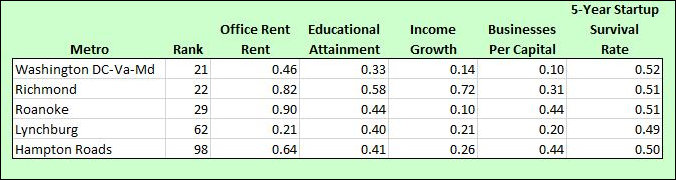
    Now comes a new of “Best and Worst Places to Start a Small Business,” published by Reward Expert, a company that creates reward packages for credit cards. Researchers used a bundle of 30 metrics including office space, demographics and diversity, education, income, transit, housing costs, and venture capital activity, among others for 177 metropolitan areas with populations greater than 250,000.

    Under this methodology, the Denver, Colo., and Boston, Mass., metros scored No. 1 and No. 2, while Charleston, S.C., and the Tallahassee, Fla., regions scored the worst.

    And Virginia metros? Overall, they put in a fair-to-middling performance. The Washington and Richmond metros ranked 21st and 22nd respectively, both respectable scores but not enough to blow anyone’s socks off. Roanoke was a pleasant surprise at 29th. Lynchburg scored in the top half. Virginia Beach-Norfolk was the only laggard, falling into the bottom half — but nowhere near the bottom.

    Metropolitan rankings have become a dime a dozen now, and I haven’t analyzed Reward Expert’s methodology to see if it is better or worse than the others. (I do question how valuable the five-year startup survival rate is as a metric, for instance, for it seems to vary within such a narrow range. And Washington’s low score for educational attainment looks plain wrong.)ย Just consider the report as one more colorful fragment in the kaleidoscope of data we scrutinize to track our performance.

    Combine this report on small business prospects with the “Rich States, Poor States,” which focuses more on factors influencing corporate investment and human capital flows between states, and the outlook is cautiously positive for Virginia. By no means can we consider ourselves an economic development powerhouse, as we were during the glory days of the 1980s and 1990s. And we’re still too dependent upon the vagaries of federal government spending. But our economic fundamentals look better that those of most states.

    Update: WalletHub has come out with its own ranking of best cities for business startups. Bottom line: Virginia sucks. Out of 180 cities:

    Richmond — 79th
    Virginia Beach — 131st
    Norfolk — 150th
    Newport News — 160th
    Chesapeake — 170th

    Important difference between the two rankings: Reward Experts looks at Virginia metropolitan regions, WalletHub looks at Virginia “cities.”


  • Welcome Steve Haner to Bacon’s Rebellion

    I’m pleased to announce that Stephen D. Haner is joining the ranks of Bacon’s Rebellion contributors. An occasional guest columnist in the past, he will become a more regular presence on the blog.

    Steve brings a unique perspective to public policy in Virginia. He started his career as a journalist. When I first met him at the Roanoke Times in the early ’80s, he was a dogged reporter covering the Roanoke County board of supervisors in. He moved on to partisan politics as a Republican Party operative, worked in the Attorney General’s Office, and rounded out his career as a lobbyist, most notably for Huntington Ingalls (owner of Newport News Shipbuilding). In other words, he has observed Virginia sausage making from both the inside and the outside and has few illusions about the process.

    Winding down his lobbying practice, Steve has the freedom now to proffer opinions that he once considered prudent to keep to himself. I, for one, look forward to reading what he has to say now that the manacles are off.

    — JAB


  • Fighting Child Abuse with Predictive Analytics

    Dr. Dyann Daley

    by Stephen D. Haner

    As a pediatric anesthesiologist in Texas, Dr. Dyann Daley saw far too many victims of child abuse in the OR. One horrible case in particular spurred her to move beyond treatment to thoughts of prevention, with a data-driven approach that should fascinate all Baconistas.

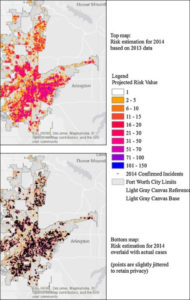
    Preventing child abuse is not as simple as preventing the flu or even malnourishment. There are plenty of thoughts on the why of child abuse, including the observation that it can be patterned behavior. The insight Dr. Daley and others behind Predict-Align-Prevent brought to the discussion was to focus on the where. Looking specifically at her home of Fort Worth, the group used spatial risk modeling to track a number of adverse outcomes believed to correlate with mistreatment of kids.

    The results are shown in two maps โ€“ one predictive and the other showing how the next yearโ€™s case statistics matched the predictions. That the two maps lined up so well may not be surprising. But Dr. Daley was surprised that poverty was not the strongest correlation with child abuse. Domestic violence, aggravated and sexual assault and children running away from home โ€“ those are the other problems with the strongest correlations.

    Dr. Daley was at Lewis Ginter Botanical Garden on Tuesday presenting her work to a child abuse and prevention conference, jointly sponsored by Families Forward Virginia and the state Department of Social Services. Predictive analytics is only worth doing if it then drives decisions on what preventive measures to take, where to focus the efforts and how to measure what is working.

    What has been done in Fort Worth is now being done in the City of Richmond, with a similar mapping effort underway down to the half-block level. That goal will be the same, to use the map to encourage the relevant players (social services, police, medical providers and the schools) to cooperate on effective prevention. The data will also locate community assets โ€“ schools, parks, services, churches, licensed day care โ€“ to see if they have any positive impact and how.
    The work is not universally applauded, and people in the audience Tuesday expressed concerns that sections of the city will see additional stigma or stereotyping based on the maps. The researchers reported that getting some of the data they want is not quickly shared, and it is being done inside DSS because at least the child welfare data is already in-house. They also stressed that the data does not deal with causation, only correlation.

    Disclaimer: Iโ€™m on the board of directors for Families Forward Virginia. It was formed last year through a merger of Prevent Child Abuse Virginia (PCAV) and the Comprehensive Health Investment Project (CHIP) of Virginia, and serves as the state office for three evidence-based home visitation programs all across the Commonwealth. CHIP was a paying client from 2013 through 2017, but now Iโ€™m working for free. I guess Jim will chalk me up as another social justice warrior.

    Iโ€™ll keep my eyes open for more information on the Virginia effort with predictive analytics and pass it on.


  • Good Idea: Set Priorities for Land Conservation

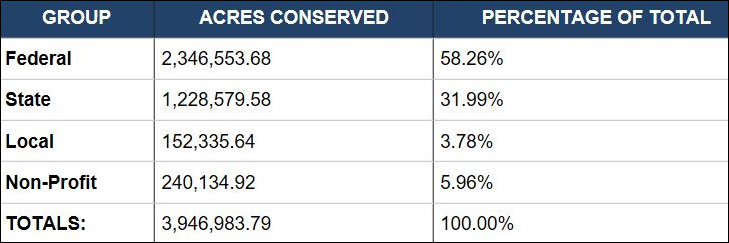
    Virginia Conservation Land Statistics. Table credit: Department of Conservation and Recreation

    Through tax credits for easements, land acquisitions for parks, and other means, the Commonwealth spends millions of dollars every year to conserve land. Under a new policy adopted by the Northam administration, the state will focus resources on safeguarding land with the highest conservation value.

    This new strategy will rely upon a “data-driven process” devised by the Department of Conservation and Recreation (DCR) to rank conservation value. The “scientific analysis” will show where the Commonwealth can get the most conservation value for the buck.

    โ€œI believe that we need a land conservation strategy that is focused and targeted toward making measurable progress on our natural resource goals, from restoration of the Chesapeake Bay to providing resilience against sea level rise and other impacts of climate change,โ€ย said Governor Ralph Northam in a press release.

    The administration said it first will prioritize permanent protection of the top 2% of lands with the highest conservation value and aim for protecting the top 10% within the next ten years. Priorities will include: “protecting watersheds and local water quality, securing and recovering wildlife populations and habitats, making sure agriculture and forestry are viable and sustainable, steering development away from vulnerable and disaster-prone areas, providing access to the outdoors, and preserving sites that represent the history of all Virginians.”

    The DCR website “Virginia Conservation Lands Database” page notes that of Virginia’s 25.27 million-acre land area, more than 4 million acres, or 16%, has some form of protection. The main vehicle for preserving lands at present is the land preservation tax credit for up to 40% of the value of donated land or conservation easements. Taxpayers were able to use up to $20,000 per year in 2015, 2016, and 2017, and $50,000 per year in subsequent years.

    Bacon’s bottom line: This makes total sense. Indeed, I recall having advocated a priority-setting process at some point in the past. If the state is going to hand out tax credits, which are the functional equivalent of budget expenditures, it should optimize the public value of the easements. It’s astonishing to me that it has taken so long to develop a methodology for ranking the easements, but I’m glad it has finally happened. Kudos to the Northam administration for bringing the program to fruition.


  • Supply Siders Like Virginia’s Economic Outlook

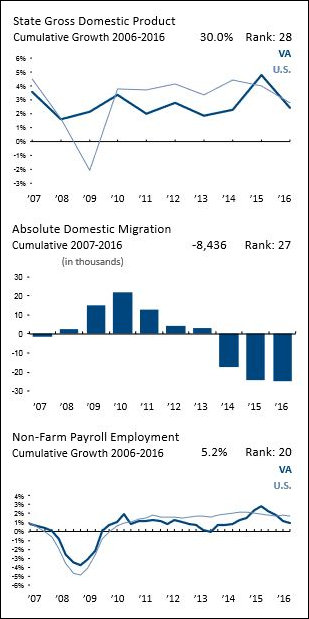
    Virginia economic performance over the past 10 years: fair-to-middling.

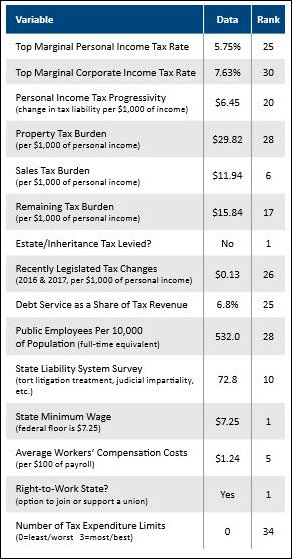
    Virginia’s economic performance has been mediocre over the past 10 years compared to that of other states, finds the 2018 edition of “Rich States, Poor States,” but the Commonwealth’s public policy mix gives it an economic outlook rank of 10th best in the nation.

    The “Rich States, Poor States” economic competitiveness rating reflects the analytical viewpoint of supply-side economists Stephen Moore and Arthur B. Laffer and gives heavy weight to tax burden, public indebtedness, size of state bureaucracy, and traditional business-climate factors such as right-to-work and average workers’ compensation costs.

    Many other factors influence a state’s prospects for economic growth, such as industry mix, education and skill levels of the workforce, entrepreneurial vitality, cost of living (particularly housing), and the quality of government services. Even so, the attributes identified by “Rich States, Poor States,” now in its eleventh year of publication, clearly have considerable value in explaining differential rates of population and economic growth.

    Laffer and Moore elaborated upon the importance of tax burden in a Wall Street Journal column today, in which they made the case that the capping of State and Local Tax (SALT) deductions will accelerate the movement of businesses and people — especially wealthy people — from high-tax blue states to low-tax red states. States with the highest, most progressive tax tax burden like California and New York, they predicted, will be the biggest losers. Conversely, low-tax states will be the biggest winners.

    About 90% of taxpayers are unaffected by the change. But high earners in places with hefty income taxesโ€”not just California and New York, but also Minnesota and New Jerseyโ€”will bear more of the true cost of their state government. Also in big trouble are Connecticut and Illinois, where the overall state and local tax burden (especially property taxes) is so onerous that high-income residents will feel the burn now that they canโ€™t deduct these costs on their federal returns. On the other side are nine statesโ€”including Florida, Nevada, Texas and Washingtonโ€”that impose no tax at all on earned income.

    Laffer and Moore did not discuss Virginia specifically, but according to the “Rich State, Poor State” methodology, the Old Dominion has a favorable tax and business climate. Hence, all other things being equal, economic performance should fare better looking forward than it did over the past 10 years when budget sequestration and defense spending caps squeezed the Northern Virginia and Hampton Roads economies.

    I would caution against making any judgments regarding short-term performance based on these numbers. Federal spending is the No. 1 economic driver in Virginia, and the state’s fortunes rise and fall to a considerable degree depending upon the vagaries of federal budget policies. Right now, Uncle Sam is in spendthrift mode, so that augurs well for us. But, as I frequently warn, what can’t go on forever… won’t. At some point, the federal spending spigot will close.

    Rather, tax and business climate factors make a difference over long periods of time. They facilitate a steady drip… drip… drip… in the migration of corporate and human capital from state to state, metro to metro. A perfect example is the recently announced relocation of Gerber Products Company of its U.S. headquarters from New Jersey to Arlington. The company will invest $5 million and create 150 jobs. By itself, that one move is not terribly significant given the huge scale of the Northern Virginia economy. But if the corporate migration from New Jersey and New York to Northern Virginia is entirely one way — and it is — small investments add up over a long period of time.


  • Can Medicaid Expansion Address the Doctor Shortage?

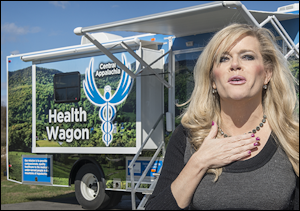
    Teresa Gardner Tyson, executive director of Health Wagon. Photo credit: Virginia Business

    With Virginia on the cusp of Medicaid expansion, it is heartening to see someone asking the obvious question: What good is Medicaid coverage if you can’t find a doctor? Bob Burke at Virginia Business states the obvious:

    Getting a Medicaid card doesnโ€™t necessarily mean you have a doctor at hand. Plenty of places in Virginia โ€” especially rural areas โ€” already are short of health-care providers. Oftentimes, people there depend on nonprofit community health centers or free clinics (both of which are chronically underfunded) scattered around the state, or they just go without. This is the true access challenge.

    Virginia has a network of clinics, health wagons and other services that provides basic care to poor Virginians, but the system operates on a shoestring, and thousands of people fall between the cracks. An important question is what happens to the existing medical infrastructure for the poor, as inadequate as it is, when Medicaid comes along?

    Teresa Gardner Tyson runs The Health Wagon, a mobile clinic that delivers care to people in Southwest Virginia. Medicaid expansion would be favorable to the people she treats, she says, but it’s not a panacea. Some of Health Wagon’s patients are already Medicaid patients — and they can’t find any other health provider.

    About five years ago, Health Wagon hired a consultant to run the numbers on how best to take advantage of Medicaid dollars if they started flowing. โ€œWeโ€™d have to go back and look at those numbers againโ€ and see whether becoming a Medicaid provider makes sense, Tyson says. โ€œWeโ€™re sustained by donations and grants, and at the end of the day, though, we do give free care, [but] the care that we give is not free.โ€

    Here is my question: What happens to those donations and grants if Medicaid expansion is enacted? Will Health Wagon still have a purpose? Perhaps it will, if nothing is done to address the shortage of health care practitioners in Southwest Virginia and there’s nowhere else to go. But if that shortage isn’t addressed and patients still can’t find doctors, is anyone better off?

    The Virginia Community Healthcare Association (VCHA), which has 29 member organizations at 147 sites, serves about 100,000 uninsured people every year. CEO Neal Graham estimates that of that number, about 70,000 would be eligible for Medicaid after expansion. He also estimates that expansion will bring an additional 100,000 patients into the clinics and community centers. But it’s not clear at all from Burke’s article that the clinics will have the resources to staff up to meet the extra demand.

    There are two problems in rural Virginia: a lack of health coverage and a shortage of health care practitioners. Medicaid expansion fixes the first problem. But as long as the program pays less than Medicare and private insurance — typically forcing medical providers to operate at a loss — Medicaid expansion will do nothing to recruit new practitioners to under-served areas. If lawmakers want the expansion to work, they must address the shortage of doctors, nurses, and technicians. Otherwise, they’re just perpetrating a cruel hoax on Virginia’s poor.


  • Does Uberization Increase Traffic Congestion?

    The ride-hailing market in Washington, D.C. is booming — ridership for Uber, Lyft and other ride-hailing services have more than quadrupled since late 2015, reports the Washington Post. And that’s a problem, some say. All those vehicles on the road are adding to traffic congestion.

    According to figures provided by the Washington mayor’s office, some of that traffic is diverted from traditional taxicab companies. Taxi ridership has fallen 31%, or about 6 million trips, since the ride-hailing boom began in late 2015. As far as traffic congestion is concerned, that’s a wash.

    But a Washington Metro consultant last year noted that Uber and Lyft account for much of the commuter bus and rail system’s ridership decline. Average weekday ridership is down 135,000 from the decade-ago peak. Those riders are crowding the roads, while Metro’s revenues are sagging, making it difficult to keep up with maintenance and safety needs. Mayor Muriel E. Bowser has proposed increasing the gross receipts tax on “for-hire” vehicles to 4.75% to raise money for the Metro.

    City officials concede, however, that they don’t have hard data on how many trips the ride-hailing services are providing, or how many passengers they are carrying. Calculating the impact is a challenge because, for Uber at least, a growing business segment is comprised of shared-ridership services. When riders share trips instead of riding solo, they take vehicles off the road.

    In other big ride-hailing markets such as New York, San Francisco, and Boston, there is growing concern that the Uberization of transportation is cannibalizing mass transit and putting more vehicles on the road. Not only is the trend bleeding business from mass transit, it might even be creating new trips.

    Bacon’s bottom line: I’m a big believer in the disruptive potential of Uberization (by which I mean the entire panoply of ride-hailing services encompassing Uber and all of its competitors and offshoots), but I acknowledge that the trend poses complex trade-offs.

    The obvious benefit of Uberization is that people wouldn’t be flocking to ride-hailing services if they didn’t offer a superior value proposition. Do we really want to a tax 21st-century transportation mode to subsidize a 19th-century mode (commuter rail) and a 20th-century mode (buses)?ย Another plus is that if more people ride Uber, they won’t need to park their own car. Reducing the demand for on-street parking could free up space for other uses such as bicycles.

    On the other hand… If Uberization does, in fact, put more vehicles on the road, the trend adds to traffic congestion, which imposes a social cost on other drivers. Arguably, more vehicles also equals higher CO2 emissions — at least until cars are powered by solar- and wind-generated electricity. Finally, given urban political realities, if Uberization undermines the economics of mass transit, taxpayers could wind up paying more to subsidize the failing transit systems.

    The Washington Post article creates the impression that there is a growing backlash against Uberization. I worry that the backlash might become powerful enough to stifle the industry’s growth, experimentation and evolution into new forms. We’re still in the very early phases of the 21st-century transportation revolution, and as far as I’m concerned, the transportation future can’t come soon enough.


  • Fix the State Windfall from Federal Tax Reform

    by Stephen D. Haner

    Governor Ralph Northam recently announced the nomination of about two hundred economically-challenged portions of Virginia to become federal Opportunity Zones, a special designation similar to an enterprise zone created by the recent overhaul of federal tax laws. Thatโ€™s good. But the economic opportunities available to all Virginians from the Tax Cuts and Jobs Act of 2017 are still in limbo.

    Like most states, Virginia bases its tax code on the federal tax code โ€“ a practice called conformity.ย  The rules on income, deductions and credits that determine your federal taxable income serve as the starting point for your state taxes. Until 2002, Virginiaโ€™s conformity to the IRS Code was automatic. Starting in 2003 Virginia became a fixed-date conformity state, leaving it to the General Assembly to review and cherry pick from new federal tax provisions. It has chosen to de-conform from only a handful. Until now.

    The 2018 Virginia General Assembly, following the advice of the administration, voted to conform to none of the tax changes for 2018. Individual and business taxpayers looking at the May 1 deadline for their first quarter state tax payments are having to base them on the 2017 federal tax code.

    The federal changes were made late in the calendar year and their impact is still poorly understood at both the federal and state level. A decision in February to fully conform at the state level could have made state revenue projections less reliable. But it is not too soon for the stateโ€™s leaders to declare that their policy going forward is to conform to as many of the federal changes as possible, and to resist the temptation to let federal changes automatically result in a state tax increase for Virginians.

    Full or almost full conformity to the rules should be the goal, with the tax brackets or rates then adjusted to produce revenue neutrality. If there is to be a revenue windfall, let it come from actual economic growth.

    Inaction will produce higher state tax bills for many individuals due to changes to the federal standard deduction. Secretary of Finance Aubrey Layne recently told a legislative committee that a consultant has estimated more than 600,000 Virginia taxpayers will switch from itemized deductions to the standard deduction at the federal level for 2018. That will require them to also take the standard deduction at the state level.

    At the federal level new lower tax rates offset the impact of losing those deductions. But with state tax rates staying the same, every $1,000 in lost deductions produces $57.50 in higher state income taxes. Even taxpayers who continue with itemized deductions at the federal level may see them shrink because of new limits, producing a higher state tax bill for them as well. To prevent a windfall the General Assembly will need to either increase the state standard deduction or lower individual rates.

    The confusion caused by delayed decisions on conforming on business tax provisions is even greater, because the 2017 federal bill really reshuffled that deck.

    A Virginia Department of Taxation presentation to the Assembly in January and one from the Division of Legislative Services highlighted new rules on losses claimed by businesses, on interest deductions, and on the amortization of research expenses.ย  There is a major new deduction for income from pass-through entities. The federal law doubled the expensing deduction for buying equipment from $500,000 to $1 million, one of the provisions expected to quickly juice the economy. The new law eliminates the domestic production activities deduction as a trade-off for lower federal tax rates.

    When Virginia has refused to conform since 2002 it has usually been on business provisions like these and it may be tempted to do so again โ€“ putting Virginia companies at a disadvantage. It may also be tempted to try to tax all the off-shore income that Virginia-based companies are going to bring home and add to their federal returns.

    Compare todayโ€™s lack of decision and discussion with the situation in 1986, when Congress passed the last major reform of federal taxes. There was an immediate push in Virginia to prevent a state-level revenue windfall. The push came from then-minority Republican legislators, and despite their minority status the issue struck a cord and the General Assembly responded with several positive changes to state tax brackets and personal exemptions.

    The 1986 changes were not as complex and were not as focused on business taxes. But that focus on the business side this time around makes Virginiaโ€™s response all the more important. It is time to start this debate.

    As his lobbying activities wind down, my former Roanoke Times colleague Steve Haner may again become a regular contributor to Baconโ€™s Rebellion, with a focus on some of the state and local issues that were the center of his career for four decades in Richmond. He will remain in business as Black Walnut Strategies for the near future.ย