And who controls their fates?
by Patricia N. Saffran and Ann McLean
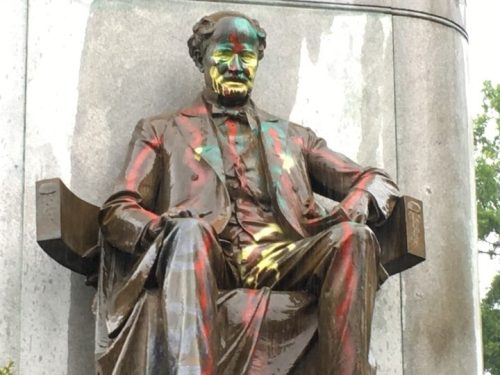
LA’s Monuments Exhibition at the Museum of Contemporary Art, which opens this month, is being funded to desecrate figures from American history. As a result, culture battles are heating up over whether or not to send magnificent Confederate Beaux Arts monuments to Los Angeles. It appears that some museum and city officials in a number of cities have deprived the public, who don’t want their local historic statues sent to the LA show, of having their say.
The public opposes the exhibition’s controversial display of some graffiti-laden and damaged Confederate sculptures along with modern works satirizing the South. The concern is that negative renderings of some of the sculptures will only serve to stir up racial animus and animosity toward historical works still standing in urban centers.
The Shenandoah Valley Battlefields Foundation (SVBF), on behalf of concerned citizens, filed a request for an emergency injunction June 27 against the city of Richmond to prevent previously removed Monument Avenue Beaux Arts monuments and cannons from being sent the LA exhibition. A number of the monuments were vandalized after the Charleston shooting event of 2015 and more memorials were attacked and removed in the aftermath of the 2020 riots. The exhibition condemned Southerners in a press release as “white supremacists” for putting up funerary monuments well after the Civil War even though the North put up funerary monuments of their own.
The LA Monuments show ignores basic facts about the aftermath of the Civil War. Having a good death in 1800s was very important, meaning if possible, being surrounded family and friends when passing as Thomas “Stonewall” Jackson experienced. Since that was impossible on the battlefield, being given a decent burial became meaningful. This period saw new developments in embalming techniques that allowed the dead whenever possible to be transported back to their homes for burial, thus the need for numerous funerary monuments mostly organized by grieving widows. Since over 600,000 died in the war, the extreme grief was felt by both sides and given tribute by monuments and statues even later when grandparents and relatives died.
(more…)