
Improve safety with longer yellow lights.
by J. Kennerly Davis
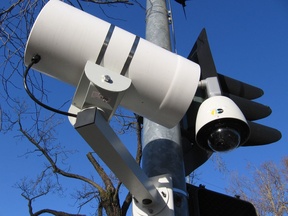
Traffic ticket revenue maximization and safety have been competing motivations for public officials since the dawn of the automobile age. This has certainly been the case with the enforcement of red-light laws.
The first electrified traffic signal was activated in Cleveland, Ohio in 1914. For decades after that, traffic signal compliance depended on a somewhat fortuitous combination of observation and enforcement by uniformed policemen who happened to witness an individual violation.
Things changed dramatically in 1992 when New York City began to automate enforcement by launching the first red light running camera program in the United States. Fairfax County became the first locality in Virginia to automate enforcement in 1995 when it installed red light running cameras under a temporary pilot program authorized by the General Assembly.
The pilot program used by Fairfax County lapsed in 2005 but in 2007 the General Assembly passed legislation generally authorizing Virginia’s counties, cities, and towns to install and operate red light running camera systems to enforce compliance and support the ticketing of offenders. That legislation is codified in Section 15.2-968.1 of the Code of Virginia.
Since enactment of the 2007 legislation, more than a dozen Virginia localities have implemented red light running camera systems, including: Albemarle County, Alexandria, Arlington County, Chesapeake, Fairfax City and Fairfax County, Falls Church, Newport News, Norfolk, Petersburg, Richmond, and Virginia Beach.
Virginia proponents of red-light running cameras argue that the combination of conspicuous warning signs on the approach to intersections plus automated monitoring contributes significantly to improved safety at intersections by reducing greatly the likelihood of T-bone crashes caused by drivers running red lights.
Critics are skeptical of such safety claims and argue that the primary motivation of localities installing the systems is to increase ticket revenues collected for government coffers. There is no official regularly published total for annual red light camera revenue across the Commonwealth. Proponents of the systems, and several operating localities, claim that the revenue collected often doesn’t cover the cost of installing and operating the systems.
There is a simple straightforward way to resolve the safety versus revenue debate, improve the finances of localities losing money on the systems, and dramatically improve intersection safety:
Abolish all red light running systems in the Commonwealth and simply adjust the timing of traffic lights to ensure that the yellow light lasts a minimum of 4 to 5 seconds.
Numerous studies have shown that serious T-bones at intersections occur not because the driver willfully ignores a red light but because he is not paying attention. Cameras do nothing to help with that problem. Such studies also show that the operation of red-light running cameras is strongly associated with a significant increase in rear-end collisions that occur when drivers slam on the brakes in response to a rapid signal sequence running from green to yellow to red.
Virtually all now understand that the best way to decrease crashes at problem intersections is a longer yellow. Jurisdictions across the country have replaced their cameras with a longer yellow. Virginia should follow suit. Candidates in the fast-approaching elections should be asked to state their position on this issue so that voters can decide to give them a green light or to stop them with a red.
J. Kennerly Davis has served as a Deputy Attorney General for Virginia. In that office, his responsibilities included matters related to transportation.
Leave a Reply
You must be logged in to post a comment.