by Steve Haner
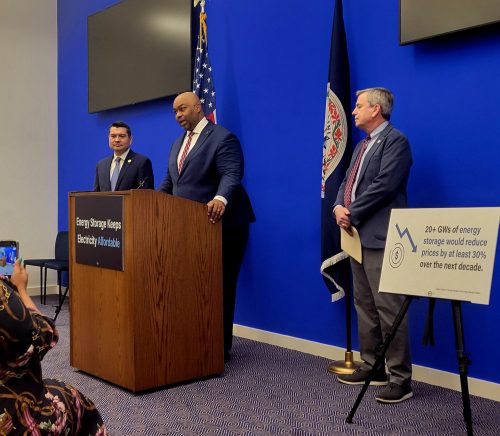
Advocates for adding massive amounts of battery storage to Virginia’s electric grid held a news conference Wednesday to claim again their upcoming bill will lower energy costs, not raise them, but added that the legislation they will push is still being drafted.
The 2026 General Assembly session starts in a week, and a version of the battery mandate bill was reviewed late last year by the Commission on Electric Utility Regulation (CEUR), but CEUR member Delegate Richard Sullivan, D-Arlington, said another version was coming. Whatever the changes, it is going to be great news for energy consumers, he and other legislators promised, flanked by people who are in the battery industry selling the hardware.
It was the bill version being discussed last month that sparked this report that the capital cost of all the new battery facilities could approach $54 billion, $62 billion if you included the battery mandates already listed in the 2020 Virginia Clean Economy Act. The basis for the estimate is the average cost of battery project applications now pending at the State Corporation Commission, about $675 million per gigawatt-hour.
The advocates spoke for close to a half hour without mentioning any cost figure. If they dispute the figure published on Bacon’s Rebellion, they didn’t say so. And none of the reporters at the event posed direct questions about the cost per megawatt or megawatt-hour that Virginia ratepayers will have to cover for Dominion Energy Virginia or Appalachian Power Company. Reporters did, and this was encouraging, understand the ratepayers will pay.
Some questions were about the cost versus benefit calculation behind the claims that adding batteries will make things cheaper. Sullivan’s best answer – correct – was that batteries would allow the utilities to purchase energy for storage when the production price is low, and then use it when the price peaks, preventing the need to buy off the grid at peak price. The opportunities for that kind of arbitrage are limited.