• SCC Staff Offers Grim Predictions on Virginia Clean Energy Law

    by Steve Haner

    Dominion Energy is likely to miss its Virginia Clean Economy Act targets, and in a decade, the financial penalties of that law will begin to pile up on the companyโ€™s ratepayers, a State Corporation Commission (SCC) staff assessment has concluded.ย 

    โ€œโ€ฆdespite building 17.5 gigawatts (โ€œGWโ€) of solar and 3.4 GW of wind, the Company will not procure sufficient renewable energy credits (โ€œRECsโ€) to meet the RPS (renewable portfolio standard) requirement starting in 2036. Customers will be paying significant deficiency payments starting in 2036, through the end of the modeling horizon. The total deficiency penalty ratepayers will be responsible for is approximately $5.32 billionโ€ฆโ€ wrote one staff analyst in publicly filed testimony.

    He added elsewhere: โ€œUltimately, the Companyโ€™s ratepayers have no control over whether the Company meets its RPS obligation or not. However, it is the ratepayers, and not the Company, that are penalized through the assessment of deficiency payments when the Company fails to meet the RPS requirementโ€.

    The staff was commenting to the judges and senior staff of the regulatory commission on Dominionโ€™s most recent application for new solar and battery assets that will help it meet the lawโ€™s goals. The law orders them to steadily reduce reliance on coal and natural gas generation and eventually eliminate them.ย  A hearing on the application will start February 17.

    This round, Dominion has applied for approval to own or lease about 1.3 gigawatts (nameplate value) of solar assets and 620 megawatt-hours of battery storage. The SCC staff recommends rejecting 17 of the 21 individual projects due to high cost, including the two battery projects. The reasoning mirrors that used by the full commission last year in rejecting similar proposals from the Appalachian Power Company.ย 

    (more…)


  • Would Anyone Want This Woman on Their Surgery Team?


  • Minneapolis Isn’t Virginia

    by Shaun Kenney

    Talk to your neighbors, talk to your friends, get a beer or grab a coffee. Talk to your friends and neighbors as if they were people worth living around. Talk about things other than politics โ€” spring planting is coming up, kids are hearing back from colleges, new books and poetry are being published every day.

    There is a lot more out there that unites us than divides us. That shouldnโ€™t be an invitation to divide at the expense of a common humanity, but rather a call to realize that the gentle and kind and good in the world are cultivated and finally defended โ€” they donโ€™t simply exist because the world is that way.

    I canโ€™t do much about Washington or Richmond, but I can do an awful lot in my own backyard. So can you โ€” and maybe if we started thinking about the world that way, we wouldnโ€™t invest so much of ourselves in things we canโ€™t control. Or worse, things other people control who donโ€™t give a damn about you.

    โ€ฆand if you feel the need to raise the stakes in order to win the argument? Come up with a clever sign if you have to. Watch โ€” and let folks know you are watching. But as the Man In Black reminds us all, donโ€™t take your guns into town:

    Especially if you are going to resist lawful orders.

    Shaun Kenney, senior advisor to former Attorney General Jason Miyares, publishes the Republican Standard blog. This column was excerpted from a longer essay, “Here’s Your Sign: Don’t Take Your Guns to Town.”


  • Virginia CNBC Ranking Legislative Analysis – Structural Decline

    by Chris Saxman

    Over the weekend, I was asked by a Virginia business leader how the first week of the General Assembly Session was going.

    This is my reply. At the outset of EVERY Session, there are bills that are dropped in that, to say the least, grab headlines. With social media these days, itโ€™s a constant barrage of outrage and mistaken blame.

    โ€œDid you see what Abigail Spanberger did in Virginia?โ€

    Boom.

    Fox News then runs segments basically ReTweeting, now called RePosting, a listing of various bills submitted by Spanbergerโ€™s party which now controls the House and the Senate.

    Whoa. Hang on a tick.

    No – Spanberger hasnโ€™t signed one bill into law. In fact, very few votes have actually been taken by anyone.

    Without concurrent offsetting reforms, Virginiaโ€™s ranking is likely to decline from #4 (2025) into the #12โ€“#18 range over the next two ranking cycles, with downside risk approaching the low teens.

    She signed some executive orders and if you have any questions about them, let โ€˜em rip. Hit reply and leave me a message.

    To review, proposed legislation almost always submitted by members of the legislative branch and is sent to committees of jurisdiction (yes there can be more than one).

    Every subcommittee and committee of both chambers acts as a filter that refines/clarifies legislation such that it can continue through the alimentary canal that is the legislative process.

    The final legislative product is then sent to the executive branch for final filtration.

    (more…)

  • Senate Looks to Tighten School Cell Phone Ban

    Created by Grok

    by Todd Truitt

    A Virginia Senate bill sponsored by Senator Stella Pekarsky, D-Fairfax County, would tighten the stateโ€™s school student cellphone ban law by replacing the word โ€œrestrictโ€ with โ€œprohibit,โ€ a change supporters say is necessary after local school divisions โ€” particularly Fairfax County Public Schools (FCPS) โ€” interpreted the current statute more loosely than lawmakers intended.

    The issue traces back to legislation passed by the General Assembly in 2025 requiring every local school board to adopt policies that โ€œrestrict, to the fullest extent possible,โ€ student possession and use of cellphones during the regular school day (with exceptions if required by an โ€œIndividualized Education Plan, Section 504 Plan, individualized health care plan, or Limited English Proficiency planโ€).

    But the lawโ€™s โ€œrestrictโ€ phrasing quickly became controversial, with districts like FCPS arguing that the statute allowed for lunch exceptions since it used the word โ€œrestrictโ€ rather “prohibit.” In response, Sen. Pekarsky and Senate Majority Leader Scott Surovell, D-Fairfax County, sent a letter to FCPS stating: โ€œThe intention of lawmakers in passing this law was to clarify that during class, lunch, and between classes, students are NOT permitted to use their cellphones at any time.โ€ Notably, Pekarsky was the co-sponsor of the 2025 cell phone ban legislation that became state law and, prior to joining the Senate, was an FCPS School Board member.

    Senator Stella Pekarsky

    Despite the letter, the FCPS School Board adopted a policy that bans cellphones, but allows high school students to use phones during lunch in designated areas. Similarly, the School Board for Arlington Public Schools adopted a policy allowing high schools to โ€œdesignate a particular location and non-instructional time during the school day in which phones or devices can be used briefly by students.โ€

    And just last month, the School Board for Loudoun County Public Schools (LCPS) was discussing updating its cell phone ban policy to comply with state law, which included a robust disagreement as to whether “restrict” meant “prohibit” (even despite LCPS Superintendent Aaron Spence citing the law’s patrons’ expressed intent to mean “bell-to-bell” without exceptions).

    (more…)

  • The Busiest Physician in Virginia

    The Busiest Physician in Virginia

    by James C. Sherlock

    In the first article in this series, the author revealed the names of the medical directors of each of Virginiaโ€™s nursing homes and the hours of medical director time for each facility as reported in the second quarter of 2025.

    Almost half of Virginia’s nursing homes reported zero hours from their medical directors. The author assumed they billed Medicare, Medicare Advantage, and Medicaid directly for those services. So, he checked Medicare records to get a general sense.

    One physicianโ€™s records were particularly curious. This article will not reveal his name. It is really not about him. It is about the governmentโ€™s woeful lack of capability to analyze and detect fraud in the nearly infinite amount of Medicare data it collects.

    In CY 2018, he billed primarily for nursing home services and received about a quarter of the Medicare fees he received in 2022.

    He changed his practice. He billed for very few nursing home services in 2022. All but $7,000 of his Medicare payments in that year came instead from home health-related services. It proved to be a profitable career move. Medicare paid almost $900,000 in 2022 for billing under his personal National Provider Identifier (NPI). That did not include an estimated $500,000+ more from Medicare Advantage and an unknown amount from Medicaid. Then there is private insurance.

    Home health? Who knew?

    (more…)


  • Moderates of Virginia Unite

    Stand up now to stave off anarchy and violence.


  • The Moderate Mirage of Gov. Spanberger

    Spanbergerโ€™s appointments and executive orders tell the real story of race-based politics and radical priorities.

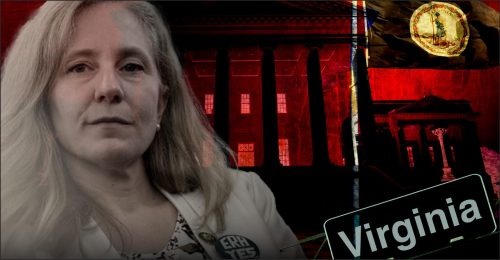
    A woman with long hair, wearing a white blazer, in front of a stylized background featuring the Virginia State Capitol and a gold coin.
    Image credit: Restoration News

    by Victoria Manning

    Abigail Spanberger ran as a moderate Democrat to win over swing voters, but her new record as Governor already tells a different story. Her appointments reveal a clear alignment with the radical leftโ€”putting Virginia on a path toward the same failed policies that have plagued states like California. One of her first executive orders emphasizes race-based preferential treatment.

    Gov. Spanberger appointed Sesha Joi Moon to fill the new position of Chief Diversity Officer and Director of Diversity, Equity, and Inclusion. Moon declared that DEI is โ€œa constitutional mandateโ€ and claims to be a โ€œblack queer woman.โ€ She was previously the chief brand strategist for far-Left Rep. Jasmine Crockett.

    (more…)

  • Bill Would Let Progressive Legislators Pick most of the Virginia Parole Board

    by the Liberty Unyielding staff

    Does any other state do this? Let progressive legislators โ€” rather than the governor โ€” pick most of the members of its parole board? Thatโ€™s what Virginia is about to do.

    On January 23, a Virginia Senate committee voted to do just that. It approved a bill, SB60, to expand parole for juvenile offenders. The bill was amended to give two progressive legislators the ability to pick 6 of the 11 members of the Virginia Parole Board, expanding the parole board by 6 members. (4 members of the parole board must vote to release any offender serving life without parole, so expanding the parole board to 11 members makes it much easier to release murderers and other inmates serving a life sentence).

    Under current law, the Virginia Parole Board has 5 members, all of whom are appointed by the governor, and confirmed by the legislature.

    Parole board members picked by a governor are less likely to release dangerous inmates than parole board members picked by a progressive legislator. Virginia Governor Abigail Spanberger represents swing voters who could turn against her if her appointees to the parole board release dangerous inmates. So her appointees are unlikely to empty the stateโ€™s prisons or release high-risk inmates. If they did, she would be blamed, and so would they. (She can fire her own appointees to the parole board). Spanberger has been floated as a future possible presidential candidate, and may wish to become president or a U.S. senator. To win a statewide election in Virginia, Spanberger needs votes from independents and moderates, not just Democrats or progressives.

    (more…)

  • Light Rail: The Bad Idea That Will Not Die

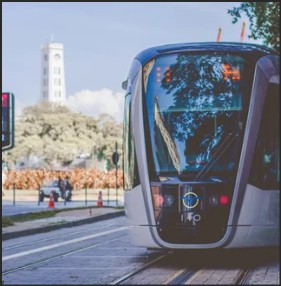
    A modern tram approaching a stop on tracks, with a tower in the background and trees lining the street.

    by Kerry Dougherty

    Good grief.

    I thought we drove a stake through the heart of the foolish notion of extending light rail to Virginia Beach back in 2016.

    Apparently not. 

    Del. Alex Askew, Democrat of Virginia Beach, is asking Richmond to commission a two-year study to determine the feasibiity of extending Norfolkโ€™s failed light rail system to the oceanfront in Virginia Beach. 

    Please, no. Enough money has been wasted on this developer-driven boondoggle. Voters realized that the rail system was never going to be a commuter rail but rather it would allow city power brokers to get rich building ant colonies around each stop. A 2016 referendum to extend the failure to Town Center was defeated in a landslide.

    Take was when the extension would have cost $100 million a mile. That cost has probably quadrupled by now.

    I wrote dozens of metro columns for The Virginian-Pilot persuading voters to reject folly. 

    I was right, of course. A column penned by Randal Oโ€™Toole, a Cato Institute expert on public transportation, neatly explained the folly of this system in a 2021 piece โ€œcelebratingโ€ the 10-year anniversary of The Tide.

    Light rail was a mistake from the beginning. As Iโ€™ve repeatedly noted before, it was rendered obsolete in 1927, when the first rear-engine buses were developed that were less expensive to buy and less expensive to operate than rail transit. Buses can also move far more people per hour than rail.

    Norfolk light rail is particularly pathetic. In 2019, it carried an average of 12.4 people per 68-seat railcar (that is, 12.4 passenger-miles per vehicle-revenue mile), less than any other light-rail system in the country. Fares covered less than 14% of operating costs, not the lowest but well below the 22% average for light rail nationwide. These numbers are all from before the pandemic, but as of June, 2021, ridership was still 58% less than 2019 numbers, which means trains were emptier and fares covered even less of the cost of running the Tide. Continue reading.


  • Revenue Hungry Democrats Fill a Buffet Table of Tax Bills

    by Steve Haner

    Governor Abigail Spanberger so far is no more clear on her tax and spending priorities than Candidate Spanberger was, but her fellow Democrats in the General Assembly are laying out a smorgasbord of tax increase options for her.ย ย ย  ย 

    Would she like a major โ€œtax the richโ€ approach? Start with Delegate Vivian Wattโ€™s House Bill 979, pending in the committee the Fairfax Democrat chairs. It would create two new tax brackets on taxpayers with higher incomes, 8% on taxable incomes higher than $600,000, which then rises to 10% on income of more than $1 million.ย  ย 

    Do you want to tax upper-income families another way? Many get much of that income from investments, and House Bill 378 from another Northern Virginia Democrat imposes a 3.8% piggyback income tax on net investment income reported on their tax returns. It will not kick in until $500,000 in such income is received. That is the same supplemental tax rate as is applied by the federal Net Investment Income Tax, but HB 378 uses a higher threshold before the tax starts.ย 

    (more…)


  • A Rejoinder to Hans Bader

    by Dick Hall-Sizemore

    Courtesy of wallpaper.com

    Hans Bader has published an extensive article in BR opposing bills introduced in the General Assembly that would enable judges to give a โ€œSecond Lookโ€ at inmates with long sentences. As I was preparing my comments to the article, they themselves became so extensive that I decided an rejoinder article would be more appropriate.

    The bill (HB 853 and SB 634) would establish in which an offender in a Virginia state prison could petition the court to take a โ€œSecond Lookโ€ at his sentence.ย How long on his sentence an offender would have to serve before filing such petition would depend on the nature of the offense.ย After consideration of the petition and comments provided by the Commonwealthโ€™s attorney and victims, a judge could reduce the offenderโ€™s sentence and even order him released, if the court finds โ€œthe petitioner has changed since the time of his original sentencing or โ€ฆ there is good cause to modify his sentence.โ€ In effect, the bill establishes a parole process overseen by the judge who handed down the original sentence.

    In setting out his opposition to the legislation, Mr. Bader cites recidivist statistics that he has used in the past. There are several reasons why his statistics are weak:

    1. Not applicable to Virginia. He tells us a story about how early releases of offenders led to more crime in Italy. He cites national arrest statistics. He does not cite Virginia recidivist data for a reason: the Commonwealth has the lowest recidivist rate in the nation.

    (more…)

  • No, Fools, We Really Need the Gas

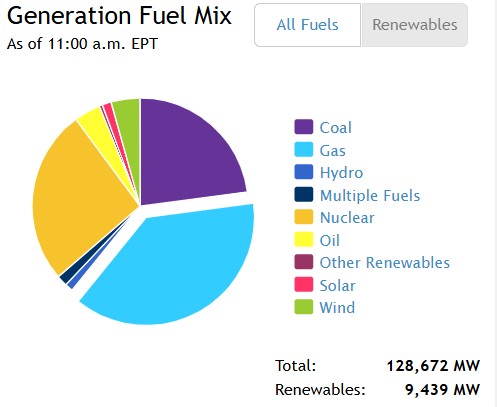
    Today demonstrates once again that thermal generation sources โ€“ natural gas, nuclear, coal and oil โ€“ provide the electricity that keeps us alive when the cold gets to deadly levels (no, it isnโ€™t the heat we need to worry most about).

    At 11 a.m., according to a PJM Interconnection tracking website, about 90 percent of the electricity in that 13-state region was coming from those sources and less than 10% was coming from the so-called โ€œrenewableโ€ sources.ย The massive solar facilities that Democrats seem to worship as sacred, and wish to force on us over local objections, are worthless at times like this. Worthless.ย Wind is only slightly better.

    (more…)

  • Top U.S. Foundations Fund the Desecration and Destruction of Fine Art

    by Patricia N. Saffran

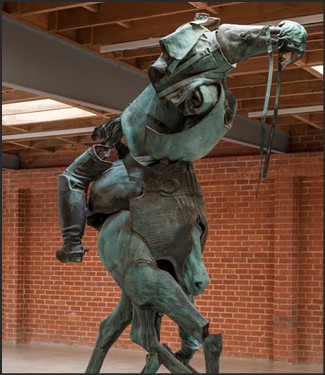
    A bronze sculpture depicting a horse rearing up with a knight in armor, set against a brick wall in an art gallery.

    The Monuments Exhibition in Los Angeles, co-presented by the Museum of Contemporary Art (MOCA) and the Brick, features historic Confederate Beaux Arts statues splashed with paint and graffiti, along with contemporary art based on a theme of satirizing the South. Most notably, the exhibition displays the once-magnificent historicย Charles Keck equestrian statue of Stonewall Jackson after it had been dismembered and reassembled in grotesque form.

    I attempted to pose questions to the presidents of some of the world-famous foundations that financed the exhibit. The foundation presidents refused to answer any questions. Transparency among foundation officials doesnโ€™t exist.

    Those questioned include representatives for Elizabeth Alexander, President of the Mellon Foundation, John Silbeman, President of the Teiger Foundation, and Joel Wachs, President of the Andy Warhol Foundation for the Visual Arts, also Treasurer of the Teiger Foundation and Vice-Chairman of the Board of Trustees of the Los Angeles Museum of Contemporary Art. 

    The following questions were directed in particular to the Mellon Foundation:

    (more…)

  • Bill Would Effectively Abolish Life Without Parole

    by the Liberty Unyielding staff

    A close-up photograph of a man with short hair and a serious expression, facing the camera directly.
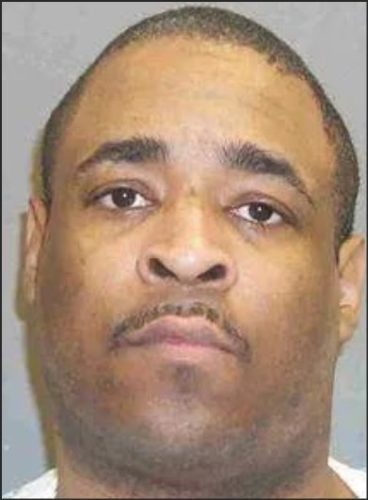
    Anthony Juniper: saved from execution by Virginia’s abolition of the death penalty.

    When Virginia abolished the death penalty in 2021, Virginians were assured that it wasnโ€™t needed, because the worst murderers could be given life sentences without the possibility of parole.

    But soon, even the worst killers could be released. Legislation has been introduced to allow all prison inmates serving long sentences to seek release after specified periods โ€” even serial killers, child killers, and other murderers who once would have been eligible for the death penalty. HB 853 and SB 634, known as the โ€œsecond lookโ€ bills, have been amended to create three tiers for release. Some inmates could seek release after 15 years, while those who commit the most serious offenses would have to wait 20 years or 25 years, depending on their offense.

    A smiling woman with long dark hair wearing earrings, photographed closely with an expressive pose. There is a name and dates below the image.
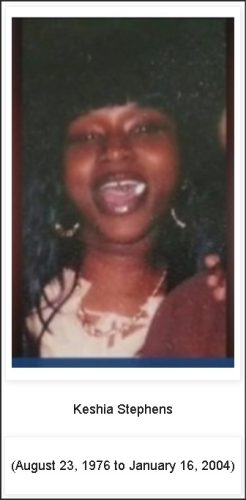
    Keshia Stephens: unavailable for comment

    Most Virginia inmates already spend less than 15 years in prison. For example, manslaughter carries a sentence of one to ten years. Drug possession can lead to sentences of up to 6 months, 1 year, or 10 years, depending on the type of drug.

    But some murderers, such as serial killers, are serving sentences of life without parole. This โ€œsecond lookโ€ legislation could not only release them, but give them more freedom than they would get from parole. Inmates released on parole are subject to the supervision of a parole officer, and if they misbehave, they can be sent back to prison for a long time. But inmates released under HB 853 and SB 634 would be free as a bird, with no parole officer to keep tabs on them.

    (more…)