• Nineteen Millionth Nervous Breakdown


    by James A. Bacon

    Two dozen students occupied the central lobby of James Madison University’s Alumnae Hall for 90 minutes last week. The group issued a list of demands, the most notable of which was increased funding and staff for the Counseling Center. Protest leaders read from some 50 testimonies submitted by students, reports the student newspaper The Breeze.

    โ€œIโ€™ve been struggling with depression and suicide thoughts on and off since I was 14 years old,โ€ one testimony read. โ€œAll that changed at the beginning of last semester. My suicidal thoughts got really bad. I would go days without sleeping, and I had no idea how to handle classes when all I could think about was taking my own life.โ€

    Another letter expressed the difficulty the writer and others have felt at JMU. โ€œOur mental state,” it said, “is on the fritz.โ€

    A graduate student urged faculty to disregard class-attendance guidelines and restrictions on test makeups. โ€œThat’s detrimental to student’s health and completely ignores the nuance of existence…. These sorts of things are barriers to students that are extraordinarily harmful.โ€ (more…)


  • Senate: “Trust Us This Time on Tax Reform”

    One of Charles Schulz’s most iconic and useful images.

    by Steve Haner

    First published this morning by the Thomas Jefferson Institute for Public Policy.

    Virginia government is flooded with cash — tax revenues far in excess of what is needed to maintain its current level of services and a fair reserve. Key votes have now been taken and the House of Delegates is poised to return much of the excess money back to taxpayers. The Senate of Virginia wants to keep the money and continue growing government ever larger.

    Yet another monthly financial update showing surging tax receipts was released Friday.

    Governor Glenn Youngkin (R) campaigned on and has introduced a series of tax reductions, most (but not all) of which will likely receive approval by the full House by today or tomorrow. Some of them (but not all) have received bipartisan support during their consideration in committee.

    But the Senate Finance and Appropriations Committee, meeting late Thursday, voted to stay with the minor tax cuts/more spending approach proposed by outgoing Governor Ralph Northam (D). Some committee Republicans joined in voting against Youngkinโ€™s proposals, delaying others for a promised study. (more…)


  • Virginia ACLU Sues to Keep Schoolchildren in Masks – Forever

    by James C. Sherlock

    The ACLU of Virginia is suing under the Americans with Disabilities Act (ADA)ย and Section 504 of the Rehabilitation Act in United States District Court in Charlottesville to keep all Virginia school children in masks. Potentially forever.

    The lawsuit contends that Governor Youngkin, with his EO making masks optional, “has effectively barred the schoolhouse doorโ€ to some kids with disabilities.

    A victory for the plaintiffs would make the debate on current Virginia law moot. It would make the expiration of that law on July 31 moot. It could make CDC recommendations moot. Indeed, it could make COVID-19 moot.

    Relief — masking for the entire school population — is sought based on the increased vulnerability of one or more kids to pathogens. The plaintiffs plead this is a reasonable accommodation. A decision based on the ADA or Section 506 cannot reasonably be limited to this particular strain of coronavirus.

    The wrong decision could make the administrators and teachers, as well as kids, wear masks when any child in a school is deemed by a physician to be more vulnerable than others to anyย pathogen. (more…)


  • The Cultural Bankruptcy of “Cultural Appropriation”

    Man Ray self portrait

    by James A. Bacon

    Yesterday my son and I visited the Man Ray exhibit at the Virginia Museum of Fine Arts. Man Ray was the Annie Liebowitz of his day, photographing the celebrated poets, painters, novelists, singers, dancers, and composers of Paris in the 1920s, a time in which the City of Light was the world’s undisputed center of artistic ferment. The exhibit displays Man Ray’s black-and-white portraits ranging from American writers Gertrude Stein and Ernest Hemingway to European painters such as Pablo Picasso and Salvador Dali. The exhibit portrays Man Ray himself as a creative genius who experimented with new photographic techniques and used cinema to explore the interplay between movement and light.

    All in all, the exhibit was informative and well done. It illuminated a period of history for which I had little appreciation, providing context for America’s famous “Lost Generation” of expatriate artists, as well as dozens of Frenchmen, Spaniards, Englishmen, Latin Americans, and even Romanians of great renown and modern-day obscurity. (Who knew there were so many celebrated Romanian artists in the 1920s, certainement pas moi.) The exhibit also highlighted the role of women in the intellectual movements of the day. Paris in the 1920s was a crucible for women’s emancipation.

    But there was one spoiler — a cringingly awkward placard about cultural appropriation. Man Ray, you see, had committed the cardinal sin of appreciating African art and incorporating it into some of his photographs. That, lecture the exhibit’s curators, amounted to “a blatant act of cultural appropriation,” which showed how “even an ‘enlightened’ and forward-thinking artist like Man Ray could be blinded to his own participation in the visual legacy of colonialism, as well as his white privilege.”

    Are these people serious? (more…)


  • Jeanine’s Memes

    From the Bull Elephant

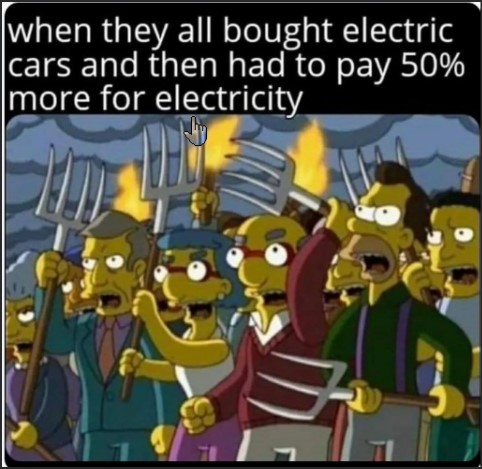
    Hmmm… It seems like torches and pitchforks are a recurring theme here on Bacon’s Rebellion.


  • A Dangerous Overreach in Public School Policy

    by James C. Sherlock

    Disturbed by the actions of Fairfax County Public Schools (FCPS), I have just finished reading Threat Assessment and Management in Virginia Public Schools: Model Policies, Procedures, and Guidelines (Model Policies),ย a publication of the Virginia Department of Criminal Justice Services (DCJS).

    It enjoins schools to investigate everyone, including โ€œpersons unaffiliated with the school.โ€ Everyone.

    DCJS thus turns public schools into law enforcement agencies by an absurd and dangerous interpretation of the applicable Virginia law.

    The colossal DCJS overreach inserted language in Model Policies that would permit FCPS to investigate the Wuhan lab. FCPS is using that authority to back its RFP for a web dragnet.

    That cannot end well.

    They will miss real threats, identify non-existent threats, suppress speech, leak protected information or all four while investigating entire communities with a dogmatic view of what constitutes a threat. (more…)


  • No Exceptions to the Free Exercise Clause

    by Deborah Hommer

    Many states, including Virginia, have a religious exemption to the requirement of vaccines based upon sincerely held religious beliefs. However, Virginia’s exemption has a big hole. The Code of Virginia (ยง 32.1-48) states that during epidemics the state Commissioner of Health can mandate vaccinations for “all persons” except those whose health might be compromised.

    HB 306 introduced by Delegate Nick Freitas, R-Culpeper, would amend the code to maintain the religious exemption during epidemics. The bill passed out of the Health, Welfare, and Institutions Committee 12-9. Now it heads to the House.

    States, Congress, and the Supreme Court have a long history of protecting the Free Exercise Cause that is contained in the First Amendment. The Supreme Court case Abington School District v. Schempp determined, โ€œThe Free Exercise Clause . . . withdraws from legislative power, state and federal, the exertion of any restraint on the free exercise of religion. Its purpose is to secure religious liberty in the individual by prohibiting any invasions there by civil authority.โ€ (more…)


  • Undocumented Aliens vs. Undocumented Vaccinations

    Screen grab from the University of Virginia website: “DACA & Undcoumented Student Resources.”

    by Walter Smith

    Prior to the fall 2021 semester, the University of Virginia disenrolled 238 students, including 49 who had already registered for classes. What was their offense? Take a guess.

    1. Entering and residing in the country illegally, or
    2. Refusing to get COVID vaccinated in violation of a university policy that has since been overturned.

    If you answered (2), you have been paying attention. If you also knew that UVa had declared in June 2020 that Deferred Action for Childhood Arrival (DACA) status no longer disqualified an applicant from attending the university, you are really on top of things.

    โ€œOur mission as a university is to attract outstanding students who will make our community stronger and the world a better place,โ€ said UVa President Jim Ryan in this June 2020 article. โ€œWe should be open to all qualified applicants โ€“ and this decision is an important step in the right direction.โ€

    Solicitude to โ€œallโ€ qualified applicants did not extend to those who presented no documentation of vaccinations and boosters. University policy compelled “all students attending in the Spring 2022 semester … to upload proof” — documentation, if you will — “of an approved booster shot to the HealthyHoos patient portal” or face expulsion.ย  (more…)


  • Seeing Red About Blue Hydrogen

    by Bill Tracy

    In recent discussions on Bacon’s Rebellion, readers have been talking about hydrogen as an emerging fuel source.ย Hydrogen, not electricity, may be the ultimate transposition fuel of the future. Let’s call it the 800-lb blue “gorilla” in the room.

    U.S. liberals and electric vehicle advocates see hydrogen as a threat to their vision of the energy future. They believe in one winner, and only one winner, and that winner needs to be battery-electric vehicles (no hybrids). The problem with this “blue” logic is that we could be putting political correctness ahead of the best vehicle choices for America. Among other issues, the lithium, rare earth minerals, and electrode-grade graphite, needed in great abundance for EVs, come mostly from China.

    Let’s give hydrogen, H2, the consideration it deserves. Today, most H2 is called “Gray Hydrogen” because the process of extracting it from natural gas generates some CO2 emissions as a chemical byproduct. However, the CO2 so generated is high purity and is easily recovered for other uses. If the CO2 is recovered, we get so-called “Blue Hydrogen,” which is seen as more sustainable. Some purists demand only “Green Hydrogen,” in which hydrogen is extracted via electrolysis using renewable energy. (more…)


  • Follow-up: Appointment War Called Off

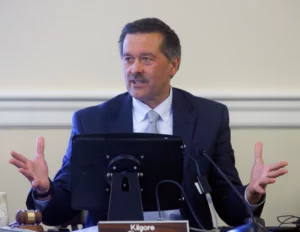
    Del. Terry Kilgore, Majority Leader, House of Delegates. Photo credit: WJHL

    by Dick Hall-Sizemore

    House Republicans backed off late yesterday afternoon from their threat to let over 1,000 appointments by former Governor Northam lapse. They did, however, single out and deny eleven appointments to a few regulatory boards that have recently been the subject of controversy:

    • Board of Education — denied three appointments, but confirmed one, Ann Holton, former judge and Secretary of Education and wife of Sen. Tim Kaine.
    • State Air Pollution Control Board — two appointments.
    • State Water Control Board — two appointments, including Tim Hayes, a long-time environmental lawyer. They did confirm one Northam appointment, however. She is from St. Paul, which is Terry Kilgore country.
    • Safety and Health Codes Board of the Department of Labor — two appointments. This is the body that adopted the controversial COVID workplace standards. However, the appointment of four members was confirmed.
    • Virginia Marine Resources Commission — two members.ย  This is the body that regulates fishing in the Chesapeake Bay and the Atlantic Ocean off Virginia’s coast. There has got to be an inside story on the refusal to confirm these appointments.

    (more…)


  • War Clouds On the Horizon

    by Dick Hall-Sizemore

    The potential warfare that is simmering near Crimea may pale in comparison to the war that is threatening to break out in the Virginia General Assembly.

    First, a little background. During the course of a year, a governor makes hundreds of appointments to various agency boards, boards of visitors, etc. These are to fill vacancies, reappoint persons whose terms have expired, or make new appointments to replace incumbents whose terms have expired. These appointments must be confirmed by the next regular session of the General Assembly.

    When a new governor comes in, there is the potential for conflict, but normally the General Assembly confirms the appointments of the former governor, even if there has been a change in which party has captured the governor’s mansion.

    Currently, there are six Senate Joint Resolutions sitting in the House Rules Committee listing appointments made by Governor Northam during the interim between the 2021 and 2022 Sessions. All were agreed to unanimously by the Senate. Reportedly, midnight today is the deadline for the House to take action on these resolutions. If no action is taken, the positions automatically become vacant. (There must be some obscure rule somewhere that sets midnight today as the deadline, but I can’t find it. Steve probably knows what it is.) (more…)


  • The Peasants Must Be Controlled

    by James A. Bacon

    It caused a brouhaha last year when U.S. Attorney General Merrick Garland assigned the FBI to look into threats of violence against local school officials by parents protesting woke school policies. The announcement struck many as paranoid and detached from reality, but it apparently reflected a widespread concern by local officials that the peasants with torches and pitchforks demonstrating at school board meetings genuinely represented a threat to their personal safety.

    A case in point: Fairfax County Public School system has published a request for proposal to pay up to $200,000 for “social media management services” to “monitor social media threats, harassment, hate speech and bullying.”

    According to Parents Defending Education, which has published a copy of the proposal, the RFP encompasses “active listening,” “deep and dark web sources not visible through traditional search engines” and “Open Source Intelligence.” It further seeks to “classify aliases, usernames, emails, websites, etc.” and “visually identify relationships and connections between persons.” (more…)


  • Many Criminals Don’t “Age Out” of Crime

    by Hans Bader

    Supporters of releasing criminals from prison make misleading claims. They say criminals age out of crime, and usually don’t return to crime after being released from prison. But a recent report of the U.S. Sentencing Commission shows how misleading these claims are, chronicling how most violent offenders return to violent crime after being released.

    On February 10, the Commission issued a 116-page report titled “Recidivism of Federal Violent Offenders Released in 2010.” Over an eight-year period, violent offenders returned to violent crime at a 63.8% rate. The median time to rearrest was 16 months for these violent offenders. So, most violent offenders released from prison committed more violent crimes. Even among those offenders over age 60, 25.1% of violent offenders were rearrested for violent crimes.

    Supporters of cutting sentences for violent offenders claim otherwise, even advocating that serial killers be eligible for release after 10 or 15 years. The ACLU of Virginia claims that “most people ‘age out’ of crime. By the time a person has been incarcerated for 10-15 years … they have matured significantly” and likely are safe to release. Similarly, the Virginia Grassroots Coalition claims that keeping violent offenders in prison for many years doesn’t “make us safer” because “violent crime is strongly correlated with youth.” And Families Against Mandatory Minimums claims that “long sentences” are not “necessary to keep us safe.” (more…)


  • Lab Schools — Vo-cation or Woke-ation?

    In 1896 educator John Dewey launched one of the first laboratory schools in the U.S., in association with the University of Chicago, as a “progressive” educational institution.

    by James A. Bacon

    It took the state Senate no time this session — 10 minutes, to be exact, reports The Virginia Mercury — to dispense with proposed legislation to make it easier to start charter schools in Virginia. Now Governor Glenn Youngkin is pinning his hopes for promoting school choice upon the idea of laboratory schools — K-12 academies developed in partnership with colleges and universities.

    This idea is not dead on arrival, but any lab school legislation will entail a lot of horse- trading to pass. The Mercury has done an excellent job of describing the wide range of issues involved. Where will $150 million in funding that Youngkin proposes come from? Will school districts be made fiscally whole from the diversion of students to these lab schools? What criteria should be used to set up lab schools, and how will they be held accountable for performance?

    What is a “lab school” anyway? Lab schools have been around since the late 19th century. In the 1930s, they focused mainly on teacher training and educational research. As the concept evolved, they expanded to new pedagogies such as hands-on industrial training. Under current Virginia code, the programs can be founded only by colleges or universities with teacher training programs. Bills backed by the Youngkin administration would repeal that requirement. (more…)


  • Richmond Leader Opposes Right to Gas Bill

    Pending Termination

    by Steve Haner

    โ€œI hope the General Assembly will reaffirm its confidence in localities to make these critical decisions on behalf of our residents.โ€

    So said Richmond City Council member Katherine Jordan in opposition to pending legislation that would establish in law a right for Virginians to use natural gas and require localities that wish to close their own gas utilities to instead sell them.

    The problem is, the council resolution Jordan sponsored back in September expressing the cityโ€™s desire to close the Richmond Gas Works does not just affect her โ€œresidents.โ€ The 120,000 customers include homes and businesses in Henrico, Chesterfield and Hanover counties.

    The bill faces a key floor vote in the House of Delegates today and then again Monday. After months of silence, Jordan is the first Richmond leader to publicly speak about the bill, in this case to Virginia Mercury. This is also the first major story on the issue besides coverage here, and the Richmond Times-Dispatch remains missing in action on the story, a huge one for its readership. (more…)