• Sens. Warner, Kaine Visit Roanoke To Tout New Bridge But City Council In The Dark About Scope of Project

    by Scott Dreyer

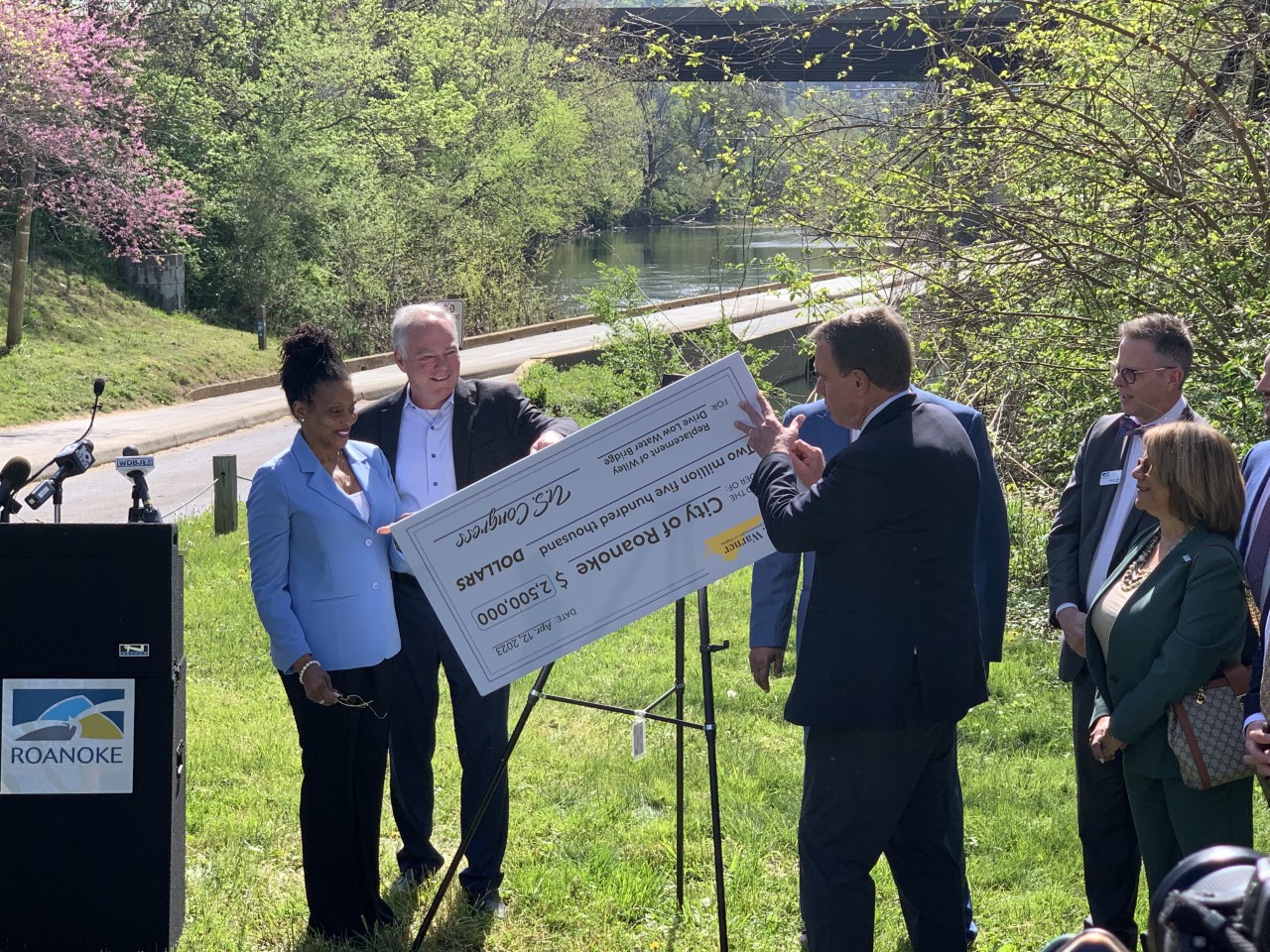
    On a picture-perfect April 12 with a backdrop of the sparkling Roanoke River and dogwoods and redbuds in bloom, Virginiaโ€™s Senator Mark Warner (D) and Senator Tim Kaine (D) visited the Roanoke Greenway at Roanoke Cityโ€™s Smith Park.

    The occasion was for the two senators to present a cardboard poster representing a check to Roanoke City for $2.5 million for the replacement of the low water bridge on the popular Greenway just a few yards downstream from Smith Park. The senators stated the funds came from the roughly $1.2 trillion bipartisan infrastructure bill.

    An email invitation from the City to reporters claimed the new, higher bridge will not only allow kayakers to travel under the bridge unimpeded (at low water levels) but also help the endangered Roanoke logperch swim up and downstream more easily.
    (more…)


  • Ezekiel Statute to Move from Arlington to New Market?

    As controversy rages over the fate of the Moses Ezekiel statue at the Confederate Memorial in Arlington National Cemetery, The Cadet student newspaper at Virginia Military Institute quotes anonymous sources that the statue might be moved to the Virginia Museum of the Civil War at the New Market battlefield site. — JAB


  • Bacon Meme of the Week


  • SCC Agrees Dominion Must Own Most Wind, Solar

    Dominion wins one for the shareholders.

    By Steve Haner

    The State Corporation Commission has rejected arguments that the Virginia Clean Economy Act would allow Virginiaโ€™s dominant electric utility to get more than 35% of its new wind, solar and battery power from third party suppliers. Dominion Energy Virginia is guaranteed by law (actually, required is the better word) to own 65% of those assets directly.

    The ruling was issued today in the Commissionโ€™s final order on Dominionโ€™s most recent application for additional solar and battery assets, most of which were approved.ย  The question has lingered through several recent cases since the General Assembly passed VCEA in 2020, with various stakeholders arguing that the third-party assets are usually cheaper for consumers and impose less risk from failure.

    The lower cost of those alternative approaches was highlighted in this case and discussed earlier on Baconโ€™s Rebellion. Dominion had rejected several cheaper third-party choices in compiling its plan. That earlier story also touched on the dispute over whether the 35% referenced in the statute was a ceiling or a floor.ย  The SCC looked at the plain wording of the law in effect and declared it really is a target that cannot be ignored or exceeded. To wit:

    This particular law is written as follows: “… and 35 percent of such generating capacity procured shall be from [third party-owned resources], with the remainder, in the aggregate, being from construction or acquisition by (Dominion.) As written, the above says โ€œ35%โ€ โ€“ neither something more nor something less – “shall” be from third party-owned resources.

    (more…)


  • School Bullying and Victimization Data: Just the Facts

    by Dr. Kathleen Smith

    Earlier this week on Baconโ€™s Rebellion, James Bacon posted โ€œThe Fruit of School Disciplinary ‘Reform.’โ€ Regarding the matter of bullying, I am adding a few additional statistics from the Youth and Juvenile Justice System 2022 National Reportย from the National Center for Juvenile Justice.

    The abstract embedded in the report includes the following:

    The report draws on reliable data and relevant research to provide a comprehensive and insightful view of youth victims and offending by youth, and what happens to them when they enter the juvenile justice system.

    It offers empirically based answers to frequently asked questions about the nature of youth victimization and offending, and the justice systemโ€™s response.
    (more…)


  • As Newspapers Struggle, Local News is Harder to Find in Virginia


    by Christopher Connell

    It is, unfortunately, old news.

    Virginiaโ€™s newspapers, the single biggest source of local news, face unprecedented challenges, with their readers, revenues, and staffs steadily dwindling.

    Itโ€™s a paradox because news writ large now seems to be available everywhere, all the time, on phones in our pockets and purses.

    People still hear about bickering in Congress, mysterious Chinese balloons overhead, and blizzards burying Buffalo. What they learn less about is whatโ€™s going on in their own backyards, towns, schools, counties, and state capitals.

    Some 2,500 U.S. newspapers have closed since 2005, some over-reliant on advertising-dependent business models that cratered with the rise of the Internet, many simply killed by their market areasโ€™ struggling economies. Most were print weeklies, where most people got their local news. (more…)


  • It’s a Cemetery, for Crying Out Loud!

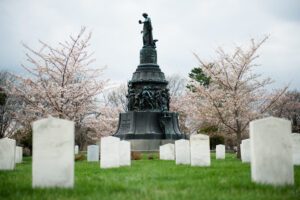
    Arlington National Cemetery. photo by Rachel Larue.

    by Donald Smith

    Apparently, it is the will of the United States Congress that, in the interests of sensitivity and inclusiveness, we go into our cemeteries, and then search for and remove items that might offend someone whoโ€™s not related by blood or heritage to anyone buried there. The Congressional Naming Commission (CNC) has recommended that the Confederate Memorial at Arlington National Cemetery be removed, and the Secretary of Defense has concurred. The Congress, at least according to the CNCโ€™s final report — which has mysteriously gone offlineย  — has given its blessing to the CNCโ€™s recommendations.

    The Confederate Memorial, sculpted by Moses Ezekiel, does not sit on the Washington Mall. Itโ€™s not on Capitol Hill, in the Rose Garden or Dupont Circle, or leering over Interstate 95.ย Itโ€™s in a cemetery. In order to see it, you have to go to non-public places — the cemetery itself, or a parking lot at Fort Myer, an Army base adjacent to Arlingtonโ€™s western border. ย 

    If you do go to Arlington to see the memorial โ€ฆ you really have to want to see it. ย  Itโ€™s on the other side of the cemetery from the welcome center and visitorโ€™s parking. The shuttle tour through Arlington does not stop at the Confederate section, Section 16. Two friends have visited the memorial on four separate occasions over the past two years, and the shuttle drivers never mentioned the existence of the Confederate cemetery, much less how to find it. Donโ€™t use the official Arlington Cemetery map as a guide: it doesnโ€™t label the Confederate section. (Much like the Richmond city tourism maps that didnโ€™t label the Lee, Jackson and Stuart statues on Monument Avenue). ย 

    Once you get to the Confederate cemetery, youโ€™ll see the memorial. It stands in the center of more than 400 Confederate graves, radiating out from the memorial in six concentric rings.ย If you look outside the Confederate section, youโ€™ll notice some differences between the Confederate graves and the others in Arlington. The โ€œregular government headstonesโ€ on most Arlington graves have curved tops, but the tops of Confederate gravestones are pointed. Graves in most of Arlington are arrayed in rows, but the Confederates are buried in a circle around the Ezekiel sculpture. This should allay the fears progressives and hypersensitive people might have that visitors might confuse Confederate graves with those of other Arlington dead. (more…)


  • Richmond FBI Office Used Undercover Agents to Spy on Traditional Catholics

    by Robin Beres

    The United States has not always been a bastion of religious freedom. When Virginia became an English colony in 1607, the English considered religious differences just as treasonous as political differences. Sure, Elizabeth I had reinstalled the Church of England following Queen Maryโ€™s tumultuous reign, but the possibility of another Catholic on the throne remained a threat for decades.

    As a result, English rulers decreed the Church of England to be the only official church in Virginia. For nearly two hundred years, there was no religious freedom in the colony. Even other Protestant denominations, such as Presbyterians and Baptists, were persecuted.

    It wasnโ€™t until 1786 that the Virginia General Assembly enacted Bill No. 82, โ€œA Bill for establishing religious freedom.โ€ Written by Thomas Jefferson and guided through the Virginia legislature by James Madison, the bill, eventually known as the Virginia Statute for Religious Freedom, was strongly backed by leaders of other religious factions.

    The bill stipulated that no government had the legitimate authority to establish or compel anyone to hold certain religious beliefs. Jefferson firmly believed that if this newly-born nation was to survive, all men must be given the freedom to determine their own beliefs.

    The bill was the first attempt to get religion out of government and government out of religion. Eventually the act became the basis of the U.S. Constitutionโ€™s First Amendment declaration that โ€œCongress shall make no law respecting an establishment of religion, or prohibiting the free exercise thereofโ€ฆ.โ€ The bill also confirmed Virginia as the birthplace of Americaโ€™s religious freedom.

    Little wonder then why many Virginians were stunned and concerned to learn of a January memo issued by an analyst with the Richmond FBIโ€™s field office. The memo seemed to determine there were white supremacists masquerading as Catholics who prefer the Latin Mass. The author of the โ€œanalysisโ€ seems to have even created a name for this newly-discovered group: โ€œRadical-Traditionalist Catholicsโ€ or RTCs. (more…)


  • Youngkin Energy Reforms Killed Without Votes

    By Steve Haner

    Governor Glenn Youngkinโ€™s proposal to ensure that any future wave of wind turbines built off Virginia must follow a real competitive bid process ended up dead as a beached whale. The General Assembly didnโ€™t just kill his proposed amendment during its reconvened session April 12, it refused to even take up the matter.

    Both the Republican-controlled House of Delegates and Democrat-controlled Senate voted to โ€œpass byโ€ the substitutes. The substitutes then died when the motion to adjourn was approved at the end of the day. Such a motion is often used to avoid a recorded vote loaded with political risk.

    Rejection of the amendments, first discussed here, leaves Youngkin (R) free to veto the underlying bill (actually two identical bills, one in each chamber), but his argument was not with the underlying bills themselves. He was just trying to weaken Dominion Energy Virginiaโ€™s control over the wind development process, which has led to Virginia building the first and only $10 billion project with all the cost and risk on its ratepayers. At this point, any second phase will likely be the same.

    The gubernatorial amendment on competitive bidding for offshore wind was injecting a new issue in the last stage of the 2023 session. Youngkin offered other amendments which constituted repeat efforts to pass things rejected during the regular part of the session. They met the same fate, some also by motions to pass by supported by his own party. (more…)


  • Incarceration Should Not Mean Humiliation

    by Kerry Dougherty

    Hang onto your wallets, Portsmouth. A lawsuit filed Friday in Circuit Court is seeking $1 million in damages due to alleged misconduct by a sheriffโ€™s deputy. Oh, and another $350,000 in punitive damages.

    The conduct – if it happened – was atrocious.

    According to court papers filed by a former inmate, Danaesha Martin, a sheriffโ€™s deputy on May 2, 2022 forced her to disrobe to prove she was actually having her menstrual period when she requested sanitary products.

    If true, this is sick. Sadistic, too.

    No matter the crime, incarceration should not be accompanied by humiliation. Treating inmates like animals should not be part of the criminal justice system. Jailers are supposed to behave better than the people behind bars. (more…)


  • Peace, Love and Tolerance at W&M

    Although she passionately believed in the right to life when she entered the College of William & Mary,ย Skyler Culbertson describes herself as “borderline liberal” and politically uninvolved. The past two years, however, have radicalized her.

    In a Hot Air podcast she says:ย ย โ€œI was like,ย oh my gosh, indoctrination is not just a right-wing talking point โ€” itโ€™s real! And ever since then, I pretty much changed. Now I consider myself pretty much like a MAGA Republican, about as far right as you can get, all thanks to the craziness of William and Mary and the liberals.โ€

    In Hot Air and College Fix, she tells how she has been called a “threat to humanity,” has been cyber-stalked, received an oblique death threat, and routinely gets obscene hate messages. Her foes tear down her flyers. In one incident, a student threw a cup of urine at her fellow right-to-lifers manning an information table.

    The administration’s response? (more…)


  • Thomas Jefferson Deserves Respect From All Americans

    by Bob Turner

    Thomas Jefferson owned slaves and is widely believed by able and honorable people to have raped the enslaved child Sally Hemings and fathered all her children. Therefore, itโ€™s understandable that some wish to see our third president โ€œcanceled,โ€ to use the Woke vernacular.

    Today would be Jeffersonโ€™s 280th birthday, so it seems fitting to pause briefly and reassess these horrendous allegations. I have studied Thomas Jefferson for more than half a century, and I am delighted to report that his critics are misinformed.

    In reality, Thomas Jefferson may well have been Americaโ€™s first abolitionist. Moreover, by far the most thorough investigation of the alleged Jefferson-Hemings sexual relationshipโ€”a year-long inquiry involving more than a dozen senior professors from all over the countryโ€”concluded (with but a single mild dissent) that the allegation is false.

    Jeffersonโ€™s critics are not wrong about everything. He did own slaves, and (to use his language) slavery was certainly โ€œan abomination.โ€ But when he inherited slaves uponย the deaths of his father and father-in-law, it was illegal in Virginia to free them. And it was Thomas Jefferson who, in 1769, drafted the law that permitted manumitting slavesย and, later, the 1778 lawย prohibiting importing new slavesย into Virginia. (more…)


  • Changes to the Virginia Law Requiring Schools to Report Incidents to the Police Makes them Far More Dangerous

    I wrote originally about the 2020 changes to the school incidents reporting law.

    I have removed the content of this column in order to reconcile issues with the current reporting law, including 2022 changes, with the Department of Education.

    I will repost it when those issues are resolved.


  • D.C.’s Crime Problem Is Virginia’s Crime Problem

    Christy Bautista
    Christy Bautista

    by James A. Bacon

    Washington, D.C. has a crime problem, and due to its proximity to Virginia, that means Virginia has a crime problem, Attorney General Jason Miyares wrote a week ago in a letter to Washington Mayor Muriel Bowser.

    Miyares attributed D.C.’s crime wave to lax-on-crime policies. “Your unwillingness to enforce your laws and hold violent offenders responsible puts your residents and mine at risk,” he said.

    The letter prompted immediate pushback from those who maintain that either (a) Washington’s crime problem really isn’t so bad; or (b) it’s really Virginia’s fault for allowing so many guns to get into the hands of bad guys in D.C. “This is not just a D.C. problem. It’s a gun problem,” retorted Washington Post columnist Petula Dvorak. “More Americans died from gunfire — homicides and suicides — than in any other year on record.” Virginia’s lax gun laws, she said, leave D.C. in the “crossfire.”

    At the risk of agitating both sides of the gun debate, perhaps it’s possible that both Miyares and Dvorak are right. Maybe, just maybe, Virginia’s gun laws do (or did in the past) make it too easy for D.C. criminals to get guns. And just maybe D.C. law-enforcement policies do make it too easy for violent criminals to get out of jail. While we’re spreading around the blame, maybe we should acknowledge that there is something dysfunctional about an American culture and society that produces so many violent criminals in the first place (although we’re never likely to agree why). (more…)


  • Five Questions: An Interview with Lieutenant Governor Winsome Earle-Sears

    by Shaun Kenney

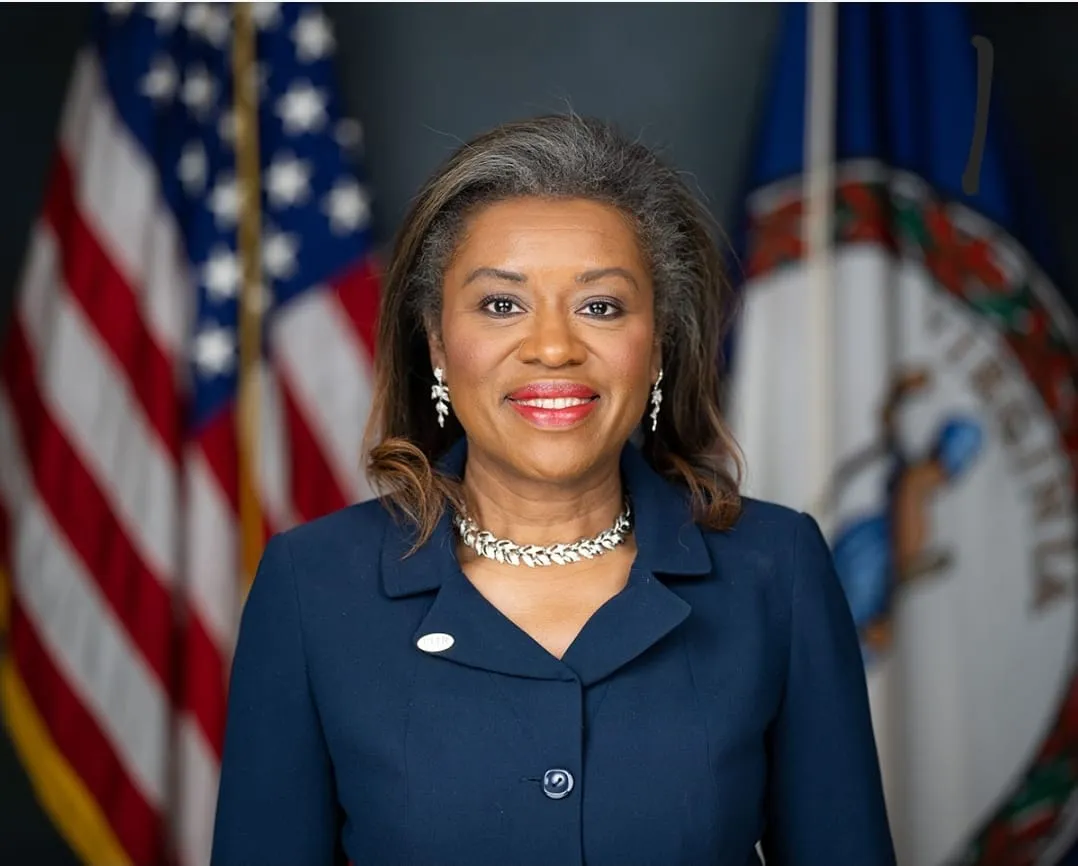
    Last week, The Republican Standard had the opportunity to follow Lieutenant Governor Winsome Earle-Sears as she toured the Richmond Slave Trail โ€” which included not only the site of the notorious Lumpkins Slave Jail but also the site where Gabriel Prosser was executed and presumably buried in 1800.

    Winsome Earle-Sears brought a narrative rooted in the role of hope in human liberation, whether it was in her own tradition from Jamaica to the hopelessness that seems to infect so much of our political discourse today. TRS was able to sit down with the Lieutenant Governor in order to explore her thoughts on this topic and many others.

    We just toured Lumpkinโ€™s Slave Jail site. Clearly this is a place with a lot of hurt and anguish, but a little bit of courage and heroism. Where do you think that resilience โ€” that hope โ€” comes from given the experiences of the past?

    People look at me and think that I have courage, but I donโ€™t. I have no special store of courage more than the next guy, but I have counted the cost and what I say and do comes with consequences.
    There are times when people believe that I am not willing to take that stand, but God comes along and tells me to pick up my cross. Many people attribute that to me being a Marine, but it is really not: it is attributable to my Christian Faith.
    (more…)