• MEDIA NOTES

    Quote of the Day:

    “What kind of a person sends her own granny up a cul-de-sac.?”

    Ms Doonesbury, an MIT Freshperson

    ……………..

    Philip Kennicott the WaPo movie critic suggests (“Rose-Colored Lens: In Louisiana, Environmental Distruction Neever Looked So Pretty”) that the new Smithsonian IMAX feature “Hurricane on the Bayou” deserves a miss. See “Down Memory Lane with Katrina” at db4.dev.baconsrebellion.com

    Kennicott, by the way, will receive a major nomination soon for Best Reporting on human settlement pattern issues.

    …………….

    RINO Hunters on the Endagered List

    Community papers suggest that as RINOs become more rare, the RINO Hunters are coming under attack. The word is that to save their skins the RINO Hunters will have to put on RINO costumes. Advocates of “No Crazies to the Right” may have died in Afghanstan and Iraq.

    EMR


  • Rural Virginia Fights Back

    It’s interesting to see the line of argument developing in rural Virginia regarding the GOP’s transportation funding plan: There’s not enough money in the plan for non-metro areas. And Gov. Timothy M. Kaine is pushing the angle hard.

    How can rural Virginia justify demanding more, when it already benefits disproportionately from the allocation of state highway dollars? It’s all about safety. Read this article in the Martinsville Bulletin.

    Rural Virginia would get about one-fourth of the money the legislative transportation plan would yield, even though 61 percent of the stateโ€™s traffic fatalities from 2000 through 2005 occurred on rural roads, according to federal highway safety data. …

    During a stopover in Stuart last week on his โ€œlistening tourโ€ to gather input on the proposed $2.5 billion transportation bill, Kaine criticized the bill for its omission of significant help to rural areas. โ€œWhatโ€™s in this (bill) for rural Virginia?โ€ Kaine asked, adding that the one-fourth earmarked for rural Virginia could only be spent on primary roads and interstates, under the current wording of the bill.

    Of the 5,593 people killed in Virginia car crashes from 2000 through 2005, more than three-fifths โ€” 3,398 โ€” died on roads U.S. Department of Transportation highway accident data classifies as rural, according to a computer analysis by The Associated Press.

    Crashes in rural areas are more often lethal because drivers reach greater speeds on the open roads, said Ray Pethtel, associate director of the Center for Transportation Research at Virginia Tech. Driver distractions, which cause most crashes, occur in rural areas and urban ones, Pethtel said. … โ€œYou donโ€™t have on the rural roads the same safe design characteristics that you do on major arterials like interstates,โ€ he said.


  • A Growth Slowdown in the Making?

    Signs of the times from Northern Virginia and Hampton Roads…

    Scholars at the Brookings Institution see indications that the “galloping growth” of Washington’s Virginia suburbs is slowing. The Washington Post quotes William H. Frey, a demographer at Brookings:

    “There’s still growth in the Washington region, and there’s still migration from the inside of the doughnut to the periphery. But it’s kind of slacking. From being a very fast-growing exurban place, Washington has now come down to more normal levels.”

    Meanwhile, the Virginian-Pilot reports that, according to newly released Bureau of Census estimates, Norfolk and Virginia Beach are actually losing population.

    According to the new estimates, Virginia Beach, the regon’s most populous jurisdiction, lost 1,402 residents in 2006. Its population now stands at 435,619. Norfolk lost about 1,663 residents in 2006. Its population stands at 229,112. The Weldon Cooper Center, which tracks Virginia’s population, believes that Norfolk and Virginia Beach actually gained a small number of inhabitants last year.

    What seems indisputable is that growth in Hampton Roads appears to be shifting to the metropolitan periphery. Chesapeake has gained 21,000 residents since 2000, while Suffolk has gained 17,000. The Pilot’s article does not indicate whether that represents a continuation or a slowdown for the metropolitan area as a whole.


  • Henrico: Doing It Their Way

    One of the main threads of controversy in the transportation debate right now is the propriety of devolving responsibility for building and maintaining secondary roads to local governments. Many local officials have objected to the transfer of authority, fearing that the state won’t send along the money to match. Remarkably, no one has seen fit to ask local officials in Henrico or Arlington Counties what they think of the idea. They would seem to be logical people to ask — after all, they have been handling their own roads for the past 75 years.

    So, that’s what we’ve done. Bacon’s Rebellion dispatched Bob Burke to look into the experience of Arlington County and Peter Galuszka to take a look at Henrico.

    Peter has filed his article about Henrico: “Doing It Their Way.” One message came through loud and clear: Henrico County officials like having control over their secondary roads. They say they can make better decisions and faster decisions, and that they can be more responsive to local constituencies than VDOT can. Henrico officials also like to set their own standards, which often exceed VDOT’s.

    However, there doesn’t seem to be any way to quantify whether or not Henrico is doing a better job than VDOT would. Has the ability to align transportation and land use planning resulted in less traffic congestion? Can’t say. We asked for “levels of service” data, but Henrico hasn’t compiled it. Has local control resulted in more efficient expenditure of road dollars? Can’t say. Henrico hasn’t done the studies.

    Bottom line: We can’t get answers to fundamental questions. Little wonder. No one in local government seems to be asking the questions, so no one is collecting the information. Meanwhile, lawmakers in the General Assembly — both those in favor of devolution and those opposed — are flailing in the dark. They’re basing their positions on hunch, intuition and anecdote, not hard data. We don’t have a prayer of solving our transportation problems in Virginia without the basic information we need to make informed decisions.


  • Earthship Westerdam

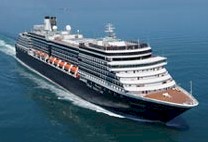
    Comparing human settlement patterns on the luxury liner Westerdam with towns and cities in Virginia, as I’ve done in my most recent column, “Earthship Westerdam,” may seem a bit of a stretch. I certainly don’t advocate modeling Virginia communities on a cruise liner with midtown-Manhattan levels of density. I regard the article as more of a brain bender. Sometimes it helps to take a look at familiar problems from radically different perspectives.

    A number of observations come out of the story.

    • The autocentric society. It’s amazing what happens when you take cars and supporting infrastructure (roads, parking spaces, driveway and garages) out of the equation. The need for space is drastically reduced. Layer 15 decks (11 above the waterline, four below) on top of one another, link them vertically with stairwells and elevators, and nearly all destinations required for a population of 2,700 are within a five-minute walk of one another.
    • Private space/personal space. It’s remarkable how much you can shrink private space (personal residences) if you compensate with quality public spaces. In America, we buy ever bigger houses that incorporate an increasing array of once-public functions; all the while, the public realm suffers. Spaceship Westerdam does the opposite, cramming passengers into tiny staterooms but providing an extraordinary array of amenities from pools to casinos, concert halls to gourmet restaurants. And bars. Lots of bars.
    • Conservation and environmental protection. It’s incredible what a community (and a cruise liner is a community) can do with just one environmental officer among its 800-person crew and staff. The Westerdam has recycling and water treatment capabilities you won’t find in towns or cities 10 times its population. The lesson for Virginia: Set environmental goals, measure your progress in achieving them, and then ratchet your goals higher as you succeed. By cutting energy consumption and waste disposal costs, conservation often pays its way.

    Please note: I do not believe in social engineering. I do not want to turn our towns and cities into replicas of cruise liners. I just think that there may be perspectives worth borrowing as we visualize the kinds of communities we want to build and live in.

    (Photo credit: Holland-America Line)


  • Washed up from Sea: Bacon’s Rebellion

    Well, better late than never. I didn’t get back from vacation until late Sunday night, and I’ve had a devil of a time getting the e-zine published. But it is at last: the March 21, 2007, edition.

    Earthship Westerdam
    The Westerdam isn’t as self-contained as a spaceship, but it’s as close as anything you’ll find on the planet. Virginians have much to learn from the cruise liner about sustainable human settlement patterns.
    by James A. Bacon

    Tunnel Vision
    A shovel in the ground early in 2008 is the right answer for the Rail to Dulles project.
    by Doug Koelemay

    Size Really Doesn’t Matter
    Yes, the world would be better off if everyone drove smaller, fuel-efficient, non-polluting cars. But even small cars can’t solve traffic congestion. Only functional human settlement patterns can do that.
    by E M Risse

    HOT to Trot
    A decade of data from southern California proves that HOT lanes provide time-sensitive drivers, regardless of income, an alternative to driving in congestion. Virginia, let’s get moving!
    by Geoff Segal

    Politics with a Capital “P”
    The Republicans’ transportation bill is a farce but fighting it is a political loser. Gov. Kaine ought to sign it and move on to other issues.
    by Barnie Day

    Nice & Curious Questions: From Smarts to Smokers: How the Old Dominion Rates
    by Edwin S. Clay III and Patricia Bangs

    Road to Ruin: Doing It Their Way
    Since 1932, Henrico County has been building and maintaining its own roads. Local officials like the arrangement, but it’s not clear whether driving conditions are any better as a result.
    by Peter Galuszka


  • “10 to 15 Percent Off the Top”

    Gov. Timothy M. Kaine has introduced a new argument into the debate over the Republican transportation package: The cost of collecting the fees and taxes proposed by the General Assembly could run $80 million a year.

    Reports Tom Holden with the Virginian-Pilot: “Kaine said administrative costs accompany all forms of taxation, but the unusually large number of fees associated with the transportation bill could take ’10 to 15 percent’ off the top of the roughly $800 million raised statewide.”

    If the Governor’s “back of the envelope” calculations are close to correct — it will be interesting to see how vigorously the Republicans contest his numbers — the high cost of collecting the revenues constitute one more reason for killing the transportation-financing scheme.

    In an address to the Hampton Roads Partnership, Kaine also said he would likely propose more than 100 amendments to fix “technical and some glaring” mistakes in the bill. According to Holden, the Governor predicted that none of the proposed changes would kill the bill.


  • Virginia Scores Again: Top Pro-Business State in U.S.

    Virginia’s basketball teams can’t seem to make it to the top of any list, but the Old Dominion scores where it really counts. Pollina Corporate Real Estate Inc., a Chicago-based corporate relocation firm, has ranked Virginia No. 1 in its annual study, “Top Ten Pro-Business States: America’s Economy in the 21st Century.” (Pollina helped Forbes compile its “best states for business” ranking, which also rated Virginia at the top of the heap.)

    What I find interesting is that Virginia is part of a very dynamic region: the south Atlantic coast. South Carolina ranks 2, Florida 3, North Carolina 4, Alabama 8 and Georgia 9. That suggests to me that something bigger is at work than individual state policies. I believe that there is a deep-rooted cultural attitude in this part of the country that regards business as a positive force to be boosted, not a negative one to be curtailed.

    In support of that hypothesis, I would quote James Leaman, president of the Virginia AFL-CIO, whom the Associated Press contacted for a reaction to the news.

    [Leaman] said kudos for the state’s business environment are good for labor. “We want Virginia to have a good business climate because without businesses, we don’t have unions,” he said in a telephone interview.

    A quote like that is more telling than any Chamber of Commerce pronouncement. Sure, business and labor in Virginia have their issues. But Leaman doesn’t perceive business as an enemy. He understands that in a globally competitive economy, we’re all in this together.


  • No Constitutional Right Against Retaliation

    The Supreme Court will hear a property rights case out of Wyoming that some in my libertarian cohort believe could be worse than Kelo.

    …in 1993…[Robbins] bought a ranch in Wyoming, not knowing that the previous owner had agreed to give the Bureau of Land Management an easement over the land. BLM agents, however, had neglected to record the easement, so when the purchase went through, Robbins got the land free and clear.

    Realizing their mistake, the agents ordered Robbins to sign over the easement, and when he refused, they grew belligerent. โ€œThe federal government doesnโ€™t negotiate,โ€ one official told him. Instead, they promised that Robbinsโ€™ refusal would โ€œcome to warโ€ and that they would give him a โ€œhardball education.โ€ Then they began a vendetta against him that would last to the present day.

    They cancelled his right of way over government-owned land, repeatedly harassed the guests at his ranch, cited him for minor infractions while letting similar violations by his neighbors go unnoticed, and brought him up on criminal charges of interfering with federal agents during their duties. The jury acquitted him after deliberating for less than 30 minutes.

    But here’s what really has some folks up in arms:

    After enduring years of such treatment, Robbins sued, arguing, among other things, that the BLM agents had violated his Fifth Amendment right to exclude others from his property. The trial court and the U.S. Court of Appeals for the 10th Circuit agreed, but the government asked the Supreme Court to reverse in Wilkie v. Robbins. โ€œNo court,โ€ said Solicitor General Paul Clement in his brief, has โ€œever recognized a constitutional right against retaliation . . . in the context of property rights.โ€

    This will be one to watch.


  • The One Consistent Principle in the Transportation Debate: Make the Other Guy Pay

    Here’s the latest from Examiner.com: Gov. Timothy M. Kaine has vowed to block a facet of the Republican transportation plan that would impose a tax of $.25 per $100 of assessed value on commercial real estate in Northern Virginia. The tax, which has sparked heavy opposition from local governments and business interests, is a “non-starter,” the Governor says. “Apartment building owners are very concerned about that because it would mean rent increases for many Virginians. It would have a devastating effect on affordable housing.โ€

    You gotta love that NoVa business community. Those guys have never seen a tax hike they didn’t like — unless they have to pay it. Then they suddenly become concerned about the impact of the taxes — not on them, the magnanimous souls, but on the little guy.

    As far as taxes go, the tax on commercial real estate in NoVa is relatively painless. The greatest part falls upon the major commercial tenants such as the federal government and government contractors who can pass on their costs to the federal government. Sounds perfectly reasonable to me. But some sliver of that tax would get passed on to apartment dwellers, and the Governor finds the prospect of higher rents to be unacceptable.

    By contrast, Gov. Kaine does not find anything especially objectionable about higher motor vehicle sales taxes ($361 million in 2008), auto insurance premiums ($110 million) and auto registration fees ($108 million), all of which are included in his currently favored road-funding package.

    Could someone please explain how paying higher rent is any more onerous than paying higher sales taxes, insurance premiums and auto registration fees? It all comes out of the same pocket. (As an aside: Is anyone besides me concerned about making auto insurance more unaffordable? Do we really want more people driving around without car insurance?)

    The one principle that neither the NoVa business lobbyists nor Gov. Kaine seems willing to articulate is this: users should pay. Instead of taxing people for owning property, purchasing cars, registering their cars or buying auto insurance, we should require them to pay on the basis of how much they drive and when they drive.


  • A Market for Everything

    Where are traffic jams created? Well, on the road, of course. But in this article from Reason, authors Sam Stanley and Ted Balaker say the roots of the jam reach back to the transportation planners and their fascination with models that simply don’t work. What are their solutions for getting people moving again?

    Markets…in just about everything. Even parking:

    Market pricing for parking. On 99 percent of our trips we park for free, thanks largely to the minimum parking requirements embedded in our zoning codes. Eliminating those requirements would allow market forces to reflect the true cost of parking. Instead of adhering to arbitrary regulations that often order more spaces than necessary, developers would have greater flexibility to build only the number of spaces that is needed. Workplaces would be more likely to adopt parking cash-out programs, which give employees who do not drive to work a share of the money that otherwise would have gone toward parking costs. Employees would be more likely to work from home.

    Market pricing for parking would reduce traffic too. If drivers had to pay the full cost of parking, they might be less inclined to take certain trips, thus putting a dent in congestion. More important, when parking is scarce but free (or underpriced), drivers have an incentive to keep the spots as long as possible. When it is scarce but costs money, drivers are less likely to dally. One additional result: Other drivers have less need to circle around and around, hoping eventually to spot an empty space.

    Traditional parking meters can be notoriously inconvenient, but they aren’t the only way to pay for parking. Aspen, Colorado, uses a variety of new technologies, including personal in-vehicle meters. The town determines its parking rates by zones; prices are highest in the city center and drop the further you are from the core. Motorists simply park, type in the number of their parking zone, turn on the meter, and hang it from the rearview meter. A timer deducts the prepaid amount until the driver returns. No one has to hunt for loose change.

    Are there really markets in everything? Sure. We just need to look for them.


  • LETS HEAR IT FOR THE SWEET SPOT

    As readers of this Blog know, there is nothing we like better than new, precise words and phrases.

    We also like familiar words and phrases used in new ways to help illuminate human settlement pattern-related relationships.

    In his posts, Jim Wamsley has been using the term “Sweet Spot” to identify the low point of the Cost of Services Curve โ€“ the Second Natural Law of Human Settlement Pattern.

    Sweet Spot is a great way to describe the low point of the Cost of Services Curve.

    The Cost of Services Curve is plotted in the X Positive / Y Positive quadrant. The cost of a unit of services is scaled up on the Y axis and the density is scaled right on the X axis.

    All the 40 +/- location-variable costs of services needed / demanded to support a quality contemporary life style start high at the lowest density (e.g. a power distribution system to serve 50 acres lots) and lower as the density increases.

    At some point every one of those services starts back up. The bottom of the curve is the Sweet Spot.

    We use transport as the canary in the minefield of dysfunctional human settlement pattern and each mode of transport has its own Sweet Spot.

    For private vehicles in common use in 2000 (and still in 2007), the Sweet Spot is 10 persons per acre at the Alpha (Balanced) Community scale.

    For shared vehicles with “high” capacity (e.g. METRO, MARTA, Metro, The Underground, U-Bahn, Subway) the Sweet Spot is 100 persons per acre at the Alpha Village (Station Area) scale.

    (NB every word in the prior two sentences has a specific meaning.)

    Depending on the size of the New Urban Region the private vehicle Cost of Service Curve rises from the Sweet Spot at different trajectories.

    Depending on the configuration of the of the shared-vehicle system (and for very large New Urban Regions the mix of systems) the Cost of Service Curve also rises at different trajectories.

    Given the dominance of private vehicles (The Autonomobile) in contemporary settlement patterns in the US of A, we use 10 persons per acre at the Alpha (Balanced) Community scale as the minimum sustainable density.

    One other point:

    In economic systems it is useful to think of maximizing profit and minimizing risk.

    In natural systems, and specifically organic systems, one needs to think in terms of “Balance” and harmony.

    Maximizing growth is equated with obesity and cancer in organic systems.

    Minimizing growth is equated with starvation and Collapse in organic systems.

    However, in the context of sustainability, it is useful to consider a minimum sustainable density.

    For now we choose to identify minimum sustainable density as the Autonomobile Sweet Spot although at some point the whole Autonomobile-exclusive house of cards will Collapse.

    EMR


  • “Honey, I’m Home”

    Yes, I’m back from a weeklong cruise in the Caribbean. I was way too mellow for way too long, and reconnecting to reality will do me good. All sorts of nonsense has transpired during my absence, and I can see that stern measures are called for. I’ll commence blogging again as soon as I manage to publish the next edition of the e-zine, normally scheduled for today.

    Thanks to Ed and Norm for manning the blog during my absence. Well done!


  • AUTONOMOBILITY

    I will admit it: Warren Brown is my favorite WaPo columnist.

    In both his “On Wheels” and “Car Culture” columns, Brown makes a lot of sense concerning private vehicles and their impact on human settlement patterns. His observations illuminate issues related to mobility and access far better than the pontificators found on the Editorial and Op Ed pages or in the Outlook Section. It is a shame that Warrenโ€™s columns often appear on the first or second page of the Sunday autonomobile classified section.

    For proof of Brownโ€™s ability to summarize reality, check out todayโ€™s “Car Culture” column “There Ought to Be a Law” on Page G 2. We will not try to summarize the column, doing it justice would require reprinting. Warren scores point after point about the stupidity of the current congressional pursuit of less pollution and more fuel efficience as well as the role of contemporary Mass Over-Consumption.

    Having praised Warren Brown, let me also say he sometimes misses a point.

    In stories filed from (and following) the Geneva International Autonomobile Show that were printed on 7 and 11 March in WaPo, Warren swallows far too much of the line from Robert Lutz, Vice Chairman for Global Product Development at General Motors. Lutz told Brown, and Brown repeats the view, that the reason small, efficient cars are not sold in the United States is that no one would buy them here. We view this issue differently:

    The basic reason that small, efficient private vehicles are not sold in the United States is that all autonomobile manufactures would make less money per unit than they would if they continued to design, promote, build advertise and sell only big, inefficient vehicles.

    Yes, there are federal, state and municipal regulations that make it hard to import or drive small vehicles… did someone say “lobbyist?”

    If small, efficient private vehicle were sold in the United States, the Big Three (and the Big Importers) would face competition from small, regional firms. (Full disclosure: my Grandfather made a lot of money selling his company to General Motors in the 20s. Further disclosure: My parents and I never say a dime of that money.)

    Small, efficient cars could be made by regional manufactures. In fact small builders, egged on by X Prize Foundation are way ahead in the race to build 100 mpg cars according to Billy Baker in Popular Science (9 March 2007.)

    GMโ€™s Lutz says what will sell in Europa and not in North American reflects the fact that they are “two different worlds.” He is right; One controlled by big manufacturers one controlled by market forces reflecting a rational price for gasoline and more intelligent agency action. After all, Euroโ€™s love their cars too.

    As to the market for tiny vehicles, we admit we would not buy (or ride in) three and four wheeled mini-vans and pickups we have seen on expressways in Europe. These vehicles were built to reflect gas prices after Oct 1973. We also would not ride in or drive one of the Second-World / Soviet Era stink bombs we saw in Praha, Dresden or Berlin in 1989. For starters at 6 foot 4, we would not fit.

    However, when we first recall seeing a Mercedes Smart Car in Kobenhavn in 1991 we had the money and the interest. That was 16 years ago come May. To this day a lot of alternative vehicles are not available here that are deemed safe in the “over-regulated” European Union.

    Warren Brownโ€™s column focused on the hearings last Wednesday before the House Energy and Commerce subcommittee on energy and air quality. In todayโ€™s Business Section of WaPo, Lutzโ€™s boss G. Richard Wagoner Jr. is quoted as saying:

    “Many of the recent legislative proposals to increase [mileage standards] … would be extraordinarily expensive and technically challenging to implement โ€“ all with little to show for actually reducing oil consumption or emissions.”

    Rep John D. Dingell responded: “Inaction and telling us what doesnโ€™t work is … no longer sufficient.”

    What did Warren Brown say again?

    He said a core problem is that consumers do not want efficiency as individual drivers and consumers. They would desperately want efficiency in Autonomobiles if they understood the consequences of Business-As-Usual. Now, if those politicians were honest with those who they were elected to represent…

    What did Wagoner say again?

    “Many of the recent legislative proposals to increase [mileage standards] … would be extraordinarily expensive and technically challenging to implement โ€“ all with little to show for actually reducing oil consumption or emissions.”

    In fact, Wagoner, Lutz, GM and the rest of the Autonomobile crowd are correct: The legislative proposals will not work.

    There are two choices to make private vehicles more fuel efficient and less polluting:

    Make private vehicles much more costly

    Make private vehicles much lighter and much slower

    The first option widens The Wealth Gap so that access and mobility in large New Urban Regions leads to the Sao Paulo Condition outlined in “The Whale on the Beach” 28 August 2006 at db4.dev.baconsrebellion.com Oh yes, as Wagoner et. al. know, this option would destroy the North American Autonomobile industry as we know it.

    The second option does not meet the current consumer “demand.” It would also tank the North American autonomobile industry. Most important, it would not provide mobility and access for most citizens.

    Small, light, inexpensive, fuel efficient private vehicles are unsafe a high speeds and at low speeds they do not serve the disaggregated human settlement pattern which has evolved in the US of A.

    Light, small vehicles require half the space to park and provide significant savings in the paved area devoted to driving. They could be part of a comprehensive solution for small urban agglomerations but are not much help in large New Urban Regions where most citizens live and work. It is a matter of physics, not policy:

    The disaggregation of human habitation required to accommodate Autonomobiles is a dead end just as “urban horses” were a dead end. When it come to space required to drive and park, smaller is better but not solution. The cost of energy and the impact of internal combustion engines can be used as a catalyst to move to more functional human settlement patterns. Free, non-polluting energy for private vehicles given dysfunctional human settlement patterns is not a solution.

    What to do?

    Rep. Dingell and the rest of those who have relied on Politics-As-Usual need to read Warren Brownโ€™s column and then go to the microphone and announce:

    “In the long term, Autonomobility is not sustainable.”

    The only way to reduce oil consumption at all and carbon emissions significantly is to change human settlement patterns.

    However, even if the cost of energy and the carbon emissions were not an economic, social and physical drag on civilization, Autonomobility doe not provide access and mobility for most citizens in large New Urban Regions. It is physics, no philosophy.

    EMR


  • All Rise

    Anyone who has followed Virginia’s political blogs for the last few of months is aware of former Commonwealth Conservative publisher Chad Dotson’s appointment to the bench for Virginia’s 30th judicial district.

    His swearing-in ceremony was yesterday, and both Steve Minor and Brian Patton were on hand.

    And I know I’ve said it before, but congratulations, Big Guy. I’ll still keep that “Dotson for AG” yard sign handy though…just in case.