• Home (Zones) Alone

    Members of the Greenbriar neighborhood in Chantilly would like to strike a sensible balance between the rights of drivers and pedestrians. The community gets a lot of cut-through traffic, but, as the Fairfax Times puts it, “The use of random, time-consuming, and expensive traffic calming measures on a case-by-case basis is only a Band-Aid to a serious wound in Virginia’s current approach to resolving residential neighborhood traffic problems.”

    Robert Mason, a member of the neighborhood’s traffic calming committee, has asked Del. Chuck Caputo, D-Chantilly, to introduce legislation developing Home Zones in Virginia. The idea comes from zones in European countries for streets shared equally between pedestrians and motorists. Caputo says he has asked the General Assembly staff for recommendations that can be introdued as legislation.

    From the Home Zones website in the UK:

    Home Zones work through the physical alteration of streets and roads in an area. These alterations force motorists to drive with greater care and at lower speeds. Many countries support this with legislation allowing the Home Zones to enforce a reduced speed limit of 10 miles an hour. The benches, flower beds, play areas, lamp posts, fences and trees used to alter the streets and roads offer many additional community benefits to the Home Zones and are considered to enhance the beauty of an area and increase the housing prices.

    Home Zones, while on the surface offer substantial benefits to an area, are the source of some controversy. It has been reported that such schemes have delayed the response rates of the emergency services to the streets within the Zone. Other reports describe local authorities being inundated with complaints from residents demanding that the road humps and chicanes be removed as they are causing huge tailbacks through the streets. People have shown concern that encouraging children to play in roads, even specially adapted roads such as Home Zones, has introduced a danger which was not previously there. It has also been reported that the residents of a home zone in America are actively campaigning to have the road alterations removed as they can no longer park near their houses.

    (Credit for photo of a Danish home zone: Picasa.com)


  • More Monkey Business: Update on that $180 Million

    It looks like we have more than a misunderstanding on our hands: GOP legislators and the Kaine administration are spoiling for a fight. The Free Lance-Star and Examiner.com have the latest details (slightly updated from our account Tuesday) on the disposition of $180 million set aside for transportation projects this year.

    Here’s how the debate stands: GOPpers are outraged that Gov. Timothy M. Kaine would remove the desperately needed transportation funds from the budget. Kainiacs respond that the roads aren’t ready to build yet, and the funds will be restored in 2010 when the projects are ready to proceed. GOPpers retort that Kaine’s 2010 revenue forecasts are too optimistic and the money may not be there when 2010 rolls around — but Kaine will be gone, and it will be someone else’s problem.

    Bacon’s bottom line: That’s what you get when you fund transportation projects out of the General Fund. That’s why we need a segregated funding source for transportation (based on user-pays principles) and there needs to be a constitutional lockbox to prevent this kind of monkeying around.

    Question of the day: What ever happened to the constitutional lockbox for the Transportation Trust Fund? Apparently, it died a poor orphan child in some Senate subcommittee. If the lockbox was so important during Tim Kaine’s gubernatorial campaign, why hasn’t the Governor resurrected it? If transportation funding is so sacred, why haven’t House Republicans reintroduced the lockbox legislation?

    (Photo credit: Freeslideshow.com.)


  • JUST A QUESTION

    We wonder why this Blog was overrun with folks praising the citizens of Oregon for passing Measure 37 in 2004, but

    Not a peep when Measure 49 rolled back most of the provisions in 2007?

    Turns out Measure 37 was in fact paid for by speculative owners outside the logical location of the Clear Edge.

    And they were the majority of those who filed claims under Measure 37.

    It was never about elderly ladies who lost their retirement savings.

    As I recall that was our point at the time.

    EMR


  • What Strong Leadership in Schools Can Accomplish

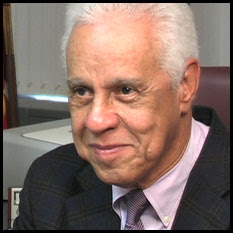
    Mayor L. Douglas Wilder may have little nice to say about the Richmond School Board or educational bureaucracy, but he is fulsome in his praise of individual educators. In his recent newsletter he lauds Dr. Irene L. Williams, principal of the Fairfield Court Elementary School, located in one of Richmond’s most notorious, poverty- and crime-ridden neighborhoods.

    The Mayor dropped in unexpectedly on the school one day recently. Writes Wilder:

    The school was clean, students well-dressed, well-behaved, orderly, and well-mannered. There was excitement in their eyes and they were marvelous to behold. I subsequently discovered some of the reasons: the academic standards are strong with daily data reports on the walls aligning the corridors. The expectation for student success was equally strong. …

    [Williams] draws nor seeks no additional pay for all of her “extra” time and refers to her students as “my children.” They reciprocate individually by greeting or leaving her by calling her “Dr. Irene” or “Mamma Irene.”

    This highly-motivated and selfless devotion to cause and to duty impressed me beyond measure. Here is a school in the shadow of public housing units portraying to all who would care that yes, these young people can learn. They can show that it doesn’t matter where you were born or your economic status – you can achieve and overcome and become outstanding contributing citizens.

    While I regard the entire K-12 school model, both public and private, as an industrial-era relic in desperate need of reform, it clearly is possible to improve the performance of the existing system. Leadership at the level of individual schools is critical. Former Gov. Mark R. Warner recognized that when he spearheaded the creation of a special program for school principals at the University of Virginia back in 2004 (profiled in “Teaching Old Dogs New Tricks.”) I wonder if Williams is an alumna of that program. I wonder if the program even survived Warner’s tenure.
    (Click on the image of Mayor Wilder to view his video commentary.)

  • Science Museum Foundation Forced to Pay-Up

    The ever-alert Jon Baliles pointed me to this item in the RTD regarding the outcome of a city investigation into Richmond clothing magnate Stuart Siegel’s clear-cutting along the James River. The conclusion? The property owner, the Science Museum of Virginia Foundation, has to pay-up…not Siegel:

    In a letter to the foundation, the city said the organization, as owner, was responsible for the clearing. The letter was dated Dec. 13 and released yesterday.

    “We were able to conclude that unauthorized clearing had, indeed, been done” on about an acre in a legally protected buffer zone, said the letter from Stewart D. Platt, a city engineer.

    Julia M. Carr, executive director of the foundation, said the group plans to comply with the city’s orders.

    They have little choice. However, wouldn’t it make more sense for Siegel to pay for the replanting? Maybe (and one would assume) the SMVF’s development people have already thought of that, and Siegel will pay for the repair work, indirectly.


  • Payday Lending, Do-Goodism and Unintended Consequences

    You can’t accuse Donald P. Morgan and Michael R. Strain of being on the payroll of the payday lending industry. They are staff economists of the Federal Reserve Bank of New York. That’s why we need to pay attention when they conclude in a November report, “Payday Holiday: How Households Fare after Payday Credit Bans,” that payday lending is less burdensome on the poor than cutting off their credit.

    Do Gooders have trashed the payday lending industry for usurious terms and conditions that allegedly mire poor and working-class citizens in a “debt trap.” Buying that logic, the state of Georgia permanently closed all payday lending in 2004, and North Carolina followed in 2005. (Virginia is still debating the issue.)

    Morgan and Strain ask the question: Are poor/working class people better off as a result? The answer: No. In both states, the economists documented that the number of bounced checks, complaints against debt collectors and personal bankruptcies increased in Georgia and North Carolina relative to other states.

    The main beneficiaries of the ban, it turns out, are conventional banks. Write Morgan and Strain: “On average, the Federal Reserve check processing center in Atlanta returned 1.2 million more checks per year after the ban. At $30 per item, depositors paid an extra $36 million per year in bounced check fees after the ban.”

    Bacon’s bottom line: Poor people don’t need Do Gooders meddling in their affairs to pursue their own economic self interest. Let the payday lenders stay in business. The only legitimate role of government is to ensure transparency — to make sure borrowers understand the terms and conditions of the loans — and to prevent fraud. Otherwise, government meddling doesn’t help the poor, it hurts them.

    (Hat tip: Chris Saxman. Photo credit of Advance America: Andrew Bain.)


  • North Anna 3: $500 Million Before Construction Even Begins

    Sen. Ken Cuccinelli, R-Fairfax, has maintained an interest in nuclear energy since his days as an undergraduate engineering student at the University of Virginia when he took a course in nuclear engineering. Now the Northern Virginia intellectual property attorney, who sees potential to build a formidable nuclear industry cluster in Virginia, is reimmersing himself in the subject.

    Most recently, Cuccinelli has focused on Dominion’s proposal to build a third nuclear reactor at its North Anna complex using a commercially untested technology developed by General Electric and Hitachi. In correspondence with Dominion, Cuccinelli has surfaced details of the project that are either new or under-reported:

    Ownership. Assuming Dominion makes the decision to pursue the project, it will own 88.4 percent of the facility, with the Old Dominion Electric Cooperative owning 11.6 percent.

    Up-front costs. The project will incur $500 million in preliminary engineering, design and regulatory costs before construction even begins. The Department of Energy will pay 50 percent, Dominion will pay $60 million net, while GE-Hitachi Nuclear Energy and its subcontractors will fund the balance.

    Those costs, according to Dominion spokesman Bill Byrd, include:

    • Preparation of the Combined Operating License application, and the U.S. Nuclear Regulatory Commission’s fees for review of the application.
    • Submittal of GE’s application for design certification of its Economic Simplified Boiling Water Reactor (ESBWR) design, and the review fees for that application. The reactor design must be approved for Dominion’s project to be licensed.
    • Detailed engineering of the ESBWR design that will be used to produce the construction drawings needed to build the plant.
    • Detailed engineering for specific features of the North Anna site, such as cooling tower design.
    • Economic and financial risk analyses to determine the feasibility of construction.
    Bacon’s bottom line: There are significant costs associated with being the first guy to try out a new technology like GE-Hitachi’s design for cheaper, safer nuclear power generation. Luckily for Virginia electric rate payers, the DOE and the developers of that technology are paying for nearly 90 percent of the cost of working through a lot of those issues. … On the other hand, I can see why proponents of renewable fuels call for tax breaks and subsidies. Nuclear power, they say, is heavily subsidized, too, so there’s no level playing field.

    (Heads up: If you’re interested in the future of nuclear energy in Virginia, don’t miss the upcoming column by Peter Galuszka in the Bacon’s Rebellion e-zine.)


  • Pork-Free Diet

    Like his budget or hate it, give Gov. Timothy M. Kaine credit for one thing: It’s nearly pork free. As Tyler Whitley notes in the Times-Dispatch today, the budget the Governor proposes for FY 2009-2010 includes only $5,755,000 for museums, cultural institutions and other non-state entities — down from $37 million in the current two-year budget.

    In a $78 billion budget, the dollars aren’t large, but the symbolism is important: State government should focus with unrelenting clarity on its core missions. For the most part, museums, ballets, theaters, opera and the like serve the regions of which they are a part and should rely upon community support.

    State funding should be limited exclusively to educational outreach programs in which museums enrich school curricula on such topics as science, natural history and the arts — and I’m willing to wager that’s exactly what the $5.8 million in Kaine’s budget is reserved for.

    (Photo credit of the Virginia Marine Science Museum: Destination 360.)

  • About that $180 Million…

    There’s a story hurtling around the Internet that’s taken on a life of its own. But it’s not entirely accurate, and I’m trying to get to the bottom of it. Republicans are working up a good head of steam — as was I for a while — over a statement by Del. Lacy E. Putney, I-Bedford, the incoming House Appropriations Chairman. In a letter distributed by the General Assembly Republican leadership yesterday, he asserted:

    [Gov. Timothy M. Kaine] plans on diverting $180 million from the Transportation Trust Fund in Fiscal Year 2008 so he can fund new or expanded non-transportation programs.

    Similar claims were made in electronic newsletters distributed by at least two Republican members of the General Assembly.

    If that statement were accurate, it would represent an astounding about-face for Kaine, who campaigned on a promise to create a constitutional lockbox to prevent the legislature from ever raiding the Transportation Trust Fund again. The constitutional lockbox has since died a quiet, whimpering death — it crawled into a corner never to be seen or spoken of again. Even so, a raid on the Transportation Trust Fund would constitute a staggering betrayal by the Governor.

    Well, it turns out the story isn’t completely accurate true. I checked with Gordon Hickey, Kaine’s press secretary, who categorically denies that Kaine is taking any money out of the Transportation Trust Fund. The $180 million, Hickey says, is coming out of General Fund dollars allocated to transportation. And the reason is that the transportation projects simply aren’t ready to be built. The Governor moved the money to 2010 because that’s when the projects will come on line.

    Did the Republicans make a mistake? Well, let’s say they’ve back-pedaled some. They’re conceding that the money is coming out of General Fund, not the Transportation Trust Fund. But they’re still fighting mad.

    Here’s how Lt. Gov. Bill Bolling explained the situation to the recipients of an e-mail exchange that I was privy to. I literally received this while typing this post, so this is fresh:

    The money the Governor is diverting from the general fund transportation allocation is being spent on other things. Specifically, it is being used to help eliminate the remaining budget shortfall in the current fiscal year, along with $261M from the rainy day fund. While the Governor has promised to replace the money in 2010, the problem with that is twofold. First, we have to trust him to do it and not change course and redirect the money somewhere else. Second, he can only do it if his very optimistic revenue projections of 6.6% revenue growth come to pass, and many of us feel that those revenue projections are overly optimistic given the general economic downturn we are facing.

    In the final analysis, our complaints against the Governorโ€™s budget come down to the following:

    First, we are concerned that he is trying to close the budget shortfall in the current fiscal year by taking money out of the rainy day fund and out of the general fund appropriation for transportation, rather than making additional spending reductions.

    Second, we are concerned that his biennial budget includes hundreds of millions of dollars in spending on new and expanded government programs in the second year of the biennium, which appears to be financed by overly optimistic revenue assumptions and an excessive reliance on more than $3B in new debt.

    Bottom line: This isn’t the political dynamite that I — and others — initially thought it was. But a strong case can be made against the maneuver. Here are follow-up questions I should have thought to ask Hickey: (1) Which specific projects were to be funded by this $180 million, and (2) what guarantees are there that a future governor (Kaine will be gone in 2010) will put the money back in?


  • Virginia’s 12.3 Billion Liability

    Once upon a time not long ago, in 2001 to be exact, Virginia’s pension fund obligations were fully funded — 106 percent funded. No longer. According to a new study by the Pew Charitable Trusts Center on the States, Virginia’s obligations for state employees is only 81 percent funded, or about $10 billion short. Additionally, the state is $2.3 billion short on funding “other” retirement benefits.

    What’s going on? A couple of things. First, Virginia shifted to slightly more conservative actuarial methodology: assuming compounded returns of 7.5 percent annually instead of 8.0 percent, which is probably wise in the current financial climate. But the study also states, “The state has stumbled a bit in making its full annual contributions toward its long-term obligation. … In the last 10 years, the Commonwealth has frequently made less than the annual required contribution, as set by its own actuaries.”

    Virginia’s funding ratio is a hair worse than the national mean — which means it’s nothing to be proud of. In the private sector, monkeying with pension payments is a notorious trick for boosting cash flow. Looks like Virginia has been doing the same thing since 2001. Before cranking up spending on other programs, Gov. Timothy M. Kaine and other lawmakers might consider taking care of core responsibilities first. Twelve billion dollars is a lot of money, even if spread over decades.


  • “Begging and Borrowing to the Point of Being Reckless”

    Gov. Timothy M. Kaine has done a yeoman’s job squeezing spending out of the state government administration (see previous post), and he’s entitled to reallocate those savings — more than $350 million a year, if I understand correctly — to new priorities. Kaine also deserves a small measure of praise for showing relative spending restraint. The roughly $78 billion biennial budget for the next two years (FY 2009 and 2010) is only five to six percent bigger than the current two-year budget — a growth rate that roughly tracks projected inflation/population growth — and the smallest increase since the recession early this decade.

    But the budget package Kaine outlined yesterday has significant flaws.

    Rainy Day Fund. Kaine still wants to withdraw $261 million from the Rainy Day Fund, the maximum allowed by the state constitution, to plug a spending hole in the current, FY 2008 budget. Bad idea. Even if the state is legally entitled to do so, the current level of economic hardship doesn’t rise to the level where we should deplete our main safeguard against hard times.

    Diverting Transportation Trust Fund Revenues. I didn’t pick this up in the news accounts or in the Governor’s speech, but a statement issued by the Republican leadership of the General Assembly states that Kaine also “plans on diverting $180 million from the Transportation Trust Fund in Fiscal Year 2008 so he can fund new or expanded non-transportation programs.” Excuse me, but didn’t Kaine vow early in his administation to fight for a constitutional amendment to prevent precisely such raids on the transportation trust fund? Excuse me, but isn’t this a beluga whale-sized flip flop? Excuse me, but where is the friggin’ outrage?

    $3 Billion in New debt. Kaine has proposed issuing a total of $3.2 billion in new debt — again, according to the Republican leadership. While the higher ed initiative in particular has merit (see previous post), there are limits to how much the state can prudently borrow. The added debt would bring the Commonwealth “to the brink of its debt capacity limit,” says incoming House Appropriations Chairman Lacy Putney. That’s a risky maneuver considering the “exceedingly optimistic” assumptions the Governor makes regarding rebounding budget revenues in fiscal 2010.

    I recall the Democrats making wisecracks and waving credit cards in mock outrage when the Republicans proposed borrowing a much smaller sum of money a year or two back to fund transportation improvements. I wonder if they will express any objections to the borrowing binge proposed by their friend, the Governor.

    Putney concludes: โ€œIf only one of these constructs were central to the Governorโ€™s budget proposal, lawmakers would justifiably question its wisdom and its potential effects. With all of them and more as integral components of his plan, it jeopardizes the Commonwealthโ€™s hard-earned reputation for fiscal responsibility and brings into question the overall soundness and long-term fiscal integrity of the proposal. The Governorโ€™s budget proposal is built on the premise of begging and borrowing to the point of being reckless.โ€

    That about sums it up.

    Key sources:
    Gov. Kaine’s proposed FY 2009-2010 budget
    Governor’s remarks to House and Senate money committees
    Briefing by the Secretary of Finance
    Reaction of General Assembly Republicans

    (Update: I checked with Gordon Hickey, Gov. Kaine’s press secretary, to find out what the story was with the $180 million switcheroo. Hickey says that Kaine proposes moving $180 million in General Fund transportation spending to 2010 when the projects cited in the enabling legislation will come online. The money is not being spent on other priorities, Hickey says: The spending is being deferred. He insists that the money is not coming out of the Transportation Trust Fund. Any communications to that effect are simply wrong.

    (Update 2: There’s more from the Republicans. See “About that $180 Million…“)

  • Kudos to Kaine When Kudos are Due

    Before I launch into a criticism of Gov. Timothy M. Kaine’s latest budget proposals in the next post, let me pause to say something nice about the governor. Not only has he increased budgetary transparency (see my previous post), he has labored diligently behind the scenes to improve government efficiency and accountability. The challenge of running the state bureaucracy doesn’t generate newspaper headlines, but the end result of Kaine’s unpublicized endeavors is the freeing up of hundreds of millions of dollars to allocate to more pressing priorities.

    Here’s what Kaine noted in his speech yesterday:

    We had a head start on identifying savings because of the work we did to address the shortfall in fiscal year 2008. The budget I present to you today carries nearly all of the 2008 reductions into 2009 and 2010, saving $232 million in each year of the new biennium. We found additional biennial savings of approximately $137 million by streamlining operations and reorganizations, thanks to the diligent efforts of our state employees. …

    These savings provide us both a cushion in a time of declining revenues and the ability to make targeted investments in areas where Virginia needs to improve.

    I have also called for increased accountability in the Commonwealthโ€™s spending. Through my performance management initiative, we have established goals to measure how well our agencies are delivering services. … My budget proposal includes tools to begin collecting outcome data on several of the stateโ€™s most critical funding commitments โ€“ the Comprehensive Services Act, Community Service Boards, and K-12 education. This information should help our agencies make wise choices that will better serve our citizens. …

    I have increased support for the Productivity Investment Fund which provides seed capital to state agencies for innovative ideas that will serve citizens better and more efficiently. The budget also includes language clarifying the use of the Public-Private Education Facilities and Infrastructure Act (PPEA) to encourage the private sector to introduce technology-driven transformational initiatives.

    Kaine credits these efficiencies with being able to boost spending for other priorities without raising taxes. This is exactly the philosophy of government I espouse: Pay for new priorities with savings from reinventing, streamlining, consolidating, eliminating or otherwise rationalizing old priorities — not raising taxes.

    Through my other work, I had a ring-side seat to watch the state overhaul the way it administers its vast real estate portfolio. On the one hand, one could argue that the changes are long over due — they simply emulate best practices in the private sector. On the other hand, never estimate how difficult it is to achieve structural change in a government/political setting. Believe it or not, state government is blessed with many dedicated employees who do excellent work under often-trying conditions, and my sense is that the change agents are getting strong support from this governor.


  • A Big Step Forward in Budget Transparency

    Gov. Timothy M. Kaine has improved the presentation of the FY 2009-2010 budget, making it easier for members of the public to analyze. The old format scattered information for (1) expenditures, (2) number of employee positions and (3) capital outlays. The new format combines them on a single web page. You can view any secretariat, or any department within a secretariat, and see any of the three budget categories with a simple click of a tab.

    Budget pages also link to departmental strategic plans and performance measures. Check out the presentation here. Drill deep and muck around. It’s a tremendous step in the right direction.

    Another step in the right direction would be to adopt a proposal championed by Sen. Ken Cuccinelli, R-Fairfax, which was inspired by the federal government’s http://www.usaspending.gov/. The federal website details information about grants and contracts valued at more than $25,000. For example, you can discover that Virginians received $40 billion in federal contracts in fiscal 2006 for everything from telecommunications services to aircraft carriers.

    Wrote Cuccinelli in a recent press release:

    As part of my effort to make our Commonwealth the most efficiently managed state in the nation, I am introducing legislation this year to create a Virginia counterpart to USASpending.gov. My goal is to give ordinary citizens more opportunities for input into our government by allowing all of us to evaluate where โ€“ and how effectively โ€“ our tax dollars are being spent. My Virginia budget transparency initiative will bring to our budgeting process a simple tool for the owners of this government โ€“ the citizens of Virginia โ€“ to determine for themselves where their money is being spent. We require such openness of public companies, why not our own government?

    I’d like to see the specifics of what the website would do, but in the abstract the proposal is an excellent one. Budget transparency should be a top goal of open government. Bloggers of all ideological stripes should support this bill!


  • Interstate 95: Kissing Good-Bye to the Solo Commuter?

    If your image of the typical commuter heading north up Interstate in the early morning is of a solo driver, then you think like I do. And the odds are, you don’t commute on I-95. Because if you did, you’d know differently. According to the “2006 Commuter Labor Study: Fredericksburg Region,” here’s how the ridership breaks down for Fredericksburg region commuters who head north on Interstate 95 in the morning:

    • Drive alone, 5%
    • Car-Van Pool, 22%
    • Slug, 27%
    • Train, 33%
    • Bus, 11%
    • Other 3%
    I find the drive-alone numbers extraordinarily, even suspiciously, low. But get this — that 2006 study was largely consistent with a Virginia Department of Transportation study showing that about two-thirds of the trips heading north on a Fairfax County portion of the I-95 corridor were made in buses, vans or carpools.

    Bob Burke uncovered both of those studies in an article posted today on the Bacon’s Rebellion website, “Life in the Fast Lane.” I had assigned him to investigate what the impact of the planned HOT lanes would be upon mass transit and shared ridership along the I-95 corridor. Hints in our previous coverage of HOT lanes suggested that the commuting population in the I-95 corridor was served by a large number of private vans and buses. Little did I imagine that shared ridership was so prevalent.

    The Fluor Transurban HOT lane proposal will divert hundreds of millions in toll revenues over the life of the project to support mass transit and traffic demand management. But it’s hard to imagine how it would be possible to increase the shared-ridership market share above current levels. Even if vans, buses and carpools get to use the HOT lanes for free, it seems inconceivable that solo driving would drop below 5% market share. Indeed, you have to wonder if easing congestion might increase the level of solo driving!

    On the encouraging side, though, if the number of people using vans, buses, carpools and rail outnumbers the solo drivers by 92% to 5% along stretches of I-95, the barriers to shared ridership aren’t nearly as high as many of us thought. Nationally, the percentage of people commuting to work alone in their own car runs around 88 percent (see Table 1 on page three). Just imagine the latent capacity that exists in Northern Virginia’s transportation system if I-95 commuting patterns prevailed on Interstate 66, the Dulles Toll Road and the Washington Beltway!
    Update: In the comments section, reader Larry Gross says the survey responses do not remotely reflect his observations of solo ridership on I-95 in the Fredericksburg region. He suggests that the survey may have methodological flaws. I would have to agree.

  • Brace Yourself: The Vehicle Miles Traveled Tax Is Coming

    Four hundred and fifty drivers in the Research Triangle region will be recruited next year to road test a satellite technology system that might be used one day to replace the gas tax with a tax on every mile we drive, reports the News & Observer.

    North Carolina is one of six states participating in a national study conducted by the University of Iowa Public Policy Center to see if Americans will buy into the idea of paying for roads by the mile, instead of by the gallon.

    “In the future, all of your roads are going to be funded by tolling or vehicle mile taxes,” said Matthew B. Click, a Florida state turnpike official. “Roads are a transportation utility. They are no different from water or sewer or anything else.”

    Autos will be equipped with GPS and computer hardware to track the number of miles they drive and which government jurisdiction they drive through. In all likelihood, we’ll hear objections from civil libertarians worried that Big Brother will be able to track their every movement. It is all but certain that we’ll hear from those opposed to paying for the miles they drive, insisting that some mythical “other” should pay instead. But I agree with Click: Economic logic dictates that tolls and vehicle-mile taxes are the future of transportation finance.

    (Hat tip: Larry Gross.)