
by Dick Hall-Sizemore

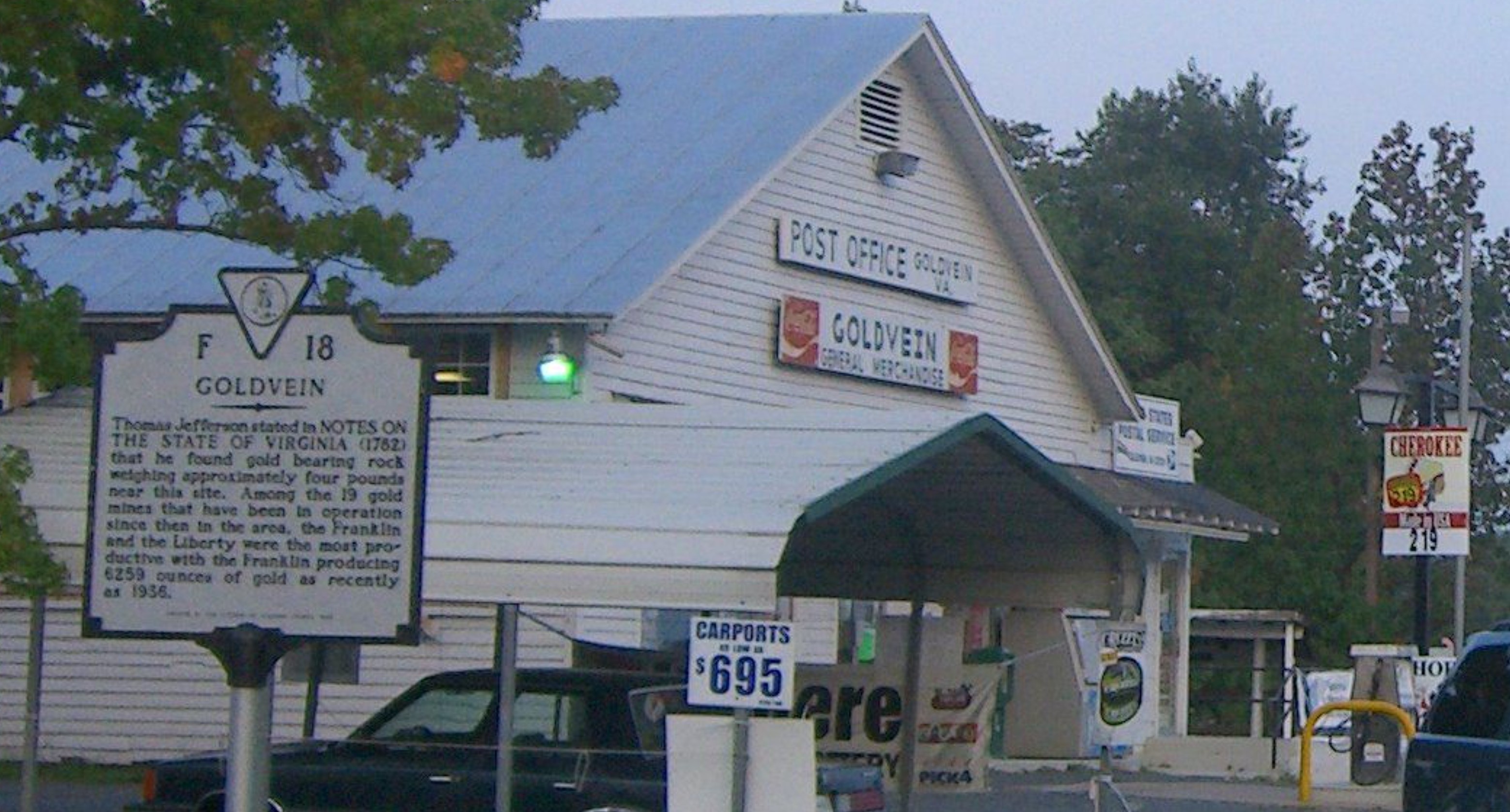
This solitary place name marker is next to an abandoned gas station in Fauquier County. Unlike other such markers that I have written about, this one is not on a back road; it is along heavily-traveled Rt. 17 between Fredericksburg and Warrenton.
This marker is different in another respect: It merits an official highway historical marker. That marker informs the reader that “Thomas Jefferson stated in NOTES ON THE STATE OF VIRGINIA (1782) that he found gold-bearing rock weighing approximately four pounds near this site.“ It goes on to note that 19 gold mines had been in operation in that area.
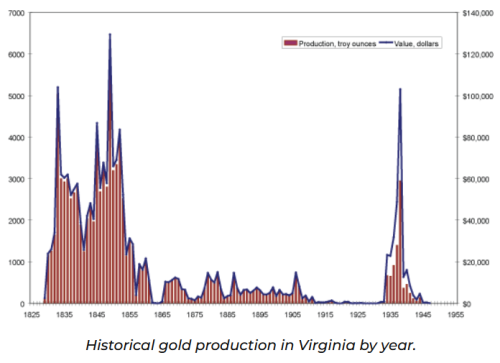
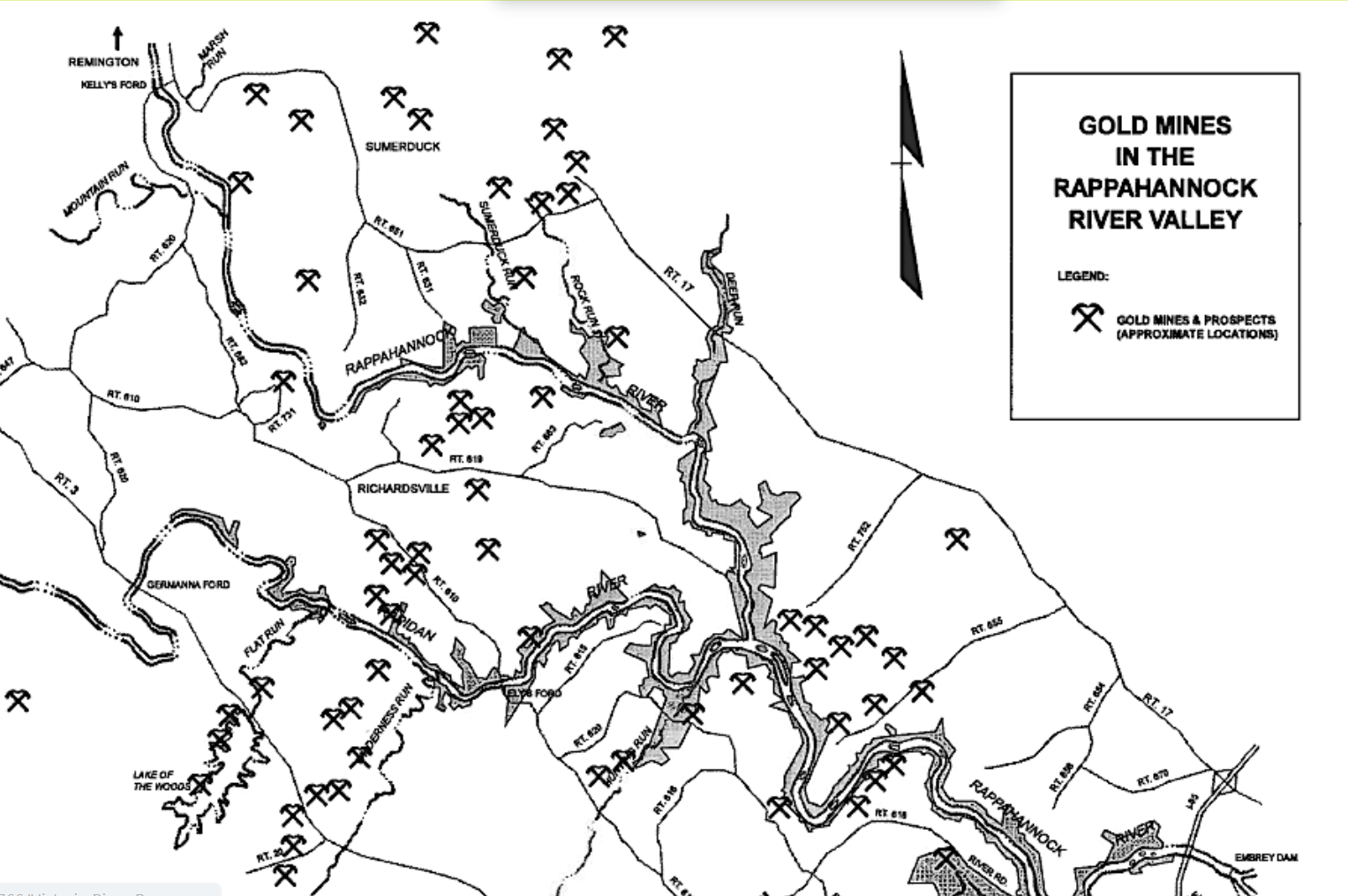
The Division of Geology of the Virginia Department of Energy reports that “gold was mined extensively in Virginia from the early 1800s until the peak of gold production in 1849.” After large deposits of gold were discovered in California in 1848, production of gold in Virginia decreased significantly. The last recorded production was in 1947. The division has identified almost 500 former gold mine sites in the Commonwealth.
Most of the former sites lie within a “gold-pyrite belt,” a nine-mile to sixteen-mile-wide, nearly 140-mile-long geological unit that extends from Fairfax County to southwestern Buckingham County. The largest concentration of historical gold mines are in Buckingham, Fluvanna, Louisa, Goochland, and Spotsylvania counties.
After 1848, gold production in Virginia decreased quickly. By 1915, it was negligible. In addition to the presence of gold in the western part of the country, a short history of gold mining in Fauquier County alludes to another factor that contributed to the decline of production, particularly after the Civil War: slave labor. “Due to slave labor the removal cost of gold during this period was $2 a ton.” After the war, the removal cost increased significantly.
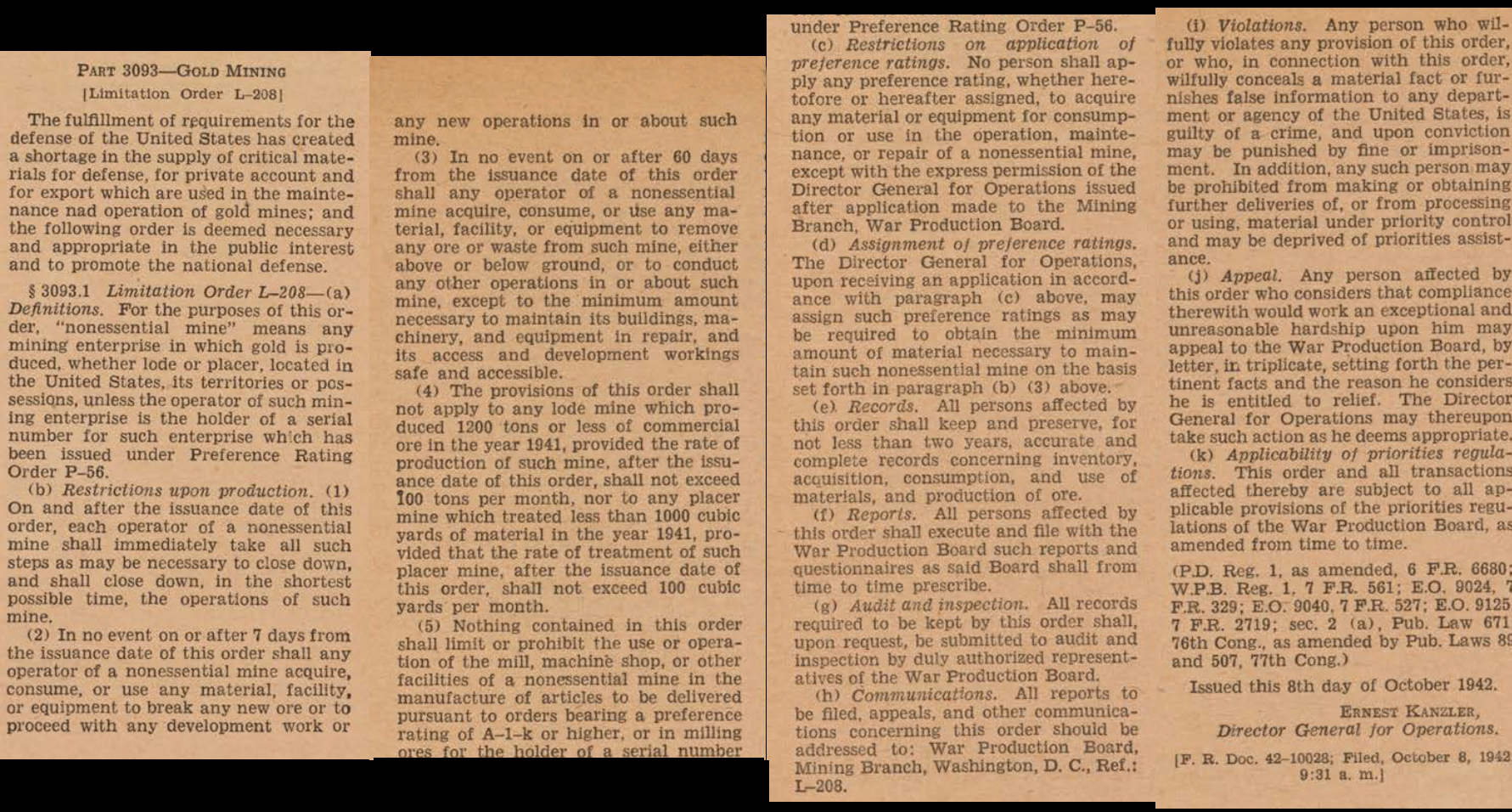
When the official price of gold increased from $20.67 per ounce to $35 in 1934, interest in gold mining in Virginia was renewed. A significant number of the previous gold mines were re-opened during the Depression. This “gold boom” was short-lived. Production peaked in 1939 and then dropped sharply during World War II after the federal government ordered all gold mines to be closed because they were not essential in the war effort and were competing with essential operations for equipment. Gold mining in Virginia did not recover after the war.
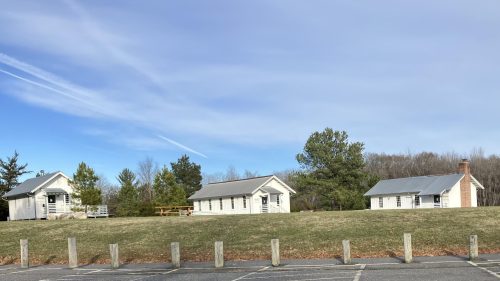
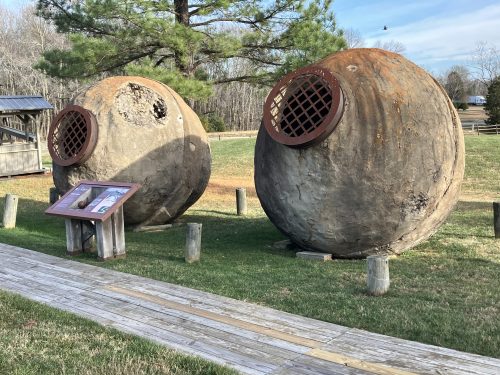
In a county park within sight of the Goldvein markers, Fauquier County has established a small museum depicting life in a typical Depression-era gold mining camp. The self-directed Gold Mining Camp Museum consists of three buildings—assay office, mess hall, and bunkhouse. Each building contains furnishings and other items from the era. In addition, there is considerable interpretative signage explaining what went on in the building, e.g. considerable detail on how gold was separated from ore and then graded for purity and value, and describing what life was like in the gold mines in the area.
The mines were a welcome source of jobs during the Depression. Although each mine was run differently, in addition to the miners, a mine operation could employ cooks, assayists, engineers carpenters, and other workers. Working in the mines themselves involved long, hard, and sometimes dangerous jobs. Some of the larger mines had shafts up to 300 feet deep.
The museum provides a well-presented, informative window into a little-known aspect of the Commonwealth’s past.


Leave a Reply
You must be logged in to post a comment.