
by Steve Haner
And the winner, again, is natural gas. The 13-state PJM Interconnection regional electricity market announced this week that it has reopened its process for adding new generation and most of the new electrons are proposed to come from natural gas.
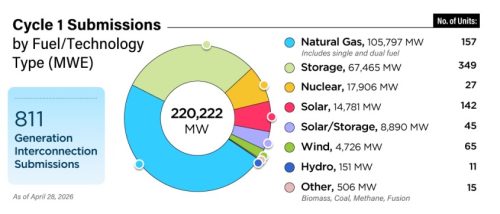
The news release reports 811 applications for future connection to the regional grid, with a total faceplate energy value of 220 gigawatts. Almost half of the faceplate energy output, 106 gigawatts, would come from natural gas plants if all the applications are approved and –- the big if -– if all the plants get built.
Nuclear projects around the region are the source of the second largest amount of new energy on the list, with about 18 gigawatts proposed. Only 15 gigawatts of solar projects made the list, supplemented by another 9 megawatts of solar combined with co-located battery storage.
PJM lists battery storage as the second most common energy source, ahead of nuclear and solar (and the tiny amount of planned additional wind power), but conveniently ignores one basic fact. Batteries do not make electricity but only store it. They do give the grid operators flexibility to bank excess output for use when needed, improving the utility of intermittent solar, but it is disappointing the PJM media writers equate it with actual generation.
More from the release:
“The application window closed April 27, and PJM now begins a validation phase to confirm which projects have submitted the required technical and financial information to move forward. All projects in this Cycle are being processed under the new framework, with no remaining backlog from prior queues.
“The reformed process replaces PJM’s prior first-come, first-served model with a first-ready, first-served approach, prioritizing projects that are more advanced and better positioned to move forward. Projects must demonstrate they are viable before entering the queue, including meaningful up-front financial commitments and proof of site control. These requirements are designed to reduce speculative projects, improve predictability and increase the overall pace of interconnection.”
Many of these projects still will fall by the wayside, either for financial reasons, regulatory hurdles or because ideological opponents of various forms of generation will kill them. Fortunately, as fast as demand within the region is growing, not all of them will be needed.
“Between 2024 and 2030, PJM expects electricity demand to increase by more than 30 GW, driven largely by data centers. Demand growth is outpacing the addition of new supply, risking reliability and making the timely interconnection of new resources critical to keeping the lights on for 67 million people in 13 states and the District of Columbia.
“The gigawatt and megawatt figures represent the maximum potential output of a resource into the system. Based on historical performance, only a percentage of projects that apply for interconnection will sign interconnection agreements. Details on specific projects seeking interconnection are confidential until the application is officially accepted.”
That is another disappointing whitewash from PJM, because it should add that it is fully aware that a solar facility that claims a certain energy output will achieve only a tiny percentage of its potential, even when supplemented with battery storage. Nuclear and natural gas are the sources most likely to approach “maximum potential output.”
Virginia is one of the states where the dominant political leadership remains fiercely hostile to any expanded use of natural gas. But if enough other states within PJM keep their sane political leadership and accept the expansion of gas, Virginia will simply keep doing what it has been doing – importing ever more of its electricity.
Leave a Reply
You must be logged in to post a comment.