
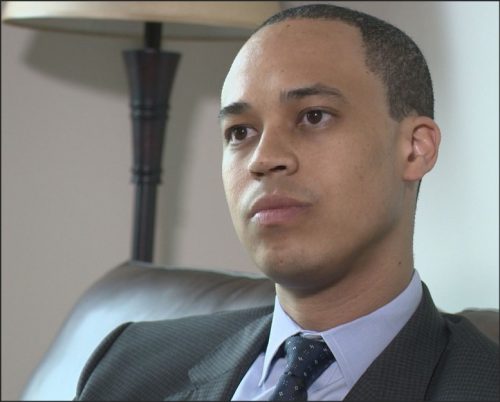
Democrat Jay Jones’s record reveals a champion for large, well-connected entities at the expense of everyday citizens.
by Jacob Grandstaff
Virginia Democrat Attorney General candidate Jay Jones presents himself as a defender of the working poor, but his career and political history tell a different story—a lawyer and legislator who consistently prioritizes corporate giants over the individual and the underprivileged.
In an interview with the leftist environmentalist group Clean Virginia, Jones said, “Everything that I have done in my career, whether it be in the legislative space, in the public sector, or in the private sector has been focused on helping people and protecting people.”
His record, however, suggests he’ll help and protect the powerful and well-connected and leave the vulnerable behind. From high-powered law firms defending large corporations to legislative votes enabling the exploitation of the poor, Jones’s track record shows a clear allegiance to big business. Many in that world recognize this and have rewarded him with handsome campaign contributions.
A Legal Career Built on Shielding Corporations from Accountability
Jones’s corporate journey began before law school graduation with a stint at the powerful investment bank Goldman Sachs.
His legal career, spanning four elite firms, shows a consistent pattern of “helping people and protecting people” at the elite levels of society. He has never represented an individual plaintiff as a lead attorney. Every client he defended in that capacity was a corporation or major institution—often pitted against workers, consumers, or grieving families seeking justice.
After graduating from the University of Virginia School of Law in 2015, he joined the employment practice group at Wilcox & Savage, which specializes in corporate defense work. There, he represented major companies in disputes against individual plaintiffs, setting the tone for his career.
In Trujillo v. Landmark Media Enterprises, LLC et al. (2015), he defended Dominion Enterprises and Landmark Media Enterprises against Roberto Trujillo, who represented himself. Trujillo alleged retaliation, wrongful discharge, and defamation over remarks posted on Glassdoor.com. Jones secured a settlement that dismissed all claims with prejudice, protecting his corporate clients. Notably, Landmark’s former CEO, John O. “Dubby” Wynne, was a significant campaign donor, contributing $26,000 to Jones’s political efforts before Wynne’s death in 2023.
In Patricia M. Richards v. Sentara Virginia Beach General Hospital (2016), Jones defended a hospital against an employee over alleged discrimination, retaliation, and HIPAA violations. Jones secured a summary judgment in the hospital’s favor, getting the claims dismissed.
Later that year, Jones notched a win for Verizon against a former employee. Jacqueline Brooks, who claimed when she left the company, in 1994, she was told she would have to wait until age 65 to collect her pension. When she tried to withdraw it upon turning 65, Verizon told her she received it as a lump sum when she left.
Jones also helped the fishing company I Crab Inc. escape liability for the deaths of its fishing boat crew in April 2015 in the Albemarle Sound. After the bodies of three crew members were recovered, Jones secured a default judgment of exoneration for the company for all but one crew member.
In Swartz v. ESPN Inc. (2022), Jones defended ESPN against a class action lawsuit alleging violations of the Video Privacy Protection Act and Pennsylvania Wiretapping Act for using Facebook’s Meta Pixel to track subscribers’ viewing habits. The case is currently stayed pending a Pennsylvania Supreme Court decision, but Jones’s aggressive discovery tactics were rebuked by the court for violating its civil practice order.
In January 2023, Jones became a senior associate at Hogan Lovells, a global law firm defending Fortune 500 companies in consumer, financial, technology, and life sciences industries.
While at Hogan Lovells, Jones has advised clients on environmental, social, and governance (ESG) issues, “a philosophy of keeping score on what businesses do to further the Left’s political agenda and directing investment dollars to the companies that fall in line.
He also notably defended Howard University and Starbucks against allegations of abuse and fraud.
In J. Siah Willie v. Jeremy Randall et al. (2023), he won a dismissal for Howard against a former employee’s claims of intentional infliction of emotional distress, negligence, invasion of privacy, and fraud.
In National Consumers League v. Starbucks Corporation (2024), he represented Starbucks against allegations of false advertising regarding its “100% ethical” coffee and tea sourcing. Plaintiffs argued this amounted to false advertising, because Starbucks sources its coffee and tea “from cooperatives and farms that have committed documented, severe human rights and labor abuses, including the use of child labor and forced labor as well as rampant and egregious sexual harassment and assault.”
Jones helped Starbucks move the case from the D.C. Superior Court to the D.C. District Court, a more favorable venue for a mega corporation. The U.S. district judge found, however, that federal courts lacked jurisdiction in the matter and remanded it back to the D.C. Superior Court.
A Political Career Built on Favoring the Wealthy and Well-Connected
Jones’s time in the Virginia House of Delegates further reveals his big business leanings.
He supported policies that enriched casino developers, sports betting platforms, and high-interest lenders—often at the expense of vulnerable Virginians. He voted to legalize sports betting and backed a controversial casino project on Norfolk’s waterfront, paving the way for industries known to exploit low-income and addicted individuals. His campaign has received significant funding from casino developers.
Jones introduced a bill prohibiting small loans from unlicensed lenders, such as family members, while allowing licensed lenders to charge up to 36% interest rates. This policy traps borrowers in high-interest debt cycles, benefiting lenders over consumers.
Even more troubling, from March 2021 to August 2023, Jones’s wife worked in public relations for PRA Group, a major debt collection firm facing multiple enforcement actions from the Consumer Financial Protection Bureau and state attorneys general.
A Campaign Fueled by Big Money
Jones has been quick to criticize opponents for accepting large campaign donations, pointing to a single $10,000 contribution from the National Rifle Association to his Republican opponent, Jason Miyares, as evidence of corruption. Yet Jones has at least 75 individual donors contributing $10,000 or more, revealing a clear reliance on corporate and legal elite funding. This includes receiving over $320,000 from trial lawyers and personal injury attorneys—including more than $100,000 from the former president of the Virginia Trial Lawyers Association and his wife—and $12,000 from class action attorney John C. Lynch.
The overlap between Jones’s donors and his corporate defense work, as well as his political support for gambling and financial support from that industry, raise serious questions about his allegiances and motivations.
Jones claims his career is focused on “helping people and protecting people.” The evidence paints the picture of a lawyer and legislator who consistently sides with the powerful over the vulnerable. From defending media giants, hospitals, and tech companies against employees and consumers to supporting casinos and predatory lenders in the legislature, Jones built a career protecting those at the top of society. His campaign, fueled by big money from trial lawyers and corporate interests, further undermines his narrative of public service. If elected Attorney General, Virginians can expect more of the same: a champion for corporations, not the common man.
Jacob Grandstaff is an Investigative Researcher for Restoration News specializing in election integrity and labor policy. This column is republished here with permission from Restoration News.
Leave a Reply
You must be logged in to post a comment.