
by James A. Bacon
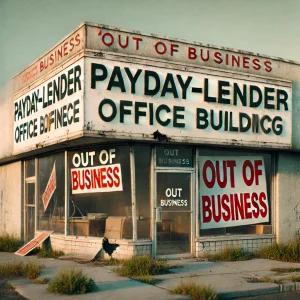
A bill capping financial loans to a maximum of 12% interest passed the state Senate Monday. If enacted into law, Virginia would go from having one of the most permissive caps among the 50 states to perhaps the most stringent. The measure could have a debilitating effect on lending to people with low credit ratings, effectively shutting them out of legal lending markets.
The most astonishing thing about SB 1252, sponsored by Senator Lamont Bagby, D-Richmond, is that it passed with significant Republican support. Only six Republicans voted against it; the rest voted for it, along with all the Democrats. If the measure passes the House as well, I hope that Governor Glenn Youngkin, who as a successful businessman has a basic grasp of economics, will veto it.
The usual justification for capping interest rates is that high rates on credit cards, consumer loans, consolidation loans and payday loans can trap people on a treadmill of indebtedness, with interest charges piling up faster than borrowers can pay them off. To be sure, this is a real problem, and I don’t pretend it isn’t. The question is whether the cure is worse than the illness.
Capping interest rates creates a new set of difficulties. Caps deter banks and lenders from making loans to high-risk borrowers. If lenders can’t generate enough return on their loans to offset the risk of nonpayment, they will withdraw from the market. It doesn’t take a finance degree from Wharton to figure that out.
How many people would be affected? Well, Copilot AI indicates that 30% of credit card customers nationally pay an annual interest rate of more than 12%, and 25% of consumers who take out installment loans pay more than 12%. Rates vary by state, locale, and other factors, of course, but we’re probably talking about financially disenfranchising as much as a quarter of Virginia’s population.
According to the National Consumer Law Center, Virginia currently has one of the least restrictive interest-rate caps among the 50 states. Examining the APR (annual percentage rate) permitted for a six-month, $500 installment loan, the NCLC found that two states, Delaware and Missouri have no caps. Virginia’s top rate of 129% was among 13 states that set the cap at more than 60%. All other states had lower ceilings. (The figures are somewhat different for $2,000 installment loans.)
The lowest cap identified in the NCLC study was North Carolina’s at 16%. Enacting SB 1252 apparently would make Virginia’s the lowest cap in the country.
The NCLC makes the case for caps:
Interest rate caps are more than numbers: they are reflections of society’s collective judgment about moral and ethical behavior. Interest rate caps embody fundamental values. Interest rate caps also reflect an assessment about the upper limits of sustainable lending that does not undermine individual or societal economic stability. When states eliminate high-cost loans by imposing rate caps, consumers generally agree that they are better off and express relief that the loans are no longer available. Elimination of high-cost loans spurs an increase in affordable loans, benefiting all borrowers.
We can all agree that it is not a desirable social outcome for large numbers of people to get caught in a debt treadmill leading to bankruptcy. However, I’d like to know how many people are so afflicted in Virginia and how the numbers differ from the neighboring state of North Carolina which has the most restrictive cap. I’d also like to know how North Carolina’s cap affects the access to credit for people with poor credit ratings. Is it true that eliminating high-cost loans “spurs an increase in affordable loans?” I’m dubious.
If I read SB 1252 correctly,* it would effectively ban payday lending in Virginia, which allows people to borrow against future paychecks.
There is no thought at all given to unintended consequences. Sure, an interest-rate cap would prevent people from getting caught on a debt treadmill — but at the cost of shutting down legal access to credit of any kind. What will people with poor credit do when they find themselves in desperate straits but no reputable lender is willing to take the risk of advancing a loan for a lousy 12% return? Ask Lamont Bagby for a personal loan?
- The language in SB 1252 reads: The bill provides that for any contract entered into on or after July 1, 2025, pursuant to which a person receives a cash advance for an amount that is based on the wages, compensation, or other income that an individual has earned but that has not been paid to the individual, and for which repayment to the cash advance provider will be made by some automatic means, at the end of the pay cycle is considered a loan and any additional funds such person is obligated to pay under the terms of the contract are considered interest. The bill specifies that such a contract is subject to the 12 percent per year maximum.
Leave a Reply
You must be logged in to post a comment.