

How They Spent That Money
Share this article
ADVERTISEMENT
(comments below)
Comments
Comments
108 responses to “How They Spent That Money”
-
We have continuing problems with wastewater treatment including CSOs in Virginia that directly contribute to problem in the Chesapeake Bay that we continue to drag our feet on and claim we just don’t have the money – even when we DO! We basically make cleanup of the Bay (and other much needed projects) the enemy for tax cuts. Later, after the tax cuts are done, we’ll say there is just is no money in the budget to clean up the bay unless we have tax increases.
-
Because it was one of the mandated encumbrances, I did not list the Water Quality Improvement Fund. I probably should have. About $644 million was deposited there. That goes to help localities upgrade their wastewater treatment systems.
A dedicated amount for Richmond’s CSO system did not make it, but the city has gotten considerable money in the past.
There was also significant amounts provided for other water improvement activities.
-
I would be remiss in not acknowledging that money is in the budget for wastewater but it’s not enough to really improve much in a shorter span… I know, for instance, Frededericksburg/Spotsy want to upgrade their plant but they cannot get as much as they need yet…. As how_its_made points out, it’s really the responsibility of the folks who are hooked up to water/sewer but the up front costs for upgrading the plants is so high that without state help it would take far longer and many localities would just put it off unless DEQ forced it.
But really what I was doing is just illustrating that there are ongoing costs that are, as Haner said, built in to the budget to get money when there is a surplus … capital investment projects get accelerated.. like new schools as well as wastewater, CSOs and other needs.. when the revenues
do exceed projections. It’s not like the State is keeping the excess and storing in a vault and it’s not like they are frittering it away on needless projects either.It’s always a matter of prioriites.
I see this in my work on a citizen panel for an MPO which is basically a regional organization that develops a list of projects they need .. and there is never enough money to build them so they prioritize and rank them and fund the ones they can and the others go unfunded until later on when there might be funding for them. It’s not like they are not needed. They are, but the money is not there unless there is a surplus.
-
-
Those are capital needs tied to fee-based services, and the fees should support the needed investments. That is the situation where you DO use a long-term bond (not your electric bill) and take advantage of the AAA credit rating. You’d be surprised how much has already been done, BTW. Other states are lagging on protecting the Bay.
-
We make excuses for not making the investments we KNOW need to be made in our wastewater systems. Like I said, we don’t fund them when we do have the money, then later say we can’t do it without raising taxes … and oh by the way, other states are irresponsible also.
Right now, we are having a drought. The river in Fredericksburg is running as low as it has ever run but guess what, we’re STILL putting out the same amount of sewage we always have from plants that still are not upgraded that should be. They stripped funding for the RIchmond CSO from the current budget.
THe “give me my money back now” folks really don’t care about funding things that need to be funded. They resent the taxes to start with and just want their money back.
Not a way to do responsible governance… IMO
-
Why isn’t the Fredericksburg WWTP upgraded?
-
It’s got a big up front cost. It’s underway but it was competing in the Fburg budget for a new school and new firehouse… and they were hoping the state had money to help with the upfront costs.
Part of the problem is these plants were built many years ago to older standards and now the standards are tougher AND the GROWTH has added substantially to the volume they have to treat.
These plants dump the same amount of treated sewage into the river no matter if the river is in drought. The standards are generally not predicated on drought levels.. they expect degradation at low levels. TO build these plants at standards to deal with droughts would make them even more expensive, so that’s the middle ground.
-
It’s actually trying to close some existing and do a brand new regional that includes both
Spotsylvania and Fredericksburg. It was gonna cost 65 million a couple of years ago. More than could be accommodated in their budget and stay within total debt thresholds for credit rating agencies.
-
-
Why should the rest of the taxpayers in the state fund what should have been funded by ratepayers in FXBG?
If the water utility in FXBG were a privately owned utility, would that change anything with regards to using tax dollars to fund this?
EDIT: I was paying ridiculous sewer rates to fund UOSA…good enough for NoVA? Good enough for FXBG!
-
It’s a problem at virtually every single wastewater treatment plant… that were designed and built to standards that are not up to date.
The standards apply to all plants public and private but some plants are old and the standards are not up to what they need to be. There are “dirty” wastewater treatment plants all over Virginia and I have not even got to storm water of which most all of NoVa is terrible at… Raw sewage gets dumped into the Potomac every time it rains in NoVa.
-
The water coming out of UOSA was drinkable clean when it was built in the 1970s, and the plant has been upgraded several times since.
There are very, very few CSOs in NoVA…none in PWC.
I saw, mandate that FXBG upgrade their plant and charge the ratepayers whatever it costs.
That’s what happened with UOSA and NoVA. Anyone from the EPA lurking here? Go make FXBG feel the pain!
-
There’s stormwater problems without the CSOs… in most developed areas of NoVa that were built before they had to set aside stormwater mitigation ponds. I don’t know what UOSA is but the FXBG and other plants do charge the users.. the state helps them with the up front costs which then are passed on to the users on a longer term basis. Not a question of EPA or DEQ – it’s a question of raw sewage that’s flowing into the rivers and thence to the bay… Storm water runs from parking lots, pet poop, antifreeze, oil and other toxics get flushed into creeks that then flow into the Potomac..If you live in a house, you are likely contributing to the problem.. no matter FXBG or PG county.
-
If you know ANYTHING about wastewater treatment…you know what UOSA is. Upper Occoquan Sewage Authority. Mandated by the EPA, it replaced many small sewage treatment plants throughout FFX and PWC counties. It was perhaps the most advanced and expensive sewage treatment plant in the country, if not the world, when it was built.
The water coming out of UOSA is so clean, it’s cleaner than the water in the Bull Run River that it discharges into. You could drink it. Supposedly one of the local politicians did so in the 70s when it opened…there’s supposedly a photo of it.
The biggest stormwater problem around my house involves a cross-culvert that was eroding my front yard. Since VDOT is useless, I hired someone to line the ditch with recycled concrete to stop the erosion. Nobody from VDOT ever bothered to call me back despite calling them several times about the problem.
The second biggest stormwater problem around my house involves the culvert under my driveway that won’t drain (there’s at least 4″ of water in it days after the last rain storm) because Verizon screwed up the ditch when they were digging to fix a cable that their fly-by-night FIOS conduit installation contractor damaged.
I’ve called VDOT about the problem several times. The most that ever happened is that Verizon sent out a guy with a shovel to fix a problem caused by a backhoe. As far as I can tell, nobody from VDOT ever came to inspect it, and they certainly didn’t call me about it to find out if the problem had been corrected.
I know you think VDOT runs like Swiss watch, my experience is that it runs more like the DC DMV.
-
I doubt seriously that you could drink UOSA water today especially in a rain event if it was built to 1970 standards. The fact that the EPA mandated illustrates what I’m talking about if you leave that decision up to the locality or even Virginia. The talk the talk but when push comes to shove, they won’t do what needs to be done unless the EPA forces them!
VDOT is not responsible for any culvert/pipes that are not on VDOT r/w. People get confused about this. VDOT is not perfect but people simply do not understand who is responsible for storm water and culverts and thins. If it runs under a VDOT road, they are responsible for it and they do have an ongoing program to replace culverts.. we have dozens they fix every year but like everything else they don’t have enough money to fix all of it right away. Fully 1/2 of the VDOT budget goes for maintenance and operations… not new roads… and if you look at metrics for road condition, bridges, etc.. they do well compared to other states. What they cannot “fix” is what none of the transportation agencies can fix and that is urban congestion. There is no fix. You build a new road and it actually encourages MORE traffic! People have this idea that they can drive anytime they want and expect no congestion. Not a VDOT problem… a “people” problem…
-
“I doubt seriously that you could drink UOSA water today especially in a rain event if it was built to 1970 standards.”
As I stated previously, it has been upgraded several times since it was built.
“VDOT is not responsible for any culvert/pipes that are not on VDOT r/w.”
These culverts and pipes are most certainly on VDOT r/w.
Hopefully, VDOT doesn’t have a problem with me having lined THEIR ditch with recycled concrete to correct THEIR erosion problem that was destroying MY property. If they do, well, too bad. I gave them every opportunity to correct the problem.
“You build a new road and it actually encourages MORE traffic!”
That was the theory when they built a new road (US 48) in West VA. I wonder if today it even gets 10,000VPD.
-
Does VDOT have r/w on your property? VDOT is far from perfect, they make mistakes but the issue with pipes and culverts is that if that pipe/culvert is not on VDOT r/w, they disavow it. Lots of conflicts in Stafford over that but in the end, the size of the pipes an design ,etc is on the developer and the county and what happens is the developer will design it for their project and then other projects will get built upstream of them and overwhelm their infrastructure…
In WVA .. new roads won’t draw more traffic… in NOVA, any new road especially one that reduces travel time for someone, will attract more traffic. There is no solution for it other than letting people choose the times they want to use the roads… really not much different than airline schedules and anything where demand exceeds supply.
-
The cross-culvert that was eroding my yard passes under a VDOT road. So I think it’s theirs.
The ditch and culvert that passes under my driveway and doesn’t drain is theirs as well. It’s less than 2 feet off the edge of the pavement and is on their R/W according to the drawings I’ve seen. They also mow it, and did some clearing/grading (which didn’t fix the drainage problem). I think they also had to approve the size of the culver that was installed under my driveway.
In NOVA, there are quite a few places where any sort of detour to an accident or road closure involves a 10 mile or more detour. That’s ridiculous for a populated area.
-
Could be. They’ve actually come and put rocks in a ditch near me! The problem with VDOT culverts is the same problem developers have and that is VDOT didn’t size them for the runoff that would come from large scale development. When they replace culverts down our way, the new ones are much larger.. they go from pipes to big concrete structures…
yah… we have accidents EVERY DAY where we are advised to “avoid that area and seek “other” ”
And we have roads that go down for days/weeks when they are replacing a culvert.
But I do notice that when a major road or I-95 has a problem they do tend to get on it… quicker but it still take hours…
Keeping this on budget issues – I don’t think more money can fix a lot of these issues. When someone screws up on I-95.. it’s down… there is no parallel I-95 to detour to!
-
-
-
-
Vdot has easements that are not in the R/W and they ARE responsible for those too. When the VDOT higher ups say as long as water stays in the ditches, they’re doing their jobs, and allow pipes under roads to get blocked and ultimately collapse damaging roadways–they are wasting tax money. Saturated roadbeds have a fraction of the lifespan of well drained roads. A roadbed saturated for 20 percent of the year loses 80 percent of the useful life it would have had if it were well-drained. (Federal Highway Administration, 2006.)
-
I think ultimately if a roadway has water on either side more or less on a permanent basis, that VDOT may consider either abandoning it or making the bed higher like a causeway. I know VDOT has abandoned some roads where there is water they cannot control.
-
It’s common for VDOT to repave only the outer edges of a 2 lane road. Can someone tell me why the outer edges of a 2-lane road are falling apart faster than the inside part?
-
They typically do not have as much bed and asphalt on them and don’t do well with larger vehicles.
Many of these roads are 1930’s era roads… they don’t really have the bed structure of more modern roads. Basically asphalt laid on dirt/gravel rather than an engineered bed.
Localities, by the way, can can upgrade these roads on a match basis… They can even take over the roads if they want and get reimbursement from VDOT for maintenance!
There are only about 4 states where the State level DOT maintains local roads. In most states, the local roads are the county responsibility.
-
I wonder if adding shoulders would reduce the deterioration.
Well aware that most VA 2-lane roads have had no improvements other than asphalt laid over dirt/gravel.
Basically the equivalent of putting a fresh paint job on rotted wood.
EDIT: I’ve never seen any posted weight limits on any VDOT road anywhere, except for bridges that have “deficiencies”.
Other states do, in fact, post weight limits on roads and they enforce them.
-
costs big money to do that because in many cases, VDOT does not own the additional R/w .. it ends at the ditch! It’s a big long difficult process to get r/w from a string of property owners along an existing road. Can take years and millions of dollars… Counties can ask VDOT to do it if they are willing to share costs. They did that in Spotsy along Route 3 so they could add turn lanes and so they were buying commercially zoned land to get the r/w… they had to use eminent domain for a lot of it… the owners were claiming huge damages to their property even for 12 feet!
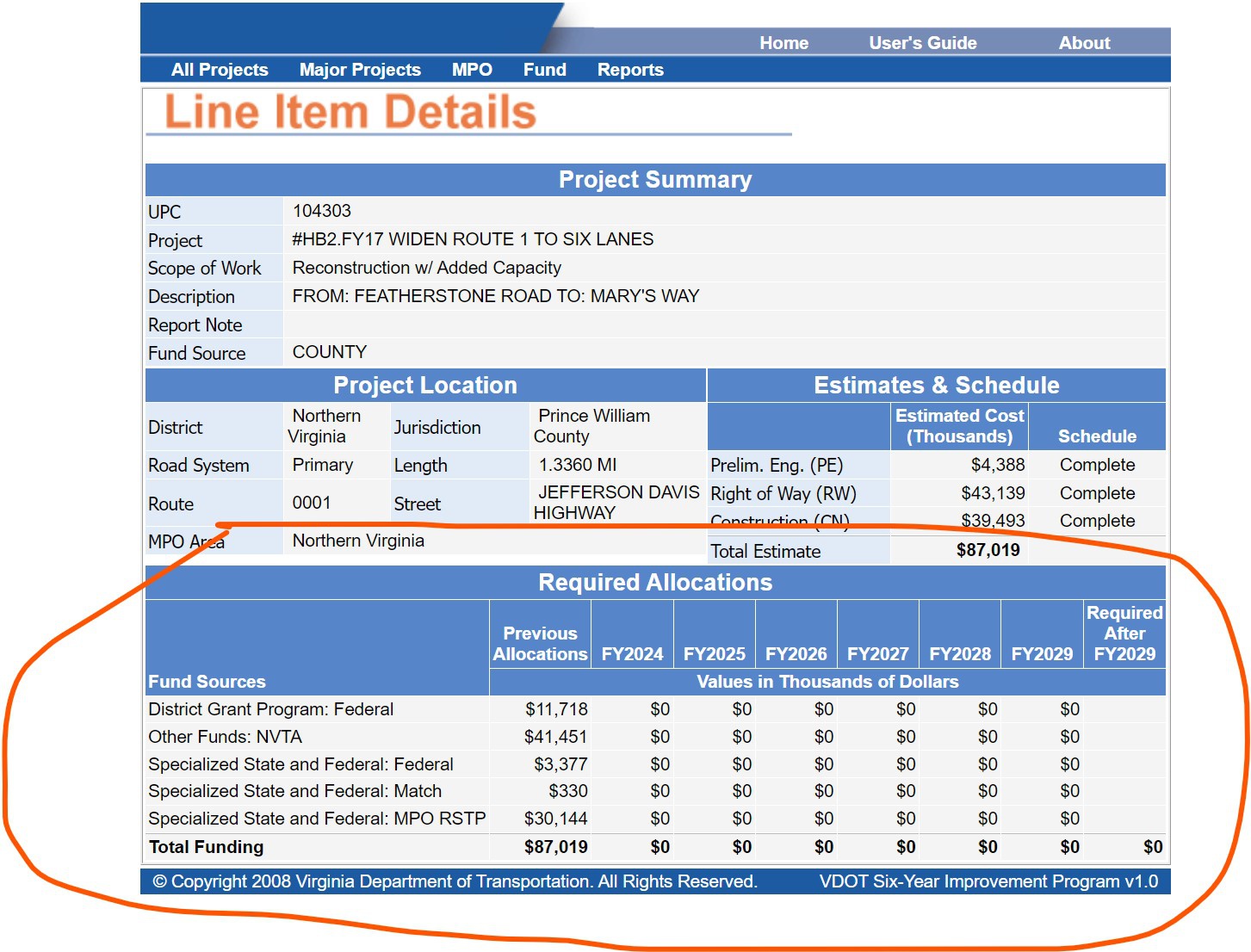
most road widening work similar to new roads… they have to get the r/w, then preliminary engineering and then finally construction. You can see this in their six year plan… it’s usually at least 6 yrs from approval to moving dirt and the money is allocated a little each year a the project progresses… They have almost 5000 individual projects in their 6yr plan. https://syip.virginiadot.org/Pages/allProjects.aspx
-
Most of these 2-lane roads without shoulders are in rural areas where the land is much cheaper.
-
It IS cheaper but it’s the sheer number of property owners to deal with and there are always a few that will not sell and will drag it out for years if they can.
VDOT will actually do the widening and the eminent domain, if the locality will put the money up. It really is a local responsibility.
-
It’s a local responsibility but how much gas tax does the locality get for that responsibility?
-
THe gas tax does not entitle the localities to all they want … they are limited to specific percentages and then allowed to prioritize what they want it spent on for local improvements. There are separate pots of money for State Primary , Federal and Interstate roads.
Ever tried to figure out how much you pay in transportation taxes annually and if your county gets all they should?
😉
-
Being that I’m in NoVA, I’m pretty sure that my county doesn’t get all they should.
-
all the counties feel that way. Number 1 complaint in Fxburg and Spotsy.. “We’re being cheated”!
you should look at the VDOT 6yr plan, ya’ll have got some expensive projects: https://syip.virginiadot.org/Pages/allProjects.aspx
-
Yea, and how many of those expensive projects are getting funded out of general fund revenue like that I64 project?
-
General fund? Nope. It’s coming from tranpo tax revenues… it’s your taxes you pay!
-
-
THe road will still be operated and maintained by VDOT. And they will 1/2 match the acquisitions but like I said, it can and does take years… Every single piece of property has to be surveyed.
We have several in the county that had that done. They also have, you’ll like this, a program called “pave in place” where a gravel road is paved but no additional r/w is bought.
Here’s a JLARC report on VDOT:
” Despite local concerns, analysis of Smart Scale decisions over time concluded that selection decisions are generally equitable across regions and types of projects. The program has appropriately allocated funding across regions based on population,”
https://jlarc.virginia.gov/landing-2021-transportation-infrastructure-and-funding.asp
-
No room on roads built in the 1800s through 1950ish. THey’ve already been widened into the former shoulders up to the ditches. But if the ditches and outfalls the go to don’t owrk, the roadbed remains saturated and the roads deteriorate faster.
-
I wonder if other states, like MD, widened the 2-lane roads when they paved them.
-
Pedestrians? Americans are, well, gaining weight.
Actually, my first real guess is water intrusion, and the accompanying vegetation. Damn crabgrass will worm roots into the cracks, letting in more water that widens the cracks, vice versa, rinse, repeat. Then, one or two drivers wander to the edge while texting, and bingo!, chunks get displaced.
-
We get bike-riders from NoVa who somehow “think”we are rural with lightly traveled rural roads. Not sure where they get that thinking but if NOVA folk, it’s sorta fits… I say NoVa because no one in their right mind locally would ever try to bike on our two-lane roads… heck you don’t want to try to keep under the speed limit in a car even!
There is NO shoulder. It is the edge of the asphalt , one foot and a ditch if you’re lucky and these fools are pedaling over hill and dale with folks in cars going 60+ mph going by them or running up behind them …. who can’t even stay off the yellow divider paint!
-
That’s one thing I’ll give Texas — nice rural roads. Almost all have maintained shoulders, and lotsa bicycles. Plus, once out in the country, it’s not uncommon to come up behind someone who will pull to the right and drive on the shoulder to allow you to pass, sometimes when they probably shouldn’t, like cresting a hill…. I kinda half wondered if they was thinking, “This might be cool.”
-
yes… roads out west typically have more shoulder! Many were built later than roads in the east and “flatter”in general.
-
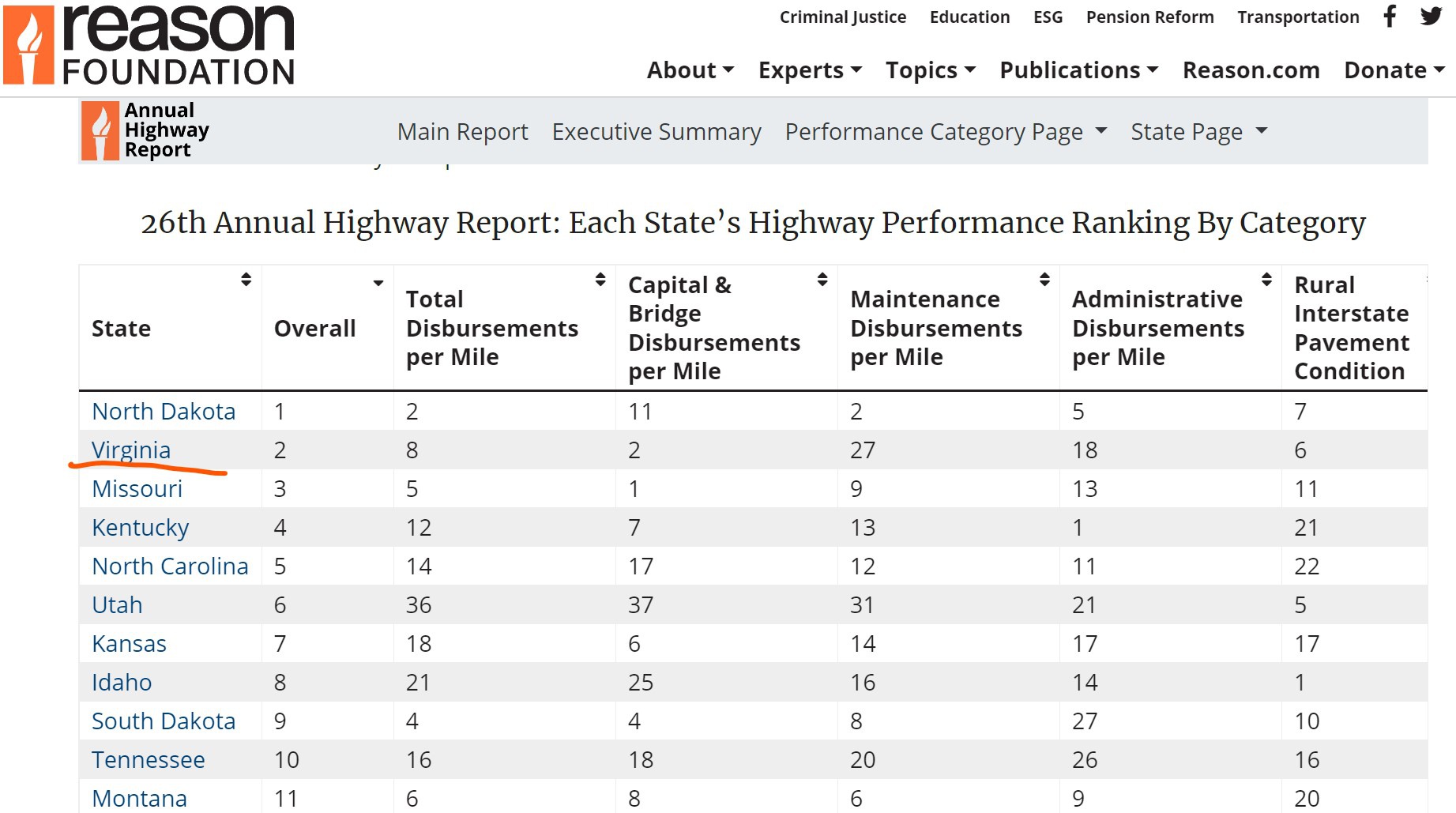
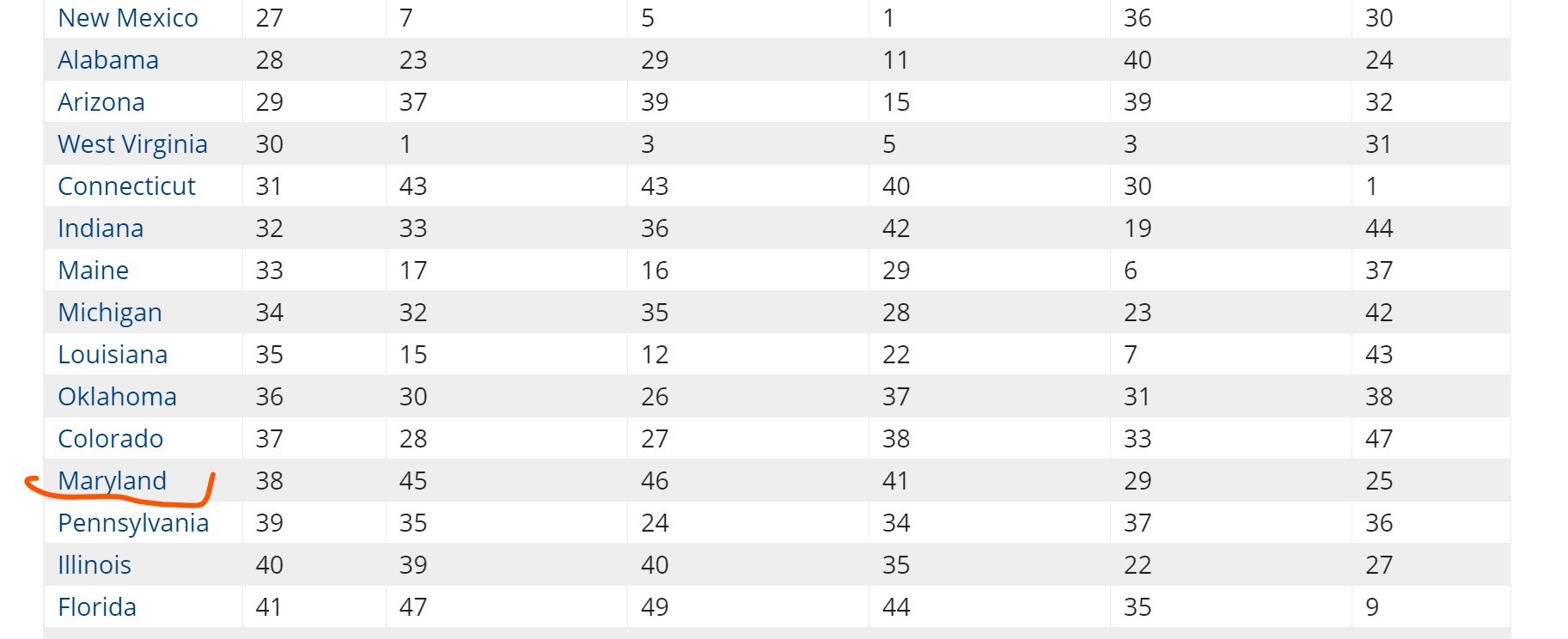
Maryland seems to do a good job with their 2-lane roads. Cross US15 into VA and see the difference.
-
wrong!
-
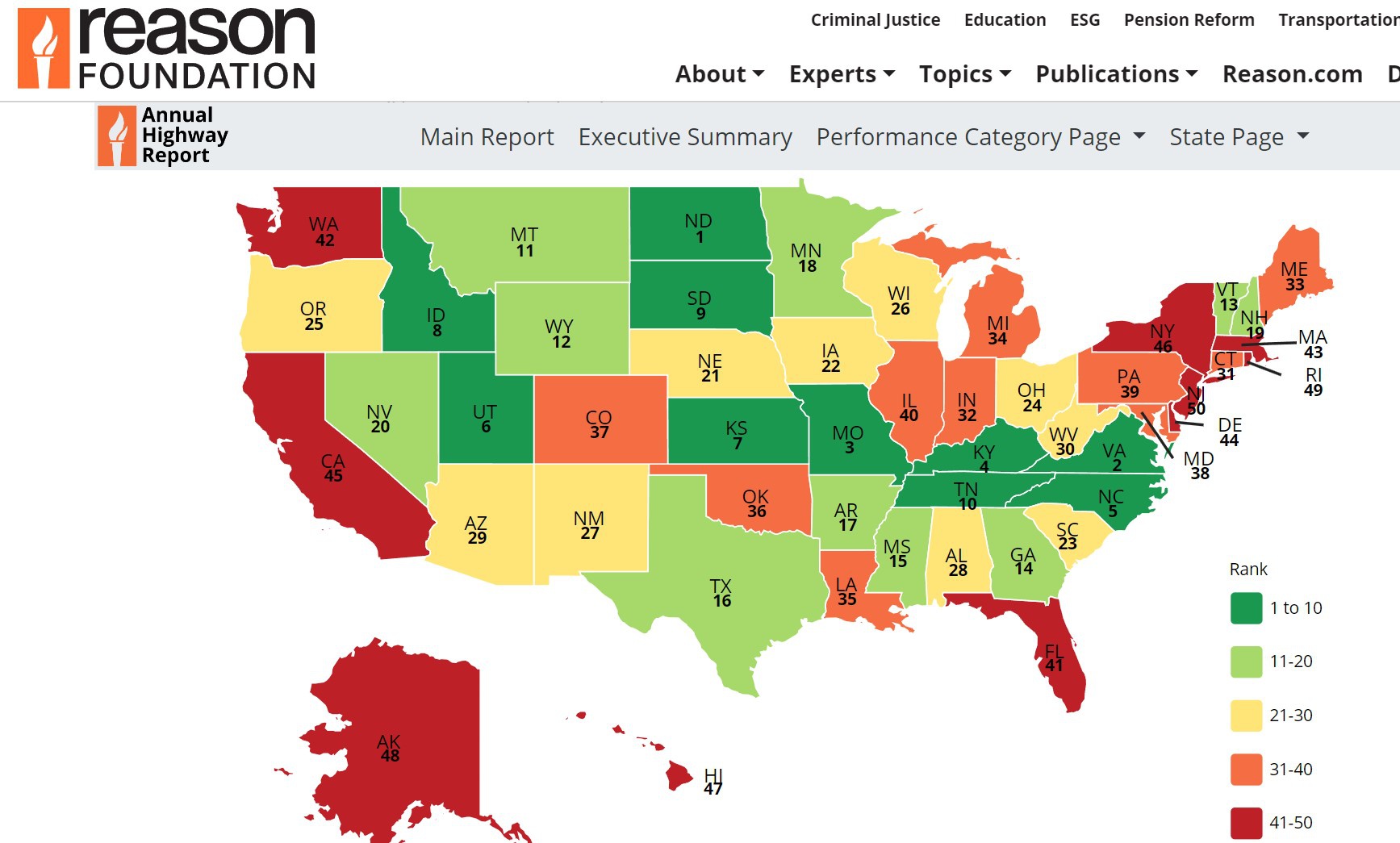
That’s self reported. Nobody from Reason Foundation actually went to all 50 states and looked at the condition of their roads.
I know for a fact that VDOT’s own pavement condition report has some, shall we say, “inaccuracies”.
That’s also just pavement condition. There are other factors too. Shoulders. Street lighting. Signal timing. Condition of guardrails. The list goes on.
I stand by my statement that 2-lane US15 in MD is far superior to 2-lane US15 in VA.
What “Son of Pocahontas” thought that a 15MPH curve in that road was a good idea?
-
More than one organization.. in general VDOT gets good marks. It’s actually considered one
of the best DOTs in the country. Lots of critics… most DOTs have them… never enough …. -
It’s asking them too much to call someone back, apparently.
If they can’t even do that most basic of public relations, they have some serious problems.
-
not their strong suite, I agree.
-
Maybe the average Virginian thinks that VDOT is too busy fixing the roads to call them back.
-
All I wanted was a call back about an erosion problem caused by their culvert. I wanted to know what they would or would not do to fix it. If they thought I was going to be “mean” to them or whatever, they need to put on their big boy pants and deal with it.
I have noticed that there are lots of people around here who:
1)Don’t have a clue what they’re doing, or do a crappy job.
2)Get extremely butthurt when you point it out to them.
It’s to the point where I think that must be some cultural thing. They don’t generally act that way up north.
-
They get abused by callers… left and right who say they “just want “… and what they really
want is to vent about their problem that they think is VDOT’s fault, etc People are just downright rude these days and the guys answering the phone are not detail experts at all. If you’re calling a general number, the guy on the other end is not likely to know the answer and not even who you should call. Find out the numbers for the local district office and go from there and be polite… and I bet you get a response but probably not the one you want. They DO have a problem report thing –
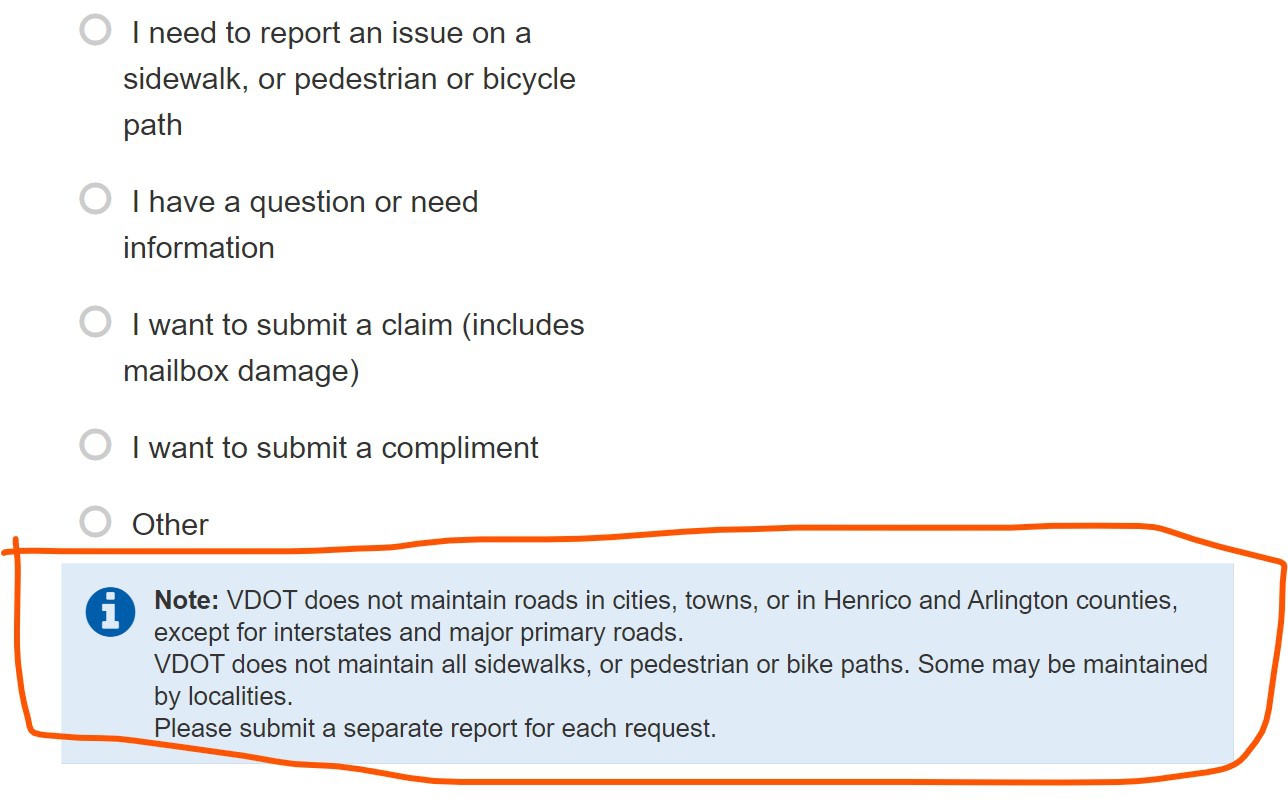
https://my.vdot.virginia.gov/ tried that?I’ve used it. I’ve reported a couple of potholes.. and they were fixed in 2 days! I’ve had conversations with VDOT public relations folks on the web and in person at VDOT meetings. They’re just ordinary people who don’t like to be accosted and treated badly.
-
I *know* the guy who answers the phone doesn’t know the answer.
That’s *why* I asked for a *call back*.
Are they so useless and incompetent that even when supplied with the address where the problem is, they can’t get the request for a call-back to the right office???
Good lord, no wonder they lost that war!
-
DO they even do call backs?
did you see this:
-
I’ve opened tickets with the website, I’ve called, they never call back. Hell, email would be fine too, I’m pretty sure I gave them my email address too.
I’ve opened tickets and made phone calls about other issues (like the left turn lane detector that was broken for over a month–made a left turn against a red light every day for a month while it was broken. Yes, I reported it the day I noticed it wasn’t working and it TOOK THEM OVER A MONTH TO FIX IT).
More recently I opened a ticket about pavement sinking on a road near my house (repaved 3 years ago, already sinking at least 6 inches, alligator cracking and all). Hit it at the 45MPH speed limit and it’s like hitting a speed bump.
No action. No response.
Best run DOT in the nation? In their dreams.
Best jobs program in the nation? I’ll buy that.
After all, Jim Bob’s drunk, retarded cousin needs a job too, since the filming of “Deliverance” ended and they no longer need any extras.
-
not good on customer service for sure! They must know you by now, eh? 😉 You do sound a bit picky! They’re not going to jump everytime you have a complaint, you know. There are LOTS of road issues.. if I reported every one , I’d be doing it every day. So only if it’s a serious safety thing. The road I use to where I live is a mess… has deformed pavement.like a pothole… and the entrance to my subdivision is on a hill with bad sight distance and cars just fly over it even though the speed sign says 35.. they go 60… I have far more problems with other drivers than the roads.. which I simply don’t expect to be perfect. VDOT is on FB and they post whenever there are issues going on and I cannot believe how rude people are these days… They say they have to close a lane down and the boo birds come out in force.. and just totally abuse the post! No sympathy from me these days.
-
I only report major issues like the aforementioned erosion problem, the pavement sinking (seriously, you have to go into the oncoming lane to avoid it or it’s like hitting a speedbump), and the broken left turn detector problem.
Otherwise, I prefer to let the issues fester and see how long it takes VDOT to deal with them without someone letting them know.
It took them at least 3 years to fix the speed limit sign that was laying in the ditch in front of my house. I say “at least” because I am not sure exactly how long it was laying there–it was laying there the first time I ever laid eyes on the property.
I specifically did NOT report that BECAUSE I wanted to see how long it would take them to fix it.
I can see why people abuse VDOT. They ask for it. Someone ought to clue their employees in—they work for VDOT, not the IRS or the FBI. Nobody is afraid of them.
-
VDOT as a large entity with their policies does “ask for it”. Such as, for example, by not having a policy to communicate the disposition of a closed ticket to the person who opened it. (That’s standard policy almost anywhere else).
-
If VDOT were a private entity, with customers that could choose not to do business with them, they would be taking a very different approach.
VDOT is typical example of a large unresponsive government agency.
-
They’re pretty responsive actually… they receive public comment all the time… on a wide variety of issues they deal with.
They are indeed a large govt agency but the excuse that the folks who answer the phones deserve rude behavior and abuse is simply wrong. THese are ordinary folks just trying to do the job they are given and they are not responsible for policies done by the agency…
I’ve noticed that at Virginia’s DMVs.. they have this problem…. and the clerks ARE trained to deal with the abusive types… AND there are guards on duty… you be rude and abusive and out you go!
-
Virginia DMV? Where it took me 3 hours to get vehicles transferred from my deceased dad’s name to mine? Where the guy behind the counter kept having to ask his supervisor what he needed to do? That Virginia DMV?
You know…maybe the problem isn’t VDOT. Maybe it’s Virginia?
-
Yep. that one. You abuse those folks and you’re out the door! You do realize they had to train people even after they’re on the job… like a LOT of jobs! DMV work can be pretty complex. I do volunteer taxes.. my own time a whole bunch of hours in training and I get most of the time right in a reasonable amt of time but every so often get a difficult one and you know.. some folks are sweet and some are rude and abusive and when they are, I send them packing… go somewhere else I tell them… OUT! Not putting up with it! I can just imagine how they deal with others also. If I were a VDOT person answering the phone, I’d do the same. Behave or go away.
-
My thought on the matter of the DMV guy asking his supervisor what forms he needs or how to do his job…the computer he’s sitting in front of ought to have a help function that tells him that.
-
I totally agree with you but I also know in my own experience that the software does not always do what is needed… especially on less common functions… and sometimes…the software is flat wrong and you need to do something different.
We train up on a LOT of stuff but some of it gets back to the way the law/regulation is written beyond even what the software can deal with.
is a kid a dependent if he lives part year with his grandparents? that kind of thing… even paid preparers screw it up sometimes.
We “want” perfection… and only right or wrong answers sometimes. The world don’t work like that and it’s not necessarily a “competence” issue… it’s reality.
-
The tax code is far more complex than anything a DMV clerk deals with. Who knows, though, the DMV may still be running applications written in COBOL like the IRS.
-
point is… neither the clerks nor the software writers are perfect… questions do come up and consultation is needed… and sometimes a judgement call… it’s the way of the world. I know folks getting ready to retire and trying to figure out how Medicare works … especially if you won’t have employer-provided coverage… probably go to Medicare Advantage of which there are a ton of different plans … there is no software that will give you a “right” answer!
-
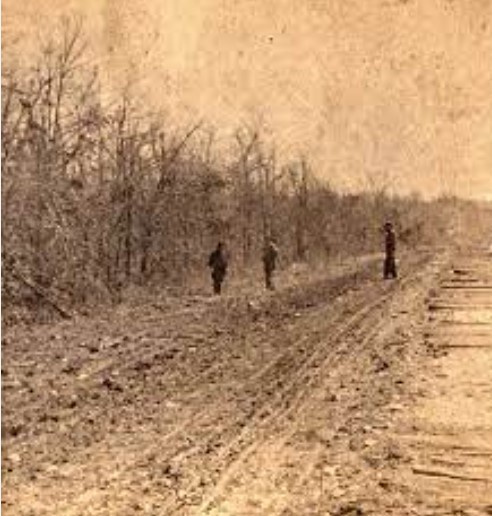
I’ve shared this before but it really lays out how roads in Virginia were initially developed.
Byrd came along later and instituted the state taking over these roads, some of which were glorified cow paths and with names like “plank road” which was literally true:
https://www.virginiadot.org/about/resources/historyofrds.pdf
-
Those bike riders from NoVA are on the 2-lane roads in PWC too.
-
Oh.. you don’t consider PW to be NoVa? 😉
-
This part of PWC is something like 4 miles from the Fauquier county line. It’s right on the edge.
-
how many subdivisions around you? served by water/sewer?
-
It’s well and septic out here. Nearest public water and sewer is probably 5 miles away.
-
Improper drainage.
-
We’ve had issues up this way with development, and developers will often want to size the infrastructure they build only to what their development will generate. Then more development will occur upstream and the lower infrastructure will get overwhelmed and then spill onto VDOT’s drainage infrastructure built long ago – and overwhelm it. They’ve had to rebuild many pipes and culverts after multiple developments too place that all drained down to a older VDOT structure.
-
In the past I believe it was Alexandria water treatment plant under fire for releases especially rain events…I am old man now but if I ever see a job posting for Alexandria plant engineer I might consider it. One time I helped clean up invasive water chestnuts in the Potomac, oh my that was an unhealthy job in that muck
-
“Since VDOT is useless, I hired someone to line the ditch with recycled concrete to stop the erosion. Nobody from VDOT ever bothered to call me back despite calling them several times about the problem.”
That’s because VDOT couldn’t figure out a way to outsource the problem to Transurban then let Transurban charge you a fortune forever for the fix.
-
It wouldn’t be funny if it weren’t true! And I am ROTFL!
-
Alexandria has a CSO.
-
That and Arlington would be the only two I’d expect to be a CSO in NoVa.
-
“Raw sewage gets dumped into the Potomac every time it rains in NoVa.”
Especially true in Old Town Alexandria.
This has been the case for years.
The answer?
Take money from the good people of Salem to fix Old Town’s problems?
No.
Raise the prices of sewer in Old Town.
-
true all over NoVa pretty much
-
Most of NoVA was developed after we figured out that combined sewer systems are a bad idea.
-
CSOs were (and still are) considered a “good” idea where there is dense development and few places to have storm water facilities. What they underestimated was the amount of rainwater
that would get into the system during large storm events.But even conventional wastewater plans like the one in Fredericksburg get overwhelmed with large rainstorms because of what is known as I & I, Inflow and Infiltration (I&I). Separate from that is runoff from development like your situation. Your property and those around you dump stuff like fertilizers, pet poop, oil/antifreeze, etc into the waterways that go to the Potomac and Chesapeake Bay. You’d have to have a sizeable dry pond to capture that water and not have it get into the river and bay.
-
Inflow and Infiltration is a problem in NoVA, but I have *never* heard that it causes CSOs at UOSA. It just makes the sewage treatment bills go up.
-
no no. CSOs are found in urban areas where there is little physical places to put storm ponds and retention ponds. I&I is sewer infrastructure that has cracks in it where rainwater gets in during storm events. If the sewage infrastructure is older, it usually has I&I issues. Most responsible water/sewer authorities allocate funding every year to get to as many as the funding will pay for. They use “pigs” and dye to determine how much a given stretch of pipe “leaks” then they will put a plastic liner in it. https://flow-liner.com/?gad=1
-
Yes, that’s exactly what I thought. You won’t find CSOs happening in places like Manassas or Woodbridge because they don’t have combined sewers.
-
If they become more dense , they’ll have to decide how they will handle stormwater runoff… But nowdays, even in dense development, a storm pond (or an underground structure) is required as a condition of the building permit. Some parking lots these days are built on top of underground storage places…
-
CSOs are an issue in almost all major urban areas where street gutters go into sewer pipes and not into separate storm water pipes. When it rains, it just overwhelms the sewage treatment plant which can’t do anything other than let the raw sewage into the river.
The “solution” whether it’s London or Arlington or Chicago, etc is to build the gigantic underground storage reservoirs…
80% of sewage in the world is not treated, just dumped into the receiving waterway. Only developed countries are actually doing anything about it. All your 3rd world and developing world countries just dump raw sewage , into open trenches and pits…into waterways that are also used for drinking water…
Not that long ago, that’s what we did until we got this great idea of curb and gutters!
😉
-
Exactly.
-
It’s the up-front costs that are actually paid by by user fees.
Almost all NOVA locations have issues with storm water runoff. There have been efforts to institute taxes to pay to retrofit storm water facilities – these are separate from CSOs and wastewater plants. A lot of prior development in NoVa did not put in storm water facilities and now they need to go back and retrofit which is expensive.




Why aren’t Combined Sewer Overflows a local problem?
-
That’s a good question but the same question is also asked about sewage treatment facilities in other localities.

Looks like you’ve mixed millions and billions in some of your early paragraphs. Those darned pesky decimal points and related consonants can be troublesome.
-
Thanks. I fixed it. It is more the related consonants and my mind having a hard time grasping the concept of billions of dollars that was the problem.
-
One of us should detail for Larry how many billions from fees and local/state/federal taxes are going into these treatment and overflow projects. He would then latch onto something else as the reason Virginia must tax even more!!
-
One of us should detail for Larry how many billions from fees and local/state/federal taxes are going into these treatment and overflow projects. He would then latch onto something else as the reason Virginia must tax even more!!
-
Nope. I’m purely looking at the state of the rivers and the bay and asking if we are achieving what we say we want?
It’s been pointed out that ultimately the folks that have water/sewer pay the fees associated with it but the localities won’t budget the
needed dollars for modern facilities because of the high up-front cost.. that often competes with new schools and other needed facilities.But you properly nailed it when you said:
” The General Assembly has made it hard to run a real surplus. By statute, most unexpended funds are allocated in some way. Some go automatically to reserves. Some go automatically to the Water Quality Improvement Fund. Some agencies are allowed to keep their unexpended balances for the following year. Surpluses can be…flexible. Surpluses are dangerous as voters tend to want the money back or start to agitate for tax cuts.”
do you not consider these items that will automatically soak up excess revenues not needed?
I say, just like with VDOT, or many localities… they ALL have lists of things they need but they cannot fund right away so they make a list and get to it when they can..often when they run a surplus.
Virginia and maybe 7 counties have AAA credit ratings. They’re fiscally responsible. They don’t keep money they don’t need or spend it on stuff they don’t need..for the most part.
sometimes a county will need multiple things like a new school and a new fire station.. etc… Sometimes, they’ll actually pay off debt and/or get a lower interest rate, etc.
It’s not irresponsible spending where taxpayers need to get their taxes back!
public infrastructure and services cost money… no way around it…
-
-

The General Assembly has made it hard to run a real surplus. By statute, most unexpended funds are allocated in some way. Some go automatically to reserves. Some go automatically to the Water Quality Improvement Fund. Some agencies are allowed to keep their unexpended balances for the following year. Surpluses can be…flexible. Surpluses are dangerous as voters tend to want the money back or start to agitate for tax cuts.
For the next few weeks, we’ll hear quite a bit about education spending in this new budget. I think the stock Democratic line emerging is that by holding out against “tax cuts for corporations” they were able to add $600 million or so for K-12. But the House of Delegates budget, which included most of the Governor’s tax cuts, was really less than $300 million behind the final K-12 figure. And the “tax cuts for corporations” money instead was directed into the pot for the $900+ million in individual rebates.
The line item for Direct Aid to local public schools approved this week is 22% higher than just two years ago. Not enough to satisfy some, but not shabby. Looking back two years, the Health and Human Services secretariat was the big winner, as it almost always is. Capital spending is also up.
-
One of my responsibilities in my final years at DPB was coordinating the capital budget. The amounts being appropriated for capital are certainly much larger than even a few years ago. Although I have not done a careful analysis of the capital budget lately, my sense is that the increase is not due to the number of projects, but, rather, to the rapid inflation of building costs. That had begun to be a real factor even several years before I retired in 2019.
-
VDOT has talked about the same problem. When the economy is hurting, they can get projects done cheap. When the economy is doing better and there is inflation, the same project can cost double.’
I forget how much VDOT says is unfunded in their budget .. projects they cannot do right now but it’s substantial.
I’m not “pro” spending. I hate paying taxes especially when I have to pay more! But I also hate paying for electricity and other expenses like schools and law enforcement.. but they are all bills that we need to pay.
-
-
“Some agencies are allowed to keep their unexpended balances for the following year.”
Sounds like the concept of zero base budgeting hasn’t made it to Richmond yet.
-
In Spotsy, the school system as to come to the BOS to use unexpended budget money for other purposes and/or carry-forward money.
-
“Sounds like the concept of zero base budgeting hasn’t made it to Richmond yet.”
Probably because it didn’t exist prior to 1865?
-

Interesting that the bulk of the K-12 money is not tied to SOQ positions and that localities do not have to match. That is not standard operating procedure.
-
Had not noticed that. Interesting indeed. Is it one-time or recurring money?
-
As I said in the article, the House briefing materials call it “one-time payments”. Because it is not baked into SOQ, it is much more susceptible to change in future years. If a school district is to use this money to hire more reading specialists and tutors as laid out in the Governor’s plan, making it one-time money runs counter to such an approach and is not a commitment to a long-term strategy, which is needed.
-
THat’s what I thought as I had forgotten what you wrote. So the schools are likely not hiring any permanent employees with this money. Such money, one might think, is often not going to go to anything important enough to maintain in the future. If it’s 645 million to be spread among about 2000 schools, it’s a substantial chuck of one-time money.. maybe 300K, enough for 4 or 5 full time non-permanent employees or many more part-time folks.. I know a retired teacher who is now tutoring… not sure if it’s in-person or remote… have to ask…
-
It is the $418 million that may be one-time. The remainder is for teacher salary increases and additional support staff funded through SOQ. We will know when the Governor presents his 2024-2026 biennial budget whether the $418 million is one-time money. Presumably, that appropriation will be in the base budget and, if it is one-time, the Governor will need to propose an amendment to take it out. If he takes no action, it remains in.
-
Thanks… so not crystal clear yet. Our local school board has, in the past, wanted to use carry-over money for salary increases and only a couple on the BOS saw the problem. Prior BOS had actually gone along with it. Basically, if it IS one-time money allocated to the core budget, it’s automatically becoming an embedded part of the next budget.
If it is one-time money, it’s not a sustainable increase for the schools downstream in future years.
The difference between one-time money and recurring is pretty significant in budgets.
I see this problem at both the local and state level and sometimes am not sure if some don’t understand the difference or they do and are hoping others won’t see the issue.
Youngkin and team did not really clearly lay this out IMO. (Dems play this game also),
-
-
-
Leave a Reply
You must be logged in to post a comment.