
by James A. Bacon
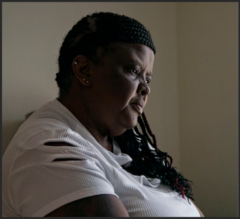
If you were a tenant, who would you rather butt heads with? A slumlord or a public housing authority?
Private-sector landlords have a bad reputation for going to court to evict their tenants. But it’s not clear that government is any kinder or more understanding.
As COVID-era eviction moratoria expire, housing evictions are surging across the country, and Richmond is no exception. In just a nine-day span in March and April, more than 130 tenants were summoned to Richmond courts for eviction hearings, mostly for unpaid rent, reports the Post. A Department of Housing and Urban Development (HUD) audit found that 27% of RRHA’s rent was going uncollected in September 2022. About 60% of tenants owe back rent totaling $3 million.
Public housing authorities grapple with a problem that private landlords don’t: they have to calculate government rent subsidies based on tenants’ income. That task, apparently, has introduced significant room for error. Housing authorities suffer high employee turnover, and some less-experienced employees don’t know what they’re doing.
Steven Nesmith, CEO of the RRHA, told the board that if the agency miscalculated rent, it was because residents gave it inadequate information, according to the Post. But, conceding that the authority is short-staffed, he estimated that about 20 percent of tenant files contained errors made by the agency. Also, in tacit admission of the RRHA’s culpability, he restructured its affordable housing department for what he characterized as “mismanagement.”

But Nesmith laid plenty of blame on tenants. In announcing a one-time opportunity to avoid eviction for nonpayment of rent, he drew a distinction between “those who … truly had hardships and those who are gaming the system.”
“Residents said, ‘Well I won’t get evicted,’ and so they weren’t paying their rent,” he said, referring to the COVID eviction moratoria.
That goes to the heart of the problem that all landlords face, whether public or private. Some tenants are victims of clerical errors or circumstances beyond their control. Others are cheaters and free riders. It’s not easy distinguishing one from the other.
The nation’s public housing system, not just Richmond’s, is a mess. Rent nonpayment is a problem everywhere. So are operating losses and insufficient capital for maintenance.
The founding premise for public housing a century ago is that the public sector would step in to address “market failures” — the alleged inability of the private sector to provide adequate housing for the poor. But public housing authorities encounter the same issues as private landlords — many poor people have a lousy record of paying their rent. Moreover, housing authorities are tangled with regulations, carry high administrative overhead, and support a parasitical class of third-party consultants and trough-feeders. The fact that public housing authorities cannot build an “affordable” apartment complex for less than $500,000 per unit tells you that something is systemically wrong — and it ain’t capitalism, racism or White supremacy.
From the WaPo story, it sounds as if Nesmith, the RRHA CEO, is doing his level best to address problems that are unfixable given the politics, incentives and bureaucratic realities he’s dealing with. I pity the guy. He has a thankless, impossible job.
The Washington Post and the coterie of nonprofit tenant advocates it quotes focus on the awful experience of people like Nikki Jones who get chewed up by the system. I feel badly for her. But journalists should not settle for hanky-wiper stories. They need to take off their social-justice goggles and ask why the government-run system is so deficient.


Leave a Reply
You must be logged in to post a comment.