
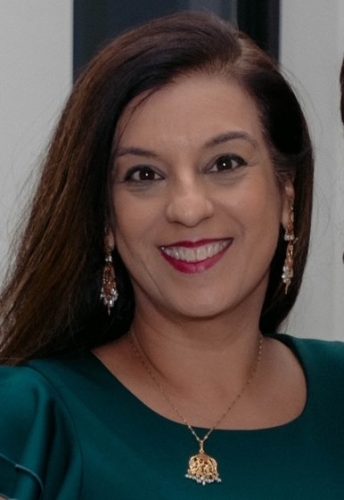
Jim Bacon launches the Oinkonomics podcast with Neena Moorjani, an advocate for financial literacy who volunteers on tax preparation and teaches practical money skills to low‑income and military families in Virginia Beach. You don’t have to be wealthy to build wealth in America, Neena says.
The episode covers Neena’s immigrant background, the importance of starting savings and investing early, tax tips for lower‑income households, credit and debt pitfalls, negotiating medical bills, and simple steps parents can take to teach children good financial habits.
Listen and subscribe on Podbean.
Transcript (lightly edited)

James Bacon: Hello, everybody. I’m Jim Bacon, and this is the Oinkonomics Podcast.
By the latest count, there are 4.6 million podcasts worldwide. Why does the world need another podcast?
Well, here in Virginia, there are only 60 podcasts worth listening to, according to FeedSpot, which fancies itself an authority on the subject. Only a handful of those are devoted to politics and public policy, and only one of those, from what I can tell, routinely explores conservative points of view. Virginia needs more than one conservative voice in the pod-osphere.
As a journalist with 45 years of experience here in the Old Dominion, my aim is to dig beneath the daily headlines by holding in-depth conversations with Virginians active in the arts, sciences, business, nonprofits, and politics. I’ll explore how we build more prosperous, livable, and fiscally sustainable communities here in Virginia. I’ll cut through the partisan talking points and find out what works. What’s the evidence? How sound is the thinking?
I named this podcast Oinkonomics because I apply a quasi-economic frame of reference to public policy issues. We live in a world of finite resources. Life involves trade-offs. Those are core insights to the economics profession. But I also recognize that people are not always economically rational. Human nature is a stubborn thing.
One particular trait of human nature is what scholars call confirmation bias. We tend to seek out information that confirms our biases and reject information that contradicts them.
After last week’s assassination of Charlie Kirk, a conservative activist who reveled in conversing with those of opposing views, it seems all the more imperative for Americans to carry on in his spirit. It would only compound the tragedy if we retreated into our ideological corners and interacted only with those who confirm our prejudices. That’s why I plan to engage with people from across the ideological spectrum, and to pose hard questions, even to those with whom I agree.
You can hold me to account on that.
That all said, my first guest on Oinkonomics is Neena Moorjani, a person whose views I tend to find pretty congenial. Neena, who lives in Virginia Beach, is a forceful advocate for personal responsibility and financial literacy.
Neena, why don’t you provide a little background about yourself? You bring a unique perspective to the table. You’re ethnically a South Asian, and immigrated to the United States by the way of Hong Kong and Singapore. Tell us how your lived experience shaped the way you view the world.
Neena Moorjani: Hello, Jim, and congratulations on the launching of your podcast, and thank you so much for inviting me as a guest. You’re correct with my background. I tell everyone when I introduce myself, the first thing I tell them is I’m from Hong Kong, because I’m very, very proud of my background. I was born and raised there, I spent most of my life there, 20 years, and I think coming up to 20 years in the U.S. Some time in China, India, and 8 years in Singapore. I’m very, very proud of my background, and my views of the world are shaped a lot from my growing up experience in Hong Kong. Hong Kong’s a very conservative society, very, very hard-working people. In fact, I would consider myself probably lazy compared to the rest of the people I grew up with in Hong Kong. And one area of life that they were so effective in instilling in me is in how you deal with money. A lot of people from Hong Kong and Singapore are very responsible when it comes to handling money. We always, always spend less than we make.
Bacon: That’s a pretty fundamental lesson, I think. It’s probably quite the change when you came to America. We tend to be kind of addicted to personal debt. So, you’ve been financially successful, presumably, by saving a lot of your money, and now you find yourself in a position where you can do what gives you more meaning than accumulating wealth. How did you decide to volunteer your time helping people with taxes and managing their finances?
Moorjani: So, it was accidental. I was living in Singapore until 2016, and they kicked me out. The color of my skin. It’s really quite sad, but that’s a story for another time. And, came back to the U.S. with a lot of money. I sold my condo in Singapore, and I put it all on the stock market, and I didn’t want to give my money to somebody else to manage.
So, I took some classes to educate myself, and, one of the classes I took was in taxes, and I really enjoyed it, took some classes, and I started off volunteering with low-income people through the VITA program. It’s an IRS program that’s been around for half a century, and they will prepare your taxes for free if you’re low-income, and that means right now $67,000 or less per tax return. I did that for a few years in Sacramento, loved it, came to Virginia Beach, and I’ve done it for a few years here, and I really, really enjoy it because I enjoy, first of all, numbers. I’ve always been comfortable with numbers. Number two, it’s something where a lot of Americans don’t understand, so I feel like I’m providing a good service.
One thing I’m very, very careful about doing, I think it’s so important doing, is explaining one thing on the tax return to the clients who come through. I’m not going to tell them a lot, because they’ll get overwhelmed. So, I’ll just latch onto one thing, and the one thing I explain to them is standard deduction, which means there’s a sum of money you can make that’s not going to be subject to income tax. It’s in essence free money. And a lot of people do not know that. So, I’ll point it out in the tax return, and that’s it. That’s all I explain to them, and then, of course, we’ll explain to them whether they owe money or they will get a refund. So that’s how I started in the volunteering and the finance world.
And from there, I liked it so much working with lower-income people that I started working with the military. A lot of the military I work with are low-income just because they’re younger. And I’ve been doing that for the past 6 tax seasons here in Virginia Beach. I love working in the military because the people I work with are very aggressive about their finances and very curious and need help.
So, I, when it comes to money, it’s a very touchy subject. I’ve learned that I can provide the help, I’ll make the offer, then I wait for people to take the next step and take me up on my offer. A lot of people don’t, but with the military, they do. They listen to me, they’ll take me up on my advice, and I’ve enjoyed working with them. And now I teach a tax class at the Learning Center for the past three tax seasons. I just teach the basics and explain to them that there’s a lot in the tax code that helps everyone.
There’s a lot of misconception out there that the tax code is only for the rich. That’s not true. There is a lot in there that helps low-income people. In fact, you can earn up to maybe $60,000, $70,000, $80,000 as a married couple, maybe with one kid, not paying any income tax. So, yep, that’s really, a summary of what I do in terms of the personal finance space and helping low-income people.
Bacon: Cool, cool. So, we hear so much about how the tax system is rigged against the poor and working class. You’ve already addressed that point.
I understand that another one of your mantras is that any American can retire wealthy, or at least affluently, if they spend responsibly and invest prudently. How can people surmount the odds that seem so stacked against them?
Moorjani: Sure. Well, first of all, I tell them it’s very easy if you start young, and I mean super easy if you start off as a baby. So, anybody who’s listening who has a baby, the first thing you do right now is go open up an investment account. It’s actually not that hard. If you find it easy to open a bank account, it’s just as easy to open up an investment account. Go out and open the investment account for your baby, and just buy one share in a company.
Now, everyone says buy, a share in a low-cost index fund. Nobody really knows what that means. Index funds are just group stocks, it’s a stock that you buy that has a bunch of different companies in it, and somebody manages it. Now, I’ve learned from experience, when I help people open up investment accounts, and they buy a share of the index fund, they’re like, okay, this is cool, I’m glad I’m doing this, but it just, it stops right there. Now, if I tell them, hey, go buy one share of Walmart.
And right now, it’s like $102. And they do it? They’re so excited because there’s a direct connection with a company that they’ve had a lot of experience with. So, anybody who has a baby, right now, go open an investment account and open… buy one share of Walmart. When the baby turns two, buy two shares of Walmart. When the baby turns three, three shares of Walmart, and go from there.
Unfortunately, we want to diversify, not just Walmart. But I keep saying Walmart because everybody understands Walmart, and I have conviction that in 10, 20 years’ time, Walmart will still be around and be successful. So, the first thing you do when you’re young is open up an investment account. Now, for those who are middle-aged or older, I have to be more careful. You can still do it, but it’s hard work.
I started off when I was 30. I was working for the federal government in D.C., and I heard about this TSP thing, which is the 401K for the federal employees. I didn’t understand it, but I heard everybody was doing it, so I went ahead and allocated a percentage of my salary to the TSP program. I only allocated 1%, because I was trying to be safe, but the returns are amazing. I wish I went ahead and did 10%. I didn’t need the money. But I didn’t really understand what I was doing, so I just wanted to be cautious, do 1%. And I’ve done really well. So, when I was 30, I set up, opened up a retirement account. When I was 33, I opened up an investment account. They’re different. Retirement account, you’re not supposed to touch until you’re 59 and a half. Investment account, you can touch anytime. So, in a year’s time, if I need some money to go buy a new car, I can go ahead, take money out of my investment account. So, that I can touch any day.
Other things, when you’re young, I would encourage you to have your kid open up a bank account. I talk to a lot of American kids who don’t open accounts until they were 16 and 17. My parents had me open up a bank account when I was 4. And this is in Hong Kong, and they opened the account for me, and then they showed me what to do, and I went to the bank, which is across the street from me, the Hong Kong-Shanghai Bank, and I would go every week to deposit, what, 5, 10 bucks. What that experience did for me is develop me a strong understanding and a comfort with a financial institution. I talked to a bunch of Americans, and what I understand is a lot of them aren’t comfortable with financial institutions. They think they’re out to get them, and they’re just not comfortable. Well, if you start very young, and you deposit on a regular, consistent way, a consistent amount of money, you will see in the summary that they give you that, hey, my money’s building up, I do have this amount of money, and it, was probably one of the best things my parents ever did for me. So, they’re actually a very, very easy thing to do. People think it’s hard, but it’s a very easy, concrete thing to do, but the key is to start young. When you’re older, 30, 40, I’m not gonna lie, it is harder, but you can do it.
Bacon: When you’re one year old, you have the miracle of compound interest working for you for another extra 20 or 30 years, right? Right.
Moorjani: Yeah.
Bacon: Is that a concept that most Americans understand —
Moorjani: No.
Bacon: — the miracle of compound interest?
Moorjani: No, and it took me a while to understand that there is a thing called compound interest. You put money into an investment account and bank– I’m actually thinking of shutting down my savings account. I opened it up in Asia 4, I’m thinking now of shutting it down because I really don’t think there’s a point anymore. I’m putting my money in my investment account, in a money market account, but you put money in on a consistent basis, and, it’s invested. And over time, it’ll grow. Looking back in history, that it works. It’s really hard to explain in a very simple way, but your money does get bigger on a much grander scale than if you just left it, under your mattress. So, I encourage people to go, everybody now really should have invested in the account, especially with AI. Taking away some jobs and reducing the need for some jobs. You really, really need another source of income.
Bacon: Neena, you’ve had a lot of interaction with lower-income residents of the Hampton Roads area. I’m wondering, is it fair to say, or is this unfair, to say that many Americans, especially lower-income Americans, are financially illiterate? And if that’s so, is it further fair to say that many of them remain trapped in poverty and economic insecurity because they make poor decisions about how to spend and save and invest their money.
Moorjani: Yes, I could say that, but at the same time, I feel that I’m buying into the whole victimhood mentality, where there’s no way out. But people are changing for themselves. And social media has a lot to do with it, for the good and the bad. When I first started working with the military six years ago, I spent a lot of time explaining the difference between a Roth and a traditional. The Roth is better if you have low income, you’re paying the tax bill now, and when you take the money out, at the other end, there is no tax bill you have to pay with it. It’s much more attractive if your income is low. And then 3 years, 4 years into working with the military.
I stopped answering those questions and having to answer those questions because the military would learn from social media the difference. So, you hear about a lot of bad things on social media, but there’s also a lot of good things happening there. So, I’ve learned from my experience with low-income people, especially with military, and I know military is a very unique, segment of the population, they’re very aggressive people, but there are good things happening. Now, for those who are trapped in this cycle, we have to be very sensitive to their situation. I do want to help.
I attend a church where there are a lot of low-income people there, and I’m part of a finance class. And, we explain the basics to them, and I tell them, everyone in the class, hey, listen, I am fine, I can meet you one-on-one. I’ll explain things to you, I’ll go over your situation, and we’ll come up with a plan. Very, very few have taken me up on it. And I’m not so sure exactly why, and what’s going on. I don’t know, I’m still trying to figure that out, but yes, so a lot of people are in debt, and they do feel that they’re in a cycle, and it’s very hard to get out, and all I can say is that for a lot of people, you need help. You can’t do it on your own. They need to reach out.
Now, the school system has a lot to do with it. They have a responsibility, and it’s quite shocking that not every U.S. state mandates personal finance classes. Virginia is one of them [that does]. It was a legislation that passed, I think, a decade ago, so it’s a mandate here.
But it’s very subjective. I’ve heard of people who take two-week online classes and that’s it, which is, of course, unacceptable. I met a senior recently who said he took the class last year, and his teacher only showed up half the time, and the other half the time, they only showed online videos. So, what’s the point in that, and what kind of results are you going to get from that?
Your question, are there a lot of people, low-income people, in cycles of debt? Yes. There are ways to get out of it. Society has a responsibility, the school system. I’m very critical of parents. I think parents need to step up and educate and empower their kids, and I don’t think they’re doing enough of that. But I also see that in America it’s so different. I come from Hong Kong, I lived in Singapore, where a lot of people don’t need these classes.
In America, there are a lot of ways where you can start off at the beginning. You make mistakes, but you can always start off. You have a bad credit, but you can always build it back up again. So, I think America’s different in that way. But it seems strange that more and more people seem to have a victim mentality, and I just have a hard time understanding that.
Bacon: Yeah, the victimhood mentality places the onus on society or outside forces.
You know, there was a brilliant sociologist, Edward Banfield. He wrote a lot back in the 1960s about what he called future orientation. And that was something that varied very much between cultures, and those cultures that had a greater future orientation, that is, they were thinking about and planning for and making sacrifices for the future, tended to fare much better than those who basically had very much of just a present orientation, and just, like, live for today. And, this is a stereotype, but the Asian cultures, at least those Asians who come to the United States, very much have much greater future orientation than most Americans.
I realize that might be somewhat sensitive for you, being South Asian and not wanting to make videos of comparisons about native-born Americans, but is that something that you’ve observed – the difference in future orientation?
Moorjani: I agree. I think we’re definitely more long-term minded, but there are also disadvantages of that in that, like, someone like me doesn’t enjoy the present as much as. I’m getting ready for the future.
I’ll give you a great example. In China, American insurance companies have had a hard time because the Chinese way of doing things is saving a lot of money yourself. Not buying insurance to take care of future needs. It’s hoarding money to pay for emergency expenses. So, something in our mindset we grew up with is always having to save as much money as possible in case of a future need, as opposed to spending the money right now. Now, China’s changing, they are spending more, but it’s a hard slog. But I think we do have a more long-term minded mindset, and I do wish Americans would have that more.
It’s actually not that hard. I’m now going to be a substitute teacher here in Virginia Beach school systems. And one of the things I’m gonna tell them, the kids on a regular basis, is that it’s not hard to get rich in America. It is not hard, but you have to have income. You have to save, and more importantly, you have to invest, and it has to be a long-term mindset with that, because if you try and invest in a year or two, the results won’t be great. Have a 10-year horizon, and you’ll be seeing the fruits of your labor at that point.
Bacon: I’m going to raise an issue, which I don’t know if you’ve necessarily given any thought to, but I want to hear your reaction to it, and that’s how the U.S. financial system works for poor people. There has been a major impulse in our society has been to democratize access to credit. So, the idea is that credit was something that favored the wealthy. “To them that has gets,” as the saying goes. And, so, the idea is to make it easier for people to borrow, let them have credit cards, let them make low down payment mortgages.
It all really came to a head back around the 2007-2008 financial crisis, when the great big thing then was everyone had to be a homeowner. Home ownership was a path to building wealth. But what struck me then, and still, is that home ownership is not for everybody. A lot of first-time homebuyers learn the hard way that it takes a lot more money than just paying off the mortgage and interest and taxes to maintain a house. Roofs leak, sinks clog, paint peels, HVA systems go kaput, gutters clog, termites, you name it. So, the cheap housing credit of the early 2000s, ultimately, by sucking in so many homeowners who probably really weren’t prepared for it, led to the greatest wave of mortgage defaults in the history of the country, and probably the greatest loss of housing equity for America’s working middle classes. So, I wonder if you’ve had any… have any perspectives on the idea of democratizing credit, and that everyone should have access to credit.
Moorjani: Yeah, I’ve thought about it. I like the idea of everybody having the same access as I do, but of course it’s not realistic. I’ll give you an example of something that we’re dealing with in Virginia right now. Didn’t President Trump talk about capping interest rates on credit cards? As someone who has a libertarian bent, I hate that idea. I hate the idea of government interfering with the private sector and telling them how to do business, but of course, we see that all that stuff’s gone out the window. Here in Virginia Beach, there’s somebody who’s running to be a delegate, running as a Republican in a Democrat area, and he supports that idea, and he wants to cap interest rates on credit cards as well, and of course, I hate that.
But I’m thinking, on the other hand, with my experience working with low-income people, that actually might be a good thing, because then banks, of course, they’ll respond, they’ll reduce the amount of credit cards they give out. They’re not going to give credit cards to people who have bad credit because they have to protect their bottom line, and I’m fine with that. So, there’ll be less credit cards given to low-income people, and that’s probably fine. Then low-income people will then have to just use their debit cards more and more. There is a silver lining, so that even though I hate the idea of government restricting private sector practices, but in practice there are a lot of people there who won’t pay their credit card bills on time. And I do know someone I’m thinking about right now who only pays the minimum, and I think that’s terrible. I think credit card debt is one of the worst out there.
Home [debt], on the other hand, is a bit more arguable, because home debt in general, is a good debt, so to speak, because it grows in value if you have a long-term horizon. But a lot of people who got it in 2006-7 weren’t supposed to get it. So, I can’t give you a definite answer on that. There are some good things to democratizing credit, but some bad things.
Bacon: Among the low-income clients that you have, do you ever encounter anybody who’s had recourse to payday loans?
Moorjani: No, but I would love to meet them, and talk to them, and spend time with them, and counsel them. If anybody knows of needs down here in the Hampton Roads area, I would love to be a part of that and learn more about that. You know, you’ve heard about Klarna, these companies where, you pay over time. Have you heard of those companies right now?
Bacon: Yeah, it’s just a new thing, and I’ve seen it on the internet. I don’t really know much about it.
Moorjani: Yeah, it’s fairly new in the past few years, and those stocks have done really, really well. I will not buy one of those, because I don’t agree with that concept, but they have done really well. If you’ve invested in it, you’ve done really, really well this year. So, that might be actually better than payday loans, because payday loans are very, very high, so I have to learn more about that, but I don’t know much about the payday sector.
Bacon: That’s just kind of a pet cause of mine. Obviously, the administrative costs are really high. People end up paying back a huge percentage of what they have borrowed, but on the other hand, in administering the cost of very small loans, over a short period of time, to people with… who are high credit risks, I mean, that’s inevitable [that] and they’re gonna have to charge a lot. And if you outlaw those, which a lot of people want to do, then what happens to people? Where do they go? What do they do when they’re really hard up for money? I don’t know, that’s…
Moorjani: Right. It’ll go underground. If you try and legislate against it, it’ll go underground. It’ll still exist. I think we need to spend more of our efforts educating people. We don’t do it enough.
You know, I spend a lot of time going to meetings with the Republican Party, and one thing I’m just so disappointed in is that a lot of these people are quite wealthy, but they don’t explain to people how they became wealthy and how everybody else can do the same thing. I don’t understand that. One of the reasons why I have a free market mindset, coming from Hong Kong, is that I see the free market works. But the Republican Party doesn’t talk about it enough. They don’t talk about the fact that there’s personal responsibility, you have to save money, you have to invest it, you have to put off some of your immediate needs for the long-term outlook. They don’t talk about it. Leadership doesn’t talk about it. It’s very, very frustrating. I understand why the Democrats do it. They think government’s a better administrator of funds. I don’t agree with that, but I understand where they’re coming from. They’re being intellectually consistent. We’re not. We don’t talk about things enough. We don’t educate and empower our people enough, and it’s very, very disappointing.
Bacon: No, I totally agree with that. Another issue, again, is the unique culture we have in the United States. Look at the role of welfare and relying upon the government to take care of you when times are hard. Another impulse over the past century has been to broaden the social safety net. The federal government spends trillions of dollars a year on Medicare, Medicaid, Social Security, earned income tax credits, food stamps, free lunches, all sorts of other forms of financial assistance.
And I wonder about the people that you’ve dealt with. Does this create a poverty trap? If people work harder, they might get a bigger paycheck, but they lose all these government benefits. Does that affect their behavior, or is that just kind of a fantasy of conservatives that people make those kind of trade-offs?
Moorjani: I don’t know from personal experiences with the people I deal with, where they talk about it. I do know people who say they get enough from Social Security so they don’t tap their own, personal retirement funds. One of the ladies in my classes at the Adult Learning Center takes home $40,000 a year from Social Security. And that’s enough for her to live on. She’s by herself, and so she hasn’t tapped into her retirement accounts.
I meet a lot of people. When I teach my classes, I always do a survey at the beginning. One of the questions I ask them is, hey, how much do you think Social Security will pay for your needs when you retire? Is it 20%? Is it 50%? Is it 60%? I always thought that it was 20%. When I get the responses back, a lot of them are, like, 50-60%. I’m really shocked that that’s what they think. I think there’s just way too much reliance on government programs, and, coming from Hong Kong when I was growing up, we didn’t have any. It was always, you save for what you need, and for the most part, there wasn’t really a need for government handouts in Hong Kong. The average tax rate over there was about 15%, very, very reasonable. Here in American everybody seems to want to get a hold of what the government has about taxpayer assistance, and it’s just very, very sad.
Again, I’m not critical of the Democrats, they’re being intellectually consistent, it’s the Republicans I’m very critical of, and it’s just sad to hear Republicans who seem to want to depend so much on government assistance, just as much as the Dems do. From what I read on social media, Republicans rely a lot on Medicaid, and that’s really quite sad. And Social Security. So, I don’t know, I haven’t had a lot of personal experience with it. You know, I deal a lot with low-income people who are young, the military, and of course, they don’t deal with the same programs that the rest of society does that’s low-income.
Bacon: That touches upon my next question. One of the few financial advantages of belonging to the military is you have excellent healthcare coverage. The cost of healthcare is, in the United States, just outrageous. I think I’m right about this. The biggest single cause of bankruptcy in the United States is unpaid medical bills. I’m wondering, is this an area where greater financial literacy can help, or is this kind of a problem that’s just so big that it transcends fiscal prudence?
Moorjani: Oh, no, no, no, I absolutely think there’s a lot more we can do in terms of educating people on the financial front with medical issues, absolutely. I’ll give you an example of something I just dealt with this week. I have some eye issues getting older, and I got a bill from my ophthalmologist after the consultation, and I had no idea where the bill came from. I wasn’t told about it ahead of time, and I just didn’t pay for it, because I didn’t know what it was all about. I went back to the doctor, I said, what is this for? And they said, oh, we don’t know, go call the billing department. So, I just really put it off for the longest time, and I don’t really do that. I like to pay bills as soon as I get them. But I wasn’t going to pay this bill. It was, like, over $200, maybe $300, and I was really upset about it. But this week, I said, you know what, I’m just fed up with this. I want to deal with it. I don’t know what it’s about. But what I did, though, is call the billing department. I said, hey, listen, I have no idea why I got this bill. But I want to get rid of it. Can you go ahead and give me a discount, like 50%? And they did. It was actually quite quick, and it was very easy. They wanted to get off their books, I wanted to stop getting these bills, I did it.
So, one thing I tell people to do is, educate yourself and know that you can negotiate, number one. Number two, it seems like people should be opting more for cash payouts for procedures.
I don’t have traditional insurance. I have something called the Christian Healthcare Ministry, where I pay up to $287 a month for catastrophic.
I don’t really get sick, so I don’t really need it, but one time I did have a procedure a few years ago where the bill was $12,000. I had to eat up $2,000, and I got a check within 6 weeks for $10,000 from this Christian healthcare ministry. I put it in the stock market. It’s doubled by now, and in the meantime, the provider that I dealt with, they gave me a payment plan, it’s a non-profit, and there was no interest, so I had to pay this $10,000 bill over 5 years, and I got the check within 6 weeks for $10,000, and I, you know, put it in the stock market and doubled it, so, hey, I came out ahead. So, there are ways — I sound so glib about it, but there are ways that you educate yourself to deal with the issue. It’s a big, big problem. We have to deal with it. It’s ridiculous that a lot of Americans are very insecure when it comes to the healthcare situation.
One thing I do want to say, again, about personal responsibility. What are Americans doing with the way they eat? It’s ridiculous. I see people having dessert for breakfast. Ice cream. Rice Krispie Treats, and I’m like, oh my gosh, what is going on here? You’re responsible for the most part, for the health conditions you have. I’ve been chubby for a lot of my life, and my doctor would like me to lose weight, and so, I have done with exercising more. There’s a lot of personal responsibility that people don’t want to talk about. I have not heard anybody in the Republican Party say, listen, you gotta eat better. Except now, of course, with Kennedy up there, but he has so many other issues going on, I don’t want to get into it. But here in the local scene, nobody talks about it. Nobody.
Bacon: You’d think that the concept of personal responsibility would extend to taking care of your own health.
I want to get back to the role of culture. I grew up in a nice Anglo family in which it was considered impolite to talk about money. Kids were encouraged to get summer jobs, and the idea would be to build a work ethic. That was always important. And maybe we’re encouraged to put our nickels and dimes into our piggy banks, but no one ever opened up a bank account for me. We didn’t talk about money much. But you grew up in a family, like you say, in Hong Kong, with a very different attitude. Is there any way that Americans could ever aspire to becoming more like the people of Hong Kong in the way they handle the personal finances? Or is America’s culture so different and so ensnared with the welfare state mentality that it’s maybe a lost cause?
Moorjani: Absolutely we can change. Absolutely. Start small. If you’re a parent right now, and you have a young kid, go open up a savings account right now. I poo-pooed savings accounts, and I want to shut mine down, because there really isn’t a good return on my money right now, but for a young kid, when you only have them put in 5 bucks a weekend, it’s not a big deal. Go open up a bank account for your young kid, as young as 3 and 4. Go with them on a regular basis, once a week, give them 5 bucks, have them go to the counter. Initially, you might have to go with them. Eventually, when they’ve done 5 and 6, they can go by themselves. Go sit in the reception area, watch them go ahead to the counter by themselves, and give the money to the cashier. They’re more than happy to help them with it. Start small. But start now. I talk to kids who are 16 and 17 years old, that’s way too late.
Empower your kids, and it’s not that hard, and you just start with small steps. Now, again, you know, we didn’t talk about personal finance stuff in our family, it was just the culture we grew up with. You open the paper up every day, and you talk about people getting richer, so we have a lot of filthy rich people in Hong Kong, but I actually never cared. I was never jealous about the rich people, because our own family was prospering. We were too busy prospering ourselves to pay attention to the filthy rich people.
Absolutely anybody can change. I have a friend here, a 24-year-old lady with a 3-year-old kid. I said, go ahead and open the bank account. She wouldn’t do it for the longest time. She wanted to. And I said, hey, listen, you want me to go with you? And she goes, yes, yes, yes, please go with me. So, we went to the bank one day, it was a credit union. And I just sat with her for an hour until we did all the paperwork.
Now, I have to point something out. This is a credit union, and you think that credit unions, people are there because the people there are nicer — and there are nice people. I went there and said, okay, we want to open up a savings account for this young 3-year-old. In the middle of the conversation, the guy, lovely person, says, okay, so what do we do about this checking account? This is a 3-year-old. Why does a 3-year-old want a checking account? I was very, very specific about a savings account. I’m not listening to the rest of the stuff he’s saying, because in my mind, the guy probably gets bonuses for every time he opens the account. Credit unions are supposed to be nicer people. Are they really in it for the money themselves as well? Maybe it was a misunderstanding, he was kind of young, he didn’t mean to do it, it was just an accident.
So, I didn’t really leave it the best experience, but hey, the bottom line is 3-year-old now has a bank account, hopefully the mom is taking the kid out there on a regular basis. And the kid, by the way, has a fake cash register, so she’s always ringing up stuff at home on this cash register, I thought it was really cute. But I do say, this kid is half Asian, so, maybe that has, something in her background as well that’s led the kid to get a cash register, I don’t know.
Everybody should know the website Investopedia. Everyone’s heard of Wikipedia. There’s something called Investopedia that’s free, and because it’s free, they have a lot of ads, it’s very annoying. But they have really good articles. They write about really important financial topics, and a very, very easy way to understand. Go to Investopedia, type in
“Best Brokerage accounts 2025,” they’ll give you a list. Call, choose one of them, call the 1-800 number, and they’ll walk you through the steps. It’s not that hard, but you need to start now.
Now, I have to caveat that, that the stock market’s very, very high, and if you look over patterns in history, there are downturns. So, you have to have a long-term horizon. You buy that one share of Walmart, which is $102 right now. You have to be prepared for that share of Walmart to go down to maybe 70 bucks by October if something happens. Be prepared. No one knows what’s gonna happen. On the other hand, we may not have a crash for another 2 years. That $102 share of Walmart may go up to $200 in 2 years’ time. Sell it, you make $100 of profit. So, but again, the bottom line is right now, start now, start small, but start now.
Bacon: That’s a great message, and I just love the idea that saving and investing is not just for wealthy people, it’s something that poor people, as stressed out as they may be financially, something that they can do or should aspire to do. If people want to know more, how can they contact your organization, or who would you suggest that they get in contact with?
Moorjani: Well, for anybody in Hampton Roads, I teach at the Adult Learning Center every tax season, and by the way, I’ve been teaching, basic, income tax, because I really do love, I understand the basic income tax code, and I’m a huge fan of it, because there’s just so much good stuff in there for low-income people. Then I started a Stock Market 101 class, just to lure people into the income tax class. So, come to my class at the Adult Learning Center at Virginia Beach. I am more than willing to travel to other adult learning centers in this area. I’ll go to Suffolk, I’ll go to Chesapeake, I’ll even go and do that tunnel from hell and go up to Yorktown and Gloucester, or wherever I have to. I’ll drive, and I don’t need any mileage reimbursement. I’ll do it, I’ll teach classes. I don’t want to do this one-on-one stuff. I don’t want to do, like, bits and pieces. I think it has to be comprehensive. My income tax class is 4 hours. My stock market class is two hours, but I might make it four hours. They can reach me through Twitter. I’m addicted to Twitter, unfortunately, but that’s a reality for me, or LinkedIn, but Twitter’s best. My DMs are open. I’ll try as best as I can to get them started.
My biggest concern is liability. My biggest fear right now is the investment stock market’s done really, really well. What happens if we have a crash in two years, and people get really upset with me? That’s in the back of my mind. So, when I teach these classes, I start off saying, people, just be careful. It’s fine in the long term, but if you have short-term thinking, you’ll probably not do so well. I play a videotape from Warren Buffett that says you always have to have the mindset that your portfolio can crash by 50%, and you just have to deal with it, you have to accept it.
Now, I do want to say this, when I started at 30 with the TSP up in D.C. with the federal program, federal 401K program. I didn’t know what I was doing, I just allocated 1% of my paycheck into the TSP. I estimate maybe I put in $10,000, $15,000 over the years I was doing it, and then I left the United States, I went to China, lived there for a year, then moved to Singapore for grad school, and I worked in Singapore and in Asia, and I just forgot about the TST program. When I came back to America, that $15,000, $10,000, $50,000, $20,000, I have no idea how much it was, turned into $105,000. That’s from 2004 to 2016. That $15,000, $10,000, $15,000, $20,000 went down to about $5,000 in 2008, but I had no idea. I was living in China, I wasn’t paying attention, I’d forgotten about it. So, the key is not to pay attention, and to have a long-term mindset. When I came back to America, and I saw that it was turned into $105,000, I was just floored. I was so excited.
Bacon: Neena, very last question: If someone does want to attend one of your classes, how do they get in touch with you?
Moorjani: Just reach out to me through Twitter. I’m very, very accessible through Twitter,
Bacon: And your Twitter handle is?
Moorjani: It’s just my name, Nina, N-E-E-N-A, M as in Mary, O-O-R-J-A-N-I.
Bacon: Neena, thanks so much, it was great talking to you. You have a wonderful message. Keep it alive.
Leave a Reply
You must be logged in to post a comment.