
by Steve Haner
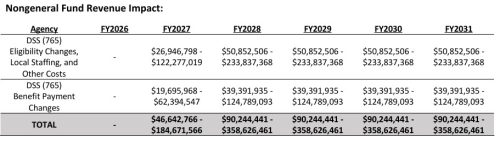
The expansion of an existing state electricity-bill subsidy program under legislation pending at the 2026 General Assembly could add up to $360 million to the annual cost during its first full year of implementation.
The Department of Planning and Budget (DPB) has produced a detailed fiscal impact analysis for House Bill 884, which revamps the Percentage of Income Payment Program (PIPP), first authorized in 2020. The bill would raise the eligibility threshold to bring in more participants and increase the financial benefit they would receive.
The Department of Planning and Budget left out one little detail in its five-page report. PIPP is funded by ratepayers, not taxpayers. All the money for higher benefits and the administrative overhead would come from the ratepayers of Dominion Energy Virginia and Appalachian Power Company. PIPP is not available to the rural cooperatives’ customers.
House Bill 884 (that link is to the current bill text) has passed the House of Delegates 63-34 and is pending in the Senate Commerce and Labor Committee. The final House vote happened February 17 and the financial estimate is dated February 21, so it may not have been part of the record before the House voted, even though it shows up with the vote on the legislative tracking page.
Senators will not be able to feign ignorance of the cost, nor will Governor Abigail Spanberger (D) should the bill reach her desk for signature. If some legislators asked, the State Corporation Commission could probably take the Planning and Budget workup and estimate how much this would add to all customer bills, residential and business. (Yes, here is another example of business customers subsidizing residential users.)
The DPB estimate is just that, and it provided a low and high estimate for both the internal administrative costs of implementing and managing the changed program, and the higher benefits amounts. The fee assessed on electricity ratepayers pays for both, along with the internal overhead costs for the utilities (also missing from DPB’s tally.)
PIPP now has about 35,000 participants, which DPB states represents about 13 percent of the eligible residential customers. That would indicate about 270,000 households overall within the two utilities are eligible. Under the bill, which increases the eligibility cap to 200 percent of the federal poverty level as of January 2027, another 400,000 households would qualify, DPB estimates.
But along with raising eligibility, the bill also increases benefits as of next year. Now a household only receives a subsidy if its electric bill (in a house with electric heat), exceeds 10 percent of its income. The bill changes to five percent, with PIPP covering the difference if the monthly bill is higher. DPB quite logically assumes a higher percentage of the eligible households will take part if that happens. As many as 240,000 more households may take part.
DPB built these estimates looking at the average residential electric bill of $150 per month in 2024. The costs for both Dominion and Appalachian customers have risen dramatically in the past two years (more like $170 or more now) and are going to continue to rise. DPB estimates of the future benefits for participants are conservative at best.
The average PIPP benefit under the current rules is coming in at $883 per year. The DPB analysis also glossed over another key point about the PIPP program as it now exists, how much of the money is covering back payments to the utility for bills in arrears.
The administrative cost of assessing the eligibility of applicants and their continued participation will exceed the cost of the added benefits to be provided, per DPB. The local social services departments could need as many as 220 new people if the high-end estimate of new participants materializes.
All of this is speculation but educated speculation. DPB is tasked with developing cost estimates for implementing something with state and local employees, and it is basing the analysis on the hard data of current PIPP enrollment (35,000 households), current average benefit ($883 per year) and the new eligibility and benefit triggers this law would put into place.
There would be no bill unless big dollars were changing hands. Advocates would not be pushing this expansion if it didn’t mean lower net electricity costs for many Virginians, even if they avoid discussing where the subsidies come from (just like they do with the other electricity piggy bank proposals in this session.)
And for the record, PIPP was created as part of the Virginia Clean Economy Act in 2020 so if this comes to pass, it counts as an added cost created by VCEA. What is right now a minimal PIPP-related bill impact could soon be noticeable.
Leave a Reply
You must be logged in to post a comment.