
by Dick Hall-Sizemore
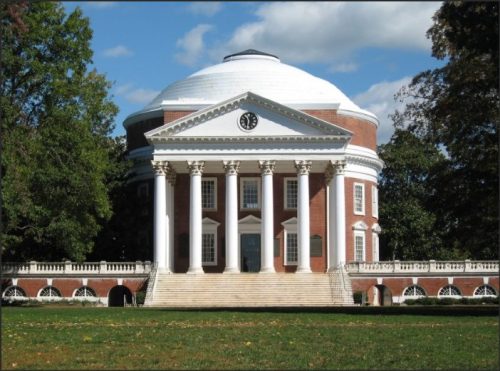
Virginia law provides that a student attending a public institution of higher education shall be eligible for in-state tuition, regardless of citizenship or immigration status if the following conditions are met:
- Attended high school for at least two years in the Commonwealth;
- Graduated from a public or private high school; completed a home school program; or passed the GED (or equivalent) exam.
- Student, or parents or guardians, filed Virginia income tax returns for at least two years prior to enrollment.
“Notwithstanding any other provision of law, an alien who is not lawfully present in the United States shall not be eligible on the basis of residence within a State (or a political subdivision) for any postsecondary education benefit unless a citizen or national of the United States is eligible for such a benefit (in no less an amount, duration, and scope) without regard to whether the citizen or national is such a resident.”
In other words, if the son or daughter of an undocumented immigrant can qualify for in-state tuition at the University of Virginia based on their residence in the Commonwealth, the state must allow a student from Arkansas, New Hampshire, etc. to attend the University on the same basis.
The Trump administration has sued the Commonwealth for discriminating against citizens of the United States in favor of undocumented immigrants in violation of the federal statute.
The case has an interesting timeline so far:
Dec. 29, 2025—DOJ files complaint with Eastern District of Virginia claiming that the federal law preempts the Virginia law and asking that the Virginia law be enjoined and declared unconstitutional because it violates the Supremacy Clause.
Dec. 30, 2025—The Attorney General for Virginia chooses not to defend the Virginia law and, with DOJ, files a Joint Order with the court.
Dec. 31, 2025—The Dream Project, represented by the Legal Aid Justice Center and the ACLU of Virginia, files a motion to intervene in the case and defend the Virginia law.
Jan. 20, 2026—Virginia files a Notice of Withdrawal of Consent to Entry of Consent Judgment. It informed the court that it no longer consented to the Joint Motion and intended to contest the complaint filed by DOJ.
Feb. 27, 2026—The court declared, “In light of the change of position…the JOINT MOTION is no longer joint, and because it does not have the consent of the parties, the JOINT MOTION (ECF No. 3) is denied as moot.”
The court left the door open for DOJ to re-file its complaint. In sum, we are at the beginning, with DOJ still suing the Commonwealth, but with the new Attorney General, Jay Jones, declaring that the Commonwealth will fight the suit.
As of late last year, at least 22 states and the District of Columbia had adopted laws that enabled undocumented immigrants to qualify for in-state tuition. To avoid the provisions of the federal law, the general practice has been to base qualification, not on state residency, but on other factors that typically included attending a high school in the state for a stated period of years and graduating from high school in the state, along with other criteria. The Virginia law follows that template.
Reaction to the attack on these policies has been mixed. Texas, like Virginia originally, immediately entered into a Joint Consent Order with DOJ. The Florida legislature changed the state’s law. Other states have opposed the DOJ suits in court.
The first court decision was announced late last week. A federal judge threw out the DOJ suit against the Minnesota in-state tuition policy. In that case, DOJ had named the Governor and the Attorney General as the defendants. The judge ruled that DOJ did not have standing to sue the state officials. (Standing is a complex issue in the judicial system and I am not going to pretend that I understood the issue and the court’s reasoning. Therefore, I am not going any further on this issue.)
After dealing with the issue of standing, the court turned to the substance of the case—the claim that the federal statute preempted the state statue, thereby making the state statute unconstitutional under the Supremacy Clause. After some exhaustive analysis, the court ruled that the state statute was not preempted by the federal one.
The court based its finding on the fact that non-residents of Minnesota can, and do, take advantage of in-state tuition in Minnesota public colleges and universities in three ways: “by living in a neighboring state and attending Minnesota high schools, attending a Minnesota boarding school, or attending and graduating from a Minnesota high school before moving out of state.” In summary, there is no discrimination against any “citizen or national” of any other state and the state law is not in conflict with the federal law.
Based on this court’s reasoning, one would think that Virginia’s provision could also pass muster with the court. However, there is a significant difference between the laws of the two states. In Minnesota, if one goes to high school in the state for three years, graduates, and, if the student lacks legal immigration status, presents to the school that he/she is trying to obtain legal status, he/she qualifies for in-state tuition. For Virginia, the first two criteria are similar—go to high school in the state and graduate. However, Virginia has a third criterion that is absent from the Minnesota law—file a Virginia income tax return for at least two years prior to enrollment.
Having three criteria that involve living in the Commonwealth comes very close to saying residency in another form. In fact, that is what DOJ argues in its filing with the court. However, there is at least one type of situation in which a non-resident student could qualify for in-state tuition. An example would be a Maryland couple who place their son in Fork Union Military Academy (or any of the private schools in Northern Virginia, for that matter). That couple also own a house at Sandbridge Beach in the city of Virginia Beach, which they rent out to vacationers during the year. That couple would be required to file a Virginia income tax return for the taxes they would owe on that portion of their income earned in Virginia. In that manner, when their son/daughter graduated from private school in Virginia, he or she would be eligible for in-state tuition at a public Virginia college or university.
Virginia could thus argue that its in-state tuition policy does not discriminate against nonresidents because the state law is applicable to residents and nonresidents alike if they meet the criteria. In summary, the argument could go, the Virginia law is not in conflict with the federal law and thus should stand.
Leave a Reply
You must be logged in to post a comment.