
By Steve Haner
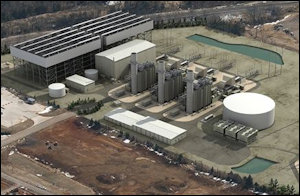
Dominion Energy Virginia has run additional projections on its future energy demand and how to meet it, and the answer keeps coming back that Virginians will need more – not less – natural gas-fired electricity in the next 15 years. The supplemental data was filed with the State Corporation Commission Friday and added to the case file.
Just before the State Corporation Commission received Dominion Energy Virginia’s new integrated resource plan back in October, it issued an order for the company to provide more information. Some opponents of the utility’s plans to add to its natural gas generation expected the additional data to bolster their case it could be done without gas.
Yet gas power continues to turn up in the company’s model runs (we all know how environmental activists trust models) even when Dominion removes the growth in its demand coming from the explosion of data centers in its region. More gas turns up even when the model is set to fully comply with the anti-gas Virginia Clean Economy Act and even when the model is told to comply with the Environmental Protection Agency’s new power plant emission rules. Dominion wrote:
The results of the modeling sensitivity analysis show that even with updated capacity pricing and removing the data center load growth:
-
There is still an incremental capacity need.
-
The model does not choose to retire any existing generation.
-
Renewable and dispatchable generation is needed to meet demand in all sensitivities.
Translate that last sentence as, the VCEA notwithstanding, if you want the lights on all the time, a power source subject to utility-engineer control (think natural gas) will be required. Wind and solar are not subject to such control. This is not the answer from the model that opponents of the integrated resource plan want to see.
In the projections that disregard the expected demand from the data centers, the amount of gas recommended is substantially lower, as little as 2.6 gigawatts compared to the almost 6 gigawatts needed if the system is dealing with that explosion in demand. But it still pops up as the best solution.
The VCEA does give the SCC some discretion to either allow the addition of new hydrocarbon-burning plants or to deny the retirement of such plants, if the case is made reliability would be imperiled. That is the case Dominion is once again struggling to make: that gas is needed for future reliability. The SCC’s demand for supplemental data also throws a spotlight on the impact of the data center industry’s plans.
Remove the assumed growth from the data centers, and suddenly the need for adding nuclear power goes away and the need for expensive battery storage plants disappears. The amount of added wind power that pops out of the model is negligible, equivalent to about ten more turbines rather than the 575 additional towers in the Atlantic needed to serve the data industry.
All the plans include huge increases in the amount of solar power Dominion would garner from its own or from contracted panel farms, from 11.5 to 12.2 gigawatts. But without the VCEA rules on utility ownership, it would be mostly from outside contractors, not utility owned. All the plans still include at least some purchased power beyond Dominion’s ability to generate, although again, the amount is far smaller under the no-data center estimate.
Projected customer bills from the various options are not cited in the document. But the plans excluding new data centers require far less capital from ratepayers over the decade and a half.
The Commission directed Dominion to tease out the portion of its projected demand growth – 82% by 2039 — attributable to data centers. It did so by simply freezing the current (2024) power levels for those customers. It then reported its future demand projection is up only 10% by 2039 without the data centers, not 82%.
Put another way, in 2024 Dominion expects to provide just over 98,000 gigawatt hours of power. The data centers are projected to add 63,000 gigawatts of electricity usage by 2039, and everything else (presumably including wider use of electric cars and heating) only 10,000 gigawatts. The projected peak demand for the busiest energy day in 2039 is 44% higher with the data centers than without.
Dominion also went through a long list of planned transmission projects and separated them into three categories – those being proposed principally to serve the data center industry, those with no such correlation, and those serving multiple customers including data centers. No cumulative project or cost totals by category were provided, even though that would have required two seconds with the spreadsheet program. It may turn up in later analyses.
Dominion writes in its conclusion:
…the Company and the Commonwealth are indeed facing unprecedented load growth. The Company takes seriously its obligation to reliably meet the needs of all customers, and the 2024 IRP presents a snapshot in time of the plan to do so with alternative resource portfolios. Dominion Energy does not believe that isolating—and entirely excluding—a certain end-use customer or customer class from the load forecast is a reasonable planning assumption as there is no reasonably foreseeable scenario in which that would reflect reality.
In other words, the data-center energy tsunami is upon us, with all the attendant costs, and natural gas generation is needed more than ever to keep everybody’s power flowing reliably.
The 2025 General Assembly will come and go before the SCC really digs into this review of Dominion’s plan, and the legislators could change the rules. Initial signs of possible revisions to VCEA seem to have been overwhelmed by opposition from environmental activists and key Democratic political funders. More likely, however, is an effort to shift the cost of the data center requirements onto that industry and away from other customers.


Leave a Reply
You must be logged in to post a comment.