
by James A. Bacon
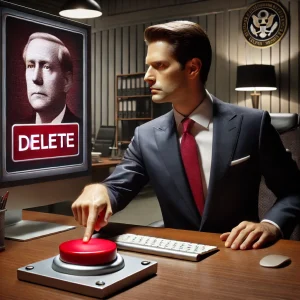
Last August, Governor Glenn Youngkin submitted the names of hundreds of appointees to state government boards and commissions for confirmation by the General Assembly. Traditionally, legislators accommodate the wishes of the chief executive, but occasionally they flex their political muscles by nixing someone they especially dislike.
This year the Democrat-controlled Senate Committee on Privileges and Elections pushed the delete button for two nominees to the Virginia Military Institute Board of Visitors, three to the George Mason University board, and one to the Board of Education.
Unless Senate Joint Resolution 275 is amended to add new names, Youngkin’s other appointees to Virginia’s public colleges and universities — and that includes five appointees to the University of Virginia board — likely will survive the legislative session intact.
Senate Dems gave only the vaguest of reasons for deep-sixing the six board members, all of whom have been actively serving pending their confirmation or rejection.
“We found their nomination to be inconsistent with the expectations, goals and values we hold for those boards,” said Senator Adam Ebbin, D-Alexandria of the rejected nominees. When pressed repeatedly by Republican members of the subcommittee, Ebbin repeated the same phrase without further elucidation.
Virginia Military Institute
The two VMI board members — Quintin Elliott and John Clifford Foster — had dug aggressively into VMI finances and decried the administration’s lack of transparency.
Elliott, class of ’85, earned a degree in civil engineering and spent most of his career in the Virginia Department of Transportation, where he was in charge of major highway construction and maintenance projects. He also served as deputy secretary of transportation under Governor Youngkin.
Clifford Foster, class of ’93 is manager at Raymond James & associates in Richmond.
Governance at VMI has been more acrimonious than at any other Virginia institution ever since former Governor Ralph Northam accused the military institute of systemic racism and forced the resignation of the previous superintendent and appointed Major-General Cedric T. Wins. Alumni resentful of the racism charges have accused the Northam-appointed leadership of watering down the honor code, imposing alien Diversity, Equity & Inclusion values, and undermining the Rat Line system for building character from adversity. Dissident alumni have supported an independent student newspaper, The Cadet, which has plagued the Wins administration with its award-winning journalism and triggered efforts to suppress and discredit it.
In its January 24 edition, The Cadet said Elliott prioritized cutting costs, lower tuition, strengthening the honor system, and ensuring transparency in governance.
“The citizens, including alumni, should be allowed to voice their views openly yet respectfully,” The Cadet quotes Elliott as saying. “If the BOV (Board of Visitors) and administration are going to achieve our stated mission, there must be strong accountability. We must be strong fiduciaries of all of VMI’s resources. We should reevaluate the current metrics used to ensure we are achieving outcomes that guarantee all resources are being used appropriately.”
The Cadet also described Elliott as an advocate of freedom of speech and viewpoint diversity. “My goal as a BOV member is to listen to all sides of the issues that come before the board and give fair consideration to all before I make a final vote. I must consider the pros and cons and ask as many questions as need to ensure I am comfortable with every vote I cast.”
Ironically, Elliott, an African-American, was a VMI classmate of Superintendent Wins.
George Mason University
The three GMU board members to get the axe were Kenneth Marcus, Nina Rees, and Marc Short.
Marcus, a George Washington University professor, is founder of The Louis D. Brandeis Center for Human Rights Under Law. He is known as an expert in antisemitism.
Nina Rees, an Iranian-born immigrant who came to the U.S. when she was 14, is a senior fellow with the George W. Bush Institute. For nearly twelve years, she was CEO of the National Alliance for Public Charter Schools, an organization dedicated to advancing the charter school movement.
Marc Short, a fellow of at the Georgetown University Institute of Politics and Public Service, served as chief of staff to Vice President Mike Pence and director of legislative affairs at the White House for President Donald J. Trump.
It is not known, other than obvious partisan differences and Ebbin’s vague statement of conflicting values, what the Democratic Party leadership has against the three appointees. Last year Speaker of the House Don Scott, D-Portsmouth, had called for the resignation of Lindsey Burke, a board member affiliated with the conservative Heritage Foundation who had written the education chapter for Heritage’s infamous 2025 Project. But her nomination had been approved previously.
Board of Education
The Privileges and Elections Committee also blocked the nomination of Meg Bryce on the Board of Education. Bryce, a mother and college psychology teacher, is the daughter of the late U.S. Supreme Court Justice Antonin Scalia. An unsuccessful candidate for Albemarle County School Board, she was criticized for taking her children out of school after losing confidence in the public school system in the aftermath of the COVID epidemic. She had written commentary in opposition of decisions made by Albemarle schools for lowering standards and ignoring parents.
University of Virginia
As contributing editor of The Jefferson Council, I am glad to see that Youngkin’s five appointees to UVA escaped the delete button. A previous appointee, Bert Ellis, had been subjected to character assassination, including unfounded accusations of racism and homophobia dating back to his college days a half century ago. He narrowly survived a Democratic effort to block his appointment in a tie vote broken by Lieutenant Governor Winsome Earle-Sears.
The UVA board survivors include Daniel Brody, Marvin Gilliam, David Okonkwo, David Webb, and Porter Wilkinson.
There was a price to pay for keeping a low profile, however: an inability to bring about any meaningful change at UVA. Fearing cancellation by General Assembly Democrats, Youngkin’s appointees have been tentative in their opposition to the status quo represented by President Jim Ryan and Rector Robert Hardie. The only resistance occurred when a majority of board members managed to delay the renaming of Alderman Library (named after a former UVA president deemed racist for his association with eugenics) to Shannon Library. But the Ryan administration regrouped and pushed through the name change the following board meeting.
UVA board members were somewhat more assertive in the December board meeting, promising to give closer scrutiny to expenditures from the $2 billion Strategic Investment Fund, but they approved the administration’s request to increase tuition by roughly 3% next year without a peep of protest. Assuming all five make it through the confirmation process, one can always hope that the Board finally asserts itself during Youngkin’s final year in office.
Leave a Reply
You must be logged in to post a comment.