
by Todd Truitt
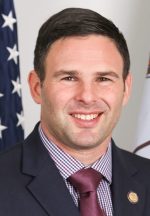
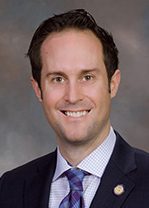
Virginia’s assessments for its Standards of Learning (SOL) could soon get a muchVirginia’s assessments for its Standards of Learning (SOL) will soon hopefully be getting a much-needed revamp. Senator Schuyler Van Valkenburg, D-Henrico County, and Delegate Dan Helmer, D-Fairfax County, have proposed a bill to significantly upgrade our assessment system.
The bill advanced this past Thursday out of the Senate Education and Health Committee on a unanimous vote.
At the Senate Public Education Subcommittee hearing on January 16th, VanValkenburg summarized their bill as improving:
- Quality and transparency of SOL exams
- Quality of local exams used as an alternative to SOL exams
- Test scores and instructional time
VanValkenburg Defends Standardized Testing
VanValkenburg is a defender of testing and high academic standards.
He stated that this bill is not anti-testing, but is “test agnostic”—not touching the politically sensitive issue of changing the number of tests. Thus, the bill likely does not remove the much-maligned through-year growth testing language for such reason, which was strongly disliked by parents and educators and is no longer being used.
At the Subcommittee hearing, VanValkenburg hit back at the criticism of standardized testing causing “teaching to the test.” “Teaching to the test is not bad,” he said. “Teaching to a bad test is bad.”
His statement was reminiscent of long-time Washington Post education columnist Jay Mathews:
“[W]e never say a teacher is “teaching to the test” if she’s using a test she wrote herself. We share the teacher’s view that what she is doing is helping her students learn the material, not ace the test…Those who complain are not really talking about teaching to the state test… but to the state standards — a long list of things students are supposed to learn in each subject area, as approved by the state school board… Hardly anybody complains about teaching to a standard.”
Quality and Transparency of SOL Exams
The bill proposes to make improvements to the quality of exams largely in line with the 2023 work group report on assessments convened pursuant to House Bill 585.
As stated in the report:
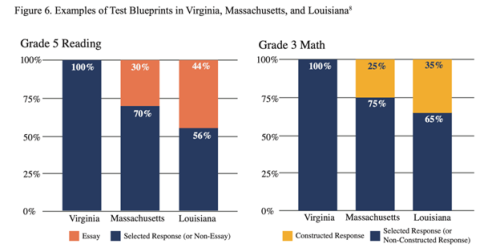
“Virginia’s assessments are almost entirely selected response questions, which require students to choose from a list of possible answers rather than writing their own. In comparison, the Work Group explored other examples of state assessments that are made up of a mix of item types, including a large proportion of items requiring a written essay for Reading or constructed response for Math.”
Here was a comparison of state assessment systems in the HB 585 Report:
This bill also requires the release of the prior year’s SOL tests by the beginning of the next school year. Currently, past SOL tests are rarely released, creating roadblocks for schools and teachers to know what to emphasize to students via instruction.
Quality of Local Assessments
The 2015 U.S. Every Student Succeeds Act (ESSA) requires statewide standardized tests for (i) Math and Reading in each of Grades 3-8 and for one year in high school and (ii) Science for one year in each of (a) Grades 3, 4 or 5, (b) Grades 6, 7 or 8 and (c) high school. Civil rights groups’ strong support for such testing was critical to its inclusion in ESSA.
But for state law required tests that are not required by ESSA, Virginia permits localities to use a locally developed assessment in place of an SOL.
The bill modifies existing quality controls on local assessments by, among other things, providing more prescriptive guardrails in law as to the format of these exams. Moreover, the bill provides for an annual audit of a certain percentage of these local assessments. The penalty for failing such audit would be the prohibition of a school district to use optional local assessments for the next four school years.
I am skeptical of these local assessments because of their lack of objectivity (i.e., graded by employees at that school district). At both the Senate Education Committee and the Public Education Subcommittee hearings, VanValkenburg expressed his skepticism of them as well.
Academic Rigor, Test Score Format and Validity, and Instructional Time
The bill will likely improve academic rigor by requiring the SOL exams and local assessments count for at least 10% of a student’s final grade in such course. This provision will likely reduce grade inflation and decrease the growing discrepancy between grades and standardized test scores. And it will effectively prevent districts from eliminating final exams for all classes, an anti-rigor fad that fails to prepare kids for college.
Additionally, this 10% provision will improve the validity of test scores. Critics of standardized testing often deride them as “high-stakes testing”, but such tests are typically zero-stakes for students as the test results often do not factor into their course grade or future academic progress. By giving students stakes in the test results, students will have an incentive to try their best on the exam.
Next, the bill requires that SOL and local assessment scores be on an intuitive 100-point scale, versus the current nonsensical 600-point scale for SOL exams and typical 7-point scale for local assessments. And the bill requires the release of SOL exam results within 45 days after the exam window closes.
Lastly, this bill restores lost instructional time to our students by requiring that all standardized testing occur in the last two weeks of the school year. As explained by Helmer and VanValkeburg in their OpEd in The Virginia Pilot:
“[O]ur current process has most students taking their tests a month before the end of the school year. After the exam, there are high levels of absenteeism as teachers concentrate on test-retake prep for the few kids who failed. During that wasted month, little other learning takes place. In effect, students lose a month of education — a year of lost instructional time over a career.”
Critics of standardized testing often act as though the tests are a waste of a student’s time. But studies have found what cognitive psychologists call the “testing effect”—the action of taking a test on information significantly improves the retention of such information in long-term learning compared to simply studying it.
What is in fact a waste of time for learning is students losing a month of education after taking their SOL exams. Such loss of instructional time demonstrates the necessity of standardized tests.
Benefits of Improving Assessments Exponentially Outweigh Costs
The cost of these needed updates to our assessment system will not be cheap as the Governor’s budget proposed an additional $66 million for them. As stated in the HB 585 Report, one of the biggest cost drivers of assessment reforms is typically developing new test items. But not improving our outdated assessments would be even costlier.
Virginia’s assessments are an essential part of Virginia’s K-12 public education system, including for improving classroom instruction. As famous Virginia education scholar ED Hirsch wrote:
“[Standardized] tests are necessary to achieve excellence and fairness. They function as achievement incentives for teachers and students, as ways of monitoring students’ progress in order to remedy their deficiencies, and as essential helps in the administrative monitoring of classrooms, schools, and districts.”
The test results also significantly affect the allocation of billions of public dollars. The state, localities and school districts rely heavily on these results to target resources.
Moreover, Helmer and VanValkenburg rightly linked these reforms to Virginia’s future economic development:
“These reforms will require investment. However, this investment will return itself many times over; in better classroom instruction, better National Assessment for Educational Progress (“the Nation’s Report Card”) results, and a more educated workforce and citizenry.”
Most importantly, improving the quality of our standardized tests furthers the civil rights of the least advantaged kids. As stated by civil rights organizations in a 2015 hard-hitting letter against anti-testing advocates:
“The educational outcomes for the children we represent are unacceptable by almost every measurement. And we rely on the consistent, accurate, and reliable data provided by annual statewide assessments to advocate for better lives and outcomes for our children. These data are critical for understanding whether and where there is equal opportunity…[W]e cannot fix what we cannot measure.”
Todd Truitt is a parent of two school-age children in Arlington County, Virginia. He is also the former Chair of the Math Advisory Committee for Arlington Public Schools and active in the Arlington Democrats. He is a business transactions attorney and a Certified Public Accountant.
Leave a Reply
You must be logged in to post a comment.