
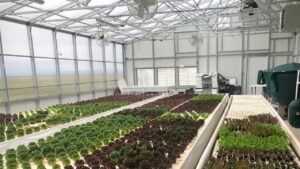
An Old Use of Solar Power
Share this article
ADVERTISEMENT
(comments below)
Comments
Comments
16 responses to “An Old Use of Solar Power”
-
Now that’s an EXCELLENT blog post! More and more research is going into growing plants in greenhouse environments – where there is more control over things like rain and what kind and how much fertilizer and how to control insects and critters that eat the veggies – much better control and much less use of harmful pesticides that get into the environment when used in open fields.
We’ll probably never grow commodities like wheat and corn or soybeans but a lot of other veggies are possible.
Here’s an evil corporate commercial :
-
Well, gee, one thing where I agree with the Climate Catastrophe Crowd is that the whole Earth is a greenhouse, Larry! 🙂 Otherwise we’d not even be around…No GHG and no you and me!
-
-
Here’s the mother of all greenhouses, now 30 years old:
https://rt-homepage.roadtrippers.com/wp-content/uploads/2018/11/shutterstock_177804941.jpg
-
Where is this thing?
-
The biggest is supposedly in England, where they are growing a rain forest.
-
-
One issue with large scale greenhouse is increased impermeable surfaces, especially in the Bay watershed where we are spending 100s of millions on restoration each year. There are also industrial-scale groundwater use issues in the eastern half of VA….
There could also be an issue with increased albedo rates, which surprisingly seldom comes up in the climate change discussion. Plus birds and insects are fooled by the surfaces to think they are water… no good for these critters.
But putting these greenhouse on brownfields or other contaminated land could be a beneficial engineering control that essentially serves as a cap.-
You make valid points. If the choice between the use of the land was between greenhouses and traditional farming, then, yes, there would be a decrease in permeable surfaces. But, I suspect that, if the greenhouses were not constructed, the land likely could have been used for an apartment or townhouse development or a shopping center, all of which would mean even less permeable surface.
Water in hydroponic greenhouses can be recycled.
I had not thought about birds, but should have. In doing a little internet research, it seems there are products or methods that can be used to make the glass less attractive to birds, while not decreasing the sunlight.
-
Art Evans (the bug guy from NPR & UR professor) wrote an incredible public comment recently on the Solar PBR reg action (9VAC 15-60) where he goes nto depth of the issues with solar panels and insects. It’s an amazing point regarding “green” infrastructure. It is worth a read if you like nerdy stuff!
Approximately 60,000 acres of solar are under development… not a small issue.
-
-
Hydroponics relies heavily on water soluble fertilizer. Most (if not all) water soluble fertilizer is manufactured from natural gas feedstock. Far from carbon neutral.
-
Agreed… one aspect of the “evil” fracked natural gas no one seems to discuss. Without fertilizers it’s hard to feed a growing population.
-
-
-
Getting ready to grow legal marijuana.
-
Bingo!
-
Which is a huge carbon plus industry! But equity knows no bounds!
-
-
You can lead a horticulture, but ya can’t make her think.
Extremely large greenhouses in Mexico provide a lot of fruits and vegetables year round to US tables.
If I remember correctly, this place was a venture investment from the Carlyle Group. Right goes left.
-
Neither party owns the sun. 🙂 It is ALL solar power, just stored in some cases, even uranium. And as I recall Carlyle also played a role when NNS spun off from Northrop Grumman. I know Blackrock did but I’m also remembering Carlyle. Could be wrong.
-
Probably did. The ” problem” with labeling, or assuming, the position of investment companies based on PAC money, ads, etc., is that they invest. Cash is King, all else is venture, including politics.
-
-


Leave a Reply
You must be logged in to post a comment.