
Charlottesville writer Scott Johnston’s new book is a lark, but it makes a serious point about society’s new norms, status seeking, and virtue signaling in the wealthy enclaves of New York.
Listen to the latest Oinkonomics podcast.
James Bacon: Hello, everybody. I’m Jim Bacon, and this is the Oinkonomics Podcast.
American society seems more divided than at any time since the 1960s, when the Vietnam War was raging and the Civil Rights Movement was at its peak. What’s really scary today is that we’re not at war, and the gains of the Civil Rights Movement have been consolidated and institutionalized. What is driving the discord? The root of the increasingly acrimonious divisions in our society, I would argue, has been the spread of critical theory, and the reactions, and perhaps overreactions to it.
Very few Americans can actually define critical theory. Not many have even heard of it. But its precepts have trickled down through academia, school systems, and elite media into the popular culture. Basically, critical theory views human interactions through the paradigm of oppressors and oppressed. This set of ideas is commonly referred to as wokeness.
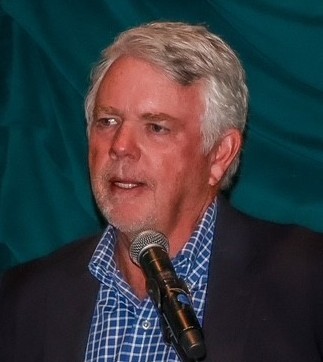
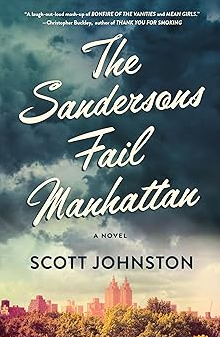
Today, I am talking to Scott Johnston, a Charlottesville novelist, about his latest work, “The Sanderson’s Fail Manhattan.” The novel is set in Manhattan, not Virginia. But it explores how wokeness plays out, not just in academia and politics, but in the everyday interactions of the educated elites who have most fully embraced it. “The Sanderson’s Fail Manhattan” takes place in New York City, but it easily could have been set in Fairfax County.
Scott is a Northerner, transplanted to Virginia. He graduated from Yale, worked on Wall Street, and launched several successful businesses. His 2019 novel, Campusland, skewers political correctness run amok at his alma mater. It’s hilarious, and I recommend it highly. He explores similar themes in the Sanderson’s Fail Manhattan, which was published this summer.
Good day to you, Scott.
Scott Johnston: Hello! Nice to talk to you, Jim.
Bacon: So, Scott, why don’t you give us the elevator pitch version of “The Sanderson’s Fail Manhattan” to provide listeners a base of understanding for our conversation?
Johnston: Sure, and, you know, we’re having a serious conversation, but I want to emphasize the book is meant to be fun, and eminently readable, and a quick read.
Bacon: It is. It is fun, and it is a quick read.
Johnston: Sanderson’s is cowardice and courage, all in the same family, the Sanderson family. They are a wealthy Upper East Side family that seemingly has it all, but anytime you hear a novel introduced with the words, so-and-so seems to have it all, you know something’s gonna go south.
So, you have William Sanderson, the father is rich, but you can always be richer, and he’s on the cusp of a giant promotion at a huge investment firm, but there’s just one little task he has to accomplish first, which is a whole funny subplot — totally pulled from, real life, I might add.
And then, the emotional center of the book is his wife, Ellie. Ellie is not a Manhattanite. She was an itinerant army brat, and more than anything in life, she just wants to plant roots somewhere, so she’s trying to figure out all the rules and play by them. And there are two daughters, the oldest daughter, Jenny, and they’re both in one of the elite private schools in Manhattan. Well, William Sanderson desperately wants Jenny to go to Yale, because that’s where Sandersons always go. And she’s maddingly indifferent to the whole idea, which drives her father nuts. And the younger daughter is very shy, Zoe, and often overlooked. But she starts to come out of her shell a bit when she makes friends with a new student who identifies as a goblin, which is an actual thing in real life.
Anyway, things go south for them, they manage to step on every cultural landmine that’s out there, and you know, I’m very much in the mode of a Tom Wolfe, and he wrote Bonfire of the Vanities. And the money culture of Manhattan hasn’t changed, but a lot of the other cultural rules have, and we have all the DEI struggle sessions, and privilege walks, and other things. And all the new rules and the wealthy make for a very awkward pair sometimes, and that’s what I have explored.
Bacon: You did a great job at it. You wrapped it all up really nicely. I don’t think there’s a whole lot that you missed. So, just like Campusland, this is a great book, a great read, and I suggest it to everybody. But also, while it’s kind of a lark, it’s also got a substratum that’s very serious, and that’s what we’re going to talk about.
As one might expect from a book of this nature, reviews are mixed. An approving writer from The Federalist says, quote, the book offers readers a cathartic chance to laugh at the insanity we’ve endured the past few years.
But a writer with the Chicago Review of Books says, quote, Johnson’s novel reads like a manifesto written by an aggrieved boomer scrolling Facebook memes created by Fox News anchors. It’s a fantasy farther from reality than the Wizarding World of Harry Potter where DEI hobgoblins lurk around every corner.
So, I guess my first question for you is where did the material for Sanderson’s come from? Is it a conservative fever dream, or does it accurately reflect — with allowances for the fact that it’s fiction, and you’ve got a creative, fun plot — does it actually reflect the culture of elite Manhattanites?
Johnston: Well, reviews have mostly been very good. I think I have 4.6 stars on Amazon, which is pretty good. Which is actually very good. But I know, or I knew, when I set out to write both my novels, that if I didn’t have some haters in the mix, I had not done my job. That was a given, that there were going to be people like that guy from the Chicago Review of Books, whatever that is. And where he’s completely wrong is that this is some kind of fantasy and not associated with real life. Virtually everything that happens in the book, every subplot, and lots of the scenes are pulled directly from things that actually happened.
I’ll give you one example. There’s a subplot that involves the task that William Sanderson has to accomplish to get elevated to the executive committee at Bedrock Capital, [He’s] got to find out if one of their board members is LGBTQ+ because they’ve got a big RFP, a request for proposal, and one of the questions is from a giant pension fund. One of the questions is, how many LGBTQ plus board members do you have at your company? And this is 100% drawn from a story that a good friend of mine told me, who runs a big asset management company. And he had to answer that same question. And there was a board member that he’d known for 25 years that he knew to be gay, but they’d never discussed it. So, it was a bit of uncertainty. So, he was put in this position where he had to go to his longtime friend and say, hey, are you gay? Can I check this box?
And it’s parody. It’s farcical in and of itself, and sometimes the challenge of writing satire is how do you satirize something that’s already self-satirical? And, you know, Sanderson’s focus is on an all-girls private school, and they’re the craziest, by the way, in terms of being woke. And all the things that happened there, even a lot of little details, are, pulled from real life.
I’ll give you one good example. The tables in the dining hall at this school, the Lennox Hill School for Girls, I call it, are all circular. They remove the rectangular tables because they determined that a rectangular table could lead to an imbalance of power, i.e, someone would have to be sitting at the head of the table. And so, they got rid of all the rectangular tables. Well, that happened. You know, there’s a school named Spence, which is a really elite and well-known all-girls private school in Manhattan, that did exactly that. So, this reviewer who seems to think I’m fantasizing all this stuff isn’t paying attention to reality himself.
Bacon: Okay, there are a few things where maybe you go over at the top, but again, that’s part of satire.
Johnston: I would challenge you on that. Even the Goblin character, that’s a real thing. They’re called the Goblin Corps. You can Google it. They’re out there. I think we’ve all seen furries in the national news in the last few days. They’re out there. There’s a couple schools now that have put litter boxes in their bathrooms to accommodate the furries who like to pretend they’re cats.
Now, if I put that in a satirical novel, someone might say, oh, that’s ridiculous, that’s over the top, but it’s actually happening. So, I, in some cases–
Bacon: Oh my god.
Johnston: I have to dial stuff back from reality, lest people say I’m way over the top satirically.
Bacon: Okay, folks, you heard it: Scott actually restrained himself. He had to rein himself in in order to make his novel remotely believable. … The litter boxes. I have to say, I’ve never heard of that one, That is just astounding.
Moving on, I noticed that the novel rarely actually uses the term “woke.” I counted only 3 references, and they occurred in characters’ dialogue. Was that a deliberate choice on your part to avoid invoking that label?
Johnston: I suppose it was. I mean, I didn’t really think about it, but if I’d written the novel well, I wouldn’t have had to use the word woke. I mean, it wouldn’t be necessary. People would understand. I don’t need to beat people over the head with it. Anytime you let yourself get pinned down with language, too, the language can shift under your feet. I mean, once upon a time, it was political correctness, then that became woke. Who knows what it’ll be next?
Bacon: Yep. So, Sanderson’s made me start thinking about the sociology of wokeness as it percolates down from academia into the world at large. You mentioned semantics. We get caught up in semantics a lot, and when conservatives try to critique it, then we’re always told, oh, it’s not this, or it’s not that. It gets hard to pin down. What we’re talking about is a jumble of values and prejudices and habits. It’s not a formal ideology. I mean, maybe in an ivory tower somewhere, it’s a formal ideology of critical theory, but by the time it percolates down, it’s just a set of mental habits.
The commitment to wokeness, whatever you want to call it, among some of the world’s wealthiest, most privileged people in New York is… What’s interesting to me about the book is how it’s inextricably … tied to status and status-speaking. You can’t violate these cultural norms without risking your status in all sorts of kind of small ways which you describe in the novel. To borrow another off-used phrase, there’s a whole lot of virtue signaling going on. I wonder if maybe you could talk about the connection between adopting these awoke attitudes and maintaining your status in Manhattan.
Johnston: This is what drove me to write the novel in the first place.
I did a lot of blogging back in 2000… sorry, 2020 and 21… in the wake of George Floyd and everything, when all the schools really started going crazy. I’d write about specific schools. I wrote a lot about the Dalton School, which the blog blew up, it got a million hits in 6 weeks. The Dalton headmaster ended up getting fired. The Wall Street Journal asked me to do an op-ed on that, which I did. And then all these other people from other schools kept sending me their information, like, please write about our school, our school’s going nuts, too.
At the end of every piece, I’d list the board members’ names of the school, pretty much saying, if you want to point fingers, point them here. These are the people in charge, and they’re fiddling while Rome burns. And three of the schools removed the names of the board members in the wake of my writing about them from their websites.
And a couple months later, one of the people comes up in conversation who ran one of the school’s boards. She was being considered for something. I won’t go into the details, but I expressed some reservations because of what she was residing over I considered to be horrendous. And I think two or three people almost all at once said, oh, she’s perfectly lovely. Here’s the thing, she probably was very successful. But here she was, presiding over this undermining of the Enlightenment and Western civilization on her watch. That’s not an exaggeration. This stuck in my head. She’s perfectly lovely.
All these incredibly successful people [were] prostrating themselves to this bizarre ideology of wokeness, all because Brittany hasn’t gotten into Georgetown or Harvard yet. And, so, I thought, there’s a novel in this. So, the first title for the novel was actually “All the Lovely People,” but the good people at St. Martin’s Press didn’t think that was a title that sold books, so the title became the Sanderson’s Fail Manhattan.
Bacon: You live in Charlottesville now. Do you go back and forth between Charlottesville and New York, or…
Johnston: We spend summers out on Long Island. I just got back.
Bacon: Charlottesville is a world away from Manhattan, but it is an academic community. I’m wondering if you – at the risk of, ostracizing yourself in polite society in Charlottesville — do you see similar ways of thinking and similar ways of using social pressure to enforce those progressive norms.
Johnston: Do I see them doing it here?
Bacon: Is it as extreme in an academic community as it is in Manhattan?
Johnston: I’m not in the middle of the UVA situation. I mean, tangentially, sure. And I attended a lot of events over there and so forth, but it’s not like I’m an employee or a professor or anything like that, where they’re still fully in the grips of progressive ideology. So, it doesn’t really affect me. I’m enough outside that world. And everyone knows where I’m coming from, honestly.
Bacon: We have been talking about wokeness and critical theory. The term that seems to be on most everybody’s lips is Diversity, Equity, and Inclusion. The Trump administration seeks to expunge DEI from higher ed in the U.S. And, obviously, that’s been generating headlines all over the place. I guess I would argue that getting rid of DEI is much easier said than done. It’s one thing to fire bureaucrats and eliminate departments. But DEI is an outgrowth of critical race theory and wokeness. It’s wokeness put into action. But critical race theory and wokeness are sets of ideas. I wonder, can we expunge DEI without expunging critical race theory? And if we succeed at that, do we do so at the expense of academic freedom, and freedom of speech? It seems to me part of the problem at UVA and a lot of other places is that it’s really hard to tell where the unconstitutional practices of DEI end and the constitutionally protected right of free speech begins. Is this anything that you’ve given any thought to, or can you kind of shed any light on that problem, that dichotomy?
Johnston: Oh, heck yes, and I don’t view it so much as a dichotomy. It’s good to remind people what the First Amendment is and what it is not. First Amendment means the government cannot squelch your speech, they cannot throw you in jail for things that you say, unless you cross certain lines promoting violence. This is especially relevant in the last few days with what’s been going on with Charlie Kirk. The First Amendment does not say that your employer has to keep employing you if you say horrible things that are antithetical to the company’s values. Nor does it say that universities have to have all these horrible departments that teach awful things, that most of them end in the word “studies.” So, it is not a violation of free speech or the First Amendment whatsoever to expunge a university of these things. And they should be expunged. And if someone wants to go… I suppose you can always go found your own university to teach those things. But serious universities have long been teaching very unserious things in these departments. You know, typically gender studies and racial studies, you know the groups I’m talking about. So I don’t see that… I think you can get rid of both. You can get rid of DEI, and you can get rid of critical race theory by eliminating all these non-serious disciplines.
Bacon: For purposes of argument here, you shut down the Department of Women and Gender Studies, for example, or Black Studies, or whatever. Go look at what they’re saying in the sociology department and the English department, and look who they’ve recruited as professors, what they write about, and the way they think. And a large number of them absolutely embrace critical race theory. You can’t delete the English department, right? Okay, can you go in there with a scalpel and just cut out the people who espouse critical race theory or DEI? But where do you draw the lines? How about people who are adjacent to that? I don’t know. It seems to me it’s really antsy. It gets into some very difficult territory.
Johnston: Well, you start hiring professors that provide some balance, and once you have some good professors in there teaching real things and intellectually honest things, I think that students will start voting with their feet. And you’ll see the ridiculous humanities professors that are out there marginalized. Funny, I just watched a Charlie Kirk video where some kid’s challenging him about something, and he says he’s an English major, and Charlie Kirk says, you know, so what’s your favorite Jane Austen novel? And he says, who?
Bacon: Right.
Johnston: So, those majors have been completely undermined by… well, you mentioned critical theory before. And you said critical theory is about dividing the oppressed and the oppressor, but the reason behind that is the foundational tenet of critical theory is that there’s no such thing as objective truth. That truth is simply a social construct that is fabricated and imposed by those in power. Which is very much why, the left seeks to find positions of cultural leverage in academia, in the media, and so forth, because that’s where they can get the message out, and they can construct their own truth.
Bacon: Yeah, I have to say, they do not seem to be very self-aware of that. Within the university context which is largely insulated from the rest of the society, they are the ones who hold the power. And they’re the ones who make the rules. But they still like to pose as the oppressed.
Do you think the cultural trend of wokeness has peaked? I mean, the Trump administration has sicced the Department of Justice on UVA and George Mason and Harvard and other universities, it’s chasing transgenders out of the military. Corporations are abandoning their DEI programs. Has the tide turned, or is the outcome of our culture wars yet to be determined?
Johnston: Well, it’s funny, when I wrote Campusland in 2019, and I subsequently gave a lot of talks and was on podcasts and so forth about that, I would always get asked, surely — and peak woke happened right after Campusland came out, and the Summer of George and all that — I would always get asked, you know, surely this is a pendulum, and it will swing back. And I said, well, you know, sometimes pendulums are wrecking balls, and at that time I thought the pendulum was a wrecking ball, that these institutions were essentially damaged beyond repair, that the cancer spread too deep. And I’ve… I cautiously walk back from that now, just a bit.
Because things have swung back a bit. That doesn’t mean that a place like UVA or Yale have fundamentally changed. They haven’t, but they’re a little more careful, and outside of academia, it’s swung back quite a bit. In corporate America, it’s swung back significantly, thank God. And I think America’s consciousness has swung back. The universities will be the last redoubt of this, and they’ll fight to the last man. So, we’ll see how that plays out. But the pendulum has swung back, it’s swinging in the right direction. How far that can go, and whether we achieve some sort of good equilibrium or not, you know, that remains to be seen.
Bacon: One of the things I worry about is, pendulums don’t change directions in the real world unless somebody is exerting pressure on them. So, that means whether it’s the Wall Street Journal op-ed page, or Donald Trump, or the general public, someone has got to do the pushing back. And invariably, in the pushback, there’s gonna be some overreach, and people are going to do and say things that might [make] some of us cringe. I really do worry about the tactics that were used and the coercion used to force change at, say, at UVA or George Mason. It’s all coming from the outside. Ideally, you’d like to see change come from the inside. When it comes from the outside, it’s gonna spark more resistance.
Johnston: There’s no one on the inside to do it. There’s no one left.
I don’t know who that would be, honestly. You have a valid point, though, if the pendulum swings back too far. It’ll be tempting for people on the conservative side to abandon some of the principles that they should hold dear.
And you’re seeing a very healthy debate right now over that very thing with the cancellation of Jimmy Kimmel. It’s an interesting debate, and I think missing the point, largely, why he was fired. I mean, he was not fired because of pressure from the federal government. The federal government made some noises that they might want to look into it, but they didn’t do anything. It was fired for a bunch of other reasons. People can go do their own research, but starting with he had no viewers, and the affiliates were all taking a hike. So, he’s fired very much for economic reasons. However, it has sparked an interesting debate, like should the FCC start getting involved with this sort of thing? And even though they own the airwaves that ABC’s on, I would hope the FCC would really have a hands-off approach where that’s concerned. The market’s gonna sort this out. I think the market sorted Jimmy Kimmel out. But I don’t like it when they start making too much noise about getting involved themselves.
Bacon: I agree with you 100% on that, Scott. Absolutely, 100%.
Last question, put it on a more upbeat note. What are the odds that Campusland will be turned into a TV series? And is there another Scott Johnston novel in the works?
Johnston: Campusland has been optioned to Hollywood. There is a script. It’s being flogged around as we speak. It’s a very good script for the pilot. The concept that they have is a four-season show, with each season corresponding to one year of college.
Bacon: Wow.
Johnston: It’s a long way from a script being flogged around Hollywood to a show actually being made, so I will believe it when I see it. Of course, I’m hopeful, I think it would be a really fun miniseries, but again, it’s Hollywood, and who knows?
And, yes, I have two half-written novels. I have to figure out which one I can finish, or which one I can figure out how to finish. These things are so tricky to work out. So, now that I’m back here, and it’s the fall, I feel like the fall is always the start of a new year, and time to get serious about writing again.
Bacon: That’s awesome. Thanks so much for showing up on Oinkonomics. Speaking for myself and I bet a lot of other listeners, we really look forward to seeing Campusland on Netflix, or whoever, and really look forward to another Scott Johnson novel.
Johnston: Thanks, Jim.
Bacon: Bye-bye.
Leave a Reply
You must be logged in to post a comment.