
by James A. Bacon
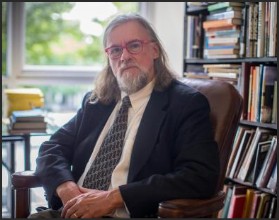
Mark Edmundson, an English professor at the University of Virginia, ran a column Saturday in the Wall Street Journal about threats to academic freedom.
He leads with an anecdote about teaching John Milton’s epic poem “Paradise Lost” with his students. “Milton can help you think about almost any consequential human subject. How shall we govern ourselves? … I am never tired of Milton and neither, it seems, are my students. And I sometimes give quiet thanks for the freedom to teach ‘Paradise Lost’ as I like.”
“One of the best freedoms in the world,” he writes, “is the freedom to sit in a quiet room and try to get at the wisdom in great writing with a group of students,” he writes.
But now, as the WSJ sub-head puts it, “ideological demands from the right” are putting the teaching of literature “in danger.”
In danger? Really?
The irony is that Edmundson’s column describes a very real threat to academic freedom — from the left, although he minimizes it. He offers no tangible evidence whatsoever of a peril from the right. When I say no evidence whatsoever, I mean no evidence whatsoever.
Have there been any threats to classroom freedom at the University of Virginia? Not really. A couple of years ago, the administration wanted to know how our teaching and writing contributed to diversity, equity and inclusion. I protested this as soon as I saw it: The freedom to ignore DEI or teach in ways that came into conflict with it seemed precious to me.
I sounded my mild protest to the president, Jim Ryan, the provost Ian Baucom (now president of Middlebury College), the chair of my department and anyone else I could find in power. The whole thing was a bit tricky, because I believe in many of the tenets of DEI. I just didn’t want the university to try to persuade professors to bend their teachings toward what I see as a political position. All the officials were willing to talk, debate, reconsider. When I and others spoke up, the people in charge wanted to hear.
Presumably, Edmundson was referring to the mandatory “diversity” statements that UVA then required of every professor in their annual reviews. Those statements compelled faculty members to spell out their commitment to DEI in teaching, mentoring, research, and community engagement. Everyone knew that a conservative or classical-liberal response — “I would treat members of all races equally, without regard to skin color” — would be frowned upon. A professor would not be living up to “UVA values” if he or she didn’t express support for a social-activist viewpoint.
It’s not clear how information from these statements was used, but the implied threat was very real. Responses would go into a file and higher-ups could deploy them against a professor any time for any reason. Many UVA profs chose to tell the DEI enforcers what they wanted to hear rather than risk blowback.
Compelled speech, I would suggest, is a very real assault on academic freedom.
I credit Edmundson for acknowledging that the DEI queries were problematic, even if they did “not really” amount to much. And I applaud him for pushing back ever so gently. It’s not apparent from his account, however, that Ryan’s and Baucom’s willingness to listen translated into a cessation of the practice. Only recently, since UVA has come under close scrutiny for its DEI policies, has the College of Arts & Sciences terminated required DEI statements. The same may be true of other schools at UVA, although no official pronouncement to that effect has been released to the public.
What does constitute a threat to academic freedom? Here’s what Edmundson says:
Now the tables have turned. Last month, President Trump’s Justice Department forced Jim Ryan to resign by threatening to cut off crucial funding to the university, claiming that Ryan hadn’t done enough to dismantle DEI programs. When the Trump administration attacked Harvard, the members of the Harvard Corporation fought back. At the University of Virginia, unlike Harvard, the Board of Visitors is state-appointed, and the current members, all chosen by Republican governors, caved in to the demands. So did the attorney general of the state, who might have defended us.
How does any of this undermine academic freedom? The DOJ is intent upon ending racial preferences and the DEI bureaucracy that supported them, and it was frustrated by UVA’s lack of responsiveness to its requests for information. One can agree or disagree with the DOJ’s interpretation of the U.S. Supreme Court ruling against discrimination in admissions. One can criticize its coercive tactics. One can take issue with the Board’s response. But how does any of this affect academic freedom?
It doesn’t.
Indeed, insofar as ending DEI at UVA entails decisively ending diversity statements, one can argue that DOJ’s initiative represents a gain for academic freedom.
Edmundson proceeds to make more unfounded assumptions.
The members of the Jefferson Council, a conservative alumni group, have spoken much about the brainwashing and indoctrination they feel goes on in our classrooms. There may be some of that, I’ll concede, but not nearly as much as they imagine. I think that conservative students who bottle themselves up in class are more afraid of their peers’ reactions than their professors. How long before the Board of Visitors, guided by the Jefferson Council, decides it must take an active hand and begin vetting our syllabi?
Again, I’ll credit Edmundson with enough objectivity to concede that “some” brainwashing and indoctrination goes on. But he goes off the rails with this question: How long before the Board of Visitors, guided by the Jefferson Council, decides it must take an active hand and begin vetting our syllabi?
I can tell you exactly how long. Never. Never once in my active four-year involvement with the Council have I heard anyone even broach the idea of taking an active hand in restructuring syllabi. To be sure, we have criticized the heavy leftward slant of current course offerings — especially the mandated “encounters” courses — but we would never presume to dictate what professors taught. We have always sought the appointment of a president, provost and deans in a position to make granular decisions like the restructuring of syllabi.
Wait, there’s more! Next, Edmundson bizarrely quotes the political philosopher Hannah Arendt as saying that “a politically unanimous condition is always something to fear,” and adds, “I fear that we at UVA may be on the verge of such a condition.” He elaborates:
The road that runs from the White House, to the Justice Department, to Gov. Glenn Youngkin’s office, to our Board of Visitors looks to be all too smooth. Who is going to stop the call for political conformity as it gathers force? (My bold)
All too smooth? What does that even mean? I apologize for being blunt, but Edmundson doesn’t have any idea what he’s talking about. First, the public has no idea how the Ryan resignation went down. As a journalist, I’m trying to piece it together, but I’m still working on it. What I can say definitively is that there was nothing “smooth” about it. DOJ had one agenda. Youngkin had another agenda. Ryan had his own agenda. The Board of Visitors had its own agenda. Actually, there is considerable division within the Board, so it’s more accurate to say that different factions within the Board had their own agendas.
Call for political conformity? The only political conformity that exists at UVA is enforced by the left. Reformers do advocate diversity of thought, which does means hiring more conservatives, classical liberals, moderates, and free thinkers as a corrective to that conformity. It says something about the mindset of even center-left professors like Edmundson (who is less untethered from reality than many) that the campaign to break up the left’s ideological monopoly represents a call for political conformity by those who currently represent an infinitesimal minority. As I have written repeatedly (not that I expect Edmundson to have read my scribblings), the Jefferson Council sees a vibrant center-left element on the UVA faculty as essential to the robust exchange of ideas with the conservative faculty we envision someday teaching there.
Edmundson concludes: “My colleagues who teach queer studies or critical race theory or Marxist approaches to literature may be in for a hard time. We’re going to have to hang together.”
Upon what basis, other than the paranoid delusions of his colleagues, does Edmundson think that leftist UVA English teachers might be in “for a hard time?” Perhaps he’s projecting the experience meted out to conservative English professors, who are in very short supply (if they exist at all). The English Department engaged in a long, slow-motion purge that largely extinguished conservative thought, so it would be understandable if profs expected the same in return. But that’s not what the Jefferson Council and other reformers have mind.
Edmundson seems to be the proverbial fish that is unaware that it is swimming in water. He is so accustomed to the leftist monoculture in his department that he can’t see it.
Based on a review of 50 “graduate faculty” profiles, it seems indisputable that the ideological center of gravity within the department is strongly center-left. Many English profs openly tout their leftist orientation in describing their research interests or the books and articles they have written. Some avoid overtly ideological terminology and frames of reference, so it can be inferred that they are not doctrinaire leftists. A few engage in the study of such arcane topics that it’s impossible to divine an ideological orientation. But not a single professor is readily identifiable as conservative or libertarian. Not one. You will see no academic interest in such authors as C.S. Lewis, Rudyard Kipling, J.R.R. Tolkien, George Orwell, Ayn Rand, or Tom Wolfe. As for Shakespeare? There’s not one professor specializing in the greatest writer in history of the English language.
Upon reading these profiles, I am struck by a crucial point. Most of these professors strike me more as historians or sociologists than English professors. Their interest is developing or amplifying theories and then applying them to English-language authors as a way of illustrating them. They’re in love with the theories, not the authors. Only a handful seem interested in understanding the authors’ use of language, narrative technique, and social/political messages in the context of their times.
Here’s the data I draw from to reach that conclusion. The following highlights are based upon a quick scan of faculty profiles. Due to time constraints I reviewed only “graduate faculty,” not “general faculty.” I will be happy to amend any squib below if anyone presents contrary evidence.
Jane Alison
Book: “Change Me: Stories of Sexual Transformation from Ovid.”
“Ovid’s stories melt moral conventions, explore ambiguities, and dissolve boundaries between men, women, animals, gods, plants, and the mineral world.”
Steven Arata
Specialties: 19th C British, 20th C British, Modernism, History and Theory of the Novel.
Alison Booth
“In research, I have expanded my feminist and narratological studies of cultural and literary history in Britain and North America since 1830 into digital humanities and bibliography.”
Anna Brickhouse
Specialties: American, Early American, Hemispheric American.
Book: “The Unsettlement of America: Translation, Interpretation, and the Story of Don Luis de Velasco, 1560-1945.”
Mrinalini Chakravorty
“She specializes in postcolonial studies, history of the novel, and queer theory. She is particularly interested in coloniality and discourses of Marxism and psychoanalysis.”
Sylvia Chong
Specialties: American, Asian American, Film
Book: “The Oriental Obscene: Violence and Racial Fantasies in the Vietnam Era.”
Steven Cushman
Specialties: American, Poetry.
Book: “The Generals’ Civil War: What Their Memoirs Can Teach Us Today”
“Cushman considers Civil War generals’ memoirs as both historical and literary works, revealing how they remain vital to understanding the interaction of memory, imagination, and the writing of American history. Cushman shows how market forces shaped the production of the memoirs and, therefore, memories of the war itself.”
Rita Dove
Specialty: creative writing. First African-American poet laureate of the United States.
AI summary of Dove’s politics: Rita Dove’s politics are deeply rooted in artistic freedom, civic engagement, and cultural inclusivity, though she’s not overtly partisan. Her poetry often explores African American history, civil rights, and identity. She’s been described as having a “political consciousness” that diverges from the Black Arts Movement’s more militant nationalism, favoring a more inclusive and nuanced approach.
Mark Edmundson
Book: “Song of Ourselves: Walt Whitman and the Fight for Democracy.”
“In the midst of a crisis of democracy, we have much to learn from Walt Whitman’s journey toward egalitarian selfhood. Walt Whitman knew a great deal about democracy that we don’t. Most of that knowledge is concentrated in one stunning poem, Song of Myself.”
Rita Felski
Specialties: Aesthetics, Interpretation, Literary Theory, Methodology
“I am starting a new book on the contemporary Frankfurt School and its relevance for literary studies. I also have longstanding interests in feminist theory, modernity and postmodernity, genre (especially tragedy), comparative literature, and cultural studies.”
T. Kenny Fountain
Specialties: Rhetoric of Science (& Pseudoscience), History of Rhetoric, Conspiracy Rhetoric, Visual Rhetoric, Writing in the Disciplines.
“Rhetoric in the Flesh is the first book-length ethnographic study of the gross anatomy lab to explain how rhetorical discourses, multimodal displays, and embodied practices facilitate learning and technical expertise and how they shape participants’ perceptions of the human body.”
Elizabeth Fowler
Specialties: Material Culture, Medieval, Poetry, Renaissance.
“She has an abiding interest in what people do with ritual language (especially poems) in real places; all her work concerns language as one among other cultural practices.”
Susan Fraiman
Specialties: Specialties: Feminist Theory, Queer Theory, Anglophone Novel, Cultural Studies.
“My primary interest is in feminist theory and, more generally, issues of gender and sexuality whether in a theoretical context or within primary texts from Mansfield Park to Pulp Fiction. My book on narratives of female development features chapters on Frances Burney and Jane Austen among others—and Austen is the single figure to whom I find myself returning most frequently.”
Debjani Ganguly
Specialties: Modern and contemporary literatures in English; world literature; history and theory of the novel; postcolonial studies; literature and human rights; literature and technology; planetary humanities.
“I specialize in post-1945 global anglophone and world literatures. My research is informed by postcolonial and world literary theories, new materialism, media ecologies, philosophies of technology, human rights discourse, ecocriticism, and histories and theories of climate change.”
Adrienne Ghaly
Specialties: Modern and Contemporary Novel, Environmental Humanities, Theory.
“My research interests include the novel and post-novelistic media, archives of biodiversity loss and species extinction, the literature of planetary crisis, and the critical methods and ways of thinking the novel affords to address the climate and biodiversity crises.”
Lisa Goff
Specialties: Cultural history and landscapes, migration, public history, point-of-view journalism.
Book: “Shantytown, U.S.A.: Forgotten Landscapes of the Working Poor”
“Twentieth-century reforms in urban zoning and public housing, introduced as progressive efforts to provide better dwellings, curtailed the growth of shantytowns. Yet their legacy is still felt in sites of political activism, from shanties on college campuses protesting South African apartheid to the tent cities of Occupy Wall Street demonstrations.”
Ian Grandison
Specialties: African American Literature, American
Article: “Landscapes of Terror: A Reading of Tuskegee’s Historic Campus, 1881-1915,” in The Geography of Identity.
Jennifer Rae Greeson
“Claiming the South as our deviant and recalcitrant ‘other,’ Americans have projected an anti-imperial imperative of domesticating and civilizing, administering and integrating underdeveloped regions both within our borders and beyond. Our South has been a primal site for thinking about geography and power in the United States.”
Njelle Hamilton
Research areas: Caribbean Literature; Postcolonial Theory; Sound Studies; Afrofuturism/ Sci-Fi/ History of Science; Time Studies; Trauma and Memory; The Novel.
“Her first monograph, Phonographic Memories: Popular Music and the Contemporary Caribbean Novel (Rutgers, 2019), investigates how Caribbean subjects turn to nation music when personal and cultural memory have been impacted by time, travel, or trauma.”
Bruce Holsinger
Specialties: Critical Theory, Medieval
Book: “Neomedievalism, Neoconservatism, and the War on Terror”
“President Bush was roundly criticized for likening America’s antiterrorism measures to a ‘crusade’ in 2001. Far from just a gaffe, however, such medievalism has become a dominant paradigm for comprehending the identity and motivations of America’s perceived enemy in the war on terror. Yet as Bruce Holsinger argues here, this cloying post-9/11 rhetoric has served to obscure the more intricate ideological machinations of neomedievalism, the global idiom of the non-state actor: non-governmental organizations, transnational corporate militias, and terrorist organizations such as al Qaeda.”
Stephen Hopkins
“As a medievalist, my work focuses on early English literature in its North Sea context. This means that I work primarily on Old English literature, but that I often compare it to its literary neighbors in Wales, Ireland, and Iceland.”
Walter Jost
Specialties: Critical Theory, Literary Theory, Rhetoric.
Book: “All in All (More or Less): Rhetorical Considerations in Literature, Thought, and Experience”
“The book as a whole culminates in Part Three, where the author demonstrates how ‘ordinary language criticism’ fruitfully bears on cultural models — film, drama, novels, poetry — belonging to ‘American Low Modernism.’”
Clare Kinney
Specialties: 16th C British, 17th C British, Genre Studies, Medieval, Renaissance.
Book: “Strategies of Poetic Narrative: Chaucer, Spenser, Milton, Eliot”
“It is remarkable that some theoretical developments in narratology have bypassed poetic narratives, concentrating almost exclusively on prose fiction. Clare Kinney’s original study aims to redress the balance by exploring the distinctive narrative strategies of fictions which unfold in the artificial and self-conscious schemes of language bound by poetic form.”
J. Daniel Kinney
Specialties: 17th C British, Digital Humanities, Renaissance
Book: “Petronius’ Satyrica”
Christopher Krentz
Specialties: Disability and Human Rights in Postcolonial Literature.
“Krentz is the first to put the fields of postcolonial studies, studies of human rights and literature, and literary disability in conversation with each other in a book-length study.”
Mary Kuhn
Specialties: 19th C American, Environmental Humanities, Literature and Science.
Book: “The Garden Politic: Global Plants and Botanical Nationalism in Nineteenth-Century America“
“The Garden Politic argues that botanical practices and discourses helped nineteenth-century Americans engage pressing questions of race, gender, settler colonialism, and liberal subjectivity.”
Carmen Lamas
Specialties: Latinx Literary Cultures, 19th century to the present, Hemispheric American and Latin American Studies.
Book: “The Latino Continuum and the Nineteenth-Century Americas.”
“Shows how Latina/o literature and Latinx studies more broadly do not serve as a bridge between the fields of American and Latin American studies but reveal instead their fundamental interdependence, politically, socially, culturally, and aesthetically with the Latina/o experience and culture.”
Michael Levenson
Specialties: 19th C British, 20th C American, 20th C British, Modernism.
Book: “Modernism”
“Modernism should be viewed as the emergence of an adversary culture of the New that depended on audiences as well as artists, enemies as well as supporters.”
Micheline Aharonian Marcom
Specialties: creative writing
Digital humanities project: “Welcome Children: Stories of the Central American Refugee Crisis“
Katharine Maus
Specialties: Renaissance
Book: “The Oxford English Literary History: Volume 4. 1603–1660: Literary Cultures of the Early Seventeenth Century.”
“Surveys the rich English literary tradition in the context of the eventful decades between the accession of James I and the restoration of Charles II.”
Deborah McDowell
Specialty: African-American literature
“The Punitive Turn: New Approaches to Race and Incarceration.”
“The Punitive Turn explores the historical, political, economic, and sociocultural roots of mass incarceration, as well as its collateral costs and consequences.”
Joshua L. Miller
Specialties: 20th and 21-st Century US Literature and Visual Culture
Book: Accented America: The Cultural Politics of Multilingual Modernism.
“This consideration of the continuing presence of fierce public debates over U.S. English and domestic multilingual cultures demonstrates their symbolic and material implications in naturalization and citizenship law, presidential rhetoric, academic language studies, and the artistic renderings of novelists.
Kevin Moffett
Specialties: prose and creative writing.
Book: “The Silent History.”
“It begins as a statistical oddity: a spike in children born with acute speech delays. Physically normal in every way, these children never speak and do not respond to speech; they don’t learn to read, don’t learn to write. As the number of cases grows to an epidemic level, theories spread. Maybe it’s related to a popular antidepressant; maybe it’s environmental. Or maybe these children have special skills all their own.”
John O’Brien
Specialties: 18th C British, Digital Humanities, Early American, Restoration.
Book: “Literature Incorporated: The Cultural Unconscious of the Business Corporation, 1650-1850.”
“My current work focuses on the relationship between literature and economics in Britain and American in the eighteenth and nineteenth centuries, in particular on the emergence of the corporation as an economic and imagined entity, and the ramifications of that in genres like insurance and money.”
Emily Ogden
Specialties: 19th C American, American
Book: Credulity: “A Cultural History of US Mesmerism”
“Credulity tells the fascinating story of mesmerism’s spread from the plantations of the French Antilles to the textile factory cities of 1830s New England.”
“Neoliberal forms of reason do much to encourage students, citizens, and workers to think of themselves not simply as producers of capital, but as human-capital. Today, we are faced with multiple scenes in which the human and non-human meet at a vanishing point.:
Victoria Olwell
Specialties: American, Gender and Sexuality Studies, Modernism.
Article: “The Body Types: Corporeal Documents and Body Politics Circa 1900″,” in Literary Secretaries/Secretarial Culture.”
Nasrin Olla
Research and Teaching Interests: African Diasporic & African Literature, Anglophone and Francophone African Thought, Ethics/Critical Theory, Gender Studies/Queer Theory.
Article: “Metamorphic Humanity: On Achille Mbembe’s Critique of Black Reason.”
John Parker
Specialties: Medieval, Renaissance Drama.
Book: “The Aesthetics of Antichrist: From Christian Drama to Christopher Marlowe.”
“In Dr. Faustus, Christopher Marlowe wrote a profoundly religious drama despite the theater’s newfound secularism and his own reputation for anti-Christian irreverence. The Aesthetics of Antichrist explores this apparent paradox by suggesting that, long before Marlowe, Christian drama and ritual performance had reveled in staging the collapse of Christianity into its historical opponents―paganism, Judaism, worldliness, heresy.”
Steven Parks
“[My] work has led to me developing an international archive of working class writing with London Metropolitan University (along with Jess Pauszek, University of Texas-Commerce) as well as an international collaborative with scholars in Italy and France exploring the changing nature of working class identity in a neo-liberal age.”
Brad Pasanek
Specialties: 18th C British, Digital Humanities, Restoration.
Book: “Metaphors of Mind: An Eighteenth-Century Dictionary.”
“An encyclopedic dictionary along the lines of Voltaire’s classic Dictionnaire Philosophique, Metaphors of Mind provides an in-depth look at the myriad ways in which Enlightenment writers used figures of speech to characterize the mind. Drawn from Brad Pasanek’s massive online archive.”
Kiki Petrosino
Specialties: American Poetry and Poetics; African American Poetry, Documentary Poetry, Creative Non-Fiction.
Book: “White Blood: a Lyric of Virginia.”
“Kiki Petrosino turns her gaze to Virginia, where she digs into her genealogical and intellectual roots, while contemplating the knotty legacies of slavery and discrimination in the Upper South. … In her poem ‘The Shop at Monticello,’ she writes: ‘I’m a black body in this Commonwealth, which turned black bodies/ into money. Now, I have money to spend on little trinkets to remind me/ of this fact. I’m a money machine & my body constitutes the common wealth.’”
Jahan Ramazani
Specialties: 20th C American, 20th C British, African, Caribbean American, Irish, Modern & Contemporary, Modernism, Poetry, Postcolonial, World Anglophone.
Book: “The Hybrid Muse: Postcolonial Poetry in English.”
“In The Hybrid Muse, Jahan Ramazani argues that postcolonial poets have also dramatically expanded the atlas of literature in English, infusing modern and contemporary poetry with indigenous metaphors and creoles. A rich and vibrant poetry, he contends, has issued from the hybridization of the English muse with the long resident muses of Africa, India, and the Caribbean.”
Caroline Rody
Specialties: Multiethnic American, Jewish, Caribbean, Postcolonial, Gender and Sexuality Studies.
Book: “The Interethnic Imagination: Roots and Passages in Contemporary Asian American Fiction.”
“Caroline Rody proposes a new paradigm for understanding the changing terrain of contemporary fiction. She claims that what we have long read as ethnic literature is in the process of becoming ‘interethnic’.”
Marlon Ross
Specialties: African American Literature, Gender and Sexuality Studies, Romanticism.
Essay: “Race, Rape, Castration: Feminist Theories of Sexual Violence and Masculine Strategies of Black Protest.” In Masculinity Studies and Feminist Theories: New Directions.”
Rebecca Rush
Specialties: Medieval and Renaissance Studies.
Book: “The Fetters of Rhyme: Liberty and Poetic Form in Early Modern England.”
“The Fetters of Rhyme reveals that he was entering into a controversy about rhyme and liberty that had been raging for a century. In the wake of humanistic attacks on rhyme in the sixteenth century, writers of rhyme were forced to formulate defenses of the benefits and beauties of submitting oneself to what critics had charged was a tyrannical, illogical, customary restraint.”
Taylor Shey
Specialties: 19th C British, Romanticism, Theory, Poetry and Poetics.
Article: “Race-Making and Romanticism: Notes on Pedagogy and the Position of Whiteness.”
A specialist in British Romanticism, I work at the intersection of poetics and critical theory, with a particular interest in how literary language both registers and participates in the historical production of race. My current book project, The Rhetoric of Racialization: British Romanticism and Everyday Antiblackness, elucidates the quotidian figural operations that consolidated logics of antiblackness in the early nineteenth century.”
James Seitz
Specialties: Writing Pedagogy, Rhetoric, Autobiography & Memoir
Book: “Motives for Metaphor: Literacy, Curricilum Reform, and the Teaching of English.”
“I teach undergraduate courses in writing and literature, and I like to bring my interests in music, film, television, art, and athletics into my classes, where I can think alongside my students about problems and possibilities in what we read, watch, and listen to.”
Sandhya Shukla
Specialties: American, Postcolonial.
Book (editor): “Imagining Our Americas: Towards a Transnational Frame.”
“The essays stage vital conversations between the Pacific Rim and Latin America through the vector of U. S. empire; between black diaspora and mestizaje through the comparative calculus of race; between queer, feminist histories and Cold War politics in the crucible of the Caribbean.”
Lisa Russ Spaar
Poet
Book: “Madrigalia: New and Selected Poems.”
“This career-spanning volume portrays in stunning fashion Lisa Russ Spaar’s exquisite obsessions: spiritual hunger, lingual pleasures, bodily decay. The “ringleader of a stunning lexicon.”
Book: “Byron: A Life in Ten Letters”
Andrew Stauffer
Department Chair
Specialties: 19th C British, Book History, Digital Humanities
“Published to coincide with the 200th anniversary of Byron’s death, and adopting a fresh approach, it explores his life and work through some of his best, most resonant correspondence. Each chapter opens with Byron’s own voice – as if we have opened a letter from the poet himself – followed by a vivid account of the emotions and experiences that missive touches.”
Michael Suarez
Director of UVA’s Rare book School
“‘The most Blasphemous Book that ever was Publish’d’: Ridicule, Reception, and Censorship in Eighteenth-Century England,” in The Commonwealth of Books: Essays and Studies in Honour of Ian Willison
Note: Suarez delivered the keynote address to the 2025 graduating class. Daily Progress headline: “UVa professor defends academic freedom amid Trump attacks at Final Exercises. UVa professor Michael Suarez told the graduate class of 2025 Saturday, “The American university must compromise neither its moral provision nor its vision.”
Brian Teare
Specialties: American Poetry and Poetics, Ecopoetics and Environmental Humanities, Feminist Theory, Queer Theory.
Book: “Doomstead Days.”
“Brian Teare offers a new kind of nature poem for the late Anthropocene in these plein air meditations on the pleasures and perils of everyday life during global climate change.”
John Unsworth
Dean of Libraries
Specialty in digital humanities
Note: It would take an entire essay to describe Unsworthy’s commitment to leftist ideology.
David Vander Meulen
Specialties: 18th C British, Bibliography, Book History & Culture, Restoration, Textual Studies.
Book: “Bibliographical Society of the University of Virginia: the First Fifty Years.”
Cynthia Wall
18th C British, Restoration.
Book: “The Prose of Things: Transformations of Description in the Eighteenth Century.”
“Explaining how the empty, unvisualized spaces of such writings were transformed into the elaborate landscapes and richly upholstered interiors of the Victorian novel, Cynthia Sundberg Wall argues that the shift involved not just literary representation but an evolution in cultural perception.”
Lisa Woolfolk
Specialties: African American Literature, American.
“Embodying American Slavery in Contemporary Culture.”
“Disrupting the prevailing view of traumatic knowledge that claims that traumatic events are irretrievable and accessible only through oblique reference, these novels and films circumvent the notion of indirect reference by depicting a replaying of the past, forcing present-day protagonists to witness and participate in traumatic histories that for them are neither dead nor past.”
James A. Bacon serves on the executive committee of the Jefferson Council. The views expressed here are entirely his own.
Leave a Reply
You must be logged in to post a comment.